


More news on this day
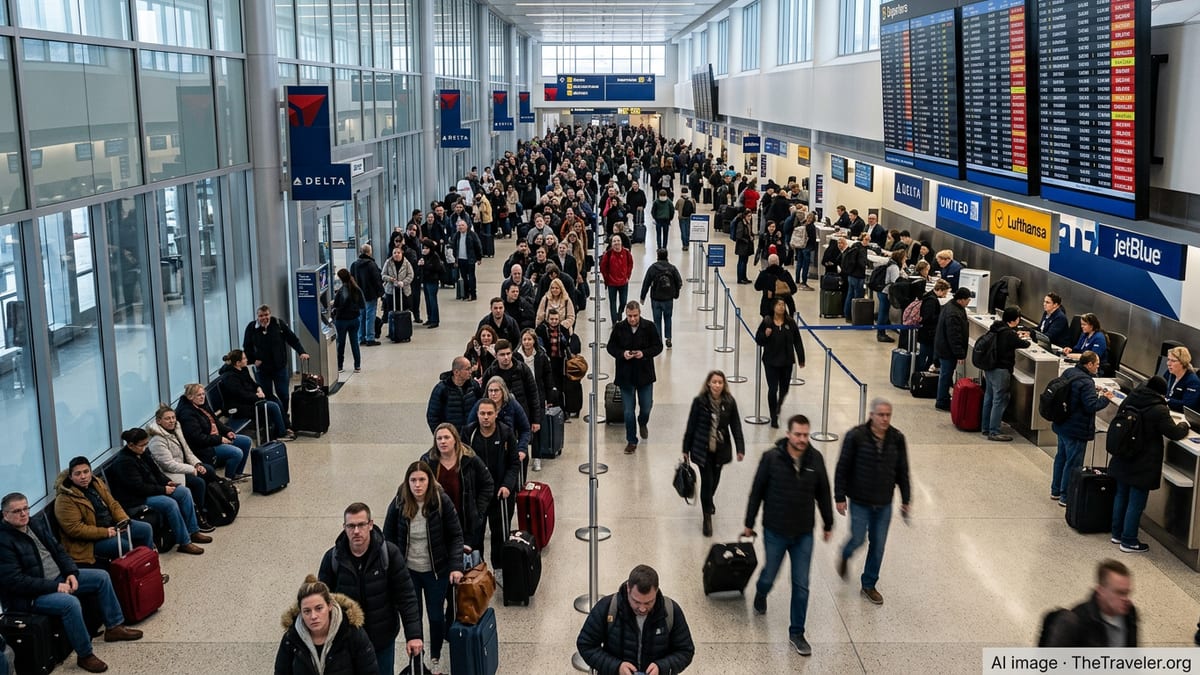
Travelers passing through Minneapolis–Saint Paul International Airport on Friday faced another wave of schedule disruptions, with publicly available flight data indicating one cancellation and 43 delayed departures and arrivals affecting major domestic and transatlantic carriers, including services on the busy Minneapolis and Chicago corridor.
Get the latest news straight to your inbox!
Multiple Airlines Hit as Operational Pressures Mount
The latest disruption at Minneapolis–Saint Paul International Airport involves a broad mix of airlines, underscoring how even a modest number of affected flights can ripple across a tightly timed network. Flight-status summaries for the day list a single cancellation alongside 43 delays tied to carriers such as Delta Air Lines, Southwest Airlines, SkyWest, United Airlines, American Airlines, Air France and Aer Lingus.
These carriers jointly account for a significant share of traffic at Minneapolis–Saint Paul, which functions as a major hub and connecting point for domestic and international journeys. Delta and SkyWest serve large volumes of connecting passengers, while United and American link the Twin Cities to their own hub systems, and Southwest concentrates on point-to-point service. Air France and Aer Lingus add long-haul capacity to Europe, so delays on their departures and arrivals can cascade across transatlantic schedules.
Publicly available reports on previous disruption days at the airport show similar patterns, where regional affiliates and mainline operators are affected side by side. Today’s figures are smaller than the most severe events reported this month but still substantial enough to force itinerary changes for hundreds of travelers, particularly those relying on tight connections.
The impact is magnified because many of these operators share gates, airspace and, in some cases, code-share arrangements. When one delayed arrival ties up a gate or pushes back a departure slot, partner and competitor flights alike can experience knock-on delays.
Minneapolis and Chicago Routes Among Those Disrupted
Among the routes feeling the effects, services linking Minneapolis–Saint Paul and Chicago stand out due to their frequency and importance for both business and leisure travel. The corridor is typically served by multiple daily flights on major carriers, linking Minneapolis with Chicago O’Hare and Chicago Midway. Even a small number of delayed departures can quickly compress options for passengers trying to complete same-day trips.
Flight boards and schedule trackers show a mix of late-running departures, extended taxi times and pushed-back arrival estimates on regional jets and narrowbody aircraft operating between the Twin Cities and Chicago. For passengers with onward connections from Chicago to other parts of the United States or overseas, even moderate delays can mean missed links and unexpected overnight stays.
Published coverage of recent operational days at Minneapolis–Saint Paul has highlighted how disruptions on key trunk routes such as Minneapolis–Chicago, Houston, Nashville and East Coast destinations often originate with late-arriving aircraft or airspace management constraints rather than a single, isolated problem at the gate. In practice, that means an arriving flight that is already behind schedule can immediately place pressure on the next departure using the same aircraft.
The Minneapolis–Chicago market also typically attracts a high proportion of business travelers, who are particularly sensitive to schedule reliability. For those passengers, a series of rolling departure-time changes can be as disruptive as a formal cancellation, especially when meetings or events are scheduled closely around planned arrival times.
Weather, Congestion and Network Complexity Behind the Numbers
While the specific triggers for today’s one cancellation and 43 delays were not fully detailed in publicly available summaries, recent data on Minneapolis–Saint Paul operations points to a familiar mix of contributing factors. Peak-season thunderstorm patterns across the Upper Midwest and Great Lakes region can quickly slow arrival and departure rates, while national air traffic management actions sometimes impose spacing or rerouting that reduce airport capacity.
Historical analyses of delay patterns at major U.S. hubs show that late-arriving aircraft, upstream weather and air traffic flow initiatives often rank among the top causes of schedule disruptions. Aviation statistics compiled by federal agencies classify any flight that arrives or departs more than 15 minutes behind schedule as delayed, a threshold that many passengers reached at Minneapolis–Saint Paul today.
Minneapolis–Saint Paul’s role as a connecting hub compounds the challenge. When one widebody or high-capacity narrowbody flight runs late, passengers from that service may miss onward regional connections operated by carriers such as SkyWest, Republic or Endeavor on behalf of the big airlines. That, in turn, can create pockets of unused seats on some departures and overflow demand on others as rebooking takes place.
Local infrastructure and runway configurations are generally regarded as efficient, and long-range planning documents for the airport indicate that average delays are moderate in normal conditions. However, even well-performing hubs can experience short bursts of disruption when strong weather systems interact with tight airline schedules.
European Links via Air France and Aer Lingus Also Affected
The inclusion of Air France and Aer Lingus among today’s delayed operators underscores how disruptions at Minneapolis–Saint Paul extend beyond domestic connections. Both airlines tie the Twin Cities into European networks, and delays on these long-haul services can echo through connection banks in Paris, Dublin and beyond.
Recent industry coverage has documented days when Aer Lingus and Air France flights from Minneapolis reported late departures, contributing to missed onward connections for transatlantic passengers. Even when only a small number of long-haul flights are affected, the absolute number of passengers involved can be large, particularly during peak travel periods.
For travelers heading to Europe, a delayed departure from Minneapolis can reduce connection windows at the onward hub, especially if inbound flights need to wait on ground handling or air traffic clearance. This can result in rerouting through alternate gateways or extended layovers, adding hours to overall journey times.
Passengers on these services also face added complexity from immigration and customs requirements, which can limit rebooking options to specific airports and times of day. As a result, even a single delayed departure on a transatlantic route may generate a disproportionate number of itinerary changes compared with a similar delay on a short domestic hop.
What Travelers Can Do Amid Continuing Disruptions
For passengers moving through Minneapolis–Saint Paul today, practical steps can help reduce the impact of schedule irregularities. Aviation and consumer travel guidance consistently recommends checking flight status frequently through airline channels and airport flight boards, as estimated departure and arrival times can change rapidly during periods of disruption.
Airlines typically update rebooking options within their own applications or customer portals once a delay crosses certain thresholds, so travelers on affected Delta, Southwest, SkyWest, United, American, Air France or Aer Lingus services may be able to switch to later flights on the same day or, in some cases, alter routing through alternative hubs. Availability depends on seat capacity and broader network conditions.
For those connecting through Chicago or other airports, allowing additional buffer time between flights can be a practical hedge during volatile operating days. When booking or rebooking, choosing slightly longer connection windows may reduce the risk of misconnecting if departure times shift again.
Travel planners also point to the value of monitoring broader national delay maps, which can indicate whether Minneapolis–Saint Paul disruptions are part of a wider pattern affecting multiple hubs. If weather or traffic management constraints are widespread, options for rerouting may be more limited, and travelers may need to prepare for extended waits, rolling updates and, in some cases, overnight stays before they can complete their journeys.