


More news on this day
A multi-car freight train derailment in Laurens County, South Carolina, has been reported by regional outlets and rail-tracking services, disrupting rail operations in the area and prompting a coordinated response from local agencies.
Get the latest news straight to your inbox!
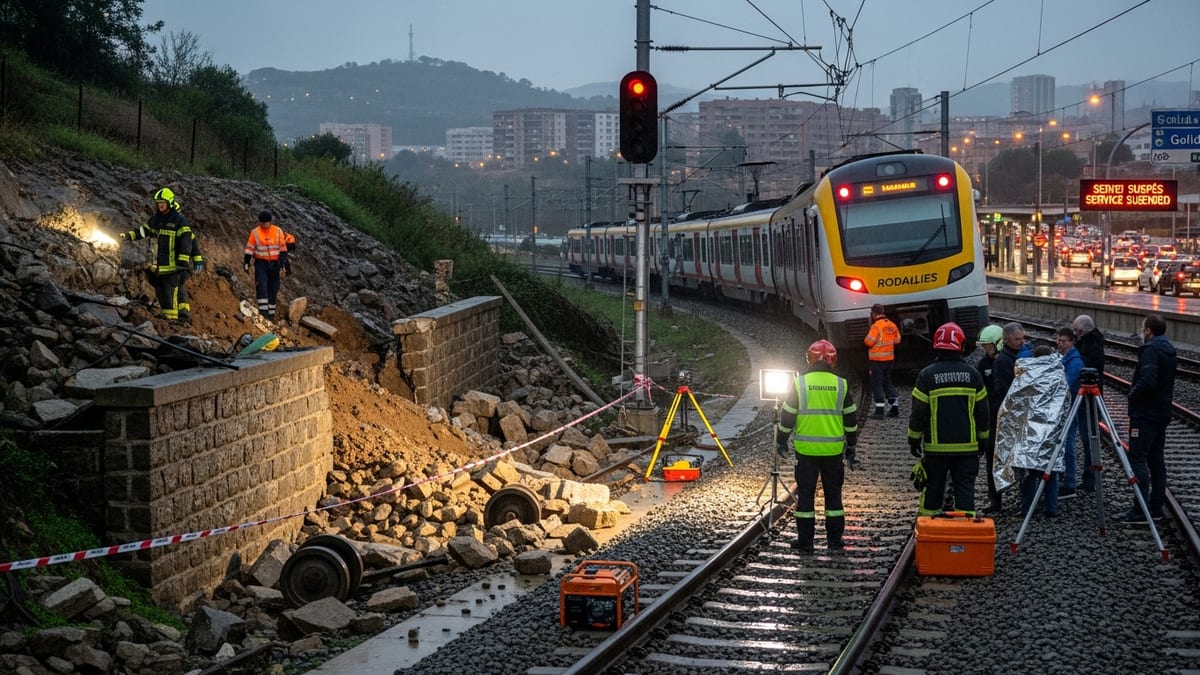
Freight train derailment disrupts rail corridor in the Upstate
Initial information from regional media coverage and publicly accessible rail operations data indicates that multiple freight cars left the tracks in Laurens County, affecting a section of line that serves South Carolina’s Upstate region. Early descriptions characterize the incident as a multi-car derailment involving a freight consist traveling through a largely rural part of the county.
Reports suggest that rail traffic through the affected corridor has been temporarily interrupted while railroad crews and contractors assess track conditions and begin recovery work. Nearby road traffic has also experienced delays where grade crossings intersect the derailed train, although available coverage does not indicate a prolonged highway closure.
As of the latest updates, there is no widely circulated indication of serious injuries or fatalities connected to the derailment. Local coverage instead focuses on operational impacts and cleanup logistics, reflecting a pattern often seen in freight accidents where cars leave the rails but do not involve passenger service or heavily populated surroundings.
The affected line is part of a freight network that helps carry agricultural products, manufactured goods, and other commodities across the region. Any significant disruption on such a corridor can have a cascading effect on scheduling and routing, especially when multiple cars are involved and track repairs are required before full operations can resume.
Emergency response and early safety assessments
According to publicly available information, local fire and emergency crews responded to the scene shortly after the derailment was reported, working alongside railroad personnel to secure the area and evaluate any immediate hazards. Standard protocols in similar incidents typically include checking for fuel leaks, hazardous materials, and fire risk, even when the train is believed to be carrying nonhazardous freight.
Current descriptions of the Laurens County incident do not highlight a major hazardous materials release, and there have been no widely reported evacuation orders in nearby neighborhoods. The absence of large-scale public safety alerts suggests that responders have been able to manage the scene without the kind of extensive shelter-in-place or relocation measures that sometimes accompany more severe derailments.
Railroad companies customarily initiate internal safety reviews after multi-car derailments to determine whether track conditions, equipment issues, or operational factors contributed to the event. While formal investigative findings often take weeks or months to emerge, preliminary assessments in similar cases frequently focus on track geometry, heat-related stress on rails, and the performance of wheels and axles under heavy freight loads.
Observers note that the Laurens County derailment comes at a time of elevated public attention toward rail safety nationwide, particularly in communities situated along busy freight routes. Even when derailments do not cause high-profile damage, they can prompt renewed calls for infrastructure investment, technology upgrades, and stricter inspection regimes.
Impact on rail traffic and nearby communities
Short-term impacts from the Laurens County derailment include delays and rerouting of freight trains that usually rely on the affected segment of track. Rail dispatchers often respond to such incidents by holding trains at upstream yards, sending them on longer detours, or adjusting schedules while track crews remove damaged cars and inspect the rail bed.
For nearby communities, the most immediate effects are typically noise, visible recovery operations, and potential congestion around crossings where work vehicles and heavy equipment gather. Local residents may notice increased activity as cranes, loaders, and maintenance trains arrive to clear the site and begin repairs.
Businesses that depend on timely freight shipments can also feel indirect effects. Manufacturing plants, warehouses, and agricultural shippers sometimes experience schedule changes when key routes are temporarily out of service. However, railroads generally emphasize restoring at least limited single-track operations as quickly as possible, then expanding capacity as repairs progress.
In Laurens County, the derailment adds to a recent series of transportation and infrastructure incidents across the region that have drawn public interest, even when they do not result in large-scale damage. The pattern underscores the importance of resilience planning for both rail networks and the communities that rely on them.
Context within South Carolina’s rail safety landscape
The report of a multi-car derailment in Laurens County fits into a broader pattern of freight incidents documented in South Carolina and across the United States. Federal statistics and past case studies show that most derailments involve freight trains, often in rural or industrial areas, with outcomes that range from minor track damage to significant disruptions and environmental concerns.
Recent national discussions about rail safety have highlighted issues such as track maintenance, crew training, inspection practices, and the condition of aging infrastructure. In South Carolina, where freight rail plays a key role in supporting ports, manufacturing, and agriculture, local incidents tend to fuel debate about how to balance economic reliance on rail with community expectations for safety and transparency.
Publicly available emergency planning documents at the state level describe train derailments as a recurring risk and outline the coordination roles of local governments, state agencies, and private rail operators. These frameworks often include provisions for hazardous materials response, communication protocols, and long-term recovery measures that can be applied when incidents disrupt transportation corridors.
The Laurens County derailment is likely to be examined alongside other recent rail events around the country as policymakers and industry groups consider additional steps to reinforce safety. Even when the immediate physical damage is contained, such incidents contribute to a growing body of evidence that informs discussions about infrastructure funding, technology investments, and regulatory approaches.
Ongoing recovery and next steps
Cleanup and recovery work in Laurens County is expected to continue until derailed cars are removed, the track structure is rebuilt or repaired, and safety inspections confirm that trains can move through the area at normal speeds. This process can involve staged reopenings, in which trains initially travel at reduced speeds while engineers monitor the performance of newly repaired sections.
Railroad operators typically conduct internal reviews after a derailment to refine safety practices and determine whether additional inspections or upgrades are warranted along the affected line. These assessments may influence maintenance schedules, investment priorities, and operational protocols on nearby segments of track.
For residents and travelers in the region, information about train movements and any lingering delays is expected to filter through local news coverage, social media updates, and travel advisories issued by rail operators. While major passenger-service disruptions do not appear to be a central feature of this incident, the event serves as a reminder that freight rail operations can have ripple effects on regional mobility.
As more details emerge about the circumstances leading up to the derailment, transportation observers are likely to focus on what the incident reveals about the condition of South Carolina’s freight network and the ongoing efforts to keep trains, communities, and critical infrastructure safe.