


More news on this day
India’s Konkan coast is entering a new phase of rail-led connectivity as the freshly introduced Mumbai Chhatrapati Shivaji Maharaj Terminus–Sawantwadi Road Express begins daily operations, tightening direct access between the country’s financial capital and a string of fast-growing South Konkan destinations.
Get the latest news straight to your inbox!
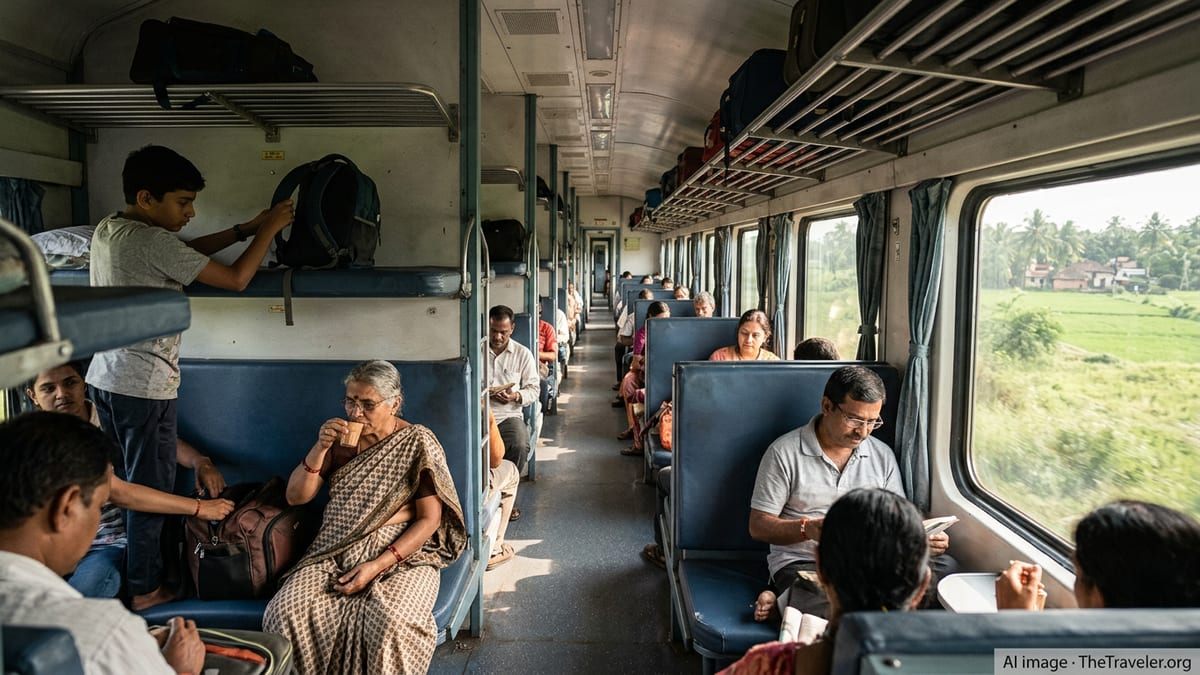
A New Daily Lifeline Between Mumbai and Sawantwadi
Publicly available information shows that Indian Railways has cleared a new daily express service linking Mumbai’s Chhatrapati Shivaji Maharaj Terminus (CSMT) with Sawantwadi Road in Sindhudurg district, with regular commercial operations beginning on 3 September 2026. The service follows the operation of an inaugural special train on the same route, which ran as Train No. 01001 between Mumbai CSMT and Sawantwadi Road with limited stoppages along the Konkan Railway corridor.
According to published coverage and railway notices, the regular service is expected to run as a dedicated CSMT–Sawantwadi Road Express with daily frequency. This gives passengers in both directions a predictable, year-round option that complements existing long-distance services such as the Tutari Express and the Konkan Kanya Express, which also connect Mumbai with South Konkan but on different schedules and routings.
The train’s introduction is being framed within a broader push to strengthen north–south connectivity along the Arabian Sea coastline. Press releases issued through official channels describe it as part of an effort to expand capacity in the Panvel–Chiplun–Ratnagiri sector, where more than twenty pairs of trains already operate, by adding a Mumbai-originating service that specifically targets the southern end of Maharashtra’s Konkan belt.
Timings released by regional media in Marathi indicate that the express is structured to provide overnight or near-overnight connectivity, improving onward links to coastal towns and inland tourist hubs. With a fixed departure and arrival pattern, the service is designed to support both point-to-point travel and multi-stop itineraries that rely on early-morning arrivals in Konkan towns.
Strategic Halts Along the Konkan Railway Corridor
Route details shared in Konkan Railway’s inaugural-train notice list a series of stops that effectively trace the spine of Maharashtra’s coastal railway. After departing CSMT, the train is scheduled to halt at major suburban and junction stations including Dadar, Thane and Panvel, ensuring that passengers from different parts of the Mumbai Metropolitan Region can board without needing to cross the city to a single terminal.
Beyond Panvel, the express runs through the Konkan Railway’s scenic main line, with halts at Pen and Roha before pushing deeper into the coastal belt. The notified stopping pattern includes Mangaon, Veer, Khed and Chiplun, followed by Sawarda, Aravali Road, Sangameshwar Road and Ratnagiri, a city that serves as a major rail and road interchange for mid-Konkan. Farther south, the train calls at Adavali, Vilavade, Rajapur Road, Vaibhavwadi Road, Nandgaon Road, Kankavali, Sindhudurg, Kudal and finally terminates at Sawantwadi Road.
This chain of halts is significant for both residents and visitors because it connects smaller stations that often rely on a limited number of long-distance trains. In several of these locations, existing services such as the Diva–Sawantwadi Road Sindhudurg Express operate on specific timings that do not always align with tourist peaks or weekend travel patterns. The new express adds another layer of flexibility, particularly for passengers starting their journey in central Mumbai rather than suburban terminals.
For the Konkan Railway Corporation, the service represents further utilization of an artery that has become central to the region’s economy since the line’s completion. The route is already host to a mix of express, superfast and seasonal special trains, and the addition of another daily express underscores rising demand from both local commuters and long-distance travelers heading to Konkan beaches, temple towns and heritage sites.
Boost for South Konkan Tourism and Ganesh Festival Travel
Reports in regional outlets highlight that the timing of the CSMT–Sawantwadi Road Express coincides with heightened seasonal demand, particularly around Ganesh Chaturthi when large numbers of Mumbai-based families travel back to ancestral homes in the Konkan. A direct daily service from the city’s historic terminus to Sawantwadi Road is expected to ease pressure on heavily booked festival specials and reduce the need for multiple transfers via buses or intermediate trains.
For the travel sector, Sawantwadi Road functions as a crucial gateway. From this terminus, road connections fan out toward popular beach destinations such as Vengurla and the northern fringes of Goa, as well as to hilltop forts, lakeside retreats and small homestay clusters that have emerged across Sindhudurg district. Travel platforms already show strong rail traffic between Mumbai and Sawantwadi on services like the Konkan Kanya Express; the new train adds capacity directly targeted at this corridor.
South Konkan’s tourism profile has been steadily expanding beyond its traditional peak during religious festivals. Weekend beach stays, monsoon treks and food-focused itineraries centered on Malvani cuisine have all contributed to year-round demand. By offering a new daily rail option, the Mumbai–Sawantwadi Express lowers the barrier for short, spur-of-the-moment trips as well as planned holidays that rely on confirmed rail berths rather than unpredictable last-minute bookings.
Industry watchers also point to the potential for more structured tour packages built around rail plus road combinations. With predictable arrival times in hubs such as Ratnagiri, Kankavali and Sawantwadi Road, operators can coordinate onward vans, ferries and homestay check-ins more efficiently, potentially drawing a wider mix of domestic and international visitors into less-publicized stretches of the Konkan coast.
Improved Access for Coastal Communities and Small Towns
Beyond tourism, the expanded rail link offers tangible benefits to everyday travelers along the South Konkan. Stations such as Aravali Road, Vilavade, Rajapur Road and Nandgaon Road serve large rural catchment areas where residents often depend on a narrow set of transport choices. The addition of a daily express connecting directly to Mumbai CSMT improves access to jobs, healthcare and education in the metropolis.
According to railway data summarised in recent press material, the Panvel–Chiplun segment alone already supports more than twenty pairs of passenger services, reflecting robust commuting and long-distance demand. Extending another Mumbai-originating express through Ratnagiri into Sindhudurg distributes capacity further south and helps address long-standing calls from Konkan communities for more direct, daily trains rather than seasonal specials alone.
For small-town businesses, better rail connectivity can translate into faster supply chains and easier movement of goods that rely on passenger-carrying trains’ luggage and parcel capacity. Traders in agricultural products, fishery items and locally produced crafts often use existing express services to reach wholesale markets in Mumbai; an additional daily train increases options for time-sensitive shipments, especially during peak harvest and fishing seasons.
This enhanced access also ties into broader regional development initiatives, as improved mobility encourages higher rates of return migration during festivals and supports circular movement between Konkan villages and Mumbai’s employment hubs. Consistent, year-round connectivity is seen as particularly important for students and professionals who need reliable travel windows but previously faced capacity constraints on popular trains.
A Key Piece in India’s Wider Rail-led Travel Push
The Mumbai–Sawantwadi Express fits into a larger national narrative where new and restored train services are being leveraged to reshape travel patterns across emerging tourism circuits. In the Konkan, this shift is especially visible, with recent years seeing new trains from Mumbai and the western suburbs toward Madgaon and other coastal points, alongside efforts to increase speeds and streamline operations on existing routes.
Press releases and media analyses describe the CSMT–Sawantwadi service as part of a portfolio of improvements that also includes additional festival specials, rake upgrades and timetable adjustments on established Konkan trains. Together, these measures aim to enhance comfort and reliability while spreading travel demand more evenly across multiple departures and days, reducing strain on a handful of legacy services.
For travelers, the effect is a growing sense of choice. With multiple daily and near-daily trains now threading Mumbai to destinations from Chiplun and Ratnagiri down to Sindhudurg, itineraries can be planned around preferred timings, intermediate stops and onward connections. This stands in contrast to earlier years when a small cluster of trains dominated the Mumbai–Konkan route, often leading to long waiting lists and a reliance on road travel as backup.
As the new Mumbai–Sawantwadi Express beds into the timetable, attention will likely turn to on-time performance and how effectively the service integrates with connecting buses, taxis and local trains at key interchange points. For now, its launch signals a clear intent to anchor India’s new phase of coastal travel growth in a denser, more resilient network of rail options that link metropolitan Mumbai with the evolving landscapes of South Konkan.
Press Information Bureau release on new Mumbai CSMT–Sawantwadi service
Konkan Railway inaugural special notification: Mumbai CSMT–Sawantwadi Road
Regional coverage of approved daily CSMT–Sawantwadi Express
Loksatta report on CSMT–Sawantwadi Road train entering service