


Vatican City may be the smallest country in the world, but planning a visit can feel surprisingly complex. Between timed tickets, separate entrances, long security lines and strict dress codes, a little preparation makes the difference between a rushed box ticking stop and one of the most memorable travel days of your life. This guide brings together the latest ticket options, prices and on the ground advice so you can experience the best of the Vatican Museums, Sistine Chapel and St Peter’s Basilica with minimal stress.
Get the latest updates straight to your inbox!
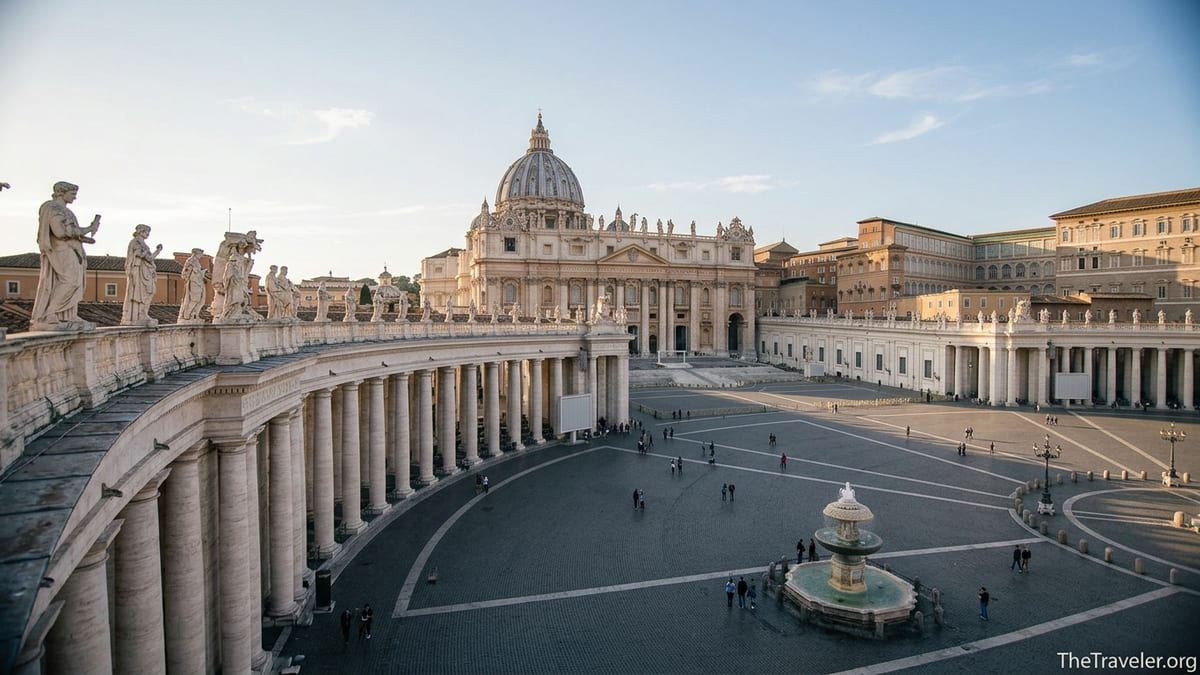
Understanding Vatican City: What Is Where
The first step to a smooth Vatican visit is understanding the layout. Most first time visitors are surprised to learn that the Vatican Museums and Sistine Chapel have a completely different entrance from St Peter’s Basilica and St Peter’s Square. The museums sit along the Vatican walls on Viale Vaticano in northern Rome, while the basilica faces the great oval of St Peter’s Square on the opposite side. Walking between the basilica and museum entrance takes roughly 15 to 20 minutes at a normal pace, which matters when you are planning timed tickets on the same day.
The Vatican Museums complex is vast, containing more than a dozen museums, courtyards and galleries. Every standard museum ticket routes you through a set itinerary that ends in the Sistine Chapel. You do not buy a separate Sistine Chapel ticket. By contrast, St Peter’s Basilica is a working church. Entry to the main interior is free, but you must pass airport style security. Above it all rises Michelangelo’s dome, for which separate dome climb tickets are sold. The layout means that you should usually treat the museums plus Sistine Chapel as one major activity, and St Peter’s Basilica with the dome as a second.
Because all of this sits just outside central Rome, most visitors reach Vatican City on Rome’s Metro line A. The Ottaviano station is the most convenient for St Peter’s Square and the museums, with Cipro slightly closer to the museum entrance if you want a shorter uphill walk. From either station you are looking at 10 to 15 minutes on foot, depending on crowds and mobility. Taxis and ride shares can drop you on the perimeter streets, but cannot enter the square itself.
Once you are on site, keep in mind that Vatican City is a sovereign state with its own security and protocols. Bag checks, dress codes and crowd control measures can change with large events, papal ceremonies or Holy Year celebrations. On very busy days, staff may re route flows inside the museums or temporarily slow entries to avoid dangerous congestion in the Sistine Chapel corridors.
Tickets for the Vatican Museums and Sistine Chapel
Official Vatican Museums tickets are sold with timed entry. In 2026 the standard adult ticket price is approximately 20 euros plus an online reservation fee of around 5 euros, so most visitors pay about 25 euros per adult when buying ahead on the official site. Youth and student reductions apply up to a certain age with ID, while children under a set age bracket often qualify for a much lower rate. Same day tickets at the on site ticket office can be slightly cheaper because they do not include the online fee, but availability is far from guaranteed on busy days.
The single biggest mistake travelers make is assuming they can simply walk up and buy museum tickets in high season. For spring and autumn weekends, and for most dates between roughly May and early October, popular morning time slots can sell out weeks in advance. When official tickets are gone, the remaining options are usually third party tour companies selling guided tours or skip the line packages that cost significantly more. It is now common to see basic skip the line tickets offered around 75 to 90 US dollars per person and fully guided half day tours including the basilica marketed around 150 to 220 US dollars per person. Booking directly on the official channel when possible is usually the best value.
Every standard Vatican Museums ticket includes access to the Sistine Chapel, which sits near the end of the visiting route. You cannot buy a “Sistine Chapel only” ticket. What you can choose is how you experience it. A basic ticket lets you move at your own pace, perhaps with an audio guide rented on site or downloaded independently. Official guided tours, usually about three hours, combine select museum highlights, the Raphael Rooms and the Sistine Chapel with a licensed guide. These are particularly worthwhile if you care about context and art history and do not want to spend time deciphering maps or signage.
If your official time slots are sold out, one workable strategy is to purchase a small group early morning tour through a reputable operator. This generally gets you inside the galleries earlier than the bulk of the crowd and sometimes gives you access to “shortcuts” from the Sistine Chapel directly toward St Peter’s Basilica, avoiding the need to walk all the way around the walls. These tours cost substantially more than standard admission but can be valuable in peak season if you want to avoid hour long lines in the sun.
St Peter’s Basilica and Dome: Free Entry and Paid Experiences
Entry to the main interior of St Peter’s Basilica remains free. You pass through security on the right side of St Peter’s Square and then walk into the church. The catch is time. In busy months, security queues for the basilica can stretch across the square, and waiting 60 to 90 minutes is not unusual late in the morning. Many experienced travelers aim to arrive between 7.30 and 8.30 in the morning, before tour groups and day trippers arrive from cruise ports, or later in the afternoon after 5.30 when the day’s peak heat and crowds subside.
Inside, some optional services have a cost. Audio guide packages, which bundle a reserved access lane with a smartphone style guide to the basilica’s art, are sold through official channels at modest extra cost compared with a traditional free entry. For most visitors, the most appealing paid experience is the dome climb. Recent guidance places the dome climb ticket around 10 euros for the elevator plus stairs combination and slightly less if you take the full 551 steps on foot with no lift. Third party sellers often package the dome climb with guiding services for higher combined prices, so if you are traveling on a budget, buying the basic ticket on site after you clear security can be more economical.
The dome climb is physically demanding. Even with the elevator you face several hundred narrow, spiraling steps and increasingly tight corridors as you approach the top. It is not recommended for travelers with significant mobility issues, heart conditions or severe claustrophobia. Children are generally allowed from about six years old upward if accompanied, but parents should judge their child’s stamina. On the reward side, you step out onto a viewing terrace that offers one of the best panoramas in Rome, from the geometric sweep of St Peter’s Square to the Tiber River and the domes of the historic center.
Below the main floor, St Peter’s also houses the papal grottoes where many popes are buried. Access to the grottoes is free and usually included on a signed route inside the basilica, though lines can form at bottlenecks. A separate, highly restricted area is the Vatican Necropolis or Scavi, the ancient Roman cemetery under the basilica that some believe holds St Peter’s tomb. Visiting the Scavi requires special permission and must be booked well in advance directly through the Vatican Excavations Office, with group sizes strictly limited for conservation and security reasons.
Planning Your Day: Routes, Timing and Crowd Strategies
Because the museums and basilica operate with separate entrances and different crowd patterns, your single most important decision is which order to visit them in. If you have a morning timed ticket for the museums, for example at 8.30 or 9.30, it usually makes sense to start with the museums, work your way through to the Sistine Chapel and then head around the walls to St Peter’s Basilica afterward. Expect a standard unguided visit through the museums and Sistine Chapel to take at least three hours, and often closer to four once you account for photo stops, restrooms and coffee breaks.
If, instead, your Vatican Museums slot is in the late afternoon, say 16.00 or 17.30, you should prioritize St Peter’s Basilica earlier in the day. Many recent visitors report that arriving at the basilica security line around 8.30 to 9.00 gives a reasonable wait and still leaves time to see the interior and even climb the dome before lunch. You can then take a break, perhaps in the nearby Prati neighborhood with its cafes and trattorias, before walking to the museum entrance 30 minutes before your timed entry. This “basilica first, museums later” strategy helps avoid the longest security lines under the midday sun.
Season and weekday also matter. Wednesdays and Sundays are typically the most affected by papal events. On Wednesday mornings when the Papal Audience is held, access to the square and basilica interior may be restricted for several hours, and security checks are tighter. On many Sundays the museums are closed, except for occasional free openings which in practice generate intense crowds. For a calmer experience, aim for Tuesday or Thursday visits outside major church holidays, and avoid planning your only possible visit on a day that could be heavily disrupted by ceremonies.
Crowd management inside the museums has become more assertive as visitor numbers have risen. During peak hours, popular galleries such as the Raphael Rooms and the approaches to the Sistine Chapel can feel overcrowded. Security staff will often encourage visitors not to stop in doorways and may occasionally close off short cuts to prevent dangerous congestion. If you are traveling with small children, older relatives or anyone anxious in crowds, consider early morning slots, shoulder season months such as November or late January, or a small group guided tour that enters before or after the main wave of groups.
How to Get There and Practical Logistics
Reaching Vatican City from most central Rome neighborhoods is straightforward. The Metro line A, marked in orange on maps, runs from east to west across the city. Ottaviano San Pietro is generally the most convenient station for St Peter’s Square, while Cipro Musei Vaticani is slightly closer to the museum entrance. From Termini Station, the main rail hub, the metro ride to Ottaviano usually takes around 10 minutes, plus walk time and any waits for trains. Single metro tickets cost in the region of 1.50 euros and are valid for a limited time window after validation, giving good value compared with taxis for solo travelers.
For those staying in the historic center near Piazza Navona, Campo de’ Fiori or the Pantheon, walking is also realistic. The stroll to St Peter’s Square from the riverfront near Castel Sant’Angelo takes about 15 to 20 minutes across the Vittorio Emanuele II bridge and along Via della Conciliazione. From there, the museum entrance lies further around the walls, another 15 minutes on foot. Taxis can be useful if you have early morning tickets or mobility issues. Official white taxis operate on set meters within Rome; always use marked stands or phone orders rather than accepting unlicensed offers around major sights.
Security screening is a constant. Bags are x rayed at both the basilica and museum entrances. Large backpacks, tripods, glass bottles, pocket knives and some umbrellas may be refused or directed to cloakrooms. There is no public left luggage facility inside Vatican City, so if you are checking out of an apartment or hotel that morning, it is wise to arrange luggage storage elsewhere in Rome rather than bring suitcases with you. Water bottles without glass are generally allowed and can be refilled at the small number of fountains in the museum courtyards.
Food options on site exist but are functional rather than memorable. The museums operate self service cafeterias and snack bars with typical cafeteria pricing. A simple pasta dish and a drink can easily total 15 euros or more. Stopping for a more atmospheric lunch or coffee break in the Prati neighborhood or back across the river near Piazza Navona often feels better value and more relaxed. Plan at least one proper break if you are combining the basilica, dome and museums in a single long day; many travelers underestimate how tiring the constant standing, queueing and climbing can be.
Dress Code, Photography Rules and Respectful Behavior
Vatican City is not only a tourist magnet but also one of the most important religious centers in the world. As a result, standards of dress and behavior are more strictly enforced than at many other attractions. The basic dress code for both the museums and St Peter’s Basilica requires shoulders and knees to be covered for both men and women. Sleeveless tops, very short shorts and mini skirts risk being turned away, particularly at the basilica security checkpoint. Lightweight linen trousers, longer skirts, capri pants and breathable T shirts are ideal in warm weather.
Some travelers carry a foldable scarf or shawl in their day bag to cover shoulders when entering the basilica, which is often sufficient. Flip flops are technically allowed but are not ideal for hours of walking on stone floors and climbing stairs. Hats should be removed inside the basilica. Security staff and ushers have discretion; enforcement can be more lenient on quieter days and more assertive on packed ones, so it is wise to dress as if standards will be strict.
Photography rules vary by area. In most of the Vatican Museums photography is allowed without flash. In the Sistine Chapel, however, visitors are asked not to take any photos or videos at all. This policy is enforced inconsistently, but you should assume that cameras should stay down and phones in pockets. Staff regularly call out visitors attempting to record and may instruct them to delete images. In St Peter’s Basilica, non flash photography is generally allowed, but tripods and professional lighting are not. Drones are completely prohibited anywhere in Vatican airspace.
Respectful behavior extends to noise and movement. In the Sistine Chapel, guards frequently call for silence, and loud conversations are frowned upon. Sitting on the floor in busy galleries or blocking passageways for extended photo shoots is discouraged. When Mass or other services are taking place inside St Peter’s, parts of the church may be roped off, and tourists are expected to keep voices low. Even if you are not personally religious, observing these norms is part of being a considerate guest in a functioning place of worship.
Sample Itineraries and Money Saving Ideas
If you have a full day to dedicate to Vatican City, a balanced itinerary for most travelers looks like this: arrive at St Peter’s security by around 8.15, visit the basilica, optionally climb the dome, then break for coffee or an early lunch in Prati around 11.30. After a rest, walk around the walls to the museum entrance and join the timed ticket line 20 to 30 minutes before your reserved slot, ideally between 13.30 and 15.00. Spend the afternoon exploring key museum highlights, the Raphael Rooms and the Sistine Chapel before exiting in the early evening and strolling back toward central Rome along the river at golden hour.
If you are short on time or energy, you may prefer to focus on just one major component. Some visitors choose to skip the museums entirely and dedicate a deep half day to St Peter’s Basilica, the dome and the grottoes, taking time to absorb details such as Michelangelo’s Pietà, Bernini’s bronze baldachin and the intricate mosaic floors. Others, especially art lovers, may prioritize the museums and Sistine Chapel and simply admire St Peter’s Square from outside, returning to the basilica on another Rome day when energy and weather are more favorable.
For budget conscious travelers, the main levers are ticket type and timing. Booking standard museum tickets directly through official channels rather than third party resellers usually saves you substantial markups. Combining your Vatican day with a Roma public transport pass instead of frequent taxis can also trim costs, particularly if you are staying further out. Packing a refillable water bottle and a light snack reduces the need for higher priced cafeteria options. Families traveling with older children may find that a single audio guide shared with headphones is enough context, rather than paying for multiple full guided tours.
One more subtle way to save money is to think about opportunity cost. Many third party offers advertise “exclusive early access” or “skip the line” experiences at premium prices. In reality, everyone with a valid ticket must pass through security, and there is no way to completely avoid crowds during popular months. If you are comfortable with a bit of advance planning and independent navigation, a self guided visit during shoulder season with official tickets can deliver an equally rich experience at a fraction of the price, freeing up your budget for a special dinner in Rome or a day trip to the countryside.
The Takeaway
Vatican City rewards preparation. With a clear sense of the layout, a realistic estimate of walking times and queues, and tickets booked strategically, you can navigate the museums, Sistine Chapel and St Peter’s Basilica without feeling overwhelmed. Modest adjustments, such as arriving early at the basilica, booking official museum tickets several weeks out and dressing in line with the code, remove many of the common pain points that frustrate unprepared visitors.
At the same time, leave room in your schedule to simply look up and absorb what you are seeing. Whether it is the intense blues of the Sistine Chapel ceiling, the scale of Bernini’s colonnades embracing St Peter’s Square, or the views across Rome from the dome, these are experiences that linger long after ticket details fade. Thoughtful planning does not diminish the sense of wonder; it protects it, ensuring that practical logistics fade to the background and Vatican City becomes a highlight of your time in Rome.
FAQ
Q1. Do I need separate tickets for the Vatican Museums, Sistine Chapel and St Peter’s Basilica?
You need a timed ticket for the Vatican Museums, which automatically includes the Sistine Chapel. St Peter’s Basilica itself is free, but the dome and some extras cost extra.
Q2. How far in advance should I book Vatican Museums tickets?
In busy months such as May, June, September and October, it is wise to book two to four weeks ahead for popular morning slots. In quieter months a few days may be enough.
Q3. What is the approximate price of a standard Vatican Museums ticket in 2026?
Expect to pay around 25 euros per adult when buying online through official channels, which typically includes about 20 euros for admission plus a 5 euro reservation fee.
Q4. Is it worth paying extra for a guided tour of the Vatican Museums?
If you value context and do not want to navigate on your own, a three hour guided tour can be very worthwhile. Independent travelers on a budget may prefer a standard ticket plus audio guide.
Q5. How much time should I allow for visiting St Peter’s Basilica and climbing the dome?
Plan roughly two to three hours, including time to clear security, explore the basilica interior and complete the dome climb at a relaxed pace, longer in peak season.
Q6. What should I wear to meet the Vatican dress code?
Choose clothing that covers shoulders and knees for both men and women. Light trousers, longer skirts or dresses and T shirts are usually acceptable, while sleeveless tops and very short shorts are risky.
Q7. Can I go directly from the Sistine Chapel into St Peter’s Basilica?
Sometimes guided groups are allowed to use a side exit leading toward the basilica, but this shortcut is not always available to individual visitors. Most people should plan to walk around the walls.
Q8. What is the best time of day to visit the Vatican to avoid crowds?
Early morning entries, either at opening time for the museums or around 8.00 for the basilica, usually offer the calmest experience. Late afternoon museum slots can also be slightly quieter.
Q9. Is the dome climb suitable for children and older travelers?
Healthy older children generally manage the climb well, but there are many steep, narrow steps. It may be challenging for very young children, people with mobility issues or anyone uncomfortable in tight spaces.
Q10. Are photos allowed in the Sistine Chapel and Vatican Museums?
Photos without flash are usually allowed in most museum galleries, but photography is banned in the Sistine Chapel. In St Peter’s Basilica, non flash photography is generally permitted with respect.