


Mykonos is the Cyclades island many first-time visitors imagine when they picture Greece: whitewashed lanes, blue doors, beaches that turn into open-air clubs, and sunset cocktails above a sparkling harbor. It can also be one of the priciest and busiest places in the Aegean, which makes a bit of advance planning essential. This guide walks you through where Mykonos is, how to get there, where to stay, how to move around, what things cost, and how to fit it into a first-time Greece itinerary without feeling overwhelmed or overspending.
Get the latest updates straight to your inbox!
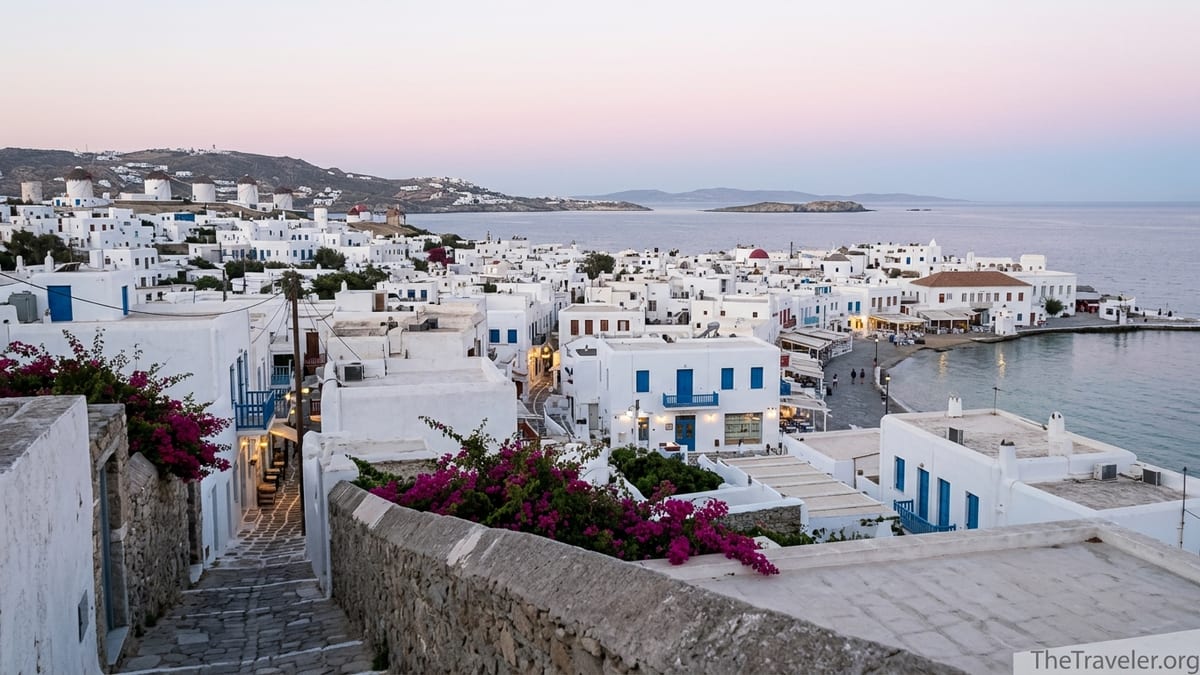
Where Mykonos Is and How It Fits Into a Greece Itinerary
Mykonos sits in the central Aegean Sea in the Cyclades island group, roughly halfway between Athens and Turkey and close to the sacred island of Delos. On a map of Greece you will find it east of the mainland and north of Santorini. From Athens, ferries connect Mykonos with the port of Piraeus and, more frequently, the smaller port of Rafina on the east coast of Attica. Blue Star Ferries and several high-speed operators normally run multiple services per day in season, with conventional ferries taking around 4 to 5 hours and high-speed vessels around 2.5 to 3.5 hours depending on the route and stops.
For many first-time visitors, Mykonos is either the first or last island on a Cyclades hop that might also include Paros, Naxos, or Santorini. A typical 10 to 12 day first trip might look like three nights in Athens, three to four nights in Mykonos, and the rest divided between Naxos and Santorini. Because the island is well connected, it also works as a single-island base paired only with Athens for travelers who prefer fewer hotel changes, especially if they fly directly into Mykonos from another European city.
Mykonos has its own international airport, which receives domestic flights from Athens and Thessaloniki plus seasonal flights from cities such as London, Paris, Frankfurt and Rome. Flight time from Athens is about 35 to 40 minutes, which makes flying a good option if you are landing in Athens in the afternoon and want to be on the island the same evening. For first-time visitors with limited days, a common approach is to fly one way (usually Athens to Mykonos) and take the ferry on the way back, experiencing the classic Aegean crossing at least once.
Because Mykonos is iconic and heavily marketed, many repeat visitors to Greece will nudge you toward quieter islands. That advice is not wrong, but if this is your first time in the country, seeing Mykonos for yourself can be part of understanding modern Greek island life. The key is to decide in advance whether you want to lean into the party side of the island or prioritize its calmer beaches and traditional corners, then choose your base and timing accordingly.
Mykonos Town and Other Places to Stay
The island’s main settlement, usually called Mykonos Town or Chora, is the dense whitewashed maze you see in postcards. This is where you will find the famous windmills above town, the waterfront neighborhood known as Little Venice, designer boutiques, cocktail bars, and some of the island’s best restaurants. Staying in or just above town suits first-time visitors who want to walk to dinner, explore late into the night, and use buses or taxis to reach the beaches by day. Boutique hotels such as Semeli Hotel, Belvedere, and many smaller guesthouses cluster within a 5 to 10 minute walk of the old port and bus stations.
South of town, the beaches of Ornos and Platis Gialos function almost like small resorts of their own. Ornos is about a 10 minute drive from Chora and has a protected bay with restaurants and mid-range hotels like Mykonos Ammos and Yiannaki. It works well for families or couples who want an easy beach and straightforward bus access into town. Platis Gialos, roughly 4.5 kilometers from Chora, has a long sandy beach lined with hotels and beach clubs, from simpler options set a row back to higher-end spots such as the Myconian Ambassador. From here you can also catch small water taxis to other south-coast beaches.
Ano Mera, inland in the center of the island, offers a completely different feel. This traditional village revolves around a main square and the monastery of Panagia Tourliani. Accommodation here is limited to small guesthouses and villas but prices are typically lower, and evenings are quieter, with tavernas serving grilled meats and local dishes rather than cocktails and DJs. For a first visit, Ano Mera can work if you are renting a car and plan to explore different beaches each day, using the village as a calm base to retreat to at night.
At the upper end of the market, hilltop properties outside town such as Cavo Tagoo or the Myconian Utopia collection provide panoramic sea views, infinity pools, and elaborate breakfast spreads, usually with shuttle service into Chora. These resorts can be ideal for honeymoons or celebrations. The tradeoff is that you will rely more on the hotel’s transport or taxis. When comparing options, look closely at how long it takes to reach town and which beach or bus route you will be using most often so you avoid spending too much time and money shuttling around.
Beaches, Beach Clubs, and the Famous Mykonos Nightlife
Mykonos has a wide choice of beaches, each with a distinct personality. On the south coast, Psarou, about 4 kilometers from Chora, is known for luxury beach clubs with high-end sunbeds, designer boutiques and celebrity-spotting. Prices here are among the highest on the island. Nearby Platis Gialos and Ornos are more mixed, with some upscale spots but also simpler tavernas where you can rent two sunbeds and an umbrella for a more moderate fee. On busy August days you might pay a premium for a front-row pair of loungers in the most popular sections, while rows further back or at the quieter ends of the beach will be cheaper.
Paradise and Super Paradise beaches are where Mykonos built its reputation as a party island. During the day you will find bar service to your sunbed and loud music; by late afternoon, places like Tropicana or Paradise Beach Club often turn into full-blown parties with DJs and dancing on the sand. In peak summer the vibe can feel more like a music festival than a typical beach day. If you want to experience that energy but also sleep at night, many first-time visitors choose to stay in Mykonos Town or Ornos and take late buses or taxis to the beach parties, heading back after midnight.
There are also quieter options. Agios Ioannis, on the southwest coast, offers sunset views toward Delos and a more relaxed atmosphere, with a few tavernas right on the sand. Beaches like Panormos and Agios Sostis on the north coast are less developed, with fewer facilities and sometimes stronger wind and waves, but they offer a sense of space that can be hard to find elsewhere on the island. If you are visiting in July or August, when the meltemi north wind is strongest, many locals recommend south-coast beaches for calmer conditions and north-coast beaches for those who enjoy wind and waves for windsurfing or simply cooler air.
Nightlife in Mykonos Town itself ranges from casual cocktail bars overlooking the sea to late-night clubs tucked into the alleys. Many visitors start the evening with a drink in Little Venice, watching the sun drop behind the windmills, then move inland for dinner at a taverna or modern Greek restaurant. Later at night, bars such as Scandinavian Bar or smaller spots dotted around the lanes fill up, with dancing often spilling into the streets until the early hours in high season. Dress codes are generally relaxed but smart casual is common, and reservations for popular restaurants in July and August are strongly recommended.
Transport on the Island, Ferries, and the Airport
Mykonos Island has a fairly simple layout for newcomers. The New Port at Tourlos, where almost all ferries arrive, lies about 2 to 2.5 kilometers north of Mykonos Town. The airport is roughly 4 kilometers southeast of town. In season there are public buses linking Chora to the airport, the New Port and major beaches such as Ornos, Platis Gialos, Paradise and Agios Ioannis. Buses usually depart from two small stations near the town center, the Old Port area and Fabrika square. In summer it is common to find buses every 30 to 60 minutes on the busiest routes during the day.
Taxis are limited on Mykonos and can be hard to find in peak times. There is an official taxi rank in Mykonos Town and usually a line of taxis waiting at the airport and outside the New Port when ferries arrive. In July and August, however, it is not unusual to wait 30 minutes or more for a cab after a busy ferry or late at night. Pre-arranged transfers offered by hotels or private companies can be worth the extra cost if you are arriving with luggage or late in the evening. For example, some hotels around Ornos and Platis Gialos offer shared shuttles that cost more than the bus but less than a private taxi, with the benefit of having someone waiting for you with a sign at the port or airport.
Renting a car, quad bike, or scooter is common, but first-time visitors should weigh the pros and cons carefully. Roads are narrow, parking in town is limited, and police checks for helmets and drink driving are taken seriously. A small car rented for a day to explore remote beaches like Fokos and Mersini can be a good compromise, allowing you to use buses the rest of the time. Rental agencies often cluster around the airport road and in Mykonos Town. Booking ahead for July and August is advisable, and you should carry your driver’s license and, if required, an international permit.
From Athens, ferries to Mykonos depart mainly from Piraeus and Rafina. Rafina is closer to the airport, around a 30 minute taxi ride or slightly more by bus, and has multiple early morning departures to Mykonos in the summer. Piraeus is more convenient if you are staying in central Athens and can be reached on the X96 airport bus or by metro and suburban train. When planning a connection between a flight and a ferry, many Greek travel agents recommend leaving at least three hours between scheduled arrival and departure, more if you need to cross the city between the airport and the port. Weather-related delays due to strong meltemi winds can affect high-speed ferries at short notice, so if you have an onward flight home, it is safest to arrive back in Athens the day before.
Typical Costs, Budgeting, and How to Avoid Surprises
Mykonos is one of the most expensive places in Greece, especially from late June to early September. Hotel prices can vary widely by date and location. A simple guesthouse room in Mykonos Town that might cost a moderate amount in May can easily double or triple in August. Around popular beaches, entry is usually free but the cost of renting sunbeds and umbrellas is where many first-time visitors are surprised. At well-known beach clubs on Psarou or Super Paradise, a pair of front-row loungers can cost a premium for the day in high season, often with an additional minimum spend on food and drinks. On less famous parts of the same beaches, or on quieter beaches like Agios Sostis, you might pay far less or even find space to lay your towel for free.
Food and drink follow a similar pattern. A simple Greek salad, grilled fish, or souvlaki in a taverna away from the most touristy areas of Mykonos Town might be only a little more expensive than on other islands, while a cocktail in a sunset bar in Little Venice or a bottle of wine in a luxury beach club can cost significantly more than in mainland Greece. One practical approach is to mix experiences: pick one or two nights when you splurge on a sunset dinner in town or a day bed at a famous club, and keep other meals casual from bakeries, gyros shops, or family-run tavernas in places like Ano Mera.
Transport costs can add up if you rely on taxis, so factor that into your budget. A short ride between Mykonos Town and Ornos or Platis Gialos may not seem much on its own, but several trips per day over a week can rival the cost of a car rental. Buses are much cheaper and, while sometimes crowded, they are efficient for most visitors. Shared transfers between the port, airport and main beaches can sit in the middle range but give you the reassurance of a fixed price quoted in advance.
For a first-time visitor, a sensible daily budget excluding flights might start at a modest level per person if you are staying in simple accommodation outside peak season and using buses and casual tavernas. In high season, staying in a mid-range hotel near the beach or in town, enjoying a couple of nights out, and perhaps renting a car for a day can push that significantly higher. Rather than chasing a specific number, it is more helpful to decide where you want to spend: if sunset views and nightlife are priorities, consider saving on daytime beach loungers, or visit the famous clubs for a few hours in the late afternoon rather than renting their premium beds all day.
Best Time to Visit Mykonos and How Weather Affects Your Stay
Mykonos has a classic Mediterranean climate with hot, dry summers and mild, windier winters. Beach season usually runs from late May through early October, with sea temperatures warm enough for swimming from roughly June onward. July and August bring the hottest weather, with daytime highs often in the high twenties to low thirties Celsius, and the island at its busiest. This is also when the seasonal meltemi wind is strongest. On some days it feels like welcome natural air conditioning; on others it can make north-facing beaches choppy and sand-blasting, or lead to ferry cancellations for smaller high-speed vessels.
For many first-time visitors who want a balance of warm weather, open businesses, and manageable crowds, June and September are particularly attractive months. In June the island is fully awake, beach clubs are operating, and the sea is already swimmable, but hotel prices and crowds have not yet peaked. September often brings slightly calmer winds and sea temperatures that have warmed over the summer, with daytime weather still firmly summery but nights a little cooler for sleeping. Restaurant reservations are still a good idea on weekends, but it is easier to find last-minute sunbeds or dinner tables than in August.
May and October are shoulder seasons with a more local, relaxed feel. In early May some beach clubs and hotels may still be preparing to open, and the sea can feel cool, but prices are lower and the narrow lanes of Mykonos Town are navigable without bumping shoulders. By October, some big-name clubs will have held their closing parties, yet many restaurants and hotels remain open into the first half of the month. These windows suit travelers who prioritize atmosphere and walking the town’s alleys over all-day beach lounging and nightlife.
Winter from November to March is very quiet. Many hotels and restaurants close completely, and ferry and flight schedules are reduced. Mykonos Town becomes a small working community again, with just a handful of year-round hotels and tavernas welcoming visitors. It can be an atmospheric time if you are prepared for wind, rain showers, and limited options, but for a first-time Greece trip focused on island scenery and swimming, it is usually better to aim for late spring through early autumn.
First-Time Greece Tips: From Athens to Island Hopping
Most first-time visitors to Mykonos will also spend time in Athens. If you are flying into Athens International Airport and heading straight to Mykonos, decide whether you prefer to connect by ferry or by plane. A domestic flight is usually the simplest if your international flight arrives in the afternoon or evening. If you want to take the ferry the same day, arriving into Athens in the morning gives you more flexibility. The X96 airport bus runs directly to Piraeus port, while a combination of bus or taxi can get you to Rafina. Leaving at least three hours between scheduled landing and ferry departure is a reasonable minimum, with an overnight in Athens the safest choice for tight connections.
On the islands, cash and cards are both widely used, but it is still useful to carry some euros in small denominations. Beach clubs, hotels and many restaurants will take cards, yet small bakeries, kiosk-style minimarkets and buses sometimes prefer cash, especially for low-value transactions. ATMs are present in Mykonos Town and at popular beaches like Ornos and Platis Gialos, though fees and exchange rates vary by bank. Tipping is appreciated rather than obligatory; rounding up a taxi fare or adding a small percentage in restaurants with table service is common practice.
Language is rarely a barrier, as most people working in tourism speak English and often other European languages. Learning a few basic Greek words, such as “efharisto” for thank you and “kalimera” for good morning, is still a thoughtful gesture and often warmly received. Dress codes are casual in most places, with beachwear accepted on the sand and smart casual more appropriate for evenings in town. When visiting churches or monasteries such as Panagia Tourliani in Ano Mera, covering shoulders and wearing longer shorts or skirts shows respect.
For a first-time island hopper, a common pattern is to start in Athens for two or three nights, travel to Mykonos, then move on by ferry to a calmer island like Naxos or Paros before looping back to Athens. Spreading your time this way lets you enjoy Mykonos’ energy without it defining your entire trip. Booking ferries and accommodation at least a few months in advance is sensible for trips in July and August, while May, June, September and early October can be more forgiving for semi-spontaneous planners.
FAQ
Q1. How many days do I need in Mykonos on a first trip to Greece?
Most first-time visitors find that three to four full days is enough to see Mykonos Town, visit a couple of different beaches, enjoy one or two nights out, and take a half-day boat trip to Delos. If you want slower mornings and more time by the pool, adding a fifth day gives you breathing room without crowding out time on other islands or in Athens.
Q2. Is Mykonos too expensive for a mid-range traveler?
Mykonos is certainly one of the pricier Greek islands, but a mid-range trip is possible with planning. Staying slightly back from the waterfront in Mykonos Town or in areas like Ornos or Ano Mera, using buses instead of taxis where practical, and mixing simple tavernas with a few special meals can keep costs in check. The biggest budget swings usually come from hotel choice and beach club spending.
Q3. What is the easiest way to get from Mykonos Airport to my hotel?
In summer there are buses from the airport to Mykonos Town and to some major beaches, which are the cheapest option if the timetable suits your arrival. Taxis are available outside the terminal but can involve queues in peak hours. Many hotels, especially those in resort areas like Platis Gialos and Ornos, offer private or shared transfers that cost more than the bus but save time and hassle, particularly if you are arriving with heavy luggage or late at night.
Q4. Do I need to rent a car in Mykonos?
You do not need a car if you are happy to focus on Mykonos Town and the main south-coast beaches that are well served by buses. Renting a small car becomes useful if you want to explore more remote spots, quieter beaches on the north and east coasts, or stay in a village like Ano Mera. Many visitors compromise by renting a vehicle for one or two days and relying on buses and walking the rest of the time.
Q5. Which area is best to stay for first-timers: Mykonos Town or the beach?
For most first-time visitors, staying in or just above Mykonos Town offers the most flexibility. You can walk to restaurants and nightlife, then day-trip to beaches by bus or taxi. If you care more about waking up by the sea and do not mind a short ride into town in the evenings, Ornos and Platis Gialos are good alternatives, with a mix of hotels, tavernas and regular buses.
Q6. When is the sea warm enough for swimming in Mykonos?
The sea around Mykonos is usually comfortable for swimming from roughly June through early October, with the warmest water in late August and September after it has had time to heat up over the summer. In May and late October you can still swim, but the water will feel cooler, and many people prefer shorter dips rather than long sessions in the sea.
Q7. How bad is the wind in Mykonos really?
The island’s nickname, the Island of Winds, reflects reality. In July and August the meltemi north wind can blow strongly for several days in a row. On moderate days it is refreshing and pleasant; on very windy days it can make some north-facing beaches uncomfortable and cause occasional ferry disruptions. Choosing south-coast beaches, which are more sheltered, is a simple way to adapt your plans when the wind is up.
Q8. Is Mykonos suitable for families or only for party travelers?
Mykonos is widely known for nightlife, yet it also has family-friendly sides. Beaches like Ornos, Platys Gialos and Agios Ioannis offer gentler seas, plenty of tavernas, and hotels that cater to families. The party beaches mainly come alive in the late afternoon and evening, and they are easy to avoid if they do not fit your trip. That said, quieter islands such as Naxos or Paros often appeal even more to families with young children.
Q9. Can I visit Mykonos as a day trip from another island?
Yes, in high season there are day-trip excursions from nearby islands like Naxos or Paros, and some cruise ships stop in Mykonos for the day. A day trip lets you sample Mykonos Town and perhaps one beach, but it can feel rushed. If Mykonos is a major reason for your trip to Greece, staying at least one or two nights gives you time to see the town early in the morning or late at night when it is most atmospheric.
Q10. How far in advance should I book hotels and ferries for Mykonos?
For July and August visits, booking hotels three to six months in advance is sensible, especially for popular areas and boutique properties. Ferries usually appear in booking systems a few months ahead of time, with most travelers reserving seats several weeks in advance for busy dates. In May, June, September and early October there is generally more flexibility, although booking key legs like Athens to Mykonos as soon as your dates are fixed is still a good habit.