


Mykonos remains one of Europe’s most intense nightlife islands, where sunset cocktails in Little Venice blend into beach parties at Paradise and Super Paradise, and club nights can run past dawn. The key to enjoying it is choosing the right area, understanding how prices and transport work, and knowing where you can still get a decent night’s sleep. This guide focuses on Mykonos Town bars, beach parties, late-night clubs, safety, typical costs, taxis and the best areas to stay, whether you want to be in the heart of the action or just close enough to dip in and out.
Get the latest updates straight to your inbox!
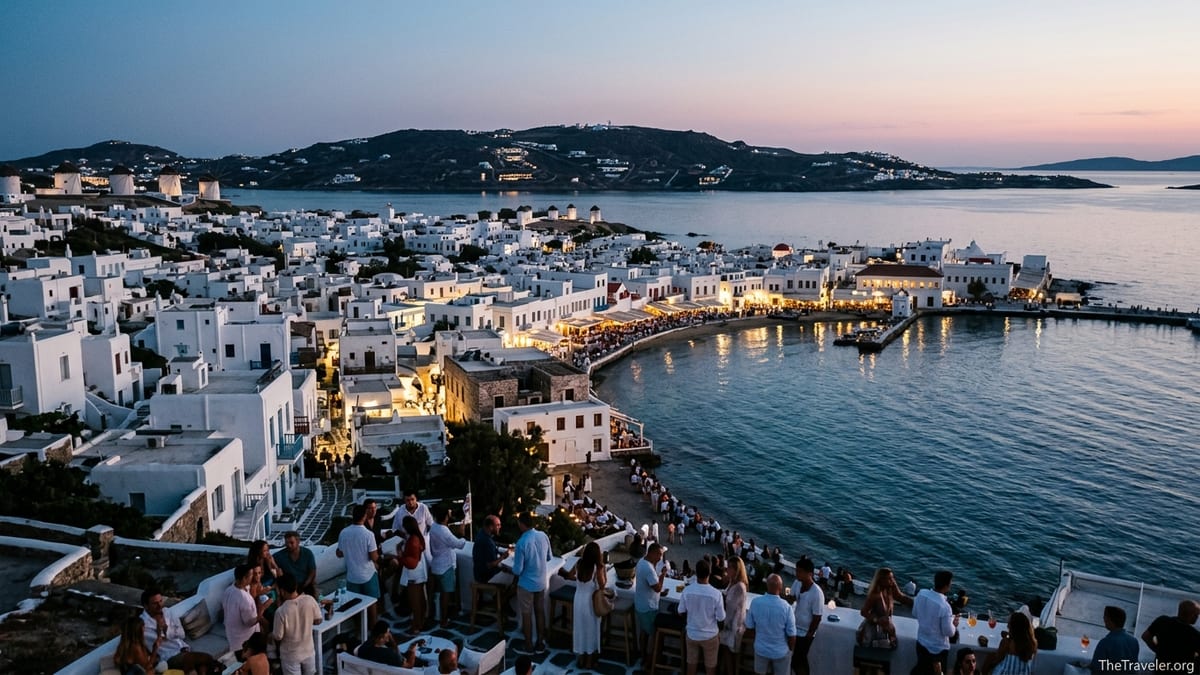
How the Mykonos Nightlife Scene Works in 2026
Mykonos nightlife has a clear rhythm that shapes how visitors plan their evenings. Sunset is the soft start, with people drifting to the waterfront bars of Little Venice or the windmills overlooking Chora for cocktails around 7.30 to 9 pm in summer. Dinner usually runs late, from roughly 9 pm to 11.30 pm, after which many visitors either move into the tight lanes of Mykonos Town for bar-hopping or down to the south-coast beaches for louder, DJ-driven parties. Club nights at the biggest venues often do not peak until 2 or 3 am, with headliners starting their sets well after midnight.
The energy varies a lot by month. In late May and June, the island is already busy, but you will find slightly more space at bars and beach clubs, and minimum spends for sunbeds or tables may be lower. July and August are the peak: packed streets in Chora until the early hours, full DJ lineups at Paradise, Super Paradise, Scorpios and Cavo Paradiso, and the highest prices of the season. By late September, the main clubs are still active, but parties wind down earlier and some venues begin to close for the year.
Mykonos is also expensive compared with most Greek islands, especially for alcohol and beach clubs. In 2026, expect standard cocktails in busy town bars to sit around 15 to 20 euros, with premium spots or waterfront seats costing more. At major beach clubs, cocktails can run from about 18 to the mid-20s, and a shared bottle with mixers for a table at a big-name club easily climbs into several hundred euros for the night. Being aware of these ranges before you arrive helps you avoid surprises and plan how many big party nights you actually want.
At the same time, you can still piece together a great evening without overspending. It is common, for example, to enjoy one round of drinks in a prime sunset location, then shift to bars on backstreets where prices are more moderate, and to use the public buses or shared transfers out to beach parties rather than relying on taxis for every leg of the night.
Mykonos Town & Little Venice: Sunset Bars and Late-Night Lanes
Mykonos Town, also called Chora, is the social heart of the island and the best base if you want to walk between bars, restaurants and late-night clubs. Little Venice, the strip of colorful houses that lean over the sea just below the windmills, is the classic sunset area. Popular bars here, such as those lining the waterfront opposite the windmills, are famous for sea-spray views and very limited seating along the front row. For an unobstructed sunset table in July or August, many visitors are willing to arrive a full hour early or accept a minimum spend that might run from roughly 60 to 100 euros per person for a couple of hours of drinks and snacks.
Right behind the waterfront, the maze of alleys is packed with smaller bars where the atmosphere ramps up as the night goes on. The Skandinavian Bar complex, just a few minutes’ walk inland from the harbor, is an institution that combines a courtyard bar area with an upstairs dance floor where the music tilts toward mainstream party hits and international pop. It is typical of how town nightlife works: you can start with quieter drinks outdoors and then move upstairs or on to the next place when you are ready for a proper dance floor.
In Little Venice and the town center, the dress code is relatively relaxed but stylish: many visitors wear linen shirts, summer dresses or smart shorts and sandals. You do not need formal outfits, but flip-flops and beachwear will stand out in the evening crowds. Cover charges are not standard for most bars in town; instead, you pay via drink prices and any applied minimums for premium seating. Ordering a simple beer in a backstreet bar might be around 8 to 10 euros, while waterfront cocktails at sunset can double that once you factor in the view.
Noise levels in Chora stay high until very late in peak season. Music from bars can echo through the lanes until 3 or 4 am, particularly around the waterfront and the blocks near popular venues such as Skandinavian Bar and other small clubs. If you value sleep, choosing accommodation a little up the hill from the harbor, around the old port side or above the windmills, gives you more distance while keeping nightlife within a 10 to 15 minute walk.
Paradise, Super Paradise & the Beach Party Circuit
Along the south coast, Paradise and Super Paradise beaches anchor the loudest party scene on the island. Paradise Beach is known for its open-air beach bars and club spaces that evolve from laid-back daytime music to full dance parties in late afternoon, often continuing through the night in high season. The main venues run programmed DJ sets through the summer, with big-name electronic and house DJs especially common from late June through August. It is normal to see people dancing on the sand in swimwear by late afternoon and then changing into something slightly dressier as the night goes on.
Super Paradise Beach, a little further east, feels slightly more polished than Paradise while still being very much a party beach. It has a long-standing reputation as an inclusive, LGBTQ-friendly area with a mixed crowd, particularly in peak season. Both beaches operate sunbed systems where the daily rental is only the starting point: for instance, you might pay 60 to 80 euros for a pair of loungers near the water at busy times, then be expected to spend another 50 to 150 euros per person on food and drink over the course of the day in top-tier sections. In shoulder months like June or early September, these figures can be lower and more negotiable.
Beyond Paradise and Super Paradise, other beach clubs shape the island’s daytime-into-nighttime circuit. Psarou Beach, home to high-end venues that attract yachts and international celebrities, tends to be more about luxury dining and bottle service than pure clubbing. Paraga Beach hosts venues with strong sunset rituals and DJ programs, while further north, more design-led beach bars such as those at Panormos or Ftelia tilt toward a bohemian, slightly calmer vibe that still includes music and occasional parties. Visitors often mix and match: a raucous afternoon at Paradise followed by a quieter, more design-conscious beach the next day.
One of the biggest late-night club experiences on the island is Cavo Paradiso, built into the cliffs near Paradise Beach. Its open-air dance floor and pool look out over the sea, and major international DJs headline here during the core months of the season. Doors can open relatively late, and it is common for the main sets to start after 2 am. Drinks are premium priced, and everyone should factor in the cost of getting back to their hotel at dawn, whether that is via pre-booked transfers or taxis waiting outside after the club closes.
Costs, Cover Charges and How to Avoid Bill Shock
Prices in Mykonos can surprise first-time visitors, especially those who assume that all Greek islands follow the same budget pattern. In 2026, a typical range for a standard mixed drink in a busy bar in town runs around 12 to 18 euros, with simple beers or house wine slightly cheaper. In top-tier waterfront bars at sunset or at luxury beach clubs, cocktails can approach or pass 20 euros, and sharing a bottle of mid-range spirits with mixers at a table can reach several hundred euros by the time service charges are added.
Beach clubs usually apply separate charges for sunbeds and consumption. A common arrangement is that you pay a fixed fee for a pair of loungers, then have either a minimum spend per person or relatively high menu prices that encourage more ordering. For example, if you book front-row beds at a well-known south-coast beach club in July, you might face a package that effectively runs well over 100 euros per person once you add drinks and a simple lunch. More basic beds in the second or third rows or at simpler beach bars can be significantly cheaper, bringing day costs closer to what many travelers expect from a Mediterranean resort.
Late-night clubs on the island vary in how they handle cover charges. Some in-town venues remain technically free to enter, depending instead on high drink prices and table reservations during peak nights. Others, particularly large-scale venues hosting international DJs, may charge an entrance fee that increases for big-name events. For headline nights at major clubs, entrance tickets bought in advance often work out cheaper than showing up at the door, and they also help with crowd control. When budgeting, it is worth planning for at least one or two high-cost party nights if you intend to experience the island at full intensity, then balancing those with evenings where you stick to casual bars or beach tavernas.
To keep costs in check, many travelers follow a few simple tactics. They have a drink or two at a grocery store price in their accommodation before heading out, focus on one or two key venues rather than jumping constantly between cover charges and taxi fares, and accept that waterfront front-row tables are a splurge, not a nightly habit. Asking about minimum spends and checking menus before ordering, especially at beach clubs, is wise. Menus in Greece are required to show prices, and reputable venues are transparent, but misunderstandings can happen when guests assume items like bottled water or bread are complimentary when they are not.
Getting Around at Night: Buses, Taxis and Transfers
Transport is part of any nightlife plan on Mykonos, because the island’s best bars and clubs are spread between Mykonos Town and multiple beaches. During the day and early evening, the public bus network connects Chora with major south-coast beaches such as Paradise, Super Paradise, Ornos and Platis Gialos. In peak season, buses can run every 30 minutes or so on popular lines, and tickets are comparatively inexpensive, usually just a few euros per ride. For travelers staying in town but wanting beach parties, this bus network is often the most economical way to reach the sand and get back before midnight.
Late at night, especially after beach clubs close or big events finish at venues like Cavo Paradiso, buses may stop or thin out. At that point, your main options are official taxis from the island’s taxi ranks, pre-arranged hotel transfers or private shuttle services that some clubs organize on busy nights. Official taxis are limited in number compared with demand in peak season, which can lead to queues and surge-like effects, particularly around 3 to 5 am. Recent published transport tariffs indicate that private transfers from the port or airport to any point on the island can run from roughly 80 euros per car per way in high season for a standard vehicle, with larger vans and VIP options costing more.
Because general taxi fares on Mykonos are known to be high by Greek standards, many visitors now rely on shared hotel shuttles, pre-booked minivans for groups, or stay within walking distance of their primary nightlife spot. For example, a group of friends focused on Paradise and Super Paradise might opt to stay at a hotel on that part of the coast, using a single daytime bus trip into town and then returning by taxi just once late at night. Conversely, those basing in Chora might schedule their heaviest club night on an evening when they are willing to pay for a late taxi back from a beach or arrange a round-trip transfer directly with a club.
Walking along unlit roads after dark is generally discouraged, as many routes between town and the beaches involve narrow, winding roads with limited shoulders and fast traffic. Within Chora itself, everything is walkable, and most nightlife areas in town are located within a 10 to 15 minute radius. If you are staying outside town without a car, confirm with your hotel in advance what late-night transport options they can help you secure, especially if you are visiting in peak season when last-minute arrangements can be difficult.
Safety, Crowd Levels and Nightlife Etiquette
Mykonos is relatively safe for most visitors, including solo travelers, but the intensity of the nightlife brings predictable risks. Petty theft can occur in crowded bars and on packed dance floors, so it is sensible to carry only what you need, use a zippered crossbody bag or secure pockets, and avoid leaving phones or wallets on tables unattended. On the beaches, keep an eye on bags when everyone is in the water or dancing; some travelers prefer to use hotel safes for passports and large amounts of cash and carry only a bank card and limited currency at night.
Alcohol-related accidents, especially late at night near the water or on steep lanes in town, are more common than serious crime. The seafront around Little Venice can be slippery due to waves hitting the sea wall, and several bars in this district warn guests about the risk of spray soaking front-row tables on windy nights. It is also wise to be cautious around cliffs and rocky edges near some beach clubs or viewpoints, where the combination of darkness, music and crowds can make footing uncertain. Sticking with friends, pacing your drinking and arranging a clear meeting point if you become separated are simple ways to avoid problems.
Local etiquette is straightforward but worth respecting. Dress casually but neatly in the evenings, avoid walking through residential lanes shouting after leaving a bar at 4 am, and follow staff directions at clubs, especially regarding reserved areas and table arrangements. Tipping is customary though not mandatory; many visitors leave around 5 to 10 percent in bars and restaurants if service is good. At beach clubs, where staff are often managing large sections and minimum spends, a similar or slightly higher tip on table service is appreciated.
Crowd levels spike in July and August, when cruise ship calls, regular holidaymakers and weekenders from Athens all overlap. Streets in Mykonos Town can feel almost jammed at midnight on a Saturday, and popular beach clubs may require reservations for loungers or evening tables days in advance for prime dates. If you prefer a bit more breathing room, June and September offer a more manageable version of the same nightlife, with long daylight hours, plenty of parties and slightly less pressure on bookings.
Where to Stay if You Want Sleep vs. Nightlife on Your Doorstep
The place you choose to stay on Mykonos has as much impact on your experience as which bars you visit. If you want nightlife on your doorstep, Mykonos Town is the logical base. Hotels and guesthouses in the central lanes or near the old port put you within easy walking distance of Little Venice, the waterfront and the main bar clusters. This works well for short stays or trips where most evenings will end between 2 and 5 am. The trade-off is noise: even with double glazing, rooms close to major bars may pick up music and late-night chatter deep into the night in high season.
Travelers who want to enjoy nightlife but still sleep reasonably well often choose the edge zones of Chora or the quieter beaches within a short drive. In town, this usually means staying a bit uphill from the harbor, around the windmills or in pockets on the outer ring of lanes where bars shut earlier. On the coast, Ornos and Agios Ioannis are popular areas that blend beach relaxation with access to restaurants and a more mellow evening scene. From these bays, it is usually a 10 to 15 minute drive into Mykonos Town, and buses run frequently in high season, allowing you to dip into the bar scene and return to calmer surroundings.
If you value quiet above all, there are still corners of the island that feel removed from the all-night soundtrack. Inland, Ano Mera offers a more local vibe around a central square with tavernas and a monastery, and while you will need a car or taxis to reach beaches and town, night-time noise is much lower than by the sea. On the more remote eastern and northern shores, areas near beaches such as Lia, Kalafati, Fokos or Merchia can be very peaceful at night, especially outside the absolute peak weeks. These locations are better suited to travelers who prioritize calm mornings and empty coves and are happy to plan specific nights in town or at a party beach, rather than going out late every evening.
For those who want direct access to beach parties, staying near Paradise or Super Paradise can make sense, especially for groups of friends. You can walk to daytime parties, head back to change, and then return for late-night sessions without needing a taxi each time. The compromise is that music from beachfront venues may carry well into the early hours, and daytime noise around pools and bars begins early. Reading recent guest reviews for any hotel you consider is crucial to gauge how much of the party atmosphere reaches the rooms.
The Takeaway
Mykonos in 2026 still delivers an intense, polished and often expensive nightlife experience that ranges from candlelit sunset cocktails in Little Venice to all-night dance marathons at cliff-top clubs. The island suits travelers who are willing to spend a little more on a handful of standout nights, but with careful planning it can also work for those who want to sample the scene in moderation.
Understanding how the rhythm of the evening unfolds, what typical drink and beach club prices look like, and how late-night transport actually works will help you avoid the usual pitfalls. Most importantly, choosing the right base makes the difference between being kept awake by distant bass every night and having the freedom to decide when the party starts and ends. Whether you stay in the heart of Mykonos Town, on a beach like Ornos or Platis Gialos, or in a quieter corner near Ano Mera or Lia, you can tailor the island to your preferred balance of sleep and celebration.
If you treat headline clubs and beach beds as occasional splurges, lean on buses where possible, book key venues in advance for high season and respect local etiquette, Mykonos rewards you with some of the most memorable summer nights in the Aegean. From the first clink of glasses at sunset to the last taxi ride home after sunrise, the island offers a full spectrum of experiences for both dedicated night owls and those who simply want one perfect night out.
FAQ
Q1. Is Mykonos nightlife only active in July and August?
Nightlife is strongest from late June through early September, with July and August the busiest and most expensive. In May and October, some bars and clubs are open but the scene is noticeably quieter.
Q2. How much cash should I plan for a typical night out in Mykonos Town?
For a mid-range evening with a simple dinner and several drinks in bars, many visitors find that 70 to 120 euros per person is a realistic range in 2026, excluding any high-end splurges.
Q3. Do I need to book beach clubs like Paradise or Super Paradise in advance?
In July and August it is wise to reserve sunbeds or tables a few days ahead for popular beach clubs, especially for front-row loungers or weekend parties. In June and September you can often find space on the day.
Q4. Is it safe to walk back to my hotel at night?
Walking inside Mykonos Town is generally safe, though lanes can be crowded. Outside town, many roads are dark and narrow, so it is better to use taxis, buses or pre-booked transfers after a night out.
Q5. Where should I stay if I want nightlife but also decent sleep?
Look for accommodation on the edges of Mykonos Town, or at beaches like Ornos, Agios Ioannis or Platis Gialos. These areas offer easier sleep while keeping restaurants, buses and nightlife accessible.
Q6. Are there quieter alternatives to Paradise and Super Paradise beaches?
Yes. Beaches such as Agios Ioannis, Panormos, Ftelia, Lia or parts of Kalafati typically have a calmer atmosphere, with music but less intense partying than the main south-coast party beaches.
Q7. Do clubs in Mykonos have strict dress codes?
Most venues expect smart-casual summer wear rather than formal dress. Beachwear and flip-flops are fine during the day, but in the evening light shirts, dresses and proper sandals or shoes fit in better.
Q8. How late do buses run between Mykonos Town and the beaches?
In peak season, buses to major beaches often run until late evening, but not usually until dawn. After midnight, do not rely on catching a bus; instead plan for taxis or club-organized shuttles.
Q9. Can I enjoy Mykonos if I am not a big drinker?
Yes. Many visitors focus on sunset views, late dinners, live music, and gentle bar-hopping with just a drink or two. You can still enjoy the ambiance without treating every night as a full-on party.
Q10. Is tipping expected in bars and clubs?
Tipping is appreciated though not mandatory. Leaving around 5 to 10 percent for good service in bars, restaurants and beach clubs is common practice among visitors.