


Nairobi’s Jomo Kenyatta International Airport (JKIA) can feel confusing the first time you fly through. Locals talk about “1A” or “T2” as if they were separate airports, airlines sometimes move between concourses at short notice, and maps online are not always up to date. Yet if you understand how Terminal 1A, 1B, 1C, 1D, 1E and Terminal 2 are actually used today, choosing the right drop off point or making a connection is straightforward.
Get the latest updates straight to your inbox!
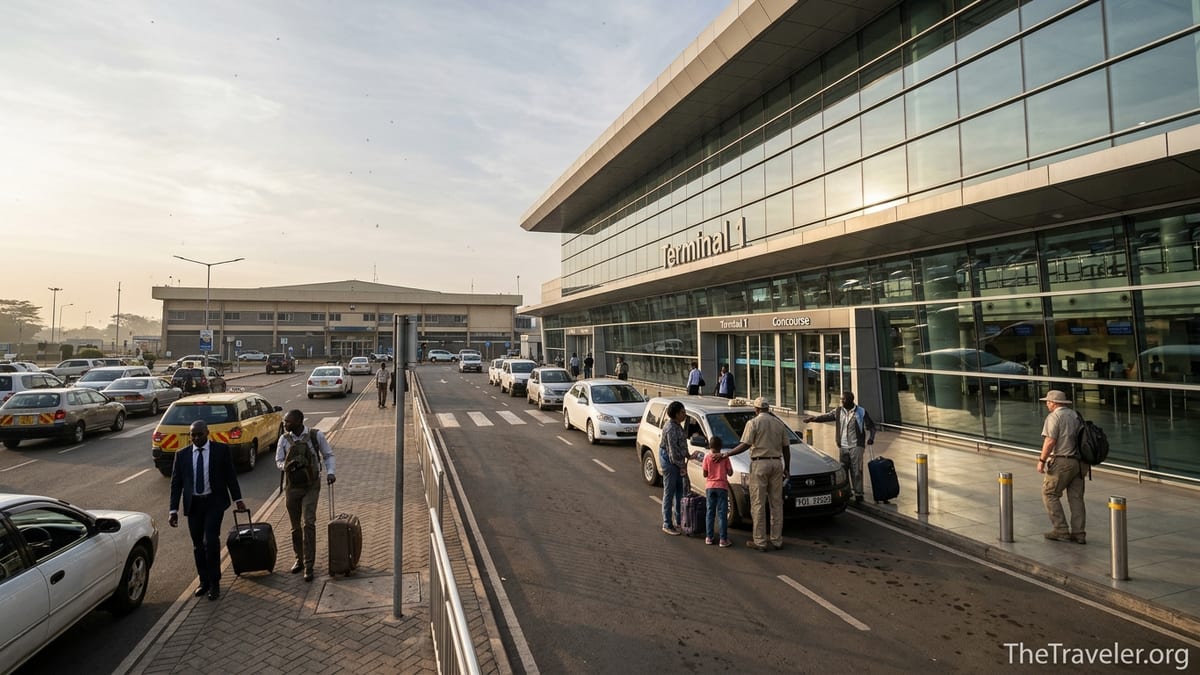
How JKIA Is Really Laid Out in 2026
Despite what many older guides still say, JKIA now has two terminal buildings: Terminal 1 and Terminal 2. Terminal 1 is a single, long building split into concourses 1A, 1B, 1C, 1D and 1E, all under one roof. You can usually walk airside between 1A, 1B, 1C and the international side of 1D without leaving security. Terminal 2 is a separate, more compact building a short drive or shuttle ride away, primarily used by regional and low cost carriers.
In practice, most international traffic, especially on full service airlines, uses Terminal 1. Kenya Airways and its SkyTeam partners anchor 1A, while a rotating mix of other international airlines use 1B and 1C depending on airport operations at the time. 1D focuses on domestic flights, and 1E is a smaller international concourse that airport planners intend to phase out under a modernization plan that concentrates international arrivals into 1A.
For you as a traveler, the key is simple: check which concourse your airline and route are using on your ticket or booking, then think in terms of “Terminal 1 vs Terminal 2.” A Kenya Airways flight to Amsterdam or London will almost certainly be in Terminal 1A, while a Skyward Express or Fly540 hop to Malindi or Kisumu may well leave from Terminal 2. Taxis and ride hailing drivers in Nairobi are used to this distinction and will usually ask “Terminal 1 or T2?” as soon as you mention JKIA.
Because JKIA is being upgraded in phases, you should also be ready for occasional last minute changes. It is not uncommon for a carrier that normally departs from 1C to be reassigned to 1B for a season or even a day. The live departures board on the airport’s official site and the airline’s own day of travel messages are more reliable than a generic internet map you found months earlier.
Terminal 1A: Kenya Airways and SkyTeam Hub
Terminal 1A is JKIA’s flagship concourse and the operational home of Kenya Airways. If you are flying on Kenya Airways to major international destinations such as New York, London, Amsterdam, Dubai or Johannesburg, you will almost always depart and arrive through 1A. SkyTeam partners that coordinate closely with Kenya Airways, such as KLM and Air France, are typically handled here too so that connecting passengers can move between flights with a short walk and a single security zone.
On the departures level, 1A has modern check in islands, self service kiosks and clear SkyPriority lanes for business class and elite frequent flyers. A typical morning scene around 07:00 might include Kenya Airways passengers queueing for a Nairobi to Lusaka flight at one bank of counters, New York bound travelers dropping off bags at another, and KLM passengers to Amsterdam being assisted just a few steps away. If your ticket shows “Terminal 1A, Row C,” plan to be dropped at the main glass faced departures entrance where Kenya Airways branding is prominent.
Airside, 1A offers some of the best facilities at JKIA. Kenya Airways’ Pride Lounge, on an upper level near the gates, usually charges around 40 US dollars for walk in access when space allows, and is complimentary for business class and many SkyTeam elites. Within the terminal you will find familiar brands like Java House for Kenyan coffee, duty free shops selling regional teas and safari souvenirs, and currency exchange counters with rates that are reasonable though not as good as downtown Nairobi.
For international arrivals, 1A is increasingly the focal point as immigration counters and baggage belts are consolidated here. A traveler arriving on a Kenya Airways overnight flight from Europe can expect to disembark into a bright, high ceiling arrivals hall, queue for eTA or visa checks, then collect bags from one of a handful of carousels serving long haul flights. Tour operators and hotel drivers usually wait just beyond customs with printed signs for “Masai Mara Safari” or “Nairobi city hotel transfer,” so agreeing a clear meeting point in 1A arrivals is important if you are being met.
Terminals 1B and 1C: Other International Airlines
Terminals 1B and 1C sit directly alongside 1A on the same long Terminal 1 building and handle most non SkyTeam international departures. Historically, 1B has focused more on regional African and Middle Eastern carriers, while 1C hosted a mix including Turkish Airlines, RwandAir, Saudia, Etihad and others. In day to day reality, the exact allocation shifts as flight schedules change, so you might see Turkish Airlines to Istanbul in 1C one year and reassigned to a neighboring concourse another season.
The passenger experience in 1B and 1C is simpler than in 1A but broadly similar. After being dropped at the Terminal 1 departures forecourt, signs direct you to 1B or 1C entrance doors. Inside, expect conventional check in counters with airline logos, standard security screening and an escalator up to the departure gates. A traveler on an evening EgyptAir flight to Cairo, for example, might check in at 1C, clear security in under 20 minutes if lines are moderate, then find a seat at a coffee shop by the gate while watching Kenya Airways narrow bodies boarding to regional routes at adjacent doors.
Once you are airside in 1B or 1C, you can usually walk between these concourses and much of Terminal 1 without re clearing security. This is useful for connections. If you land on an Etihad flight from Abu Dhabi and connect to a Kenya Airways regional service a couple of hours later, both flights may use different parts of Terminal 1 but you would remain within one secure airside zone. Many travelers simply follow the “Flight Connections” signs or ask ground staff, who are used to guiding passengers between concourses.
For those meeting arriving passengers, it is important to know that while check in is separated by concourse, the public arrivals hall often feels like one shared zone for Terminal 1. If a friend messages you that they landed at “1C,” you do not need to move your car to a different side of the airport. Instead, plan to wait in the general arrivals area and look for them emerging from the exit doors corresponding to their baggage belt number.
Terminal 1D and 1E: Domestic Focus and a Transitional Era
Terminal 1D has become JKIA’s main domestic concourse and the key gateway if you are flying within Kenya on Kenya Airways or its low cost subsidiary Jambojet. Typical routes include Nairobi to Mombasa, Kisumu, Eldoret, Malindi and Diani Ukunda. Morning departures can be particularly busy, with business travelers heading to coastal meetings and local tourists bound for weekend beach breaks.
Domestic check in at 1D tends to be more relaxed than long haul international, but security is still thorough. You might pay roughly 60 to 120 US dollars one way on a Jambojet promotion fare between Nairobi and Mombasa, arrive at 1D about 90 minutes before departure, and be through check in and security in under 30 minutes when crowds are light. As of 2026, discussions about additional food and beverage options in 1D are ongoing, with tenders visible from Kenya Airports Authority for new cafes and restaurants serving domestic passengers.
Terminal 1E is a smaller international concourse adjacent to the others that has often been used as overflow or for particular flows such as some arrivals. Under current modernization plans, 1E is slated for eventual closure, with its functions folded into the other concourses, primarily 1A. For you this means that if your older booking or an online forum post mentions 1E, your flight may now be handled through a different part of Terminal 1. Airlines and the airport typically notify passengers via updated itineraries and signage on the day.
One subtle but important detail is that the domestic side of 1D is separated from the international side of Terminal 1. Reddit users sometimes note that while you can walk airside between 1A, 1B, 1C and some international gates in 1D, you cannot simply wander from a domestic Jambojet gate straight into the international zone. If you are self connecting from a domestic flight into an international one on separate tickets, be prepared to exit to arrivals, reclaim bags if needed and go back through check in and security for your onward flight.
Terminal 2: Regional and Low Cost Flights
Terminal 2 is a physically separate building from the main Terminal 1 complex and has a different feel. Originally built as a temporary facility, it has evolved into a permanent home for several regional and low cost operators serving Kenyan domestic and near regional routes. Depending on the season and airline strategy, you may find carriers such as Skyward Express, Fly540, Renegade Air or other smaller airlines operating from T2, particularly on routes from Nairobi to coastal or northern towns.
Travelers often describe Terminal 2 as smaller, more basic and less polished than Terminal 1, but also relatively straightforward. There are fewer gates to navigate, check in queues are usually short outside peak holiday seasons, and security can be quicker simply because there are fewer wide body flights. A passenger flying Skyward Express to Ukunda for a Diani Beach holiday, for instance, might arrive at T2 just one hour before departure, check a small suitcase, pass security and still have time for a coffee at one of the modest landside cafes.
The main risk arises when travelers or drivers assume that “JKIA” automatically means Terminal 1. It is common to hear of visitors being dropped at the modern glass facade of 1A only to be told at the first information desk that their ticket is from Terminal 2. At that point they must either walk to the shuttle pickup area and transfer across the airport perimeter roads or negotiate with the taxi driver to be driven around to T2. In heavy Nairobi traffic around the airport, this can add 15 to 30 minutes and real stress if your flight boards soon.
Terminal 2 also has its own lounges and services, but they are more limited. Some frequent flyers mention smaller contract lounges like Mount Kenya or Mara Lounge, which may be accessible with certain bank cards or for a modest entry fee, but these are quieter spaces rather than the large premium lounges seen in 1A. Duty free shopping is minimal, so if you want a good selection of Kenyan coffee, tea or crafts, it is often better to shop in the city or at Terminal 1 if your journey takes you through there.
International Arrivals, Domestic Flights and Typical Itineraries
Understanding how international and domestic flows are handled at JKIA helps you predict which terminal you will use. Most long haul and regional international flights arrive into Terminal 1, mainly 1A and, during the transition period, some gates associated with 1E and other concourses. A typical itinerary for a European visitor might involve arriving on a KLM flight from Amsterdam into 1A early in the morning, clearing immigration and customs, then connecting later that morning to a Kenya Airways domestic flight to Mombasa from 1D.
When both flights are on one ticket and baggage is checked through, connections inside Terminal 1 can be quite seamless. Airport transfer guides describe scenarios where airline staff direct passengers from the international arrivals corridor to a transfer security checkpoint, and then on to domestic departures without exiting landside. In such cases, you never see the public arrivals hall, and your main concern is simply walking time between gates, often 10 to 20 minutes at a relaxed pace.
Self connections are different. Imagine you booked a low cost Jambojet ticket from Nairobi to Kisumu and a completely separate Ethiopian Airlines ticket from Addis Ababa to Nairobi. On arrival from Addis, you would go through immigration, collect your luggage in Terminal 1 arrivals, and then either walk or take a taxi over to Terminal 1D for domestic check in or, if your domestic carrier uses T2, continue to that separate building. You should allow generous time, ideally three or more hours, in case of queues or traffic between terminals.
Some international airlines also operate flights that feel “regional” rather than long haul but still count as international, such as RwandAir to Kigali or Uganda Airlines to Entebbe. These will still use the international processes in Terminal 1, including passport control. Even if the flight is only one hour long, you cannot treat it as a domestic hop. Check in times, baggage rules and transit requirements are the same as for other international services, and you will not use 1D’s purely domestic gates.
Wrong Terminal Mistakes and How to Avoid Them
Because JKIA’s terminals and concourses have evolved over time, wrong terminal stories are surprisingly common. A visitor might search an old travel blog that says “all Kenya Airways flights now depart from Terminal 1A,” not realizing that some domestic operations take place from 1D and that low cost partners may use T2. Arriving confidently at the wrong door, they discover the mistake only when a security guard examines the ticket and points them toward a shuttle to another building.
Concrete examples illustrate the risk. A Nairobi resident books a cheap Fly540 ticket to Lamu online, assumes the flight uses the same building as their previous Kenya Airways trip, and tells their ride hailing driver to go to “JKIA, international.” At drop off, they see signage for 1A but nothing for Fly540 on the departure screens. Information staff then explain that many Fly540 flights operate from Terminal 2. The traveler has to re enter the car park traffic, circle the airport to T2, and only just makes the flight.
Another common scenario involves tour groups connecting to safari flights from Nairobi Wilson Airport, a completely different airport closer to the city center. Some travelers mistakenly ask a taxi to take them from “Terminal 2 to Wilson” when in fact they only needed to move from T2 to 1A for an international flight, or vice versa. The confusion between JKIA’s Terminal 2 and the separate Wilson Airport can cause expensive, time consuming detours if instructions are not precise.
To avoid such problems, always double check three details: the airport code (NBO for JKIA), the terminal number (1 or 2) and, within Terminal 1, the concourse (1A to 1E). Confirm these on your airline booking within 24 hours of departure, watch for any last minute email or SMS alerts about gate or terminal changes, and ask your driver to stop briefly at the departures board or information point if the signage does not match your ticket. Building in even 15 extra minutes before check in closes can turn a potential wrong terminal crisis into a minor inconvenience.
Practical Tips for Transfers, Check In and Ground Transport
Planning realistic connection times at JKIA is essential, especially if you are changing terminals or working with separate tickets. For protected connections on a single booking, airlines and the airport often design schedules around a minimum connection time of roughly 60 to 90 minutes for international to domestic and vice versa within Terminal 1. This assumes your incoming flight is on time and your bags are checked through. Many travelers report comfortable same terminal connections in under an hour when flights arrive punctually and queues are light.
For self connections that require immigration, baggage claim and a terminal change, it is safer to allow at least three hours, and more if traveling in peak evening waves when multiple wide body flights from Europe and the Middle East land within a compressed window. If you must move between Terminal 1 and Terminal 2, factor in time to exit the building, navigate the car park roads, and either take a shuttle or a taxi. The actual drive between the two is short in distance, but delays can arise from airport security checkpoints and general congestion near entry gates.
Ground transport from JKIA into Nairobi or nearby hotels is straightforward from both Terminal 1 and Terminal 2. Official airport taxis are usually lined up outside arrivals, and recent visitors mention typical daytime fares in the range of 15 to 30 US dollars to central neighborhoods like Westlands or Kilimani, depending on traffic and negotiation. Ride hailing services such as Uber and Bolt operate from designated pickup zones; drivers often call to confirm whether you are at “Terminal 1A arrivals” or “T2 parking” before pulling in.
Check in opening times also vary by airline and route. Kenya Airways and major international carriers typically open long haul check in three hours before departure and close it around one hour prior. Low cost and regional airlines at Terminal 2 may have tighter windows, sometimes opening counters only 90 minutes before takeoff and closing them 45 minutes ahead. Because missed check in times can mean forfeiting the ticket, especially on non flexible low cost fares, it is wise to arrive earlier than the bare minimum recommended by an online booking engine.
FAQ
Q1. Which terminal does Kenya Airways use at Nairobi JKIA?
Kenya Airways mainly uses Terminal 1A for international flights and Terminal 1D for domestic routes, with some seasonal adjustments. Always confirm the exact concourse on your ticket before traveling.
Q2. How do I know if my flight uses Terminal 1 or Terminal 2?
Your e ticket or airline app should list the terminal. If it only shows “NBO” without a terminal, check your airline’s day of travel information or the live departures board, as many regional and low cost flights are assigned to Terminal 2.
Q3. Can I walk between Terminals 1A, 1B, 1C and 1D inside security?
In most cases you can walk airside between the international parts of Terminal 1A, 1B, 1C and some gates of 1D without re clearing security, following signs for flight connections. However, the domestic area of 1D is separated, so you may need to go landside when moving between domestic and international flights.
Q4. How far is Terminal 2 from Terminal 1 at JKIA?
Terminal 2 is a separate building a short drive from Terminal 1. The actual distance is small, but you should allow 15 to 30 minutes to move between them, including walking to the pickup area, navigating airport roads and passing any security checkpoints.
Q5. Which airlines typically use Terminal 2 in Nairobi?
Terminal 2 is generally used by several regional and low cost airlines, such as Skyward Express, Fly540 or other smaller carriers, especially for domestic and near regional routes. Exact allocations change, so always verify with your airline close to departure.
Q6. Where do domestic flights within Kenya depart from at JKIA?
Most domestic flights on Kenya Airways and Jambojet depart from Terminal 1D, while some other domestic and regional carriers operate from Terminal 2. Your booking confirmation should specify which terminal your particular flight uses.
Q7. What happens if I go to the wrong terminal at JKIA?
If you arrive at the wrong terminal, staff will direct you to the correct building. You may have to take a shuttle or taxi between Terminal 1 and Terminal 2, which can add 15 to 30 minutes. This is inconvenient but solvable if you have allowed enough time before check in closes.
Q8. Are there good lounges at JKIA, and in which terminals?
Yes. The largest and best equipped lounges, including Kenya Airways’ Pride Lounge, are in Terminal 1A. Contract lounges also operate in other parts of Terminal 1 and in Terminal 2, though facilities in T2 are more modest. Access rules vary by airline, cabin class and lounge program.
Q9. How early should I arrive at JKIA for an international flight?
For most international departures, arriving about three hours before scheduled takeoff is sensible, especially in busy evening waves. This allows time for security screening, check in, potential queues at immigration and any confusion over concourse or terminal.
Q10. Is Nairobi’s JKIA confusing to navigate for first time visitors?
JKIA can feel confusing at first because of multiple concourses and the separate Terminal 2, but signage is improving and staff are used to helping travelers. If you know your terminal, build in a little extra time and follow the signs, it is generally manageable.