


Landing at Nairobi’s Jomo Kenyatta International Airport (JKIA) is exciting, but the first practical question hits as soon as you clear customs: how do you get into the city safely, quickly and without overpaying? The airport sits roughly 15 to 18 kilometers southeast of downtown, and depending on traffic your ride can take anything from 20 minutes to well over an hour. This guide walks you through the main transfer options from JKIA to Nairobi’s city center, including real-world price ranges, when to use the Nairobi Expressway, what to expect with luggage and, crucially, how to stay safe the moment you step into the arrivals hall.
Get the latest updates straight to your inbox!
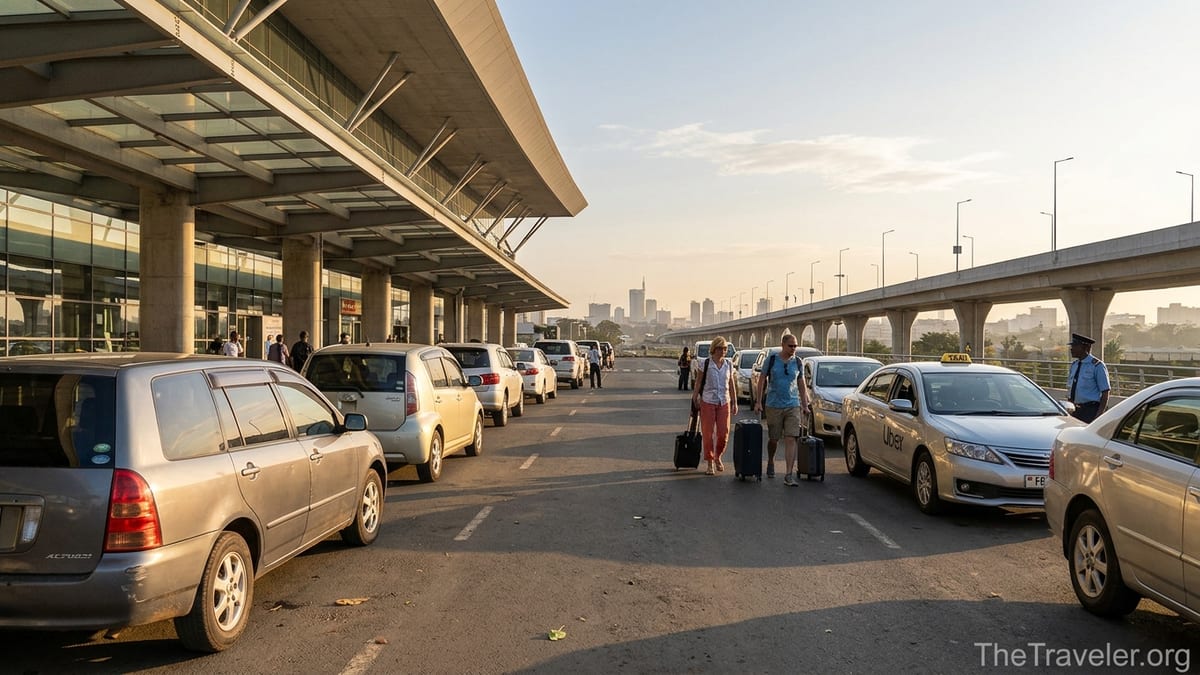
Understanding Your Route: JKIA to Nairobi CBD
Jomo Kenyatta International Airport lies off Mombasa Road, southeast of Nairobi’s central business district (CBD). On paper it is only around 15 kilometers to key downtown landmarks such as the Kenyatta International Convention Centre and the Kenya National Archives, but Nairobi’s chronic traffic congestion can turn that short distance into a slow crawl. At quiet times late in the evening or early in the morning, motorists report reaching the CBD in about 20 to 30 minutes. In rush hour, especially weekday mornings heading into town, the same journey can stretch to 60 minutes or more.
The Nairobi Expressway, a tolled elevated road, now connects the airport side of the city to central and western districts. It was built specifically to bypass the worst of Mombasa Road traffic and has cut typical airport-to-city travel times to around 15 to 25 minutes when used end to end. Many ride-hail drivers and private transfer companies will suggest the Expressway automatically during peak hours and add the toll to your bill or include it in a fixed fare.
Most visitors staying in the city center will be heading to hotels in the CBD, Upper Hill or Westlands. Upper Hill lies slightly south of the CBD and is popular for business hotels, while Westlands is a major commercial and nightlife hub to the northwest. Fares from JKIA rise modestly with distance, so getting from the airport to a CBD hotel is usually cheaper than going on to Westlands or Kilimani. Expect transfer times of 30 to 50 minutes to the CBD, 40 to 60 minutes to Upper Hill and 45 to 70 minutes to Westlands, with the lower end of the range if you use the Expressway and avoid rush hour.
When comparing options, keep in mind that the airport has multiple terminals and separate pick-up points for ride-hailing and taxis. International flights commonly use Terminal 1A, while some regional services use Terminals 1B, 1C or 1D. Walking between terminals is straightforward but can be tiring after a long flight, so it helps to know in advance whether your driver will meet you inside arrivals or at a designated app pick-up zone outside.
Uber, Bolt and Other Ride-Hailing Apps
Ride-hailing apps such as Uber and Bolt are among the most popular ways to travel from JKIA into Nairobi. They operate 24 hours a day and generally cost less than official airport taxis. As of mid 2026, typical quoted fares from JKIA to central Nairobi on Uber or Bolt fall in the approximate range of 1,200 to 2,200 Kenyan shillings for a standard car, depending on time of day, demand and whether you use the Nairobi Expressway. Prices can be higher late at night or in heavy rain, when surge pricing sometimes kicks in.
Using these apps is straightforward if you already have them on your phone. After collecting your luggage and stepping into the public arrivals area, connect to airport Wi-Fi or a local Safaricom or Airtel SIM. Open the app, set your pickup as “Jomo Kenyatta International Airport” or the specific terminal, then enter your hotel name or address in Nairobi CBD. The app will show a fare estimate and usually indicates whether tolls such as the Expressway are included or payable in cash. For a real-world example, travelers frequently report Uber rides from JKIA to hotels near Kenyatta Avenue or Moi Avenue for around 1,500 to 1,800 shillings off-peak, rising closer to 2,000 or slightly more in busy periods or to Westlands.
There are some practical nuances to be aware of. Drivers sometimes call immediately after accepting the trip to confirm your exact terminal and ask whether you are willing to pay the Expressway toll. If you agree, they may pay the toll using an electronic tag and then request reimbursement in cash or via M-Pesa. Payment by card is supported on some accounts, but many visitors find that paying in cash or using a local M-Pesa wallet is more reliable in Kenya than relying solely on foreign bank cards. It is wise to withdraw a small amount of local currency at the airport ATM before ordering your ride.
For safety, check the driver’s name, license plate and car model in the app before getting into the vehicle, and only meet the car in the well-lit, signposted pick-up areas. Many frequent visitors recommend sitting in the back seat, keeping bags on the floor rather than the seat, and avoiding sharing personal details or your full itinerary with the driver. If anything feels off, you can cancel and order another car. Despite occasional reports of drivers informally asking for more money than the app fare, the in-app price remains the best reference; you can politely insist on paying what is shown, plus any clearly agreed tolls.
Airport Taxis and Official Taxi Stands
Official airport taxis remain a visible and convenient option at JKIA, especially for travelers who prefer to arrange everything face to face. You will find a line of licensed taxis just outside the arrivals halls, usually with uniformed drivers and vehicles displaying airport taxi branding. These cars operate on fixed or negotiable fares agreed before departure rather than on a meter. For a standard saloon car from JKIA to the city center, a broad, recent range runs from roughly 1,800 to 3,000 shillings, depending on the company, time of day and whether the Expressway toll is included.
The main advantage of airport taxis is simplicity. After a long overnight flight, walking directly to an official stand and asking for “Nairobi CBD” or naming your hotel can be faster and less stressful than dealing with apps or local SIM cards. For example, a tired traveler arriving from Europe at 3 a.m. might accept a quoted taxi fare of 2,500 shillings to a central hotel just to get moving without fiddling with their phone. Many of these taxis can also accommodate larger luggage or odd-sized items more easily than compact app-based cars.
The downside is cost and, occasionally, aggressive touting from unlicensed drivers. You may encounter individuals in the arrivals hall or just outside calling out “taxi” and offering a ride at seemingly attractive prices. It is safer to ignore these and head for the marked official taxi desk or rank. There, you can ask for a printed or clearly written fare to your destination. If the price seems high, you can politely decline and either negotiate or step away to order an Uber or Bolt to compare. Genuine airport taxis understand that visitors now have alternatives and are often willing to adjust within reason, especially off-peak.
As with ride-hailing, using the Expressway with an airport taxi can significantly cut travel time. Some companies now offer a clear option such as “CBD via Expressway” at a slightly higher fixed rate. If this is not mentioned, ask whether the quoted price includes tolls and how much faster the journey is likely to be at that time of day. This helps you weigh a slower, cheaper drive along Mombasa Road against the time-saving but slightly more expensive Expressway route.
Private Transfers and Hotel Shuttles
For travelers who value predictability, a pre-booked private transfer is often the most stress-free way to get from JKIA to Nairobi’s city center. Numerous local tour operators and chauffeur services offer airport pickup packages that include meet-and-greet inside the terminal, assistance with luggage and a guaranteed fixed fare to your hotel. Recent sample rates from Nairobi-based transfer companies show prices from around 2,500 shillings for a basic sedan up to higher amounts for SUVs or minivans, depending on distance and vehicle type.
Private transfers are especially popular with families, small groups and business travelers attending conferences in the CBD or Upper Hill. A visiting team of four, for instance, might reserve a minivan to the Hilton Garden Inn or a similar central hotel, paying a single agreed price that covers everyone and includes Expressway tolls. This can be good value compared with ordering two separate ride-hail cars and eliminates uncertainty about whether large bags or equipment will fit. Many operators also monitor flight arrivals and adjust pick-up times if your plane is delayed.
Hotel shuttles form another convenient middle ground. Several mid-range and upmarket hotels in and around the city center, such as international chains in Upper Hill or Westlands, offer paid airport transfers arranged directly with the property. These are typically billed per vehicle, not per person, and can range from roughly 2,000 to 4,000 shillings for a standard car, with higher rates for larger vans. For example, a centrally located business hotel might quote 3,000 shillings each way for a private airport pick-up, with the driver waiting outside customs holding a sign with your name.
When comparing private transfers and hotel shuttles, pay attention to what is included. Some quotes are all-inclusive door-to-door prices that cover tolls, parking and waiting time, while others may add Expressway fees or late-night surcharges separately. It is wise to confirm in writing whether your driver will use the Expressway and whether there are extra costs for significant flight delays. For peace of mind, especially if arriving alone at night or with children, the reassurance of a known driver and a vehicle booked under your name can outweigh a modest price premium.
Public Transport, Buses and Matatus
Budget-conscious travelers sometimes look to public transport options from JKIA into Nairobi. While possible, these options require more local knowledge and are less comfortable, especially with heavy luggage. There are city buses and matatus, the shared minivans that function as informal public transport, serving the general airport corridor. Routes such as Kenya Bus or Citi Hoppa services toward the CBD, as well as matatus operating via Mombasa Road, can cost only a fraction of a taxi fare, often under 200 shillings for the journey.
In practice, however, there are limitations. Buses and matatus rarely pick up directly outside the main international terminal doors. You may need to walk to a nearby stop on the main airport access road, sometimes crossing busy traffic. Vehicles can be crowded, with limited space for suitcases, and schedules are flexible rather than fixed. During rush hours, standing for long stretches in a packed matatu after a long flight is uncomfortable, and petty theft is a greater concern in crowded public vehicles.
There have been experimental airport express buses and electric buses passing through the airport corridor toward the CBD, but services and routes change over time. For example, an electric bus operating under a local company might serve Jomo Kenyatta International Airport and continue to the city center via key stops, offering a cleaner and relatively modern ride. These services can be promising but may not operate late at night, and information at the airport about routes and timetables is limited.
For most short-term visitors, especially those carrying large luggage or arriving after dark, public buses and matatus are better used for exploring Nairobi once you are already settled and know the city a little, rather than as a first transfer from the airport. If you are determined to use them for cost reasons, seek up-to-date advice from local contacts or your hotel, travel light and avoid displaying valuables. It is often more sensible to pay for at least one secure transfer into town and then experiment with public transport on later days.
Nairobi Expressway, Traffic Patterns and Timing Your Trip
The Nairobi Expressway has transformed the experience of traveling between JKIA and the city center. This elevated toll road runs roughly 27 kilometers, linking the airport side of the city with central and western neighborhoods such as Westlands. Its design is intended to reduce airport-to-CBD travel times dramatically, and many travelers now report consistent journeys of around 15 to 25 minutes when using the Expressway outside of exceptional congestion or incidents.
Toll charges vary by entry and exit point and by vehicle category. For a standard car going from the airport area to central Nairobi interchanges, the toll adds a modest extra cost on top of your ride fare, often in the range that brings total Expressway-inclusive rides from JKIA to the CBD to somewhere between 1,500 and 2,500 shillings when using Uber, Bolt or a private transfer. Some services incorporate the toll into a fixed package price, while ride-hail drivers may ask you to reimburse the toll separately. Always clarify before setting off whether the toll is covered by the quoted fare.
Understanding Nairobi’s traffic rhythm can help you choose the right transfer strategy. Weekday mornings between roughly 7 a.m. and 9:30 a.m. inbound to the city, and evenings between about 4:30 p.m. and 7:30 p.m. outbound, see the heaviest congestion on Mombasa Road and in the CBD. During these times, using the Expressway is often worth the extra shillings, saving you 20 to 40 minutes compared with the old surface roads. Late evenings, early afternoons and weekends tend to be calmer, when even non-Expressway routes may flow reasonably well.
If your flight lands in the early hours, for instance at 1 a.m. or 2 a.m., the city is usually quiet and you may not need the Expressway at all. In such cases, an ordinary Uber or airport taxi along Mombasa Road may get you to a central hotel in 20 to 30 minutes. On the other hand, an arrival at 7:30 a.m. on a weekday, just as commuter traffic peaks, is a classic scenario where pre-booking a transfer that includes Expressway access can significantly improve your first impression of Nairobi.
Luggage, Group Travel and Special Situations
Your choice of transfer from JKIA into Nairobi should also reflect how much luggage you have and who you are traveling with. A solo traveler with a backpack and one rolling suitcase will usually fit easily into a standard Uber or Bolt, whereas a family of four with multiple large bags might find a compact sedan uncomfortably tight. When using apps, consider choosing a larger vehicle category if available, such as an SUV or van, even if it costs a little more. With airport taxis and private transfers, specify your luggage volume and ask for a station wagon or minivan if necessary.
For small groups, a pre-booked van can be more cost-effective and efficient than multiple ride-hail cars. For example, three friends traveling together for a safari might arrange a single minivan airport transfer to a central hotel or safari operator’s office, splitting a 4,000-shilling fare three ways. That works out similar to or cheaper than ordering three separate app cars, while keeping everyone together and simplifying coordination.
Travelers with bulky sports equipment, such as golf bags or camera gear, or those carrying exhibition materials for conferences, benefit from the predictability of private transfers or hotel shuttles. You can confirm in advance that the vehicle is suitable and that the driver understands any handling requirements. Likewise, if you are traveling with young children and need child seats, it is rare to find them in standard airport taxis or ride-hail cars at short notice. Some specialized transfer companies can provide them if requested during booking.
Accessibility is another important consideration. Nairobi is gradually improving accessibility, but wheelchair-accessible vehicles are still not widely available on demand. Some ride-hailing platforms list specific accessible options in limited numbers, but it is safer for travelers with mobility challenges to coordinate with a hotel or specialist operator well in advance. Always ask for details such as ramp availability, door width and whether the driver is trained in assisting passengers with disabilities.
Staying Safe From Arrivals Hall to Hotel Lobby
JKIA and the main transfer routes into Nairobi are heavily used by both locals and international visitors, and security is a visible priority. That said, like in any large city, opportunistic crime does occur, and sensible precautions are essential from the moment you exit customs. The busiest risk points are the arrivals hall, the curbside outside the terminal and any crowded public transport stops. Keeping your phone and wallet out of sight when you step into the public area, and avoiding juggling multiple bags while looking lost, goes a long way toward making you a less attractive target.
One common scenario is persistent offers of unofficial taxis or assistance. Individuals may approach you claiming to work for an “airport taxi” or “tour company” and offering “special prices” to the city. While some may be genuine drivers hustling for business, you have no way to verify their credentials in the moment. It is safer to either use a clearly signposted official taxi stand, a pre-booked transfer with a named driver holding a sign, or a ride-hailing app that displays the driver’s details. Politely declining unsolicited approaches and moving purposefully toward your chosen option is usually enough to avoid pressure.
Once in a vehicle, basic travel street smarts apply. Keep your smaller bags, passports, laptops and cameras on the floor behind your legs rather than visible on the seat next to an open window. Avoid counting large amounts of cash or displaying expensive electronics during the ride, especially when stuck in slow traffic where windows may be down. Some travelers prefer to lock the doors and keep windows mostly closed in busier sections of Mombasa Road and central Nairobi to reduce the risk of reach-in theft.
At night, particularly if you arrive after midnight, many locals and frequent visitors recommend going directly from the airport to your hotel rather than making additional stops. If you need cash, use ATMs in the terminal rather than in isolated locations en route. Inform your hotel of your approximate arrival time and room reservation so that late check-in is smooth. Nairobi is generally welcoming and many journeys are uneventful, but a cautious approach on your first trip makes it easier to relax and enjoy the city once you are settled in.
The Takeaway
Getting from Nairobi’s Jomo Kenyatta International Airport to the city center has become significantly easier in recent years, thanks to the Nairobi Expressway and the growth of ride-hailing and transfer services. For most visitors, Uber or Bolt offer the best balance of price, convenience and flexibility, with fares to the CBD commonly falling around the mid four-figure shilling mark. Official airport taxis remain a straightforward choice for those who prefer to arrange things in person, while private transfers and hotel shuttles provide added comfort and predictability, especially after a long-haul flight or when traveling in a group.
Public buses and matatus are by far the cheapest options but demand more confidence with local transport, offer less room for luggage and are less suitable for night-time arrivals or first-time visitors. Whichever mode you choose, planning ahead pays off. Checking your hotel’s transfer options, downloading ride-hailing apps before you travel and having a small amount of local currency ready will make your arrival in Nairobi smoother.
Above all, keep safety and timing in mind. Avoid unlicensed taxis, verify your driver and vehicle, keep valuables out of sight and, when traffic is heavy, consider paying a little extra for the Expressway to turn a frustrating crawl into a brisk drive. With the logistics from airport to city sorted, you can focus on what matters most: enjoying Nairobi’s dynamic neighborhoods, parks, restaurants and cultural attractions once you arrive.
FAQ
Q1. How long does it take to get from JKIA to Nairobi city center?
In light traffic, using the Nairobi Expressway, the trip can take around 20 to 30 minutes. In peak rush hour on regular roads, it can extend to 45 to 60 minutes or more.
Q2. How much should I expect to pay for an Uber or Bolt from JKIA to the CBD?
Typical rides for a standard car usually fall in the approximate range of 1,200 to 2,200 Kenyan shillings, depending on time of day, demand and whether Expressway tolls are included.
Q3. Are airport taxis at JKIA safe to use?
Official airport taxis from the marked stands are generally considered safe. Agree the fare before departure, avoid unlicensed touts and confirm whether any Expressway tolls are included.
Q4. Is the Nairobi Expressway worth paying for?
At busy times, the Expressway can save 20 to 40 minutes compared with regular surface roads, so many travelers find the extra cost worthwhile, especially on weekday mornings and evenings.
Q5. Can I use public buses or matatus from JKIA to the city?
Yes, but they are less comfortable and convenient, particularly with heavy luggage. Stops are not directly at the terminal, vehicles can be crowded and schedules are not always clear to newcomers.
Q6. What is the safest option for a solo traveler arriving at night?
A pre-booked private transfer or hotel shuttle is usually the safest and most reassuring choice. Alternatively, ordering an Uber or Bolt from inside the terminal once you have Wi-Fi also works well.
Q7. Do hotels in Nairobi offer airport shuttles?
Many mid-range and upscale hotels in the CBD, Upper Hill and Westlands offer paid airport transfers. It is best to request details and prices when you book your room.
Q8. How should I pay for my transfer from the airport?
Having some Kenyan shillings in cash is very useful, as not all drivers accept foreign cards. Some ride-hailing trips can be paid by card or via local mobile money such as M-Pesa.
Q9. Can I arrange a transfer for a group with lots of luggage?
Yes. Many transfer companies and hotels can provide minivans or larger vehicles. When booking, specify the number of passengers and size of luggage so they send a suitable vehicle.
Q10. Is it safe to walk around central Nairobi after arriving?
It is generally better to take a car, especially at night or when carrying luggage. Once checked in, ask your hotel for current advice on areas that are comfortable to walk in and at what times.