


Natural Habitat Adventures, often shortened to “Nat Hab,” has become one of the most visible names in high-end wildlife travel, from polar bear tours in Churchill to Galapagos expeditions and African safaris. Before you lock in a trip that can easily run into five figures for two people, it pays to understand what the company does well, who it is designed for, and where its trips may or may not match your expectations or budget.
Get the latest updates straight to your inbox!
Who Natural Habitat Adventures Is, And Who It Is Not For
Natural Habitat Adventures was founded in 1985 and specializes in small-group, nature-focused expeditions, usually at the higher end of the market. The company is now majority-owned by Lindblad Expeditions, a well-known expedition cruise line, which positions Nat Hab as the land-based counterpart to Lindblad’s ship-based trips. In practical terms, that means you are booking with an established player that is used to operating in remote destinations, from Alaska’s Katmai region to Tanzania’s Serengeti and the Arctic archipelago of Svalbard.
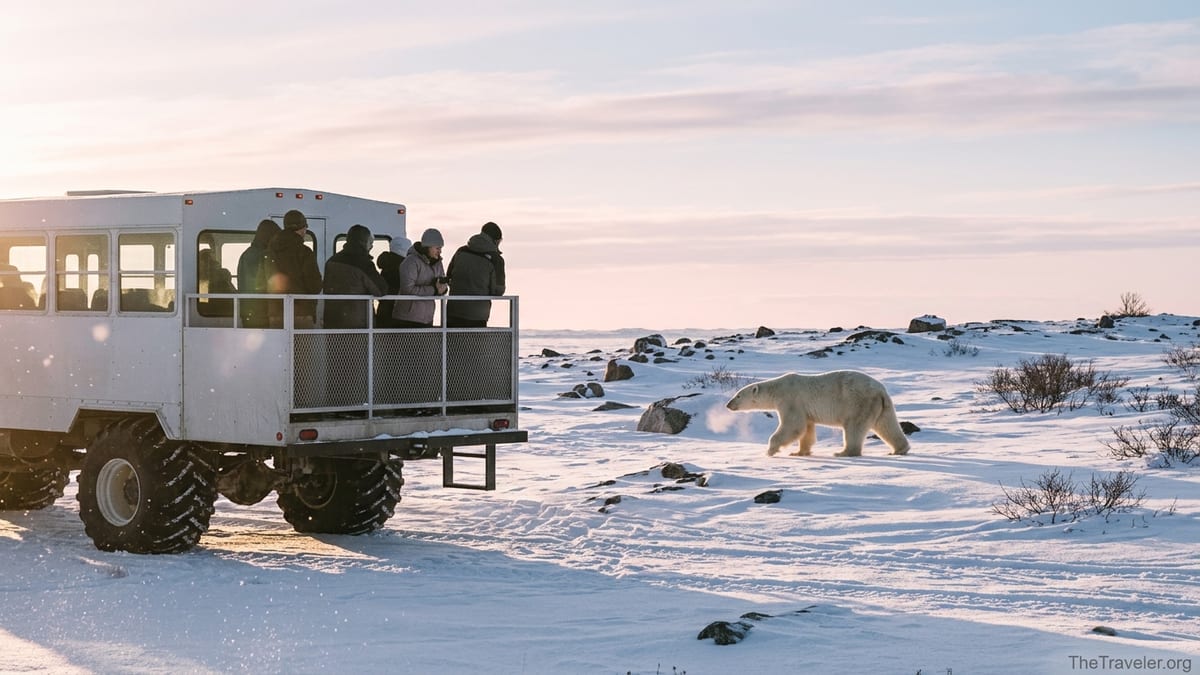
Nat Hab’s itineraries are aimed at travelers who care more about wildlife access and guiding than about resort-style amenities. A classic example is their flagship polar bear tour in Churchill, Manitoba, typically a 6 or 7 day trip in October or November, starting around the high seven-thousands of dollars per person plus air. Rather than staying in a big hotel and taking day-trips, guests often spend multiple nights out on the tundra or in small lodges to maximize time near the bears. That is very different from a coach tour or cruise that “samples” wildlife between other activities.
All of this means Nat Hab is not a budget operator or a casual sightseeing choice. Many guests are comfortable travelers in their 40s through 70s, often with the time and resources to prioritize a single “trip of a lifetime” each year. If your main goal is a beach holiday with some wildlife on the side, a mass-market tour operator or independent planning will likely fit your style better and cost much less.
On the other hand, if you are the traveler who has been saving for years to photograph grizzlies fishing for salmon in Alaska, watch a jaguar along the river in Brazil, or sleep near a penguin colony in Antarctica, Nat Hab is squarely targeting you. Understanding this focus at the outset will help you evaluate whether their trips match the type of travel you actually enjoy.
Trip Styles, Destinations, And What “Small Group” Really Means
Nat Hab divides its offerings into themes like photo expeditions, active adventures, women’s journeys, and easier trips, but the common thread is small, set-departure group travel. Group size is typically kept low, often in the range of 8 to 16 travelers depending on destination and vehicle capacity. For example, a polar bear photo expedition might cap the group at 16 because that is the comfortable limit for a tundra vehicle where everyone still has good sightlines for photography.
Destinations span high-profile wildlife hotspots. In North America, that includes polar bears and belugas around Churchill, brown bears in Alaska, and wolves in Yellowstone. Internationally, you see Galapagos cruises on small vessels, African safaris in Botswana and Tanzania, India tiger trips, Iceland and Greenland expeditions, and remote polar itineraries in Svalbard and on the Antarctic Peninsula. You are generally not choosing between dozens of departure dates for each itinerary; instead, there are select windows that line up with seasons, like the mid-October to mid-November peak for polar bear viewing near Hudson Bay.
The small-group nature of the trips means you should be comfortable spending long days in close quarters with others, whether in a Land Cruiser, on a small ship, or in a remote lodge. In practice, that can be a highlight or a drawback. Some travelers report forming lasting friendships and enjoying the shared excitement when a leopard is spotted or the northern lights appear. Others simply prefer more independence and might find a fixed group schedule limiting. Think honestly about how you like to travel before committing to several days or weeks with strangers.
“Small group” also affects logistics. When your group of a dozen travelers arrives at a family-run safari camp in Botswana or a small lodge in Costa Rica, you are often the only guests. That can mean highly personalized service and an immersive atmosphere, but it can also mean there is no backup restaurant next door if you are not fond of the day’s menu. For some, that is part of the adventure; for others, it can feel restrictive.
Pricing, Value, And What You Actually Get For The Money
Even by safari and expedition standards, Natural Habitat Adventures sits toward the premium end of the price spectrum. As a rough reference point, a 6 or 7 day polar bear trip around Churchill is typically priced in the neighborhood of 7,500 to 8,000 US dollars per person plus flights. Many of the marquee African safaris and polar voyages climb well into five figures. Travelers who have compared costs sometimes note that several weeks of independent travel in a region, staying in mid-range guesthouses and arranging local tours, can cost roughly the same as a couple of weeks with a company like Nat Hab.
To understand whether that price represents fair value for you, examine what is included line by line. Many Nat Hab trips wrap in internal or charter flights, airport transfers, park fees, most meals, guiding, and activities like game drives or Zodiac outings. On a Churchill polar bear itinerary, for instance, the round-trip charter flight from Winnipeg to Churchill, daily tundra vehicle excursions, winter gear loans, and guided cultural activities in town can all be bundled into the headline rate. When you strip those items out and price them independently, the gap between a premium guided tour and a do-it-yourself trip narrows, though it rarely disappears entirely.
Where Nat Hab justifies the remaining premium is in low group size, access to high-caliber naturalist guides, and accommodations that are often selected more for location and character than for sheer luxury. Think of simple yet well-run ecolodges on the edge of wildlife reserves, small ships with naturalist lecture programs, or tundra lodges that literally sleep you out in the bear country, rather than business hotels or big-group cruise ships. If you are primarily price-driven, you will almost always be able to find cheaper operators visiting some of the same regions, especially in places with many local safari companies. If your priority is a tightly curated wildlife-focused experience with many inclusions and little on-the-ground decision making, the upfront cost can make more sense.
One point to investigate carefully before you book is how the company handles pricing transparency. Some travelers appreciate a detailed breakdown of what is included and what is extra, such as single supplements, gratuities, optional activities, or specialty gear rentals. If your budget is tight or you dislike surprise charges, ask a Nat Hab adventure specialist for a full list of out-of-pocket costs and tipping guidelines for your specific itinerary before you put down a deposit.
Conservation, WWF Partnership, And How Responsible The Trips Really Are
Natural Habitat Adventures markets itself as a conservation travel company, with “conservation through exploration” as a core mission statement. One of its key selling points is a formal partnership with the World Wildlife Fund that dates back to the early 2000s. Nat Hab positions its trips as a way for travelers to support WWF’s work in places like the Arctic, the Amazon, and African wildlife corridors, and the company highlights millions of dollars in contributions related to this partnership.
For a prospective guest, the important question is what this looks like on the ground. On many itineraries, you can expect a strong educational component. That can take the form of talks on climate change in polar regions, briefings on anti-poaching efforts in African parks, or visits with local community projects that benefit from tourism revenue. The pace of excursions is often designed to maximize time in the field observing wildlife, with guides trained to respect viewing distances and to prioritize animal welfare over “getting the shot” at all costs.
The company also promotes sustainability measures such as carbon offsetting for its operations and attention to waste reduction and local sourcing. In destinations like Churchill, Nat Hab typically partners with local outfitters, Indigenous-owned businesses, or regional hotels for services such as dog-sled outings or cultural tours. In remote ecosystems like the Galapagos, where regulations limit group sizes and dictate approved landing sites, established operators such as Nat Hab tend to be more experienced at complying with strict park rules than a fly-by-night budget agency might be.
That said, any long-haul, small-group wildlife trip still carries a significant environmental footprint, particularly when multiple flights are involved. If you are weighing whether a Nat Hab trip aligns with your own values, look beyond headline claims and ask practical questions: How many internal flights are included? What specific conservation projects, if any, your chosen itinerary supports? Are guides and camp staff locally hired and fairly paid? The answers can help you decide whether the company’s conservation narrative feels meaningful or merely promotional.
Booking Experience, Group Dynamics, And What Past Travelers Say
At this price level, customer service and communication matter as much as the itinerary. Nat Hab relies heavily on “adventure specialists” who help you choose and book a trip, answer packing and health questions, and coordinate travel details. Reviews from recent years frequently praise these staff for being responsive and knowledgeable, especially when first-time safari-goers or polar travelers are uncertain about gear and fitness requirements.
Group dynamics are an area that every group tour company wrestles with, and Nat Hab is no exception. On a remote trip with 10 or 12 other guests, your experience can be shaped as much by your fellow travelers as by the wildlife sightings. Some guests recount groups that gelled quickly, with shared sundowners in Botswana and informal photo-sharing sessions on the ship after a day in the Galapagos. Others have found themselves paired with travelers whose expectations or personalities did not mesh well. Because these trips are typically nonrefundable close to departure and often sold out, switching groups late in the process may not be an option.
Reading a spread of independent reviews, from glowing multi-trip loyalists to more critical voices, is essential to calibrate expectations. Positive feedback often centers on guides going above and beyond, like repositioning a schedule to catch a clear-window northern lights display or arranging an impromptu stop at a village market. Critical comments sometimes point to perceived nickel-and-diming, misunderstandings about whether internal flights were included, or disappointment when rare species such as tigers or wolves proved elusive despite the cost of the trip.
If you are sensitive to group dynamics or have particular interests, consider calling the company to ask about the typical demographic for the departure you are considering. A dedicated photo departure, for instance, may skew heavily toward serious photographers carrying long lenses and expecting more time spent at each sighting. A “family” or “easier adventure” date may draw a broader mix, including multi-generational groups and travelers less interested in pre-dawn starts.
Comparing Nat Hab With Independent Travel And Other Operators
For almost every Nat Hab itinerary, from safari circuits to polar bear viewing, there are three broad alternatives: doing it largely on your own, working with a local or regional operator, or booking with a different international specialist. Each path trades off cost, control, risk, and comfort in different ways.
Independent travel will almost always be the cheapest on a per-day basis. In Costa Rica, for example, you can rent a car, book mid-range lodges near national parks, and hire local guides for day hikes and boat trips. With careful planning, a couple could spend several weeks exploring cloud forests, volcanic areas, and wildlife-rich coasts for what a two- or three-week guided expedition might cost. The trade-off is that you shoulder the research, logistics, and risk if something changes on the ground, such as a washed-out road or a local flight cancellation.
Working directly with regional safari outfits or polar operators can provide a middle path. In Tanzania, for instance, there are many well-reviewed local companies that arrange custom safaris using the same or similar camps used by international brands. In Churchill, you can book day trips on tundra vehicles directly with local outfitters, then arrange your own hotel and flights. This approach can cost significantly less than a premium all-inclusive package but still gives you professional guiding and a structured daily plan. The trade-off is that you must vet operators carefully, especially when an unusually low price is involved.
Booking with other international wildlife-focused operators is the most direct comparison. Companies like Wilderness Travel, small expedition cruise lines, or niche ecotourism brands offer itineraries that overlap with Nat Hab’s footprint. Differences may come down to group size, lodge partnerships, ship choice, guiding style, and how strongly they emphasize conservation. If you are looking at a high-ticket trip such as a Svalbard voyage or multi-country African safari, it can be worth pricing one or two direct competitors and asking detailed, side-by-side questions about inclusions, guide qualifications, and maximum group size before deciding.
How To Decide If A Nat Hab Trip Is The Right Fit For You
Before putting down a deposit, step back from the glossy brochure photos and ask a few practical questions about your priorities. First, clarify your main goal. Are you hoping to tick off a famous destination like the Galapagos, or are you deeply focused on a particular wildlife experience such as photographing polar bears in the snow or tracking mountain gorillas? Nat Hab itineraries are usually designed around wildlife first and foremost, not shopping, nightlife, or resort downtime. If you want a more mixed-focus holiday, you might prefer to add a Nat Hab-style expedition onto a longer independent trip instead of making it your entire journey.
Second, think about your tolerance for structure. On a Nat Hab trip, the days are usually well programmed: early wake-ups, fixed mealtimes, and a set sequence of activities designed to take advantage of wildlife behavior and light. Some travelers find this liberating because they do not have to plan anything and can simply show up. Others may chafe at not being able to linger in a village, skip a morning outing, or rearrange days on a whim. If unstructured travel energizes you, a fully guided expedition might feel confining after several days.
Third, evaluate your budget in the context of your overall travel plans. If you typically take several shorter, inexpensive trips a year and are considering swapping them for one Nat Hab expedition, ask whether the wildlife-focused, guided style of the tour really matches the kind of experiences you remember most fondly. Sometimes travelers discover that they value a handful of intense, expert-led wildlife experiences interspersed with more relaxed, independent adventures; in that case, saving a Nat Hab trip for a bucket-list destination and planning the rest of the region on your own can be a satisfying compromise.
Finally, pick up the phone. A detailed conversation with a company representative can reveal a lot about fit. Ask probing questions about typical age range, physical demands, how often trips run slightly below maximum capacity, and what happens if weather or wildlife does not cooperate. Listen not only to the answers but to how candid they feel. A good match between your expectations and the company’s style is the single biggest factor in whether the trip ends up feeling worth what you paid.
The Takeaway
Natural Habitat Adventures occupies a specific niche in the travel world: premium-priced, small-group, conservation-branded wildlife expeditions, often in remote or fragile ecosystems. The company brings decades of experience, a formal partnership with the World Wildlife Fund, and the backing of a major expedition cruise brand. For travelers who value expert guiding, thoughtful logistics, and a strong focus on wildlife and conservation, those strengths can justify the cost.
At the same time, Nat Hab trips are not the right solution for every traveler or every destination. Independent travel, local operators, and alternative international brands can all deliver memorable experiences for less money or with more flexibility, especially if you are comfortable taking on more planning and risk yourself. Before you book, be honest about your budget, your travel style, and how much structure and social interaction you want during a trip.
If you decide that a Natural Habitat Adventures itinerary aligns with what you are seeking, the next steps are straightforward: choose the right destination and season, confirm what is included in the price, and ask detailed questions about daily schedules and physical requirements. Enter with clear expectations and a sense of what you are paying for, and a Nat Hab journey can deliver the kind of deep, nature-immersive experience that lingers long after you return home.
FAQ
Q1. How expensive are Natural Habitat Adventures trips compared with other options?
Prices vary widely by destination, but Nat Hab generally sits at the higher end of the market. A week-long polar bear trip in Canada can run in the high four figures per person before international flights, and more complex safaris or polar voyages often cost significantly more. You can usually travel independently or with strictly local operators for less, but you may give up some conveniences, guiding quality, or small-group structure.
Q2. What kinds of travelers are Nat Hab trips best suited for?
Nat Hab trips tend to fit travelers who prioritize wildlife encounters, expert guiding, and conservation over nightlife, shopping, or resort-style amenities. Guests are often well-traveled, willing to accept early mornings and sometimes basic comforts in exchange for access to remote areas, and comfortable spending many days with a small group. If that describes you and your budget allows, Nat Hab can be a strong match.
Q3. Are Natural Habitat Adventures trips suitable for children or older travelers?
Some itineraries are family-friendly and welcome children, particularly in destinations like Costa Rica or select African safaris, while others are better suited to adults due to remoteness or physical demands. Older travelers regularly join Nat Hab trips, but should pay close attention to walking distances, vehicle time, and climate conditions. It is important to discuss mobility or health issues with the company before booking so they can advise on appropriate departures.
Q4. How much free time will I have on a typical Nat Hab itinerary?
Schedules are usually fairly structured because wildlife viewing is best at specific times of day and in particular places. Expect early starts, planned excursions, and set meal times, with pockets of downtime between outings or in the evenings. If you prefer long, unplanned days to wander on your own, you may find the format more rigid than you like.
Q5. What is included in the trip price, and what will I pay extra for?
Most Nat Hab trips include accommodations, most meals, guiding, park fees, internal transportation, and many activities. You should budget separately for international flights, some beverages, tips for guides and staff, travel insurance, personal gear, and optional extensions or add-ons. Always request a detailed inclusions list and estimated tipping guidelines for your exact departure.
Q6. How does the partnership with the World Wildlife Fund affect my trip?
The WWF partnership primarily shows up through an emphasis on conservation education and financial support for WWF’s work. On many trips you will hear about local conservation challenges, visit projects, or learn how your travel dollars contribute. It does not mean that every aspect of the trip is run by WWF, but it does signal a shared focus on responsible wildlife tourism.
Q7. What happens if we have bad weather or do not see the animals we hoped for?
Nat Hab itineraries are designed around the best seasons and locations for particular wildlife, but sightings can never be guaranteed. Guides may adjust daily plans within reason to account for weather or animal movements, but the company does not usually offer refunds based solely on missed sightings or poor weather. If a major disruption occurs, such as a canceled internal flight, staff will work on alternate arrangements, but outcomes depend on local conditions and availability.
Q8. How far in advance should I book a Natural Habitat Adventures trip?
For marquee departures like polar bears in Churchill, prime-season safaris, or polar voyages, travelers often book many months to a year or more in advance because group sizes are small and dates are limited. Shoulder-season departures and less well-known itineraries sometimes have availability closer in, but if you are locked into specific vacation dates, booking early is wise.
Q9. Can I travel solo on a Nat Hab trip, and will I have to share a room?
Solo travelers are welcome, and you can usually choose between paying a single supplement for your own room or, on some departures, sharing with another guest of the same gender if a match is available. Single supplements can be significant on small-group trips because lodging costs are often based on double occupancy, so factor that into your budget.
Q10. How do Nat Hab trips compare with booking directly with local operators?
Booking directly with local operators can reduce costs and give you more control over the itinerary, but it typically involves more research, coordination, and risk management on your part. Nat Hab’s value lies in pre-vetted lodges and guides, a cohesive itinerary, structured conservation elements, and support before and during the trip. The best choice depends on your comfort with planning, your budget, and how much you value having a single company handle the logistics.