


More news on this day
Boston Logan International Airport saw nearly 100 flight delays on Tuesday as airlines worked to recover from a major air traffic control equipment outage that had rippled across the Northeast a day earlier, snarling schedules from New York to Philadelphia and pushing aircraft and crews out of position.
Get the latest news straight to your inbox!
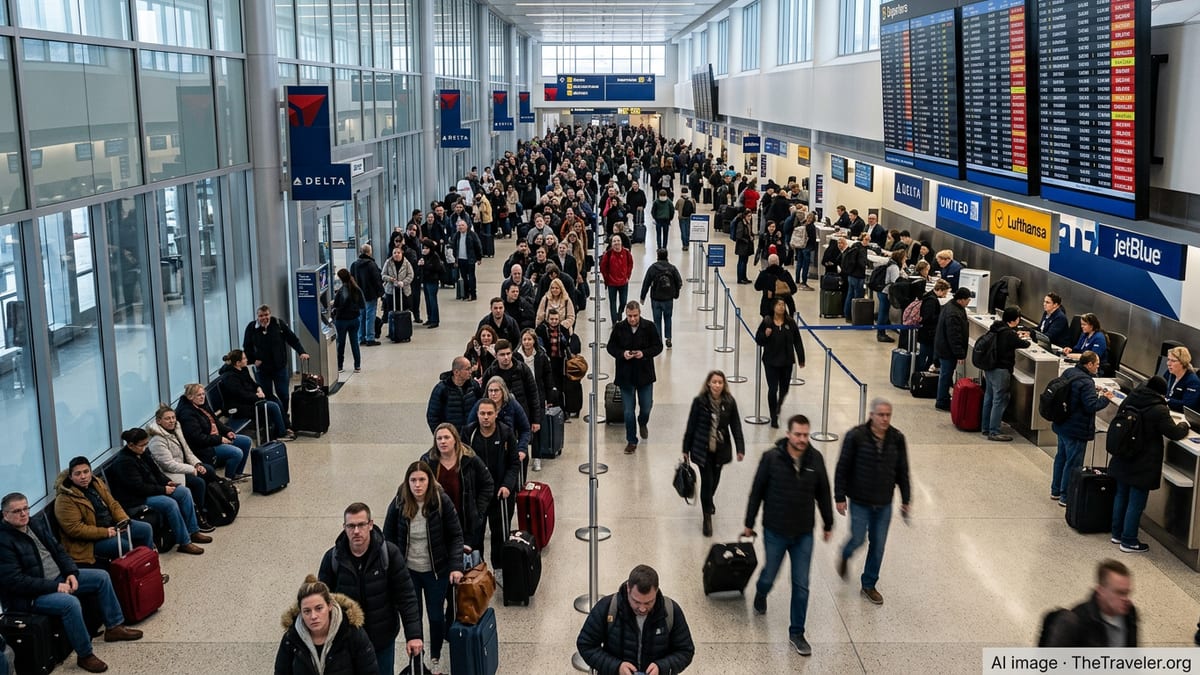
Lingering disruption after Monday’s widespread ground stops
Publicly available flight-tracking data and local coverage indicate that the worst operational impacts at Logan occurred on Monday, when nearly 500 flights were delayed and close to 80 were canceled after a fiber line serving a key air traffic control facility was accidentally cut in New Jersey. That telecommunications failure limited the ability of controllers to manage traffic flows into some of the country’s busiest airspace, prompting ground stops and delay programs at major hubs across the Northeast.
Coverage from regional outlets such as the Boston Globe and NBC Boston shows that Logan’s runways were also handling a wave of diverted flights from New York and New Jersey as the outage unfolded. With additional aircraft arriving unexpectedly and scheduled departures held on the ground, gate space grew tight and queues for takeoff lengthened, producing average delays that reached around an hour and 45 minutes for some periods on Monday afternoon.
By early Tuesday morning, reports indicate that the underlying technical problem had been resolved and that the Federal Aviation Administration’s national status page was no longer flagging any large-scale restrictions tied to the outage. Even so, early Tuesday operations at Logan still reflected the previous day’s disruption, with nearly 100 flights delayed as airlines repositioned aircraft, reassembled crews and worked through backlogs of passengers who had been rebooked from canceled or heavily delayed services.
Flight-tracking services such as FlightAware and Flightradar24 continued to show scattered delays through midday Tuesday, though the number and severity of disruptions at Logan were substantially lower than during the peak of Monday’s outage. The pattern matched the broader regional picture, in which airports around New York and Philadelphia also reported improving but still fragile operations as the system reset.
What caused the Northeast air traffic control outage
According to published coverage drawing on federal transportation briefings, the chain of events began when a contractor working for Amtrak in New Jersey severed a critical fiber-optic line that carries communications for air traffic control systems serving the busy Northeast corridor. That cut disrupted connections used by a regional air traffic center to share radar and radio information, forcing controllers to reduce the volume of aircraft moving through affected sectors until backup arrangements could be put in place.
The outage affected equipment that supports arrivals and departures into several major airports, including John F. Kennedy, LaGuardia, Newark Liberty and Philadelphia. With the flow of inbound flights sharply constrained, the FAA implemented ground stops and formal delay programs at those airports for much of Monday, which in turn pushed delays outward to other hubs such as Boston as carriers rerouted aircraft around the congested airspace.
Transportation officials described the issue as a technical infrastructure failure rather than a cybersecurity incident, and public briefings emphasized that safety systems continued to function. However, the reduction in capacity through one of the nation’s most complex and heavily traveled airspace regions had immediate operational consequences, as airlines were forced to hold departures on the ground, extend in-flight holding patterns and divert aircraft to secondary airports including Logan.
Comments from federal aviation leaders in the aftermath of the outage, as reported by national outlets including Axios and the Associated Press, linked the incident to a broader debate over investment in air traffic control technology and communications infrastructure. The episode has renewed attention on how a single point of failure, such as a damaged fiber line, can create cascading effects for travelers across multiple states.
Impact on travelers at Boston Logan
For passengers at Boston Logan, Monday’s outage translated into long waits at gates, missed connections and, in many cases, overnight disruptions to travel plans. Local television and print coverage documented aircraft parked on taxiways awaiting departure slots, full departure boards showing extensive delays and cancellations, and long lines at airline service counters as customers sought rebooking options.
On Tuesday, the situation had improved noticeably but remained challenging for some travelers. Reports from Boston-based outlets indicated that Logan’s operation had shifted from acute disruption to residual recovery, with about 100 flights delayed but relatively few outright cancellations compared with the day before. Many of those delays were tied to aircraft arriving late from other affected cities or to crew scheduling constraints after extended duty days during the outage.
Travelers with early-morning and midday departures on Tuesday were repeatedly encouraged, through airport advisories and local news bulletins, to check flight status before leaving for the airport and to use airline mobile apps or text alerts for real-time updates. With schedules still in flux, some flights that appeared on time overnight picked up short delays by the time passengers reached their gates, especially on routes involving New York, Newark or Philadelphia connections.
As Tuesday progressed, publicly available FAA data for General Edward Lawrence Logan International Airport showed only modest arrival and departure holds, suggesting that the remaining irregularities were largely airline-specific rather than driven by ongoing air traffic control restrictions. For many travelers, however, the knock-on effects of missed connections and rebooked itineraries were expected to extend beyond the day itself.
What travelers should know about future disruptions
The events at Boston Logan and other Northeast airports this week highlight how quickly a localized infrastructure problem can ripple across an interconnected aviation system. Even when the root cause lies outside of an airport, as in the case of the fiber line cut in New Jersey, the resulting flow restrictions can send additional aircraft to secondary hubs, push crews beyond duty limits and create complex re-routing challenges that take days to fully untangle.
For travelers planning to pass through Logan or other major Northeast airports in the coming days, publicly available airline advisories and aviation data do not indicate any ongoing technical constraints related to this specific outage. However, carriers may still be adjusting aircraft rotations and crew pairings, which can translate into schedule tweaks, swapped aircraft types or isolated delays on certain routes while operations normalize.
Consumer advocates and aviation experts who commented in national and local coverage of the incident emphasized familiar resiliency strategies for passengers during irregular operations. These include allowing extra time for connections through the New York and Boston areas, enrolling in airline notification programs, and favoring earlier departures in the day when possible so that there is more room in the schedule to absorb disruptions.
The outage has also prompted renewed public conversation about redundancy in critical communications infrastructure that supports air traffic control. Policy discussions referenced in recent reporting note that improving the resilience of these systems, including diversifying fiber routes and upgrading legacy equipment, could reduce the likelihood that a single cutting incident leads to hundreds of delayed and canceled flights.
Logan’s role in the Northeast air travel network
Boston Logan International Airport functions as both a major origin and destination gateway for New England and as an important relief valve in the broader Northeast network when other hubs experience constraints. When Monday’s outage triggered extended ground stops in the New York area, Logan’s ability to accept some diverted flights helped keep aircraft and passengers moving, even as it added pressure to the airport’s own gates, runways and staffing.
Massport planning documents and federal aviation data characterize Logan as a key node with a mix of domestic, transatlantic and transborder services. That diversity of routes can offer travelers alternative options during disruptions in other parts of the region, but it also means that incidents affecting New York or Philadelphia often reverberate into Boston, especially on short-haul routes that share common airspace and crew bases.
The near 500 delays and dozens of cancellations at Logan on Monday, followed by nearly 100 additional delays on Tuesday, illustrate how quickly operations at a single airport can be affected by issues hundreds of miles away. For travelers and airlines alike, this week’s outage serves as a reminder that even when local weather is calm and airport facilities are functioning normally, factors in the wider air traffic control and communications network can still dictate whether flights depart and arrive on time.
As the Northeast’s aviation system returns to normal patterns, Logan is expected to resume its typical role as both a regional gateway and a pressure-release point during future disruptions. The experience of the past two days is likely to inform ongoing efforts by federal agencies, infrastructure providers and airport operators to strengthen the resilience of the network that underpins air travel for millions of passengers each year.