


More news on this day
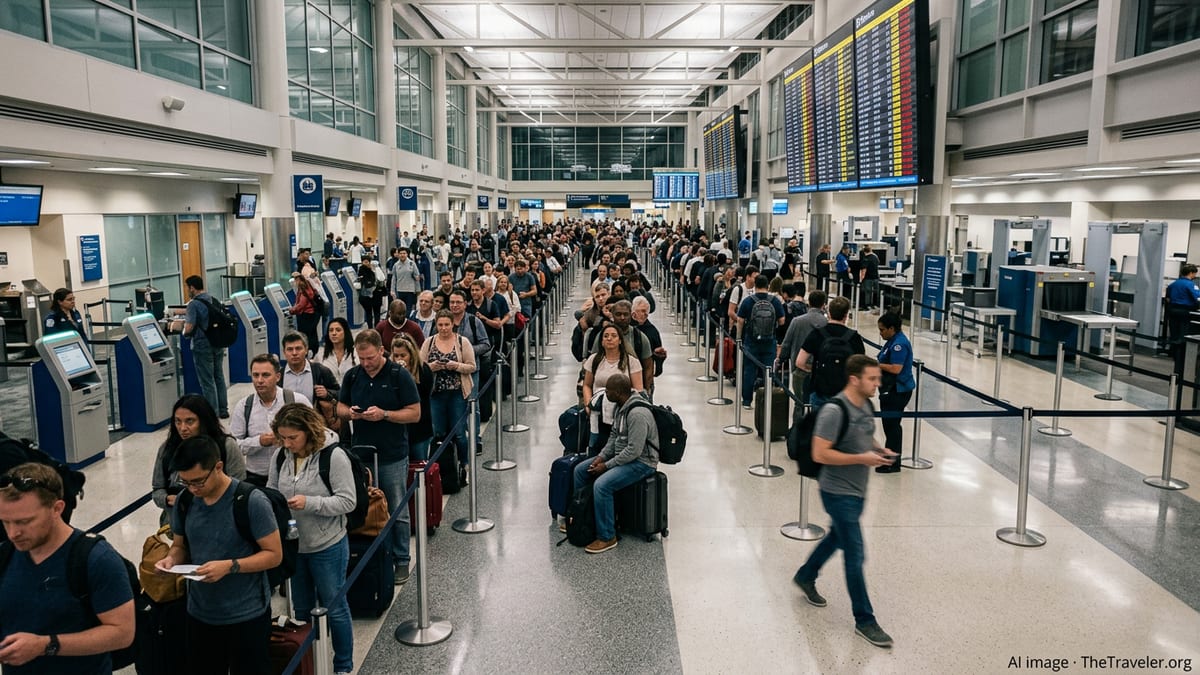
Air travelers across the United States encountered another day of widespread disruption on June 29, as publicly available tracking data showed 1,890 flights delayed and 77 cancelled nationwide, with particularly heavy impacts reported at airports in California, North Carolina, Arizona, Oregon and Alaska.
Get the latest news straight to your inbox!
Ripple Effects From Coast to Coast
The latest wave of disruptions affected both major hubs and regional airports, creating a patchwork of delays that rippled across the national network. Data compiled from flight-tracking platforms indicated that California airports, including those in the Bay Area, Southern California, and Sacramento, were among the most affected on the West Coast, with a high volume of departure and arrival delays that spread to onward connections.
In the Pacific Northwest and beyond, Oregon and Alaska also experienced elevated delay levels, with operations at key gateways such as Portland and Anchorage slowed by a combination of traffic volume and operational constraints. These delays then fed into bottlenecks on transcontinental routes and connections to smaller communities.
On the opposite side of the country, North Carolina airports, including major hubs in Charlotte and Raleigh-Durham, saw knock-on delays that impacted flights throughout the day. The problems were not confined to one region, leading to a patchy but nationwide disruption that travelers encountered from early morning departures to late-night arrivals.
Published coverage from travel-industry outlets highlighted that the disruption was not isolated to a single carrier or airport, but rather reflected broader strain across the U.S. aviation system as the busy summer travel period intensified.
American, United, SkyWest and Others Among Most Affected
The impact was felt across a wide range of carriers, with American Airlines, United Airlines, Frontier Airlines, Allegiant Air and regional operator SkyWest Airlines all recording significant numbers of delayed or cancelled services, according to publicly available flight-status tallies. Other carriers, including Southwest, Alaska Airlines and JetBlue, were also cited in industry reports as experiencing elevated disruption levels.
SkyWest, which operates regional flights on behalf of larger network airlines such as United, American and Alaska, appeared prominently in delay statistics across several states. Because many of its routes connect smaller cities to major hubs, delays on these flights can cascade into missed connections, rebookings and increased congestion at already busy terminals.
Low-cost carriers Frontier and Allegiant Air, which focus on point-to-point leisure routes, also saw a share of the delays and cancellations. For travelers headed to or from secondary airports served by these airlines, even a limited number of cancellations can mean fewer same-day alternatives and longer waits for re-accommodation.
Industry analysts noted that, as with previous disruption days this summer, the burden was spread across the network rather than concentrated on a single carrier, underscoring the sensitivity of the system to compounding operational and weather-related pressures.
Weather, Congestion and Seasonal Demand Drive Disruptions
While precise causes can vary by airport and individual flight, aviation data and Federal Aviation Administration advisories pointed to a familiar mix of factors behind the June 29 disruption. Localized thunderstorms, low clouds and shifting winds in parts of the West Coast and Southeast led to ground-delay and ground-stop programs at various times, slowing the rate at which aircraft could land or depart.
Even brief traffic-management initiatives at large hubs tend to reverberate across the country, as aircraft and crews arrive late into their next assignments. When this occurs during peak travel periods, the result can be a rolling series of delays that persist for much of the day, even after the immediate weather issues have eased.
Seasonal demand is adding further pressure. The U.S. Transportation Department’s most recent air travel consumer data shows that carriers across the country are operating tight schedules, with limited slack for recovery when irregular operations occur. Publicly available historical statistics also indicate that national aviation system issues, including congestion and air traffic management constraints, remain a significant driver of delay minutes for many major airlines.
Travel publications observing the current season have noted that the convergence of heavy passenger demand, constrained capacity and intermittent severe weather has made multi-hundred-delay days more common, particularly on weekends and holiday-adjacent periods.
Key Trouble Spots: California to Alaska
The pattern of disruption on June 29 reflected several recurring trouble spots. In California, a combination of marine-layer clouds, high traffic volumes and congestion at major hubs contributed to extended delays on popular corridors linking Northern and Southern California, as well as routes to the Mountain West and East Coast. Flight boards at larger airports showed clusters of departures pushed back by 30 minutes or more, with some stretching into multi-hour waits.
In Oregon, operations at Portland were periodically slowed as traffic headed to and from other West Coast hubs encountered spacing restrictions. For passengers connecting through the city, these modest but persistent delays increased the risk of tight connections and missed onward flights.
Farther north, Alaska’s main airports contended with a mix of seasonal weather patterns and the complexity of long-haul routes linking the state to the Lower 48. When flights from Alaska arrive late into key hubs, the resulting knock-on effects can be felt on subsequent departures across the continental United States.
In North Carolina and surrounding states, pop-up thunderstorms and heavy airspace demand around major East Coast hubs contributed to holding patterns and ground delays that added further strain to the system. Together with the West Coast challenges, this created a coast-to-coast squeeze that left limited room for schedule recovery.
What Travelers Can Expect in the Coming Days
With the busy summer season in full swing, travel experts expect that periodic waves of delay and cancellation are likely to continue, particularly on days when severe weather intersects with high passenger volumes. Historical performance data from the Bureau of Transportation Statistics shows that late-arriving aircraft and national aviation system delays routinely rank among the top causes of schedule disruptions for U.S. carriers, suggesting that tight turnarounds and congested airspace will remain pressure points.
For passengers, this translates into a higher likelihood of prolonged waits, missed connections and last-minute gate changes on peak travel days. Travelers heading through airports that have recently experienced elevated delays, including those in California, North Carolina, Arizona, Oregon and Alaska, may see residual schedule adjustments as airlines work to reposition aircraft and crews.
Consumer advocates recommend that passengers build extra time into itineraries that require connections, particularly when travel involves multiple carriers or regional operators such as SkyWest. Same-day alternatives can be limited when disruption affects a broad swath of carriers at once, making flexibility on departure time or routing increasingly valuable.
As airlines and airports navigate the remainder of the summer peak, publicly available data and industry commentary suggest that operational resilience and traveler preparedness will be key factors in how smoothly the system weathers future rounds of nationwide disruption.