


More news on this day
Several governments have quietly escalated their travel advisories in recent weeks, adding or reaffirming stark “avoid all travel” warnings for three troubled destinations and reshaping the risk map for international travelers.
Get the latest news straight to your inbox!
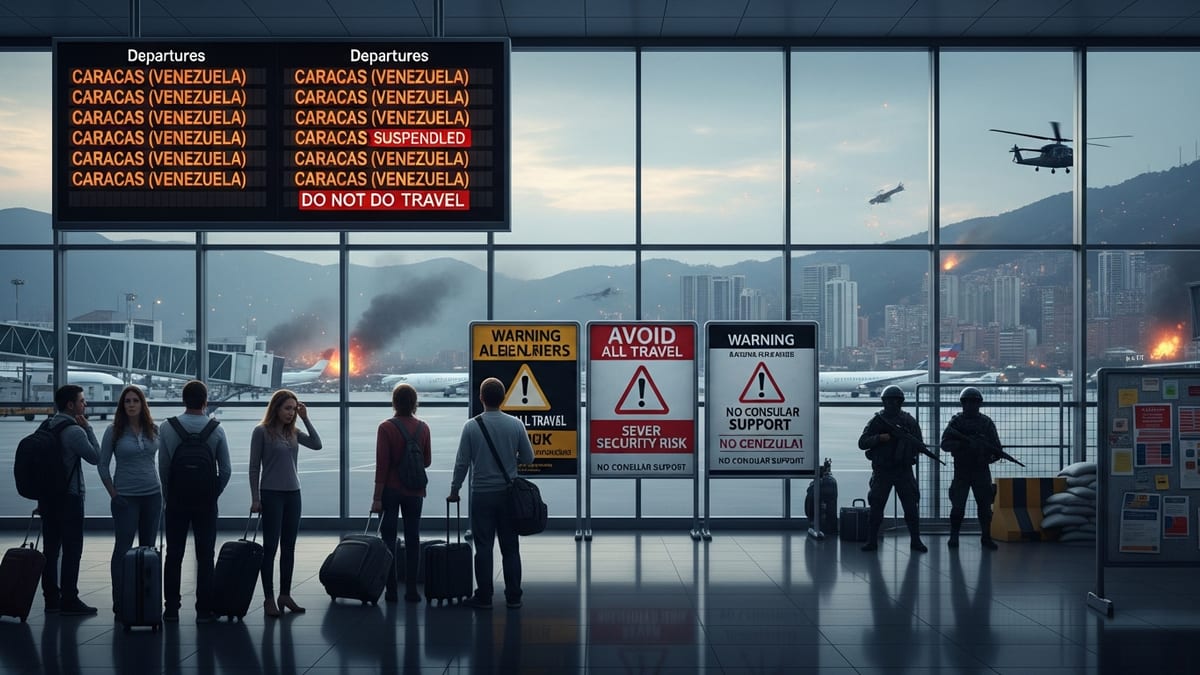
Heightened global concern over high‑risk destinations
Across multiple government advisory systems, the highest warning levels are reserved for the rare cases where staying away entirely is recommended. While language varies by country, the message is similar: conditions are judged so volatile that leisure or nonessential journeys should not go ahead, and even essential trips may be extremely difficult to carry out safely.
Recent updates highlight three destinations that now stand out for the severity of their alerts: Haiti in the Caribbean, Afghanistan in South‑Central Asia and Somalia in the Horn of Africa. Publicly available advisories describe a mix of armed conflict, rampant crime, terrorism, state fragility and near‑collapsed infrastructure in these locations.
Travel analysts note that such warnings are not static. Risk levels are reviewed on a rolling basis, taking into account changes in security, access to medical care and the ability of foreign missions to support their nationals. The latest revisions underline how quickly conditions can deteriorate, and how sharply they can diverge from the recovery narrative seen in many other post‑pandemic destinations.
For travelers, the practical effect of an “avoid all travel” label can reach far beyond safety considerations, influencing the availability of insurance coverage, airline capacity and tour operations, and even the ability to exit a country once inside its borders.
Haiti: gangs, flight suspensions and a paralysed capital
Haiti remains one of the starkest examples of a destination under maximum warning. Recent analyses of advisory changes report that the country sits at the highest alert level in the United States system, with parallel language from Canada and the United Kingdom effectively advising against all travel.
Reports describe armed gangs controlling substantial portions of Port‑au‑Prince and other urban areas, with incidents of kidnapping, carjacking and violent robbery affecting both locals and foreigners. Publicly available information points to a severely strained health system, disruption of basic services and a pattern of sudden roadblocks and armed clashes that can cut off districts of the capital.
Commercial air links are another red flag. Coverage of the advisory environment notes significant restrictions on direct flights between Haiti and several major markets, a factor that can complicate both arrival and emergency departure. Travel‑industry analyses suggest that, even when some flights operate, schedules can be unstable, with frequent last‑minute changes driven by security concerns at airports and on access roads.
Insurance and tour operations have largely followed suit. Industry commentary indicates that many standard travel insurance policies explicitly exclude coverage in countries under a top‑tier warning, and mainstream tour operators have suspended programmes, further signalling that Haiti is not currently positioned for general leisure travel.
Afghanistan: enduring instability and minimal consular support
Afghanistan continues to feature prominently on “avoid all travel” lists compiled by several governments. Consolidated advisory summaries highlight ongoing instability following the change of power in 2021, with concerns around terrorism, internal conflict, arbitrary detention and severe limits on consular access.
Publicly accessible guidance notes that many foreign embassies have downsized or relocated their operations outside the country, drastically reducing their ability to intervene in emergencies. This limited diplomatic presence is one of the reasons Afghanistan is consistently categorised at the highest risk tier, even in periods where front‑page news coverage may have ebbed.
Security reports reference the presence of multiple armed groups and the risk of attacks on government buildings, religious sites, markets and foreign‑linked facilities. Travel beyond major cities is described as particularly hazardous because of improvised explosive devices, irregular checkpoints and a lack of reliable medical evacuation options.
Specialist operators that once offered niche cultural or adventure itineraries largely withdrew after 2021. Industry briefings indicate that any remaining travel tends to involve humanitarian or tightly controlled corporate movements, usually supported by bespoke risk‑management providers rather than standard consumer travel channels.
Somalia: layered risks from conflict and fragile infrastructure
Somalia is another country where the highest‑level warning remains firmly in place. The most recent advisories classify it as a destination where travel should not be undertaken for any reason, citing a convergence of terrorism, crime, piracy and limited state control over large areas of territory.
Open‑source assessments point to an enduring threat from armed groups, including a pattern of attacks in Mogadishu and other towns targeting hotels, government facilities and crowded public spaces. Road travel between cities is widely flagged as hazardous because of checkpoints, banditry and the possibility of roadside bombs.
Infrastructure constraints compound the security picture. Public information notes that reliable medical facilities are scarce outside a handful of locations, and that emergency services, if available at all, may be overwhelmed by local needs. International observers also highlight the risk of detention or harassment, particularly for those whose documentation is questioned or whose activities attract the attention of local power brokers.
For cruise lines and shipping operators, piracy remains an additional consideration off the Somali coast, even though patterns of maritime crime have shifted over time. While commercial shipping continues under strict security protocols, the environment is far removed from what most travellers would consider acceptable conditions for leisure visits.
What an ‘avoid all travel’ warning means for trip planning
Despite the severity of these advisories, they do not make travel to the three countries impossible in an absolute legal sense. In many cases, flights may still operate, and entry rules for foreign nationals may remain on paper unchanged. However, the warnings signal that governments believe the risks significantly outweigh any potential benefits for ordinary visitors.
Travel‑insurance implications are among the most immediate and tangible effects. Policy documents commonly state that cover will be void if travellers enter a country or region against a formal “do not travel” or “avoid all travel” advisory. This can leave visitors personally responsible for medical bills, evacuation costs and losses arising from theft or disruption.
Airlines and tour operators also react to the official risk picture. Routes to high‑risk destinations may be reduced or suspended, and packaged tours are often withdrawn entirely, both for liability reasons and because demand falls away as advisories harden. For the limited organisations that do maintain a presence, itineraries are usually highly restricted and supported by dedicated security arrangements.
Travel experts suggest that anyone considering essential travel to or near these countries should not rely solely on headline country ratings. Sub‑national advisories, regional security updates and operational details such as airport access, land‑border openings and medical‑evacuation options can all change quickly and may determine whether a journey is practically feasible, even before broader safety questions are addressed.