


Barcelona El Prat Airport sits about 18 kilometers southwest of the city center, and you have a full menu of ways to get there: metro, city bus, airport shuttle, suburban train, taxi, or private car. Choosing the right one depends on your budget, where you are staying, how much luggage you have, and what time your flight leaves. This guide walks through each option with up to date 2026 details and concrete examples so you can pick the route that fits your trip instead of guessing at the arrivals hall.
Get the latest updates straight to your inbox!
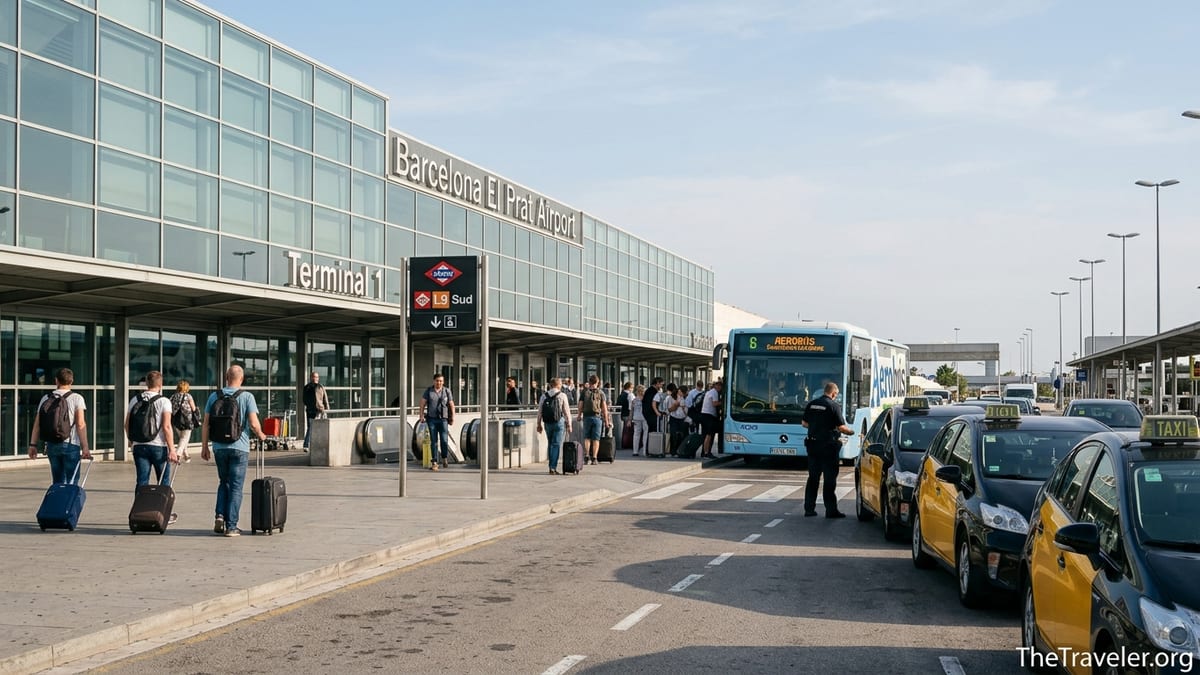
Understanding the Layout of Barcelona El Prat Airport
Barcelona El Prat has two main terminals, T1 and T2, which are a few kilometers apart. Most full service airlines and many long haul flights use the newer, larger T1, while low cost carriers like Ryanair and EasyJet tend to use T2. Before you plan your route, check your flight’s terminal on your ticket or app. It matters because some transport options, like the metro and Aerobús, have slightly different stops or routes for each terminal.
Both terminals are linked by a free green-and-white shuttle bus that runs every few minutes, day and night. For example, if you land in T1 but your suburban train to the city leaves from the rail station at T2, you simply follow the “Bus lanzadera” signs outside arrivals, ride the shuttle for about 10 minutes, and then walk into T2’s train area. The shuttle is straightforward, but factor in the transfer time if you are catching an early morning train or bus.
Most ground transport is clearly signed in English, Spanish, and Catalan. Metro symbols are red diamonds with an “M,” Renfe trains use a purple “R” logo, and municipal buses show the red TMB logo. If in doubt, look for these symbols first, then follow the arrows rather than trying to navigate by memory. Barcelona’s airport is busy but generally easy to navigate, especially compared with larger hubs like Madrid Barajas or Paris Charles de Gaulle.
Finally, remember that not every option drops you directly at your hotel. Metro and train will usually get you to major hubs such as Sants, Passeig de Gràcia, or Plaça Catalunya, from where you may need a short metro hop or a 10 to 15 minute walk. Build that extra connection into your timing when you choose your route.
Taking the Metro: Line L9 Sud to the Airport
The metro is one of the most reliable and predictable ways to get between Barcelona and El Prat. Line L9 Sud, the orange line, runs directly to Aeroport T1 and Aeroport T2 stations. Trains typically run every 7 to 10 minutes, and the ride from Zona Universitària station in western Barcelona to Terminal 1 takes around 30 to 35 minutes. From there you can connect to other lines like L3 (green), L1 (red), or L5 (blue) to reach neighborhoods such as Eixample, Gràcia, and Sagrada Família.
As of 2026, the airport metro requires a special ticket if you are paying per ride. The dedicated airport metro ticket costs around 5 to 6 euros one way, while a standard single metro ticket for the rest of the city is about 2.90 euros. Several integrated passes, such as the T-usual monthly pass or Hola Barcelona Travel Card, include the airport metro, which can make the trip much cheaper if you plan to use public transport frequently during your stay. For example, a visitor staying five days in Eixample and commuting daily to the Fira Gran Via trade fair might buy a T-usual style pass and use it for the airport trip, daily metro rides, and the L9 Sud back to the airport when leaving.
To reach the airport by metro from central Barcelona, you usually connect to L9 Sud at either Zona Universitària or Torrassa. A common scenario: you are staying near Plaça Catalunya. You take L3 (green) to Zona Universitària, change to L9 Sud following the orange signs, and ride to Aeroport T1 for your flight. If you are near Sagrada Família, you might ride L5 (blue) to Collblanc, then switch to L9 Sud. These transfers are well signposted but can involve long escalators and some walking, so allow a few extra minutes if you have heavy luggage or are traveling with children.
For late night or very early morning flights, check the first and last metro times for L9 Sud, as overnight service is limited except on Saturday nights and certain holidays when the metro runs all night. If your 6:00 a.m. departure means you need to be at the airport around 4:00 a.m., you may find a taxi or night bus more realistic than trying to catch the very first metro of the day.
City Bus and Aerobús: When the Bus Makes Sense
Barcelona’s buses give you two broad options to and from the airport: the regular city bus network and the dedicated Aerobús shuttle. The regular city bus line 46 connects Plaça Espanya with both airport terminals and is integrated into the usual public transport system, so you can use standard tickets and travel cards. This is the budget option. In 2026 a standard zone 1 trip by bus is under 3 euros, which means that if you already have a multi-trip card or travel pass, the extra cost of heading to or from the airport by bus is minimal.
The downside of bus line 46 is time and comfort. During rush hour, the ride from Plaça Espanya to the airport can run 45 minutes or more, and the bus may be crowded with airport staff and commuters. It is best suited for travelers staying near Plaça Espanya, Poble Sec, or Sants who are not in a hurry and do not mind a local-style journey. For example, a backpacker leaving a hostel near Paral·lel with a midday flight and only a small rucksack might take the metro two stops to Espanya, then bus 46 to Terminal 2, saving enough money to pay for lunch at the airport.
The Aerobús, by contrast, is designed specifically for airport passengers. The A1 line runs between Plaça Catalunya and Terminal 1, and the A2 line serves Terminal 2. Buses typically depart every 5 to 10 minutes, with travel times of about 30 to 35 minutes depending on traffic. Tickets cost noticeably more than a city bus ride, generally in the range of 7 to 8 euros one way in 2026, and the Aerobús operates its own ticketing system, so common passes like T-casual or T-usual are not valid.
The Aerobús can be a strong choice if you are staying near Plaça Catalunya or along its main stops at Sepúlveda-Urgell and Plaça Espanya. A couple staying in a hotel just off La Rambla, flying out on a Sunday afternoon with two suitcases each, might prefer the Aerobús because they can roll their bags five minutes to the Plaça Catalunya stop, board the luggage-friendly coach, and ride directly to T1 without navigating metro escalators. On the other hand, a solo traveler staying near Sagrada Família often finds that metro plus L9 Sud is cheaper and not much slower, even with a transfer.
Taking the Train: Renfe R2 Nord from Terminal 2
The suburban Renfe R2 Nord train is one of the fastest public transport options between Barcelona and the airport, but it only serves Terminal 2. The airport train station is connected to T2 by a covered walkway, and trains usually run every 30 minutes. Travel time to major city stations like Sants or Passeig de Gràcia is around 20 to 25 minutes, making it particularly attractive for travelers catching onward trains or staying near those corridors.
Ticket prices on the R2 Nord are generally slightly lower than the dedicated airport metro ticket, and some integrated passes cover this route as part of the regional rail network. For example, a visitor staying in an apartment near Passeig de Gràcia can land in T2, walk to the station, and be in the city center in under half an hour for only a few euros. If that same person were staying in Girona or Tarragona and needed to catch a regional or high speed train from Sants, the R2 Nord would deliver them directly into the rail hub, with escalators connecting them to long distance platforms.
The catch is that if you arrive or depart from Terminal 1, you must first take the free shuttle bus over to Terminal 2 to access the train station. Realistically, that adds 15 to 20 minutes, including waiting and walking, which cancels much of the time advantage over the metro or Aerobús. For travelers with a lot of luggage or limited mobility, that extra terminal transfer can also be inconvenient. In those cases, metro from T1 or a taxi from the curb might be more comfortable.
The R2 Nord also runs on a fixed timetable rather than high metro frequencies. If you just miss a train, you could be waiting around 30 minutes for the next one. Late at night or early in the morning, service can be sparse. This makes the train ideal when your schedule roughly matches the departures board, but less flexible if you are landing during unpredictable times or dealing with delays. Always check the time of the next train before committing to walk to the station.
Barcelona Taxis and Ride Services: Door to Door Convenience
Official Barcelona taxis are easy to spot at the airport by their black and yellow livery. There are clearly marked taxi ranks outside both terminals, and airport staff help organize the queues. For most travelers, this is the simplest option, particularly after a long flight or with heavy luggage. In 2026, typical fares from El Prat to central Barcelona areas such as the Gothic Quarter, Eixample, or Sagrada Família tend to fall somewhere in the 30 to 45 euro range, depending on traffic, time of day, and exact destination.
A regulated minimum fare applies to rides starting at the airport, which already includes airport supplements. This means even a relatively short trip to a nearby hotel in El Prat de Llobregat will start at a higher base price than a similar city ride. For example, a business traveler heading from T1 to a hotel around Plaça Catalunya in mid-afternoon might pay around 35 to 40 euros, while a late night Saturday trip to Barceloneta could easily push closer to 45 or more due to night and weekend surcharges.
To avoid misunderstandings, always make sure the meter is running from the start of the trip and ask for a printed receipt at the end, which will show the fare, supplements, and taxi license number. If a driver offers a “fixed” price significantly above what you expect without using the meter, politely decline and either insist on metered fare or take the next cab in the queue. Mobile ride hailing services such as Uber or Cabify operate in and around Barcelona under varying regulations, but often at prices similar to or slightly below standard taxis. In peak periods, though, surge pricing can eliminate any savings.
For small groups or families, taxis quickly become competitive with public transport. Imagine a family of four with two large suitcases staying near Sagrada Família. Four single Aerobús tickets from the airport to Plaça Catalunya, plus a taxi or metro from there to their apartment, can easily approach or exceed 50 euros. By comparison, a direct taxi from the airport to their door for 40 to 45 euros saves transfers and effort, and the per person cost is similar while the experience is much more convenient.
Driving Yourself: Car Rental and Private Car Options
Renting a car at Barcelona El Prat can make sense if you plan to explore Catalonia beyond the city, such as the Costa Brava, Penedès wine region, or Pyrenees. Major rental companies like Avis, Hertz, Enterprise, Europcar, and Sixt maintain desks in both terminals, usually on the arrivals level or in the adjacent car park buildings. Prebooking online is almost always cheaper than walking up to the counter on arrival, and it also guarantees the car category you need, especially during summer or trade fair weeks.
Driving from the airport into Barcelona is relatively straightforward. Main routes follow the C-31 or the more scenic B-10 coastal ring road, with typical drive times into the city center of 20 to 30 minutes in light traffic. However, once you reach the city limits, you face dense urban driving, one way streets, and limited parking. Hotels in central areas like the Gothic Quarter or El Born may not have on site parking at all. Visitors often end up paying for an underground public garage at daily rates that can quickly eat into any benefit from having a car.
For that reason, many travelers choose to use public transport or a taxi to and from the airport, then only rent a car on the days they leave the city. A common pattern: a couple spends three days in an Eixample hotel using the metro and buses, then picks up a rental car at Sants station on the morning they drive north to Cadaqués or inland to Montserrat and the Pyrenees. When they return to Barcelona before flying home, they drop the car at the airport and take the shuttle to their terminal. This hybrid approach reduces parking hassle while still giving flexibility for regional touring.
If you do decide to drive directly to the airport for departure, leave extra time for potential congestion around the ring roads, especially on weekday mornings and Sundays in summer when many locals return to the city. Follow “Aeroport” signs carefully, as exits for T1 and T2 split well before the terminals. Rental car returns are generally well marked but can involve circling multi level parking structures. Returning the car at least two hours before a European flight and three hours before a long haul departure is a safer buffer than relying on ideal traffic conditions.
Choosing the Right Option for Your Trip
There is no single “best” way to get between Barcelona and El Prat; the right choice depends on your priorities. If budget is your main concern and you are comfortable with local transit, the combination of metro L9 Sud with an integrated pass, or city bus 46 from Plaça Espanya, will usually be the cheapest. For example, a solo traveler staying in Poble Sec with only a carry on could take the metro from Parallel to Zona Universitària, switch to L9 Sud, and be at T1 for well under 5 to 6 euros if using a pass that includes the airport.
If you value simplicity after a long flight, the Aerobús or a taxi are usually the least mentally demanding. Arriving into T1 at 9:00 p.m. from a transatlantic flight, a visitor staying at a hotel off La Rambla might either wheel their suitcase to the well signed Aerobús stop and ride directly to Plaça Catalunya, or walk to the taxi rank and head door to door. Both options avoid ticket machines, platform changes, and the possibility of taking the metro in the wrong direction when jet lagged.
Travelers connecting to onward trains or coaches have particular needs. If you are catching an AVE high speed train to Madrid from Sants station, the Renfe R2 Nord from Terminal 2 or the Aerobús to Plaça Espanya followed by a short metro hop to Sants are popular combinations. For early morning flights when public transport may not yet be fully running, booking a taxi or private transfer the night before removes uncertainty about first metro or bus times.
Also consider your luggage and mobility. Escalators, long corridors, and crowded metro carriages can be challenging with a bulky checked bag and two small children in tow. In these cases, many families decide that spending an extra 10 to 15 euros to upgrade from bus and metro to a taxi is worthwhile, particularly on departure when everyone is tired. On the other hand, solo city break travelers with backpacks often embrace the metro or R2 Nord train as an authentic and economical start to their stay.
The Takeaway
Barcelona El Prat Airport is well connected to the city, but the number of choices can feel overwhelming when you are tired and just want to arrive. Thinking briefly about where you are staying, how much you want to spend, and how confident you feel using public transport will narrow the options quickly. Metro L9 Sud, the Aerobús, the R2 Nord train, regular buses, taxis, and rental cars each have clear strengths and trade offs.
For many visitors, a simple rule of thumb works: use metro or train if you travel light and want good value, choose Aerobús if you are near Plaça Catalunya or Plaça Espanya and prefer a direct airport coach, and opt for a taxi when convenience and door to door comfort matter most. If you plan to explore beyond Barcelona itself, consider renting a car only for those days rather than your entire stay.
Whichever route you take, allow more time than the theoretical journey duration, especially during morning and evening peaks or busy summer weekends. With a realistic schedule and a plan tailored to your own situation, getting between Barcelona and El Prat can be a straightforward, even pleasant part of your trip instead of a stressful scramble.
FAQ
Q1. What is the cheapest way to get between Barcelona and El Prat Airport?
The cheapest options are usually the regular city bus line 46 from Plaça Espanya or the metro L9 Sud when used with an integrated pass that includes the airport, such as certain monthly or multi day travel cards. These keep the effective cost per trip close to the standard city fare rather than the higher airport specific tickets.
Q2. Is the Aerobús worth the extra cost compared with the metro?
The Aerobús can be worth it if you are staying near Plaça Catalunya or along its route and you value a simple, luggage friendly ride with no transfers. If you are comfortable using the metro and staying closer to other lines, L9 Sud with a suitable travel pass is usually cheaper, though it may require a transfer.
Q3. How long does the metro take from the city to the airport?
From interchange stations like Zona Universitària, the ride to Terminal 1 on line L9 Sud usually takes around 30 to 35 minutes. You should add time for any transfers from your starting station, plus a buffer for buying tickets and navigating escalators, especially during busy periods.
Q4. Which option is best if I am staying near Sants station?
If you are near Sants, the Renfe R2 Nord train from Terminal 2 is often the most direct public transport link. If your flight uses Terminal 1, you can still take the free shuttle to T2 to catch the train, or use the metro by connecting to L9 Sud via lines L5 or L3. For late night arrivals or heavy luggage, a taxi from the airport to Sants area hotels may be a comfortable alternative.
Q5. Are taxis from Barcelona Airport safe and regulated?
Yes, official black and yellow Barcelona taxis are regulated, metered, and generally safe. Fares include a minimum charge for trips starting at the airport and supplements for luggage or night and weekend hours. Always make sure the meter is on and ask for a printed receipt if you want a record of the fare and taxi details.
Q6. Can I use the same ticket for metro, bus, and train to the airport?
Some integrated passes cover metro, bus, and suburban train within the main zone that includes the airport, while single tickets are usually mode specific and may exclude the airport stations. In practice, this means a travel card bought for several days or a month often allows you to switch between metro, bus, and certain regional trains without buying additional tickets, as long as it explicitly includes airport routes.
Q7. What should I do if my flight is very early in the morning?
For departures requiring check in before the metro and most buses start, booking a taxi or private transfer is the most reliable option. You can arrange this through your hotel, a local taxi app, or by prebooking the evening before. Night buses serve some routes, but they are slower and may not match your schedule as closely as a door to door car.
Q8. Is it a good idea to rent a car just to go into the city from the airport?
Renting a car solely to travel between the airport and central Barcelona is rarely worthwhile. Parking is expensive and limited, and urban driving can be stressful. Car rental becomes more attractive when you plan to leave the city for coastal towns, mountain areas, or wineries, in which case you can combine public transport within Barcelona with a car only on the days you need it.
Q9. How much time should I allow to reach the airport from central Barcelona?
For flights within Europe, aim to reach the airport about two hours before departure, and for long haul flights about three hours before. Adding typical travel times, many travelers leave central areas 90 minutes to two hours before a European flight if using metro, Aerobús, or train, and around an hour to 90 minutes before if taking a taxi, depending on traffic and their distance from the main hubs.
Q10. Which option is best for a family with children and several suitcases?
Families with young children and multiple bags often find a taxi to be the most practical choice despite higher cost, because it offers door to door service and avoids stairs, crowded carriages, and transfers. If budget is tight but you still want to limit complexity, the Aerobús combined with a short taxi or metro ride from Plaça Catalunya can be a good compromise, especially for hotels in the central districts.