


More news on this day
China’s renewed cautionary messaging on travel to the United States is drawing attention in both countries, but early indicators suggest it is unlikely to significantly slow the recovery in Chinese arrivals during the rest of 2026.
Get the latest news straight to your inbox!
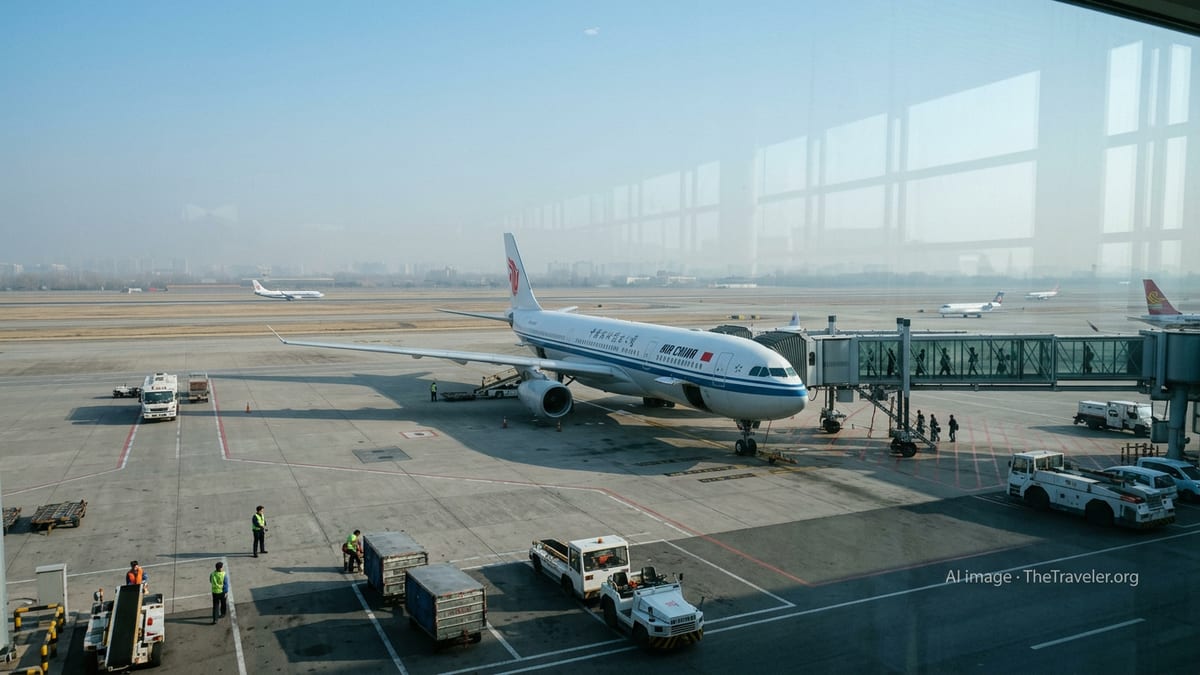
Alert Highlights Security Concerns but Stops Short of a Ban
Recent Chinese-language advisories have urged citizens visiting or studying in the United States to travel with caution, citing issues such as personal security, visa scrutiny and the broader state of bilateral relations. According to published coverage of a March 2024 notice from China’s Ministry of Culture and Tourism, travelers were asked to be prepared for additional questioning on arrival and to pay close attention to local safety information.
These notices fall into the category of risk warnings rather than formal restrictions. Publicly available information shows that the alerts do not prohibit travel or suspend outbound group tours to the United States. Instead, the language focuses on urging extra vigilance, echoing similar advisories China has issued during previous periods of diplomatic tension with other destinations.
Travel alerts of this type are common tools for governments worldwide. The United States maintains its own advisory for travel to China, currently set at a mid-level caution that points to concerns around arbitrary enforcement of local laws and potential exit bans. While such advisories shape traveler perceptions, their practical impact on aggregate tourism flows often depends on air capacity, visa policy and economic conditions rather than wording alone.
Chinese Visitor Numbers to the US Are Rebuilding From a Low Base
Available data indicates that Chinese travel to the United States has been climbing steadily from pandemic-era lows, though it remains below 2019 levels. Figures compiled by the US National Travel and Tourism Office and summarized by the US Department of Commerce show that nearly 1.1 million visitors from China arrived in 2023, a sharp increase compared with 2022 but still well under the almost 3 million who visited in 2019.
Despite the political backdrop, China continues to rank among the most valuable long-haul outbound markets for the United States. Official US trade and tourism reporting notes that Chinese visitors accounted for roughly 14 percent of US travel and tourism exports to China in 2023, with spending approaching 21 billion dollars when including education-related outlays. Industry forecasts referenced in Commerce Department materials continue to treat China as a priority market in the drive to reach 90 million annual international visitors in coming years.
For 2026, the recovery trajectory remains upward. Airline schedules between major Chinese cities and US gateways have expanded compared with 2023, even if seat capacity is still constrained relative to pre-pandemic peaks. United Airlines’ decision in August 2024 to restore a key Shanghai to Los Angeles service was one of several route resumptions that helped rebuild connectivity, and schedules filed for the 2025 to 2026 seasons add additional frequencies on trans-Pacific routes operated by both US and Chinese carriers.
Outbound Chinese Travel Is Diversifying but the US Retains Strong Pull
China’s outbound tourism has become more diversified since borders fully reopened, with neighboring destinations in Asia absorbing much of the initial surge in pent-up demand. An online version of the “China Outbound Tourism Development Annual Report 2024” indicates that, from January to November 2024, Hong Kong, Macao and Taiwan together attracted more than 30 percent of outbound Chinese trips, while short-haul markets in Southeast Asia also saw rapid growth.
Even within this shifting landscape, the United States remains a leading long-haul option. The same report and related commentary highlight that, among destinations in North America and Oceania, the United States and Australia still command the largest shares of Chinese outbound travel. Long-stay itineraries built around shopping, national parks, university visits and theme parks continue to differentiate the US from regional competitors.
Industry analyses compiled by organizations such as the China Tourism Academy and referenced by international tourism bodies note that safety perceptions are only one factor in destination choice. Exchange rates, airline ticket prices, visa processing times and the availability of multi-city itineraries often play a greater role in converting interest into bookings. With the renminbi relatively stable against the US dollar compared with earlier pandemic years and more nonstop routes reopening, travel planners expect continued incremental growth rather than a reversal.
Previous Warnings Have Had Mixed Impact on Travel Behavior
Past episodes involving Chinese travel alerts to specific destinations offer a guide to how the latest US-focused advisory may play out. When Beijing issued warnings in earlier years relating to Japan and other regional destinations, monthly arrival data compiled by those countries’ tourism boards showed only short-term fluctuations rather than prolonged declines, particularly once flight capacity and promotional campaigns ramped up again.
More recently, commentary carried by international media on a 2024 Chinese advisory concerning travel to the United States suggested that the wording was calibrated to underscore political displeasure without calling for a boycott. In similar cases, independent travel and small-group bookings have tended to prove more resilient than large package tours, which can be more sensitive to official messaging and licensing rules inside China.
Travel economists observing these cycles point out that alerts often coincide with existing sources of friction, making it difficult to separate political messaging from underlying market trends. In the US case, slower visa processing and limited airlift have already capped how quickly Chinese arrivals can rebound. That means any marginal chilling effect from the current warning is likely to be partially offset by ongoing recovery from an unusually low base.
What Travelers Can Expect Through the Remainder of 2026
For individual Chinese travelers and Chinese American families planning trips in late 2026, the practical picture appears relatively stable. Public schedules published by major airlines show a growing network of nonstop flights linking Beijing, Shanghai and southern China with hubs such as Los Angeles, San Francisco, Seattle and New York. Fares remain higher than in 2019 on many routes, but capacity increases have moderated some of the sharp price spikes seen in the immediate post-pandemic period.
University calendars, trade shows and destination marketing campaigns all point toward a gradual normalization of travel patterns. US tourism boards and city visitor bureaus have continued to attend China-focused roadshows and digital promotions, positioning their destinations for a fuller recovery if and when group travel approvals and air-service rights expand further.
At the same time, potential visitors are paying closer attention to official information from both governments. Many Chinese travelers consult China’s outbound alerts in parallel with US State Department advisories for China, cross-checking guidance on personal safety, local laws and documentation requirements. Transparent, up-to-date travel information on topics such as health insurance, consular services and entry rules is helping travelers navigate the political rhetoric and focus on practical risk management.
With these dynamics in place, analysts following published tourism data expect Chinese arrivals to the United States to keep rising through the end of 2026, though likely on a measured path. The latest Chinese travel alert may introduce another note of caution, but prevailing indicators point to structural demand and improving connectivity as stronger forces shaping this year’s visitor numbers.