


More news on this day
Airports across Europe are grappling with hours long queues, missed connections and mounting passenger frustration as the European Union’s new digital Entry Exit System beds in at external Schengen borders ahead of the peak summer travel season.
Get the latest news straight to your inbox!
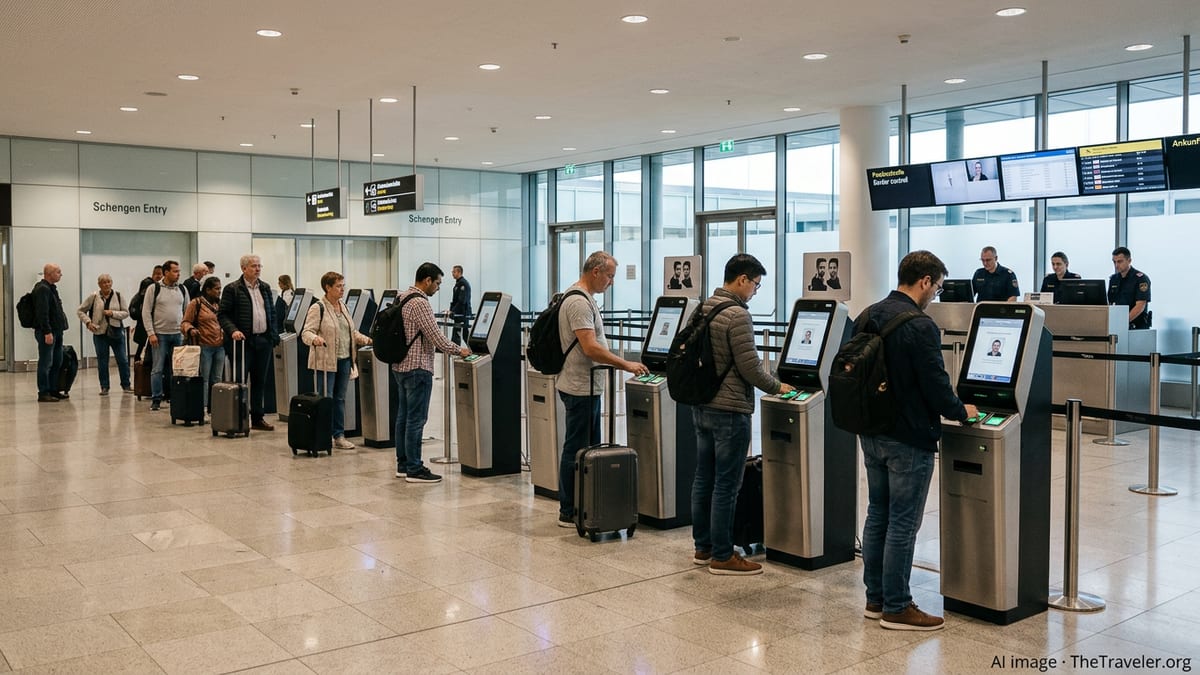
Digital Border Overhaul Goes Fully Live Across Schengen
The EU’s Entry Exit System, or EES, became fully operational on 10 April 2026 after a phased introduction that began in October 2025. The automated database replaces passport stamping for most non EU visitors with a biometric registration of each entry and exit at the external borders of the Schengen Area.
Publicly available information explains that the system records fingerprints, a facial image and key travel details for so called third country nationals on short stays. The data is stored centrally and shared between member states for border management and security purposes, forming part of a broader shift toward digital controls and advance vetting of travellers.
EU institutions have presented EES as a way to strengthen border security and make crossing faster once the system is established. However, as the rollout reaches full scale at major airports and ferry ports, reports indicate that the first wave of mass registrations is significantly slowing passenger processing, particularly for travellers entering Schengen for the first time since the system went live.
Airports and airlines argue that the core technology is colliding with real world constraints, including limited space for kiosks, staffing shortages at border control and the practical challenges of capturing high quality biometric data from millions of tourists during short peak travel windows.
Hours Long Queues, Missed Flights and Patchy Implementation
Since April, travel industry coverage has highlighted widespread disruption at a range of gateways, from major hubs such as Paris, Madrid and Milan to regional airports in Portugal, Italy and Austria. Reports from Vienna and other locations describe queues for non EU passengers stretching to two or three hours at peak times, with some flights departing with empty seats because passengers were still stuck in border lines.
Monitoring data cited by airport and airline groups suggests that in some locations the time needed to process a non EU passenger has jumped from under 30 seconds with traditional passport checks to around 90 seconds when full biometric capture is required. Sector analysis notes that this may not sound dramatic in isolation, but multiplied across several wide body arrivals it quickly overwhelms border control capacity and terminal layouts that were designed for faster flows.
Travelers have reported particularly sharp delays during the initial enrollment step, when fingerprints and facial images are taken for the first time. In response, some border authorities have temporarily suspended biometric capture or redirected certain flights to conventional booths during surges, leading to a patchwork of procedures that confuses passengers and complicates airline planning.
Airline and airport associations have publicly called for greater flexibility from EU institutions, including the option to ease or temporarily suspend some EES requirements when waiting times exceed agreed thresholds. Statements from industry bodies warn that without such measures, prolonged queues at border checkpoints risk cascading into wider operational disruption as aircraft miss their departure slots and crews run out of duty time.
Warnings of a Difficult Summer for International Visitors
The timing of full EES activation, just months before the busiest period for leisure travel, is amplifying concern. Trade press reports from early June quote airline representatives warning that passengers arriving from the United Kingdom, North America and other non EU markets could face waits of four to six hours at some airports if additional mitigation steps are not taken before July and August.
Consumer travel outlets in several countries are advising holidaymakers to arrive earlier than usual for flights leaving the Schengen Area, with some carriers recommending a minimum of three hours to clear exit checks alone at busier hubs. Travel agents are also beginning to factor in longer connection times when selling itineraries that involve a transfer at a Schengen airport for non EU nationals.
Euronews and other European broadcasters have described the situation as a systemic challenge that may take one to two years to stabilise as infrastructure is upgraded, processes are refined and more travellers become enrolled in the database. Until then, analysts expect a gap between policy expectations and what border posts can deliver during high demand days.
Particular pressure points include Mediterranean holiday gateways in Spain, Portugal, Italy and Greece, where terminal space is tight and a high proportion of passengers originate from outside Schengen. Some national authorities have already added extra border booths, reconfigured queuing areas and reassigned police to immigration posts in an effort to keep lines moving.
Industry Pushes for Flexibility and Clearer Communication
Airports Council International Europe, Airlines for Europe and the International Air Transport Association have jointly urged EU decision makers to allow broader use of contingency tools written into the EES rulebook. These can include temporarily raising the threshold for biometric registration during extreme peaks, prioritising families with young children and vulnerable passengers, and reassigning staff from non essential duties.
According to statements from these groups, the aviation sector accepts the long term objectives of EES but argues that implementation must remain adaptable to real conditions on the ground. Industry letters published earlier in the year warned that without rapid adjustments, border bottlenecks could undermine the competitiveness of European hubs and damage the reputation of Schengen travel among long haul visitors.
Communication with passengers has emerged as another weak point. Travellers arriving at some airports report limited information on why new queues exist, what paperwork is required or how long the process is likely to take. Consumer advocates are pressing airlines, airports and public authorities to provide clearer pre travel guidance, improved signage in terminals and more staff in queues to triage urgent cases such as those with tight connections.
Some airports and carriers have begun to respond by updating their websites, mobile apps and check in materials to flag EES related procedures and likely delays. Travel media are also publishing explainer pieces to help visitors understand the new system, though the absence of a single, standardised process across all Schengen entry points makes consistent messaging challenging.
What Travellers Can Expect in the Months Ahead
Looking ahead to the main summer season, publicly available briefings from EU agencies and industry bodies suggest that disruption is likely to remain uneven but persistent. Airports with more space, greater staffing and early investment in self service kiosks may see queues moderate as the share of pre enrolled travellers rises, while smaller or already stretched facilities could continue to struggle during bank holiday peaks and weekend waves of leisure traffic.
Travel experts note that conditions may also vary significantly between entry and exit. On outbound journeys from Schengen, the system does not require fresh biometric capture for travellers already enrolled, which should shorten processing times. However, the need to match passengers accurately to their previous records, combined with higher flight volumes in late summer, means that bottlenecks at departure cannot be ruled out.
The EES rollout is also taking place against the backdrop of a separate but related project, the European Travel Information and Authorisation System, which is due to begin for visa exempt travellers at the end of 2026. Analysts say that the experience with EES is likely to shape how that scheme is phased in, with a greater emphasis on testing, passenger education and coordination between border agencies and the aviation sector.
For now, non EU visitors planning trips to Schengen countries are being encouraged by travel advisers to monitor airport specific guidance, allow generous time for border checks and ensure that travel insurance covers missed connections caused by immigration delays. While the technology underpinning EES is designed to streamline crossings in the long run, the immediate reality at many European airports is a period of adjustment marked by queues, uncertainty and a renewed focus on the practical limits of digital border control.