


More news on this day
Travelers moving through Charlotte Douglas International Airport on Friday faced significant disruption as 243 delayed flights and 20 cancellations rippled across American Airlines, Delta, United, Southwest, SkyWest and other carriers, stranding hundreds of passengers and snarling connections on key routes between Charlotte, Dallas, New York and Chicago.
Get the latest news straight to your inbox!
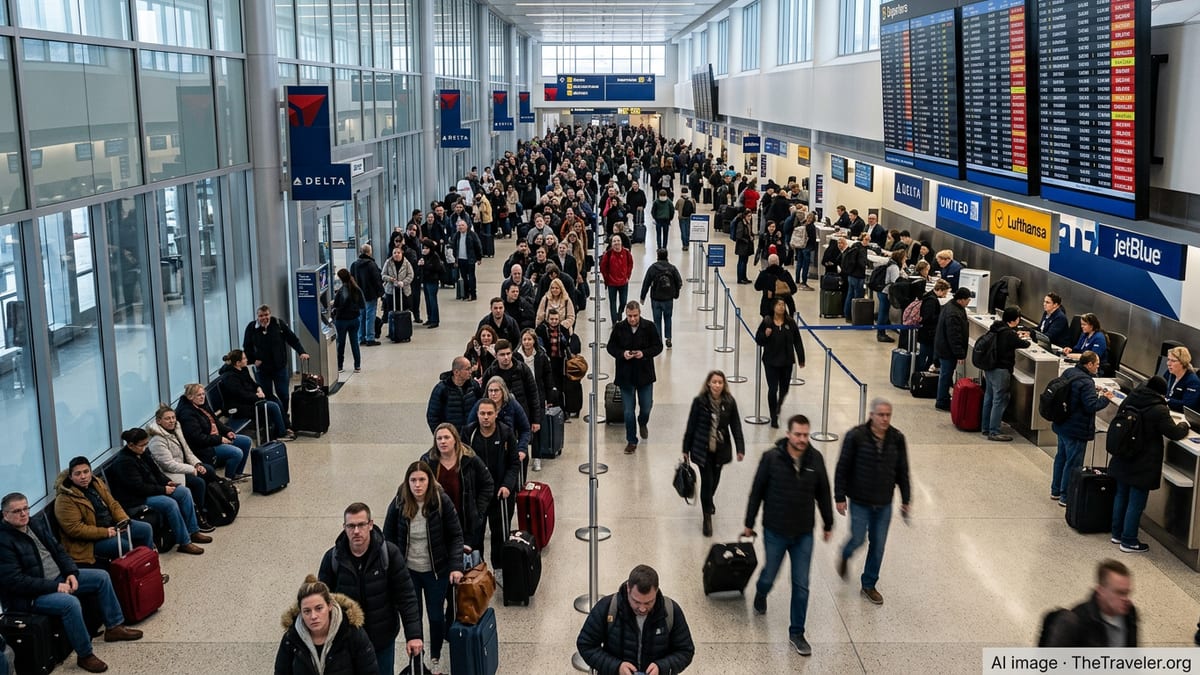
Heavy Disruptions at a Major U.S. Hub
The latest wave of disruption at Charlotte Douglas International Airport underscores the vulnerability of one of the country’s busiest hubs to operational bottlenecks. Publicly available airport and tracking data show that the combined total of 243 delays and 20 cancellations affected departures and arrivals throughout the operating day, leaving crowded gate areas and long customer-service lines.
American Airlines, which accounts for the vast majority of traffic at Charlotte, absorbed the largest share of affected flights, according to flight-tracking dashboards. Regional partners operating under the American brand, along with Delta, United, Southwest, SkyWest and several smaller carriers serving the concourses used by non-American airlines, all reported knock-on schedule problems as the day progressed.
The pattern continues a recent run of difficult days at Charlotte. Published coverage over the past several weeks has highlighted repeated spikes in disruptions at the airport, including earlier events where delay counts climbed into the triple digits and cancellations spread across domestic and transatlantic routes. The new totals put the latest incident among the more severe single-day disruptions for the airport this season.
Charlotte Douglas functions as a critical connecting node for travelers heading along the East Coast and between the Southeast and major business centers, meaning local issues can quickly spread across airline networks. Friday’s disruptions once again illustrated how quickly a local schedule problem can become a multi-state travel headache.
Routes to Dallas, New York and Chicago Hit Hard
The impact was felt most acutely on high-demand routes linking Charlotte with Dallas, New York and Chicago, where frequent flights are tightly timed to feed national and international networks. Tracking information shows rolling delays on multiple frequencies between Charlotte and Dallas, affecting both business travelers and leisure passengers trying to reach onward connections through North Texas.
Services to New York area airports, including LaGuardia and John F. Kennedy, were also repeatedly delayed, according to public dashboards, compounding congestion at already busy Northeast terminals. Several flights arrived or departed well behind schedule, limiting options for passengers hoping to rebook onto later services in the same corridor.
Flights between Charlotte and Chicago faced similar pressure. Airlines rely on these routes to shuttle travelers between two key hubs in the Southeast and Midwest, and operational disruptions at Charlotte quickly cascaded into missed connections in Illinois. Reports from aviation tracking and recent national coverage suggest that when multiple hub airports experience strain on the same day, recovery windows narrow and delays can extend into the evening.
Regional routes tied to these trunk lines, including shorter hops into surrounding states, also saw secondary impacts. When long-haul and hub-to-hub flights depart late, crews and aircraft scheduled for subsequent regional segments can be left out of position, intensifying delays for smaller destinations that may only see a few departures each day.
Multiple Carriers, Shared Strain
Although American Airlines and its affiliates dominate operations at Charlotte, disruption data show that the latest problems were spread across several carriers. Delta, United and Southwest, which use concourses serving non-American traffic, all recorded delays, while SkyWest and other regional operators reported schedule interruptions on flights marketed under the major-airline brands.
Publicly available government data on on-time performance indicate that operational delays, maintenance issues and crew availability have been persistent contributors to schedule reliability challenges across the industry in recent months. Weather and air traffic control constraints add another layer of complexity, especially at hub airports where a high volume of arrivals and departures must be sequenced within narrow time frames.
On busy days at Charlotte, a relatively small number of early disruptions can reverberate throughout the schedule. Industry reporting and past performance statistics show that when morning flights leave late, aircraft and crew rotations are immediately compressed, leaving little room to absorb subsequent irregularities. By afternoon, compounding effects can result in the kind of elevated delay and cancellation totals now being reported.
The presence of multiple carriers sharing the same airfield infrastructure can amplify these dynamics. While each airline manages its own operations, they all depend on the same runways, taxiways and airspace flows, meaning congestion for one often translates into congestion for all.
Passengers Face Long Waits and Limited Options
For passengers at Charlotte Douglas, the operational picture translated into long waits at gates and customer service counters, as travelers sought new itineraries or accommodations. With 20 cancellations on top of more than two hundred delays, many customers faced rebookings onto already busy later flights, particularly on the mainline routes to Dallas, New York and Chicago.
Published traveler accounts and recent consumer reports note that during large-scale disruptions, same-day alternatives can quickly disappear, especially at peak vacation and business travel periods. When seats are scarce, some passengers may need to accept significant schedule changes, routings through secondary hubs, or overnight stays to complete their journeys.
Compensation and relief options vary depending on the cause of the disruption, the specific airline’s policies and federal regulations. Public consumer guidance from transportation authorities stresses the importance for travelers to review airline contracts of carriage, understand what assistance may be provided in the event of delays or cancellations, and keep documentation of expenses incurred during extended disruptions.
The latest episode at Charlotte follows a broader national trend of intermittent spikes in flight delays and cancellations this year, as carriers balance demand growth, staffing, aircraft availability and an increasingly congested airspace system. For travelers, the result is a heightened risk of unexpected schedule changes on even the most routine routes.
Charlotte’s Growing Role in a Strained Network
The difficulties at Charlotte Douglas are magnified by the airport’s growing role as a key connecting hub in the southeastern United States. Pre-pandemic growth and subsequent network realignments have turned Charlotte into a primary bridge between smaller regional cities and major coastal and Midwestern markets, with American and other carriers funneling large numbers of passengers through the airport each day.
Airport information shows that American and its partners occupy the majority of gates, while carriers such as Delta, United, Southwest and several low-cost and regional operators use other concourses. This concentration of traffic means that operational turbulence at Charlotte tends to touch a wide range of airlines and destinations, even if the primary disruption begins with a single carrier or route group.
Recent episodes of elevated delays and cancellations at Charlotte, combined with similar events at other major hubs, have fueled renewed discussion in policy and industry circles about network resilience. Analysts examining aviation performance data point to the need for additional staffing, improved scheduling buffers and technology upgrades in both airline operations centers and air traffic control systems to better absorb inevitable weather and operational shocks.
For now, travelers using Charlotte Douglas are likely to continue feeling the effects when the system comes under strain. The latest tally of 243 delays and 20 cancellations demonstrates how quickly a single day’s irregular operations at a major hub can strand hundreds of passengers and disrupt travel plans on some of the country’s most important routes.