


More news on this day
Fresh attacks on energy and infrastructure sites in Saudi Arabia and Kuwait on 26 November have triggered new safety warnings and route changes for flights into Riyadh and across key Gulf airspaces, with European regulators extending conflict‑zone guidance and several long‑haul carriers keeping reduced schedules into early 2027.
Get the latest news straight to your inbox!
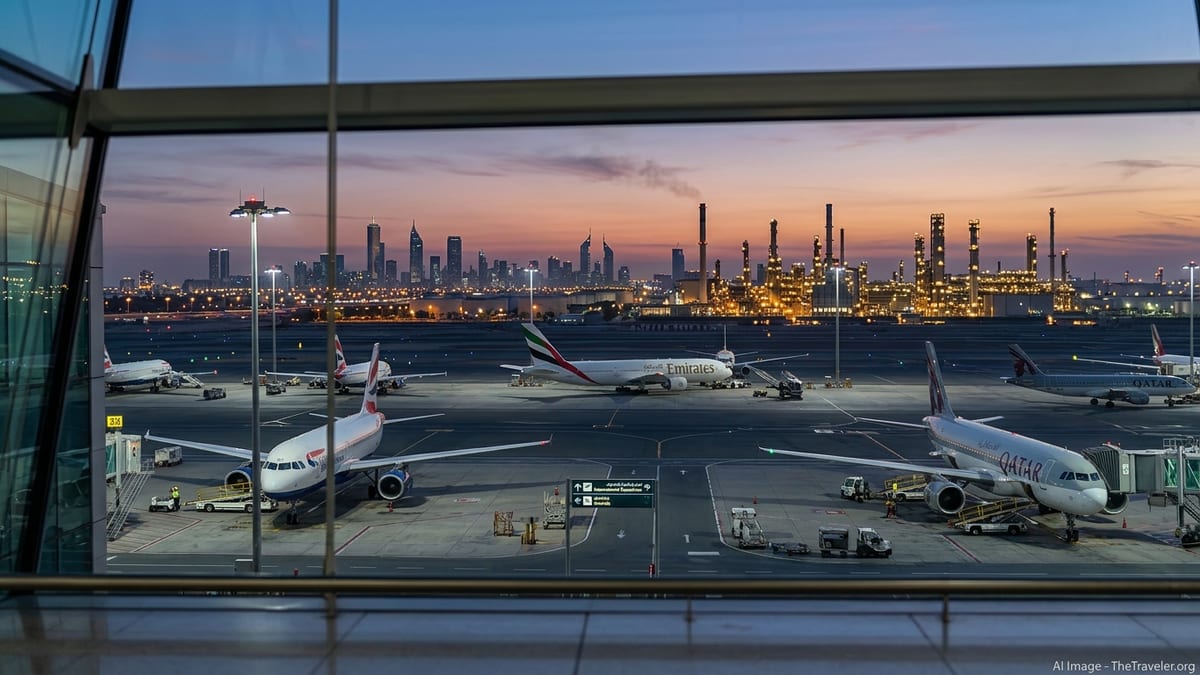
Latest refinery and drone strikes widen regional aviation risk
Saudi Arabia’s Ministry of Energy confirmed on 26 November that a hostile aerial projectile struck the Jazan oil refinery in the kingdom’s southwest, killing a Nepalese worker and injuring several others, and causing what officials described as disruption to operations at the Aramco-run site. The Saudi-led coalition later said the attack was carried out by the Yemen-based Houthi movement, which has claimed multiple strikes on Saudi infrastructure in recent months.
The Jazan incident followed a series of earlier attempted and successful attacks in November against targets in and around the kingdom’s major urban and industrial areas. Saudi and coalition statements over the past week have reported the interception of several missiles and drones aimed at Riyadh, the Eastern Province and the Red Sea coast, along with a separate projectile strike on Jazan Port that caused limited physical damage but reinforced concerns about the concentration of strategic sites along the country’s southern flank.
Across the border in Kuwait, the Defence Ministry announced on 26 November that it had detected and engaged multiple hostile drones in national airspace. Officials said shrapnel from at least one intercepted aircraft fell on a vital site, injuring four people and causing material damage. Authorities did not publicly name the facility, but regional statements have attributed the incident to Iranian-origin systems. Kuwait briefly adjusted airspace procedures before confirming that flights had resumed with reinforced security measures and ongoing monitoring of the threat environment.
Riyadh airport operations resume under caution after October strikes
The latest attacks come on top of a difficult autumn for Saudi Arabia’s civil aviation system, particularly at Riyadh’s King Khalid International Airport. Industry disclosures and local reporting indicate that the airport was closed to regular passenger traffic on 10 October following a series of missile and drone incidents that damaged parts of the facility and surrounding infrastructure. A Saudi low-cost carrier’s recent financial filing notes that the hub began a phased reopening from 25 October, with operations “gradually resuming” rather than returning immediately to pre-crisis levels.
Saudi authorities have since issued notices to airmen setting out restricted operating conditions at King Khalid International, including procedures for arrivals and departures during periods of heightened alert. While commercial traffic has returned, foreign governments continue to describe the airport as a high-risk location in their travel advisories, citing the October attack history and the broader pattern of strikes on critical infrastructure in the kingdom.
Several Western governments have maintained or tightened advice relating to Saudi airports. Recent guidance from the United Kingdom highlights the October missile strike on Riyadh’s main airport and urges travellers to be aware that further incidents are possible, while also advising against travel near the Yemen border. Canada and Australia likewise caution against non-essential travel to parts of Saudi Arabia and flag the potential for sudden disruption to airport operations where military activity is reported. The United States, which curtailed non-essential diplomatic presence earlier in the autumn, continues to apply additional internal restrictions on official travel through Saudi airports, a signal watched closely by commercial risk managers even though it does not directly bind private travellers.
EASA conflict‑zone bulletins extended over Gulf airspace
The European Union Aviation Safety Agency has reacted to the shifting security picture by extending and refining its conflict‑zone advice for the region. On 16 November, EASA renewed its Conflict Zone Information Bulletin covering the airspace over the waters of the Persian Gulf and Gulf of Oman, pushing its validity to 31 January 2027. The bulletin, which applies to the flight information regions managed by Bahrain, Kuwait, Qatar, the United Arab Emirates and Oman, notes that the regional security environment remains volatile and that miscalculation or misidentification in crowded skies could pose a hazard to civil aviation.
The Gulf and Gulf of Oman document sits alongside a separate active EASA bulletin focused on Saudi airspace, which has been updated several times since the latest cycle of Houthi attacks began. That Saudi-specific guidance highlights the risk posed by ballistic missiles and armed drones directed at airports, oil facilities and other strategic infrastructure, and urges operators subject to EASA oversight to conduct detailed risk assessments before planning flights in affected areas. Industry summaries of the conflict‑zone advisories indicate that both bulletins are current until at least the end of January 2027 unless revoked or amended earlier.
EASA conflict‑zone information does not carry legal force for non-European airlines, but it is widely used by carriers worldwide as a reference in internal safety reviews. Insurers, corporate security teams and international organisations also track these bulletins when formulating overflight policies. In practice, airlines that continue to operate into Saudi Arabia and across Gulf corridors say they are routing flights to minimise time spent in airspace segments that regulators consider higher risk, and are preparing contingency plans in case new incidents trigger additional restrictions.
Airlines trim Saudi schedules and take cautious approach to Dubai
Airlines have been steadily adjusting their networks in response to the evolving situation, particularly on routes into Riyadh and other Saudi hubs. Several European carriers that suspended services to King Khalid International after the October attacks have not yet published firm restart dates, instead maintaining temporary suspensions while they review security assessments and insurance conditions. Where return plans are being discussed publicly, they are generally framed as provisional and concentrated in the early months of 2027, subject to continued improvement in the risk outlook.
British Airways had initially targeted an early November restart of daily flights between London Heathrow and Riyadh but has since pushed that timeline back, currently indicating a potential relaunch in January 2027 rather than committing to a firm resumption date. The airline has also confirmed that it will not reinstate its separate London–Jeddah route, which had already been suspended during previous rounds of regional tension. Other European carriers have chosen either to extend suspensions of Riyadh and Dammam services or to keep them off published timetables entirely for the current northern winter season.
Within the Gulf, regional airlines have mirrored this cautious approach with selective schedule reductions. Operators based in the United Arab Emirates and other neighbouring states have cancelled or consolidated flights to Riyadh and Dammam on days when interception activity has been reported, sometimes at short notice. Services into airports closer to the Yemen border, such as Abha, have seen intermittent suspensions by carriers that judge the immediate vicinity of recent cross‑border strikes as presenting an unacceptable risk level. These measures mean that, for now, Saudi domestic and regional connectivity is recovering unevenly, with some routes operating broadly as normal while others remain paused or subject to disruption.
Dubai International Airport, historically one of the region’s most stable long‑haul hubs, has not been directly targeted in the current wave of attacks, but its connectivity reflects broader caution. After an earlier period in 2026 when some foreign airlines temporarily halted services to the Gulf, European capacity into Dubai is now being rebuilt. British Airways resumed its daily London Heathrow link on 3 November following an eight‑month suspension, while Lufthansa and its low‑cost affiliate Eurowings have restored select services from Germany, including a Munich–Dubai route. Air France has also returned to operating between Paris Charles de Gaulle and Dubai. Other major carriers, including some from the Netherlands, Asia and North America, continue to list their Dubai flights as suspended into at least the first part of 2027, citing both security reviews and commercial factors.
What travelers flying to or via the Gulf should verify now
For travellers, the current situation translates into a patchwork of operating routes, altered timetables and enhanced security procedures that can shift quickly in response to events. Government advisories stress that airport operations in parts of Saudi Arabia, particularly Riyadh and the southern regions, can be affected by military activity at short notice, resulting in same‑day cancellations, diversions or lengthier ground holds even when services appear normal at the time of booking.
Passengers planning trips that involve Saudi Arabia, Kuwait or overflights of the Persian Gulf and Gulf of Oman are being advised by foreign ministries to monitor official travel alerts in the days before departure, paying close attention to any references to specific airports or airspace segments. Where governments currently apply “avoid non‑essential travel” or “do not travel” guidance to particular areas, airlines may adjust schedules, restrict ticket sales or offer free rebooking and refund options. Travellers should check the precise wording and update dates of advisories from their home country as well as from states they plan to visit or transit.
Airlines and airports in the region recommend that passengers reconfirm their itinerary directly with the operating carrier within 24 hours of departure, rather than relying solely on third‑party booking platforms. Because some restart dates for suspended Riyadh and Dubai services into early 2027 are presented as indicative rather than guaranteed, travellers holding tickets for those routes should ensure they receive updated confirmations once schedules are finalised. It is also prudent to review fare rules and disruption policies in case flights are altered for security reasons, and to consider alternative routings via hubs that are currently operating with fewer restrictions, bearing in mind that conditions and regulatory guidance may change again if the regional security picture deteriorates or stabilises.