


More news on this day
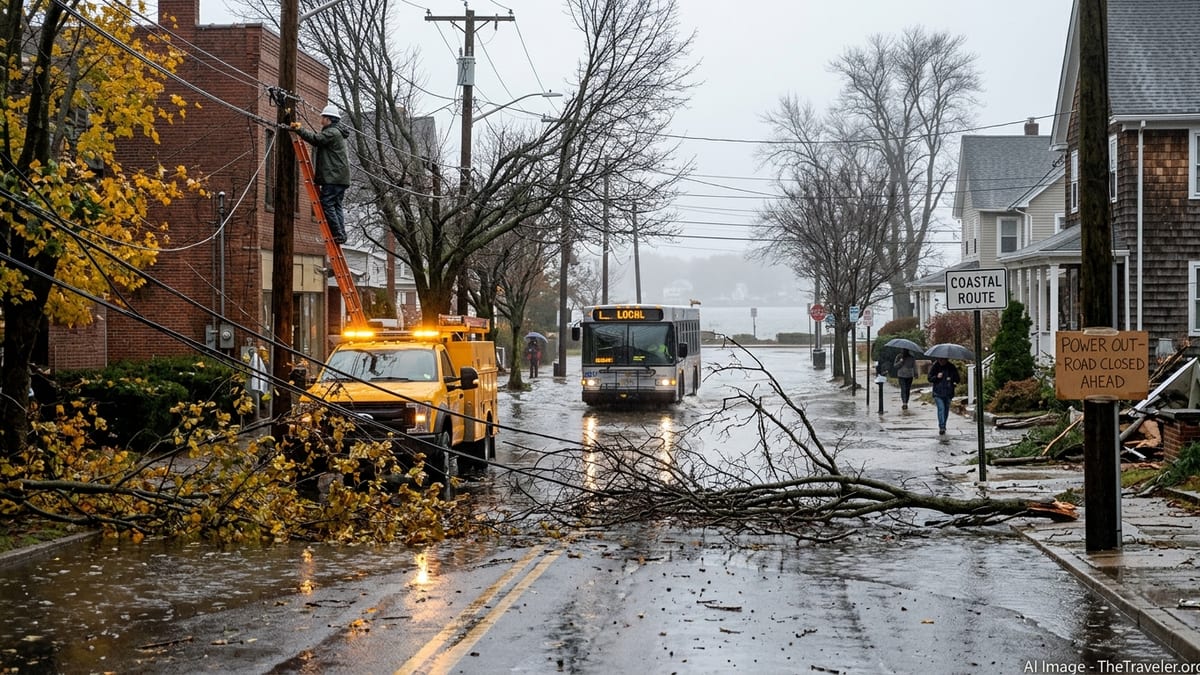
Hundreds of thousands of customers across the eastern United States remained without electricity on Friday, November 27, after a powerful Thanksgiving week storm flooded roads, downed trees and power lines, and disrupted some of the busiest travel days of the year.
Get the latest news straight to your inbox!
Wide swath of outages from Midwest to Northeast
Energy utilities and outage-tracking services reported that the Thanksgiving storm system cut power to well over 900,000 homes and businesses across the Midwest and Northeast at its peak on Thursday evening, November 26, as heavy rain and strong winds swept through key population centers from the Great Lakes to New England. While crews restored service overnight in some of the hardest-hit communities, several hundred thousand customers were still without power on Friday morning in states including Missouri, Illinois, New York, New Jersey, Pennsylvania and Massachusetts, according to regional tallies and national outage maps.
The storm, sometimes described by forecasters as a Thanksgiving nor’easter as it intensified along the East Coast, combined coastal flooding and wind gusts that reached up to about 70 miles per hour in parts of the region. In New York City, official reports cited gusts above 50 miles per hour at major airports, strong enough to topple trees and break branches that fell onto power lines. Utility companies in coastal New Jersey and Long Island reported extensive damage to local distribution networks, especially in low-lying neighborhoods that also contended with saltwater flooding.
Across the eastern half of the country, the pattern of damage and the timing of the storm created particular difficulties for residents hosting Thanksgiving gatherings. In several counties around St. Louis, for example, tens of thousands of customers awoke without electricity on Thursday after overnight thunderstorms and high winds, leaving some households scrambling to find alternate locations to cook holiday meals or relocating to relatives in areas where service was still available. Local emergency managers emphasized that, although the system was not on the scale of previous landmark storms in the region, the combination of power cuts, road closures and holiday traffic meant recovery would take time.
Coastal flooding, high winds and local emergencies
Along the Atlantic seaboard, heavy rain coincided with seasonal high tides in some locations, contributing to coastal flooding from the mid-Atlantic into southern New England. Municipal officials in waterfront cities such as Baltimore and portions of the New Jersey shore closed streets on Thursday as storm surge pushed water into low-lying neighborhoods and made some local roads impassable. Photos and local reports from New York City showed pedestrians navigating strong winds and heavy rain in Manhattan, with localized ponding on streets and subway station entrances being monitored for flood risk.
In parts of New Jersey, residents reported widespread tree damage and localized structural impacts, including siding torn from homes and branches falling onto vehicles, as the storm moved through on Wednesday night and Thursday. Emergency briefings issued before the holiday had warned of the potential for downed power lines and scattered outages, and local officials on Friday continued to urge caution around fallen trees and standing water as cleanup progressed. While major coastal defenses generally held, some communities experienced flooding in basements and ground floors, compounding the disruption caused by power loss.
Farther north in New England, the system lingered into Thursday night. Heavy rain and strong winds in states such as Massachusetts, Rhode Island and New Hampshire led to additional outages and prompted warnings about the risk of falling branches on saturated ground. State emergency management agencies in the region reported that they were coordinating with utilities to prioritize restoration for critical facilities, including hospitals, elder-care homes and emergency shelters, before focusing on smaller neighborhood circuits.
Severe weather compounds already strained holiday travel
The storm struck during one of the busiest travel periods of the year, adding weather-related disruption to air, rail and road networks already coping with high volumes of passengers. Aviation tracking services recorded more than 400 US flight cancellations and roughly 1,600 delays by Thursday afternoon, November 26, with many of the problems concentrated at large hubs along the East Coast where low clouds, strong crosswinds and runway standing water slowed operations. The Federal Aviation Administration had warned earlier in the day that “significant” weather impacts were likely at major airports from Washington to Boston, and those forecasts largely materialized during the late morning and afternoon peak.
Rail travelers also experienced knock-on effects from the storm. Amtrak reported service suspensions and delays on sections of the busy Northeast Corridor on Thursday as strong winds and localized flooding led to speed restrictions and temporary track closures. Regional commuter rail systems in the mid-Atlantic and New England issued alerts about reduced frequencies and scattered cancellations where debris or high water affected lines, asking riders to check real-time updates before heading to stations.
On the roads, officials across multiple states reiterated warnings against attempting to drive through flooded areas, noting that even shallow water could conceal washed-out pavement or submerged obstacles. Despite those cautions, transportation departments reported numerous vehicle rescues from inundated underpasses and coastal routes. In some coastal states on the West Coast, separate high surf and “king tide” conditions also prompted authorities to urge residents to avoid unnecessary shoreline travel during the holiday window, although those impacts were driven by a different weather pattern than the East Coast nor’easter.
Postponed parade and disrupted holiday plans
The storm’s timing had highly visible cultural effects along with its infrastructure damage. In New York City, officials postponed the 100th Macy’s Thanksgiving Day Parade from Thursday to Saturday because of concerns about extreme winds along the parade route and the safety of large balloons and other equipment. Media outlets noted that this marked the first time in the event’s nearly century-long history that the main parade was shifted from Thanksgiving Day itself due to weather conditions, highlighting the severity of the forecast for gusts and heavy rain in Manhattan.
Across the eastern United States, many families reported altering or delaying their Thanksgiving plans in response to utility outages and travel disruption. In communities dealing with extended power cuts, residents arranged to share meals at homes with generator backup or at community centers opened as warming shelters. Some households in coastal New Jersey and other shoreline areas chose to postpone gatherings until Friday or the weekend because of access issues on flooded or debris-strewn local roads, while others proceeded with smaller dinners close to home rather than travel long distances in poor conditions.
Tourism-dependent destinations along the East Coast and in parts of the Midwest saw a mixed picture. While some hotels benefited from stranded travelers seeking last-minute rooms after flight cancellations, others experienced temporary closures or reduced capacity due to localized outages and staffing challenges. Travel organizations emphasized that the disruptions were highly localized, with many inland routes and airports operating close to normal even as specific coastal areas and major hubs reported significant problems on Thursday.
Restoration efforts and what travelers should check next
By Friday, November 27, utilities across the affected regions had mobilized thousands of field technicians to repair damaged lines, replace broken poles and clear vegetation from rights of way. Several states activated mutual-aid agreements that allow crews from less-affected areas to assist neighboring utilities in restoring power more quickly. Officials cautioned, however, that in neighborhoods with heavy tree damage or flooded substations, individual customers could still experience multi-day outages even as overall regional numbers declined.
Weather services indicated that the core of the Thanksgiving nor’easter was moving away from the East Coast on Friday, with conditions expected to improve gradually into the weekend. However, residual river and coastal flooding, as well as saturated soils and weakened trees, meant that scattered new outages and travel issues could still occur, particularly in areas that received the heaviest rainfall. As air traffic controllers and airlines worked through backlogs from Thursday’s disruptions, transportation authorities predicted that Sunday would remain one of the busiest and potentially most delay-prone travel days of the year.
Travelers planning to return home over the weekend were advised by officials and carriers to confirm the status of flights, train services and highway conditions before setting out, rather than relying on original itineraries. In practice, that means checking with airlines or booking platforms for rebooking options, monitoring rail operator alerts for any ongoing weather-related restrictions, and reviewing state transportation or local emergency management updates for information on road closures or detours. Residents in areas still without power were encouraged to stay in contact with their utility providers for estimated restoration times, use generators safely where available, and seek warming or charging centers if indoor temperatures become unsafe.