


More news on this day
Severe Thanksgiving weather on both U.S. coasts has triggered hundreds of flight cancellations and thousands of delays, as heavy rain, strong winds and coastal flooding complicate one of the busiest air travel periods of the year and prompt major airlines to expand flexible rebooking options.
Get the latest news straight to your inbox!
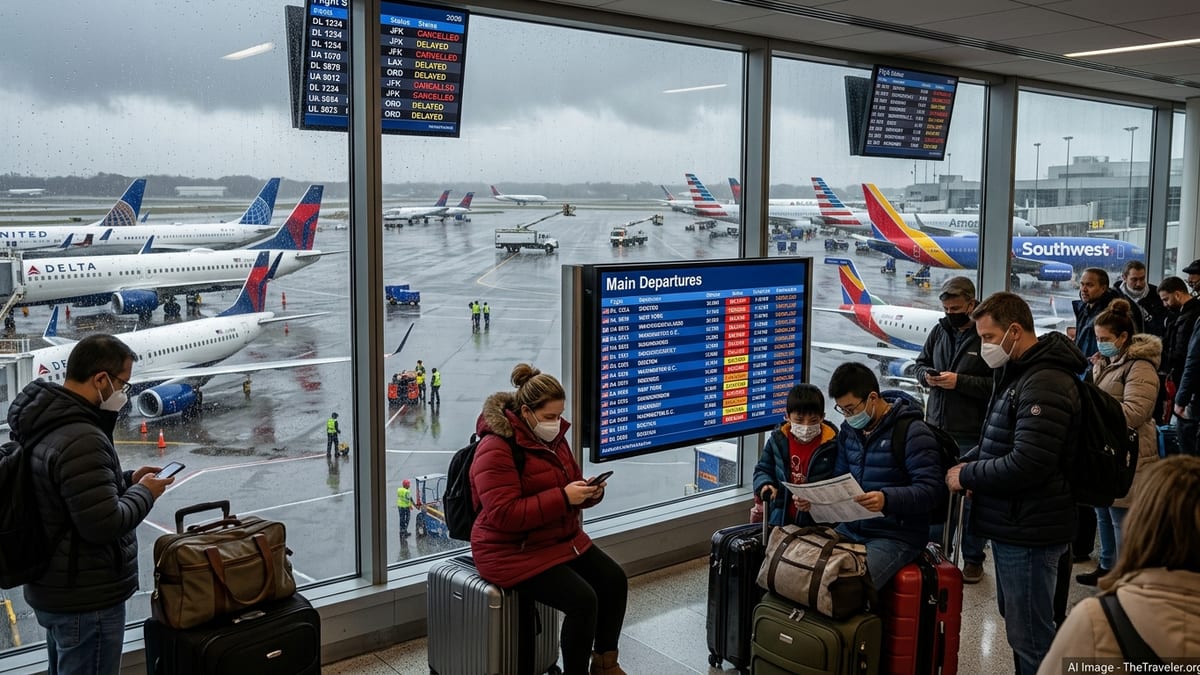
Storm-hit Thanksgiving brings widespread but uneven flight disruption
Heavy rain, high winds and flooding affected large parts of the United States on Thanksgiving Day, November 26, 2026, with conditions particularly disruptive along the East Coast and in parts of California. National flight-tracking data cited more than 2,200 delays and over 400 cancellations to or from U.S. airports by Thursday afternoon, a mix of weather-related slowdowns and residual issues from earlier in the holiday week.
In the Northeast and Mid-Atlantic, a fast-moving coastal storm brought gusty winds, periods of driving rain and pockets of coastal flooding from the Carolinas to New England. Those conditions reduced arrival and departure rates at major hubs such as Atlanta on Wednesday, and New York, Philadelphia, Washington and Boston on Thursday, creating knock-on delays across the national network even at airports with calmer local weather. Earlier in the week, the Federal Aviation Administration had also briefly halted flights bound for Atlanta, Delta Air Lines’ primary hub, after a technical outage involving the carrier’s weight-and-balance system, underscoring how operational problems and adverse weather can compound during peak travel periods.
On the West Coast, Thanksgiving coincided with a different set of hazards. An atmospheric river brought heavy rain and unusually high “king tides” to coastal California and the Pacific Northwest, with forecasters warning of significant flooding risk in low-lying parts of the San Francisco Bay Area and along stretches of the Southern California shoreline. Local authorities in some coastal communities closed beaches and urged residents to avoid unnecessary travel, while San Francisco International and other airports monitored the potential for localized flooding and strong onshore winds to slow air operations.
Record Thanksgiving air travel meets challenging conditions
This year’s weather disruptions have collided with what the U.S. Department of Transportation and Federal Aviation Administration describe as the busiest Thanksgiving air travel period in 16 years, based on scheduled departures over the nine-day holiday window. Regulators projected more than 417,000 flights nationwide between November 22 and November 30, 2026, with the Transportation Security Administration expecting more than 3 million passengers to pass through checkpoints on Sunday, November 29 alone, which is forecast to be the single busiest travel day of the year.
Despite Thursday’s difficult conditions in several regions, FAA status data on Friday, November 27 indicated that, by early afternoon Eastern time, none of the 20 major U.S. airports monitored on one widely used delay-tracking dashboard were under a ground stop, formal ground delay program or major departure hold. That snapshot suggests that while severe weather produced localized slowdowns and cancellations on Thanksgiving itself, the national system began Friday in relatively stable shape, even as airlines worked through residual passenger backlogs.
Meteorologists caution that the picture remains changeable heading into the post-holiday weekend. Federal and private forecasts for Friday and Saturday show lingering showers and gusty winds across parts of New England and the Mid-Atlantic as the coastal low pulls away, along with periods of rain and mountain snow in the Pacific Northwest associated with a developing low-pressure system offshore. Those conditions may periodically reduce airport acceptance rates at affected hubs, especially where low cloud ceilings, reduced visibility or crosswinds exceed normal operating thresholds, but they are not expected to produce the same widespread disruptions seen on Thanksgiving unless individual storm bands intensify unexpectedly.
Major U.S. airlines expand weather waivers and flexible rebooking
In response to the stormy forecast and Thanksgiving Day disruptions, the four largest U.S. carriers have all activated or widened weather waivers for certain routes, giving affected passengers additional flexibility to change their plans without paying standard change fees. American Airlines, Delta Air Lines, United Airlines and Southwest Airlines have each published advisories covering clusters of East Coast airports for travel on Thursday, November 26, with some policies also extending to Florida and earlier dates in the week as heavy rain and thunderstorms swept through Miami and other parts of the Southeast.
According to airline advisories reviewed on Thursday and Friday, American’s Northeast storm waiver allows eligible customers whose itineraries touch specified airports on November 26 to move their trips to available flights through Sunday, November 29, 2026, in the same cabin without incurring an additional change fee, although fare differences may apply on some itineraries. American also issued a separate waiver for passengers scheduled to fly into or out of Miami on Wednesday, November 25, citing hazardous weather there. United’s Thanksgiving coastal-storm waiver permits travelers booked to or from select airports in the affected corridor on November 26 to rebook onto United or United Express flights departing between November 25 and November 28, subject to seat availability and origin-and-destination restrictions.
Delta and Southwest have adopted similar though not identical approaches. Delta’s Northeast weather waiver covers a list of East Coast cities where the storm and associated winds were expected to be strongest on Thanksgiving, allowing customers to move travel within a limited window while keeping the same origin and destination. Southwest, which uses a different pricing and fee structure than its network-carrier rivals, is permitting eligible customers to change to other flights serving the same city pairs within a set period without paying a fare difference. In all cases, travelers who no longer wish to travel at all may be able to request flight credits or refunds, depending on the specific fare rules and whether the airline has canceled their flight, but those options are more limited and highly dependent on the circumstances of each booking.
How the evolving forecast affects Thanksgiving weekend flyers
For travelers yet to fly home from the holiday, the main weather threats on Friday and Saturday are expected to be residual rain and wind in the Northeast and continuing unsettled conditions in parts of the West. National Weather Service products covering November 27 and 28 highlight lingering showers or a rain-snow mix from the Great Lakes into New England as the coastal low moves away, and periods of heavy precipitation in western Washington and Oregon as another system taps Pacific moisture. These patterns can produce short-lived reductions in visibility and low ceilings, prompting air traffic controllers to reduce arrival and departure rates at certain airports for safety, which in turn can lead to queueing and delays.
By contrast, large parts of the central United States are forecast to see relatively benign conditions through much of the post-Thanksgiving weekend, which could help airlines recover schedules and reposition aircraft. However, even regions with clear skies are not immune to the ripple effects of weather elsewhere. When a major coastal hub such as New York, Boston, San Francisco or Los Angeles slows operations due to adverse conditions, aircraft and crews scheduled to operate onward flights through the day can arrive late to their next destinations, creating secondary disruptions far from the original storm zone. That dynamic is one reason holiday travelers often encounter delays at seemingly unaffected airports during large-scale weather events.
Travelers should also be aware that higher-than-usual tides and large coastal waves, particularly along parts of the California shoreline and sections of the Mid-Atlantic and New England coasts, may continue into the weekend even after the heaviest holiday rainfall has passed. While these marine hazards are not primarily an aviation issue, they can affect access roads, parking areas and public transport links serving some coastal airports, especially during times of peak high tide. Local authorities in several California communities have already closed certain beaches and urged residents to avoid nonessential coastal travel, and similar localized advisories could appear elsewhere if flooding persists or strengthens.
Practical steps for travelers navigating the Thanksgiving storm fallout
Given the combination of record Thanksgiving passenger volumes and unsettled weather on both coasts, airlines and regulators are urging passengers to monitor their flights closely and to build additional time into their journeys. Official FAA guidance for the 2026 Thanksgiving period emphasizes checking airline apps or websites for gate and schedule updates, reviewing the National Airspace System status for any emerging ground delay programs, and arriving early at airports to account for heavy security lines and potential congestion on airport access roads.
For those whose flights are still scheduled to operate, the most practical short-term step is to confirm both the status of the departure and the status of the inbound aircraft that will operate the route, since delays elsewhere can cascade into later legs. Paying attention to airline-issued weather alerts or travel advisories can also help travelers determine whether they qualify for a waiver that allows free rebooking to a different time or day. Where flexible policies are available, acting early generally opens more alternative options, particularly around peak times such as Sunday evening when aircraft are heavily booked.
Passengers whose flights have been canceled or significantly delayed should document communications with their airline and review their fare conditions, as refund eligibility and overnight accommodation support vary by carrier and by whether the disruption is attributed to weather or to controllable operational issues. Travelers using third-party booking platforms may need to work through those intermediaries for certain changes. Looking ahead, forecasters and regulators will continue to update both the weather outlook and system-status guidance through the weekend. Anyone flying between now and Sunday is encouraged to recheck the forecast and their flight status on the morning of travel, verify whether any new or expanded waivers have been issued on their route, and leave extra time at the airport in case conditions tighten again as the long holiday weekend concludes.