


Lodging in the Florida Panhandle is heavily clustered along narrow coastal strips and barrier islands, where development hugs the sand or the bayside. Across this region you will find everything from high-rise condo towers and full-service resort hotels to small independent motels, townhome and beach-house rentals, plus RV parks and waterfront campgrounds. Because each area has a different mix of these options, choosing where to stay is as important as choosing when to go.
Get the latest updates straight to your inbox!
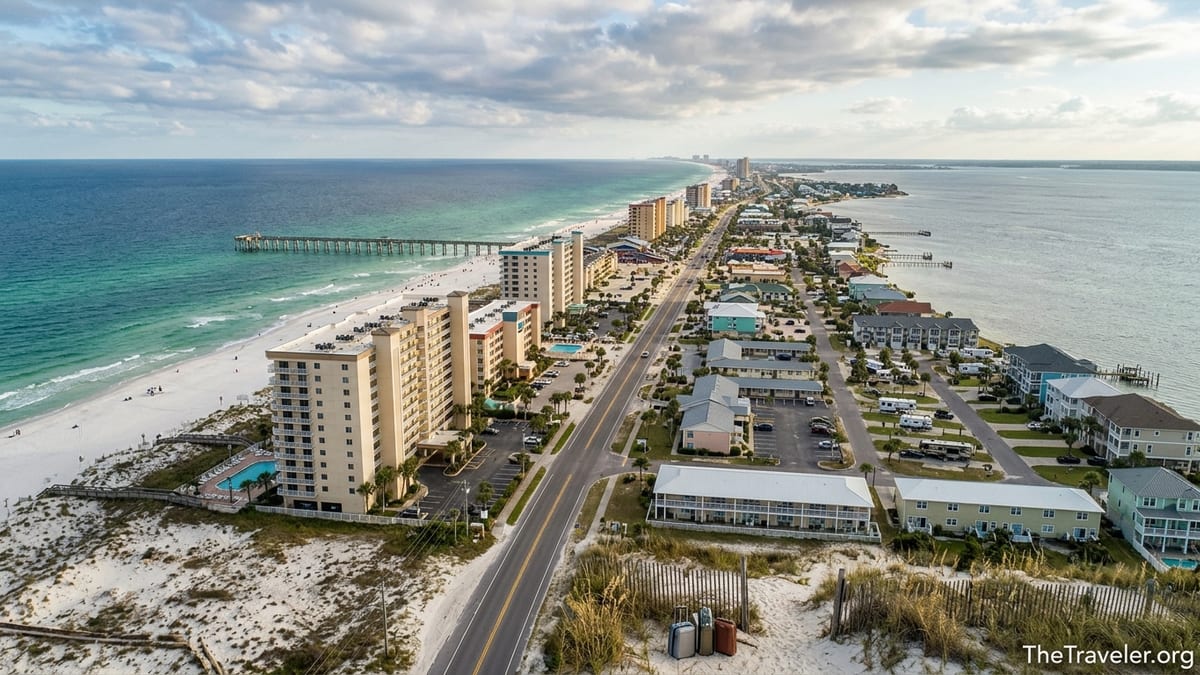
How Lodging in the Panhandle Is Organized
The Florida Panhandle’s most popular beaches run along barrier islands and slim peninsulas, with the Gulf of Mexico on one side and calm bays or sounds on the other. That geography means lodging is often lined up in a single band along a main beachfront road, and your exact location on that strip will strongly influence how easily you reach the sand, restaurants and activities.
Across the Panhandle, condos and vacation rentals play an outsized role compared with many other U.S. beach regions. Recent lodging research for the Destin and Fort Walton Beach area, for example, shows roughly half of all units are condos or residential-style properties, with hotels making up a similar but slightly smaller share. In Scenic 30A communities, traditional hotels remain limited and vacation rentals continue to dominate, while areas such as Panama City Beach and Pensacola Beach show a more balanced mix of high-rise condo resorts and branded hotels.
Because inventory skews toward multi-bedroom condos and houses in many towns, it is common to see minimum stays of three to seven nights during peak seasons. Hotels and motels, by contrast, usually offer more flexible one- or two-night bookings. As you compare destinations, it helps to decide early whether you want a classic condo week, a shorter hotel-style stay, or a mix of both.
Before committing, it is worth checking current booking sites and local tourism data for your target dates. In some places new hotels have opened in the last few years and shifted the balance slightly away from pure vacation rentals, giving more options for travelers who prefer hotel services and shorter stays.
Pensacola Beach and Perdido Key: Balanced Mix for Flexible Stays
Pensacola Beach occupies Santa Rosa Island east of Pensacola Bay, with most lodging stretched along a single beachfront road between Gulf-front towers and bayside marinas. Travelers can choose from large condo complexes, independent resorts with extensive Gulf frontage, and familiar-brand hotels with pools and on-site dining. Nearby Perdido Key, closer to the Alabama line, is quieter and leans more heavily toward condo buildings and low-rise vacation rentals with direct or semi-direct beach access.
Because of this mix, Pensacola Beach works very well for long weekends and shorter breaks. Hotels typically allow nightly bookings year-round, while many condo properties are available for three- or four-night stays outside peak weeks. Weekly rentals are common in summer, especially in larger Gulf-front condos and townhomes. Perdido Key tends to attract longer stays, with many guests booking a full week or more in beachfront condos outfitted for cooking and extended family visits.
This area suits travelers who want a balance of walkable dining and a family-friendly boardwalk scene without the density of the largest resort towns. Gulf-front resorts and condos put you directly on the sand, while bayside hotels and RV sites offer calmer water views and often lower prices, at the cost of a short walk or drive to public beach entrances. Before booking, review parking details, as some properties charge nightly parking fees or limit the number of vehicles per unit, and check whether beach chair service and resort amenities are included or cost extra.
For RV travelers, private parks near Pensacola Beach and along the Santa Rosa Sound offer full hook-ups, while the nearby Gulf Islands National Seashore includes a campground on the western end of the island. These public sites typically cap stays at one to two weeks and may enforce strict quiet hours, pet rules and generator limits, so it is important to confirm specifics and book well ahead for spring and early summer.
Navarre Beach: Low-Key Condos and RV-Friendly Options
Navarre Beach sits between Pensacola Beach and Destin on a narrow barrier island, with far fewer high-rises and commercial strips. The dominant lodging style here is condo and townhouse rentals facing either the Gulf or the Santa Rosa Sound. Many complexes have pools and direct boardwalk access to the beach, but the atmosphere is generally quieter than in the larger hubs to the west and east.
Typical stays in Navarre Beach skew toward longer family vacations. Many condos use a weekly model in high summer, with check-ins on specific days to keep turnover consistent. In shoulder seasons such as late spring and early fall, it is easier to find three-night minimums that work for a long weekend. Because restaurant and shopping clusters are smaller and more spaced out, most visitors consider a car essential, even if their condo is beachfront.
Navarre Beach suits travelers who want a relaxed, uncrowded feel with easy access to the sand and are willing to forego a dense nightlife or large shopping centers. When comparing listings, pay attention to whether you are truly Gulf-front, just across the two-lane beach road, or on the bayside. Bayside condos can offer calmer water and sunset views but may require a short drive to the main public Gulf beach access points, which can have limited parking on busy days.
Navarre is also appealing for RV and camping travelers. Private RV resorts along the sound provide waterfront or water-view sites with electric and water hook-ups, and some have pools, fishing piers and direct small-beach access. State and forest campgrounds within a reasonable drive inland add more rustic options, often with shorter maximum stays and fewer amenities. Reservation windows for these public sites are usually several months out, and popular spring break and summer weeks can book up quickly.
Destin, Fort Walton Beach and Miramar Beach: High-Rise Hubs With Condo Strength
The Destin, Fort Walton Beach and Miramar Beach stretch is one of the Panhandle’s most developed resort corridors. Lodging here includes large Gulf-front condo towers, full-service beachfront resorts, mid-rise hotels along the main highway and residential neighborhoods with short-term rental homes. Recent county reports show that condos and other residential units still account for a substantial portion of the lodging inventory, while hotels have also grown, resulting in a relatively balanced market.
Average stays in this cluster vary. Families often book weeklong condo vacations in summer, taking advantage of kitchens, multiple bedrooms and on-site beach access. At the same time, the strong hotel presence around Destin Harbor, Fort Walton’s Okaloosa Island and Miramar Beach’s shopping districts supports more flexible short breaks and long weekends. Travelers who prefer to arrive midweek or combine beach time with fishing charters and golf appreciate the ability to book three or four nights without committing to a full Saturday-to-Saturday rental.
This region suits travelers who want a wide choice of price points and amenities. Beachfront resorts provide pools, organized kids’ activities and on-site restaurants, often in walkable clusters near harborside entertainment or outlet malls. Many condo complexes include beach chair service, fitness rooms and multiple pools, but you will need to read listing details closely to see which amenities are included and which incur extra resort or activity fees. Parking is generally available but can be structured or limited at high-rises, sometimes with per-vehicle charges.
Noise levels and crowding vary block by block. Properties near harbor entertainment zones or main beach party areas can be lively well into the night, particularly during spring break and major summer holidays. Those seeking quieter stays should look for units farther east or west from main piers and boardwalks, or choose bayside and golf-course communities that require a short drive to public beach accesses but offer calmer evenings.
Scenic 30A Corridor: Rental Houses, Condos and Boutique Hotels
The Scenic Highway 30A corridor connects a string of master-planned beach towns and older coastal communities between Miramar Beach and Panama City Beach. Here, vacation rentals remain the defining lodging style. Most towns are built around clusters of single-family homes, townhouses and low-rise condos, many of which are managed by local rental companies or national vacation-rental platforms. Traditional hotels are limited but growing, with a handful of boutique and branded properties now open in select communities.
Because whole-home and multi-bedroom rentals dominate, weekly stays are common in peak season. Many owners and management firms prefer seven-night minimums during summer and school holidays, while shoulder seasons and winter allow more flexible three- or four-night bookings. Travelers willing to arrive midweek or outside the busiest weeks may find better availability in high-demand neighborhoods near pedestrian town centers.
The 30A corridor suits visitors who value design-forward beach towns, walkability within compact centers and access to bike paths more than big-box attractions. However, beach access can be nuanced. Some stretches have private or semi-private beach clubs tied to specific communities, and public access points may have limited parking that fills early on clear summer days. When evaluating a rental, confirm whether you have dedicated neighborhood beach access, shared rights with a beach club or will rely on public entrances, and consider whether you will walk, bike or drive to the sand.
New and renovated boutique hotels in certain 30A towns offer an alternative for couples and shorter stays, with amenities such as on-site restaurants, roof decks, spa services and chair service at the beach. These properties tend to price at a premium and may also add daily resort fees. For renters, it is important to budget for cleaning fees, booking fees, service charges and taxes on top of the nightly rate, as these extras can significantly change the total cost of a 30A vacation.
Panama City Beach: Resort Towers and Broad Public Beach Access
Panama City Beach is one of the Panhandle’s classic high-rise resort destinations, with a long run of condo towers and hotels facing a wide, largely continuous public beach. Recent short-term rental data indicate that Panama City Beach remains one of the most active condo and vacation-rental markets on the Emerald Coast, while a healthy selection of hotels and resort-brand properties provides alternatives for those who prefer nightly bookings and loyalty programs.
Families and groups often book Gulf-front condos for weeklong stays, appreciating direct access to the sand, kitchens for easy meals and large balconies overlooking the water. Many of these complexes include pools, lazy rivers, splash pads and kids’ clubs, which can make it easier to keep children entertained without leaving the property. At the same time, mid-rise and high-rise hotels near the main entertainment and shopping district typically accommodate shorter stays and last-minute weekend trips.
Panama City Beach suits travelers who want a wide, easily accessible beach, a substantial restaurant and entertainment scene, and the convenience of plentiful public access points. Parking is generally more straightforward than in tighter 30A communities, though some large resorts charge for garage parking or limit the number of passes per unit. Properties close to major piers and nightlife venues can be busy and noisy, particularly during college spring break and major festivals, so light sleepers may want to look a bit away from these hubs or choose lower-density areas toward the west end of the beach.
Vacation-rental guests should carefully review total cost estimates. Many Gulf-front condos add cleaning fees, booking or management fees, and taxes, and some large complexes charge separate wristband or parking-pass fees that are collected at check-in. Because of the scale of the rental market here, it is relatively easy to compare a handful of listings for your travel week to see how different fee structures affect the final price.
Mexico Beach, Port St. Joe and Cape San Blas: Quiet Beach Houses and Nature
East of Panama City Beach, the coastline transitions into a quieter region centered on Mexico Beach, Port St. Joe and the Cape San Blas peninsula. Building height limits and a slower pace of development mean that low-rise homes and small condo complexes are more common than large towers. Vacation rentals, particularly single-family beach houses and duplexes, are the dominant lodging style, complemented by a small number of inns, motels and local lodges.
Stays here tend to be deliberate and longer. Weekly bookings are the norm during high season, and many properties require minimum stays of five or more nights even in shoulder periods. Guests are often repeat visitors drawn by uncrowded beaches, access to bays and inshore fishing, and dog-friendly stretches of sand in certain communities. Nightlife is limited, and most travelers rely on a car to reach grocery stores, restaurants and outfitters.
These areas are well suited to travelers who prioritize privacy, nature and a slower rhythm over built-up attractions. Beach houses on or near the Gulf-side dunes provide direct paths to the sand, while bayfront homes on St. Joseph Bay offer calm waters for paddling and wildlife watching. Because public access points are more spread out, it is important to understand whether your rental has its own dune walkover, shares a neighborhood access or requires a short drive to a community lot.
Cape San Blas and nearby state parks include waterfront and near-water campgrounds that are popular with RV owners and tent campers. Many sites offer electric and water hook-ups, while some beach-adjacent loops may have size limits that exclude the largest rigs. Maximum stay rules often cap visits at around two weeks, and reservation windows open months in advance, so planning ahead is crucial for peak spring and summer dates.
Campgrounds and RV Parks: Coastal Access and Key Rules
Across the Panhandle, a mix of state parks, state forests and private RV resorts offer campers and RV travelers a way to stay close to the coast at generally lower nightly rates than comparable beachfront condos. Coastal parks near Destin, Panama City Beach and Cape San Blas feature campgrounds within walking or short-cycling distance of the Gulf, while private RV resorts along bays and sounds offer waterfront views, pools, clubhouses and direct fishing access.
Hook-up availability varies. Many state park campgrounds provide electric and water hook-ups at individual sites and a central dump station, while some loops remain more primitive, with limited amenities and smaller pad sizes. Private RV parks often advertise full hook-ups with sewer connections at the site, cable or streaming-friendly Wi-Fi, and larger pull-through sites for big rigs. Because each campground sets its own size limits, prospective guests with large motorhomes or trailers should double-check maximum length allowances when booking.
Reservation and stay rules are important to understand. State-run campgrounds typically open reservations months in advance and impose maximum stay limits in the range of one to two weeks in a single park to keep sites available for more visitors. Many also have specific rules regarding alcohol consumption, quiet hours, generator use and pet restrictions, particularly on swimming beaches and in protected dune areas. Private parks can be more flexible but may enforce their own standards on noise, guests and outdoor equipment.
Patterns are fairly consistent across the region, but specifics vary by park and operator. Travelers should confirm current reservation windows, available hook-ups, length limits and rule sets on official park or park-management sites before finalizing plans, and be prepared to adapt if popular waterfront loops are fully booked during holiday and school-break periods.
Costs, Fees and What to Watch in Listings
When comparing condos, beach houses and hotels, it is important to look beyond the nightly rate. Vacation rentals in the Panhandle commonly add separate cleaning fees, booking or management fees, and taxes. Some resort-style complexes layer on daily or weekly resort fees that cover amenities like pool access, fitness centers, beach chair setups or community shuttle services. Parking passes and wristbands for amenities can also carry individual fees, especially in larger towers and gated communities.
These extras can significantly change the total price, especially for shorter stays where a flat cleaning fee is spread over just a few nights. A condo advertised at a modest nightly rate may end up comparable to or more expensive than a local hotel once all fees are included. Travelers are wise to run test bookings on multiple properties for their actual travel dates and party size, paying attention to the summarized “total before taxes” and “total including taxes and fees” figures rather than the base nightly listing.
Hotels and motels in the region sometimes charge separate fees as well. Common add-ons include nightly parking charges, resort fees for beachfront properties, and charges for cabanas or premium beach chairs. Because fee names and amounts can change, it is generally safer to review booking details directly with the hotel or main rental company rather than relying solely on third-party summaries.
Another practical consideration is beach access and included equipment. Some condos and houses provide complimentary seasonal beach setups, bikes or kayak use, while others rely entirely on paid beach vendors and outside rental shops. Spring and summer visitors who expect to use chairs and umbrellas daily may find that rentals with included setups provide better value, even at slightly higher nightly rates.
Booking Strategies, Seasons and Special Events
The Florida Panhandle’s peak lodging demand typically aligns with school breaks, warm-weather months and special event periods. March and early April bring college and family spring breaks, which push occupancy and prices higher in classic hotspots such as Panama City Beach and parts of Destin and Panama City Beach’s resort corridors. Summer vacation season runs from roughly Memorial Day through early August, with especially strong demand over holiday weeks and in communities built around family-friendly rentals.
For popular summer weeks, families often secure beachfront condos and beach houses several months in advance, particularly in high-demand areas like 30A or Cape San Blas where inventory is more limited. Some repeat visitors reserve their preferred properties nearly a year ahead. Travelers seeking spring break stays in larger resorts or near major event venues also benefit from early planning, though last-minute hotel rooms can sometimes be found inland or away from central beaches.
Shoulder seasons in late April to early May and in September and October can offer a sweet spot of warm water, fewer crowds and improved availability, though fall events and festivals occasionally spike demand in specific towns. Checking a couple of representative weeks on major booking platforms or local tourism sites for the current year can give a realistic sense of occupancy patterns and minimum stay rules for your exact dates.
Regardless of timing, flexible travelers can often save by considering Gulf-view or across-the-street properties rather than direct Gulf-front units, or by choosing bayside accommodations with short drives to the beach. Booking directly with reputable hotels or established rental management companies can also provide clearer fee breakdowns and easier resolution if issues arise, compared with more fragmented arrangements through multiple intermediaries.
Scenario-Based Recommendations
For a long weekend without a car, look to areas that combine walkable lodging clusters with robust dining and entertainment. Pensacola Beach, Destin’s harbor district and select 30A town centers with boutique hotels work well here. Choosing a Gulf-front or immediately across-the-street property near a pier or boardwalk area lets you walk to the beach, restaurants and nightlife. Hotels are often the most practical choice for short car-free breaks, as they include on-site staff, easier airport transfers and minimal check-in logistics.
For a budget-conscious condo vacation with kids, consider western Panama City Beach, parts of Fort Walton Beach and Navarre Beach. In these areas, you can often find two-bedroom Gulf-front or near-Gulf condos with pools and simple beach access at lower price points than the most in-demand 30A communities. Look carefully at cleaning fees, resort fees and parking charges when comparing units, and consider staying slightly off the water but within walking distance of a public beach access if Gulf-front pricing is out of reach.
Couples prioritizing privacy and nature might be happiest in Mexico Beach, Port St. Joe or Cape San Blas, or in carefully chosen corners of 30A and Navarre Beach that sit away from main public accesses. A small beach house or low-density Gulf-front condo can provide direct dune access, dark skies and quiet evenings, while bayfront cabins and campgrounds near protected areas offer a different kind of waterfront serenity. For these trips, it is worth booking early to secure unique or particularly secluded properties, and reviewing maps and satellite images to confirm that surrounding development matches your expectations for quiet.
Whichever area and lodging type you choose, start by listing your priorities among direct beach access, walkability, on-site amenities, price and atmosphere. Then use current booking data and a handful of real-world listings to compare how condos, hotels, beach houses and campgrounds in each Panhandle destination line up with those priorities. With a bit of advance research on fees, rules and access, it becomes much easier to pick the Florida Panhandle base that fits your travel style.