


More news on this day
Travel plans for hundreds of passengers unraveled at Paris Charles de Gaulle on Saturday as operational data showed 161 delayed flights and two cancellations, disrupting services by Air France, RwandAir, easyJet and several other airlines across France, Europe and long-haul routes.
Get the latest news straight to your inbox!
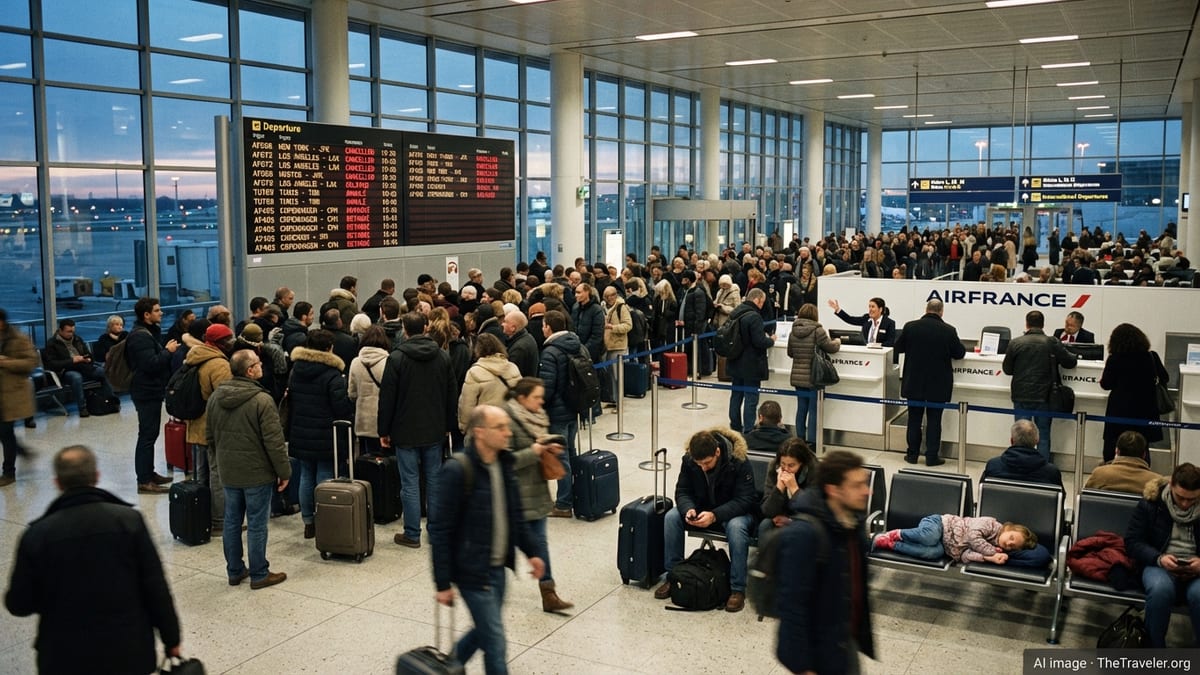
Fresh Disruptions Hit Europe’s Second-Busiest Hub
The latest disruption at Charles de Gaulle comes at the height of the early summer travel build-up, a period when traffic through Paris typically climbs ahead of the main July and August peak. Publicly available tracking dashboards for French airports indicate that Paris platforms, including Charles de Gaulle, have been managing elevated levels of late-running services in recent days, with Saturday’s 161 delays at CDG marking a notable spike in schedule pressure compared with an ordinary spring weekend.
Data from real-time flight trackers shows that delays at Charles de Gaulle on 3 and 4 June were already running higher than usual, with more than 500 delays and at least a dozen cancellations registered across the Paris airport system earlier in the week. Against that backdrop, the new cluster of 161 delayed operations and two cancellations at CDG underlines how quickly congestion can reappear at a major European hub once aircraft and crews fall out of position.
Charles de Gaulle serves as the main hub for Air France and a key base for easyJet, while also handling a broad mix of African, Middle Eastern, Asian and transatlantic services operated by partner and competitor airlines. That role as a connective hub means even a relatively small number of cancellations can ripple through connecting banks of flights, leaving passengers on routes far from Paris dealing with missed links and rebooked journeys hours after the original disruption.
Airport performance data reviewed on Saturday suggested that the bulk of the late-running flights at CDG were experiencing delays of more than 30 minutes, with a significant share exceeding one hour. For travelers with onward connections or tight ground schedules in Paris and other destinations, even moderate delays were enough to force itinerary changes and, in some cases, overnight stays.
Air France, RwandAir and easyJet Among Most Affected
As Charles de Gaulle’s anchor carrier, Air France once again featured prominently in the disruption statistics. Published coverage and route maps show that the airline’s CDG network spans everything from short domestic hops to long-haul services bound for North America, Africa, the Indian Ocean and Asia, magnifying the impact of any disruption originating in Paris. When an aircraft arrives late from one region, its subsequent rotations to other destinations are often pushed back, resulting in a widening wave of delays across the day.
Recent days have already seen scattered delays on Air France services from Charles de Gaulle to destinations such as Saint-Denis on Réunion Island, North and West Africa and North American cities, as reflected in flight-status portals monitoring June operations. The latest set of 161 delayed movements at CDG appears to fit that broader pattern of schedule strain, in which inbound tardiness and tight turnarounds combine to leave some flights departing well behind timetable.
RwandAir, which links Kigali with Paris, is also listed among the carriers affected by the latest operational setback. While the airline operates a comparatively small number of flights to and from Charles de Gaulle, its services connect into a web of onward European and transatlantic routes via codeshare partners. A delay or cancellation on the Kigali–Paris leg can therefore affect travelers not only between France and Rwanda but also those connecting onward to cities elsewhere in Europe or across the Atlantic.
Low-cost operator easyJet, which maintains an operating base at Charles de Gaulle, has likewise been caught up in the difficulties. The carrier’s CDG schedule includes frequent departures to leisure destinations such as the Mediterranean and the Greek islands as well as UK and regional European cities. According to departure boards and independent trackers, a number of those flights have been leaving behind schedule during the current spell of disruption, complicating day-trip and weekend-break plans that rely on punctual early-morning or late-evening departures.
Knock-On Effects Across France, Europe and Long-Haul Routes
Although Saturday’s figures point to two outright cancellations at Charles de Gaulle, the wider consequence of 161 late departures and arrivals is far more extensive than the raw numbers suggest. Industry analyses regularly note that a cancellation or heavily delayed departure at a major hub often reappears hours later as a late inbound at a secondary airport, or even as a delayed long-haul service departing from another continent, as aircraft cycle through their daily rotations.
Earlier in the week, published coverage of Paris-area performance highlighted that delays at Charles de Gaulle and nearby Orly had already triggered missed connections and overnight stays for passengers heading to and from cities in North America and elsewhere in Europe. With the latest disruption, travelers on itineraries linking Paris with African hubs, Indian Ocean destinations and Mediterranean holiday spots are again facing the risk of missed onward flights and reshuffled plans.
Because many aircraft operating through Charles de Gaulle are scheduled on mixed patterns that combine long-haul segments with shorter intra-European or domestic legs, a punctuality problem at one end of the route map can quickly surface somewhere else. For instance, a delayed evening arrival from Latin America or Africa might push back an early-morning departure to a European city, while an extended turnaround for a technical inspection in Paris can leave a later transatlantic flight departing hours behind schedule.
Travel forums and advisory sites have increasingly urged passengers transiting Paris to allow additional connection time, particularly when transferring between terminals or between Schengen and non-Schengen zones at Charles de Gaulle. The latest wave of delays underscores that advice, as even a 45-minute schedule slip can prove critical for travelers with tight layovers or separate tickets on different carriers.
Patterns of Strain at Paris Airports in 2026
The current setback at Charles de Gaulle is unfolding against a backdrop of broader operational challenges at French airports in 2026. In January, a winter storm system widely referred to as Jorty brought snow and freezing conditions across parts of Western Europe, triggering hundreds of delays and dozens of cancellations at airports including Charles de Gaulle and Orly. Aviation-focused outlets reported that the Paris platforms accounted for a notable share of those disruptions as de-icing operations slowed departures and runway conditions required additional spacing between flights.
More recently, analysis of delay statistics has pointed to continued pressure on punctuality at major French hubs as airlines rebuild schedules and adjust to changing demand patterns. Reports discussing flight operations at Charles de Gaulle cite factors such as high load factors, tight aircraft utilization, occasional technical issues and weather variability as recurring contributors to disruption. In some instances, capacity management measures at Paris airports have also required airlines to adapt their schedules or consolidate flights.
Operational reviews compiled this spring indicate that even on days without extreme weather or major industrial action, Paris airports have experienced periods of elevated congestion at security, border control and taxiways, particularly during busy morning and late-afternoon banks. On such days, even small schedule slips can accumulate as aircraft wait for stands, crews reach duty-time limits or connecting passengers require additional time to board, further entrenching delays across an already busy network.
Industry observers note that as carriers like Air France, easyJet and their partners push toward pre-pandemic traffic levels and beyond, the margin for error at crowded hubs remains slim. The latest episode of 161 delays and two cancellations at Charles de Gaulle illustrates how modest disruptions can still pose outsized challenges when airports and airlines are operating near capacity, particularly at the start of the European summer season.
What Passengers Can Expect in the Coming Days
With aircraft and crew schedules disrupted on Saturday, passengers traveling through Charles de Gaulle in the next 24 to 48 hours are likely to feel some residual effects. Historical data on similar events at Paris airports suggests that recovery from a wave of delays and scattered cancellations often takes at least one full operational day, especially when long-haul aircraft have been knocked off their planned rotations.
Travel information services advise that passengers due to depart from or connect via Paris in the short term should monitor their flight status closely through official airline channels and airport displays. According to publicly available guidance on recent disruption episodes in France, those who experience long delays or cancellations may, depending on the circumstances, be eligible for assistance such as meals, accommodation and rebooking support under European air-passenger rules.
Consumer-rights groups and advisory platforms typically recommend that affected travelers retain boarding passes, booking confirmations and records of any additional expenses incurred during disruption. These documents can be important when submitting claims to airlines or seeking clarification on entitlements after a delayed or canceled flight originating in the European Union.
As the early summer travel period gathers pace, the situation at Charles de Gaulle will remain closely watched by passengers, airlines and tourism businesses. Even as operations begin to normalize after the latest round of 161 delays and two cancellations, the episode serves as another reminder that Europe’s busiest hubs continue to face significant operational pressures in 2026, with knock-on effects for journeys well beyond France.