


New York’s John F. Kennedy International Airport is one of the busiest international gateways into the United States, and that often means long lines, strict security, and a lot of questions for travelers. Whether you are flying out of JFK or arriving in the U.S. for the first time, understanding how TSA security and U.S. immigration work here can make the difference between a smooth transit and a stressful scramble to the gate.
Get the latest updates straight to your inbox!
How JFK Airport Is Laid Out and Why That Matters for Security
JFK is not a single building but a campus of separate terminals, each with its own check in areas and TSA checkpoints. As of mid 2026, the primary passenger terminals in operation are Terminals 1, 4, 5, 7 and 8, with major construction and redevelopment continuing around the airport. Most international long haul flights use Terminals 1, 4 and 8, while JetBlue dominates Terminal 5 and several oneworld carriers share Terminal 8. This matters because your security and immigration experience will depend heavily on which terminal you are using.
Each terminal has its own TSA security checkpoint and its own U.S. Customs and Border Protection arrivals hall, so you cannot generally clear security or immigration in one terminal and then walk airside to another unless they are physically linked and your airline has arranged it. For example, American Airlines and some partner carriers allow airside transfers within Terminal 8, but if you land at Terminal 1 and fly out of Terminal 5 later, you will need to clear immigration, collect your baggage if it is not checked through, change terminals landside, and then pass TSA security again at the new terminal.
Real world experiences at JFK vary by terminal and time of day. Travelers at Terminal 8 during early morning bank departures have reported spending well over an hour in the standard TSA line, compared with 15 to 30 minutes at quieter midday times. At Terminal 4, which handles many long haul departures for airlines such as Delta and numerous foreign flag carriers, even TSA PreCheck lanes can occasionally back up in peak evening hours, while late morning departures might see passengers getting through security in under 20 minutes.
Because every terminal operates its own security and immigration facilities, it is important to check your flight details carefully before your trip. If you have a tight connection that involves changing terminals, you may need to build in additional time specifically for moving between buildings and clearing TSA again, even if both flights are on the same airline alliance.
TSA Security at JFK: What to Expect and Typical Wait Times
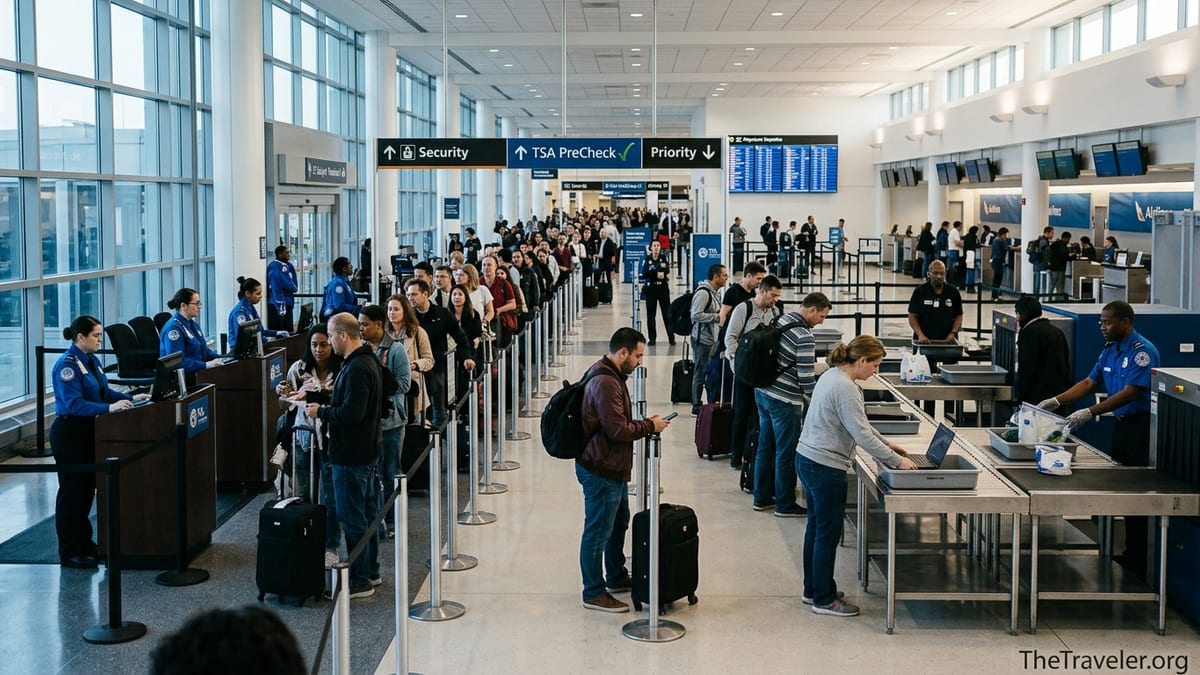
TSA security screening at JFK follows the same federal rules you will see at other U.S. airports, but the volume of travelers here can make the experience feel more intense. Live wait time trackers and historical data for JFK often show standard security waits fluctuating between about 15 and 40 minutes during busy periods, with occasional spikes well beyond that when lines stretch toward terminal doors. Early morning outbound waves between roughly 4 a.m. and 8 a.m. and late afternoon to early evening from around 4 p.m. to 7 p.m. are often the most congested.
In practice, that means a passenger checking in for a 7:30 a.m. domestic flight from Terminal 5 might arrive at 5 a.m. to find the general security line already snaking through the check in hall. Recent traveler reports describe total times of 60 to 90 minutes from curb to gate during these peaks, even when the official wait time boards suggested shorter queues. Conversely, a traveler flying out of Terminal 1 on a late evening departure around 11 p.m. may find security nearly empty and be through in less than 10 minutes.
TSA PreCheck and CLEAR can significantly reduce waits when they are operating normally. At JFK, TSA PreCheck lanes are usually available in major terminals such as 4, 5 and 8, and on a typical day PreCheck passengers might clear security in under 10 minutes when general lanes are running 20 to 30 minutes. CLEAR, where available, allows enrolled travelers to verify their identity at a dedicated pod and then use the physical TSA screening lane, effectively skipping the main ID checkpoint line. The benefit is most noticeable when the queue to have IDs and boarding passes checked stretches far back.
While TSA and the airport share live wait time estimates through various apps and displays, these are based on sensors and may not fully capture portions of the line that form outside the measured area. Travelers have reported situations where an advertised 30 minute wait at Terminal 8 translated into more than an hour in line once they reached the building. In practical terms, you should treat official wait times as a helpful guide, not a guarantee, and build in a cushion of at least 30 minutes beyond what an app suggests if you are traveling at a known busy time.
Security Rules in Practice: Liquids, Electronics and Personal Items
The core TSA rules apply at JFK just as they do across the United States, but seeing how they play out in a high volume airport can help you prepare. For standard travelers without PreCheck, the 3-1-1 liquids rule still applies: liquids, gels and aerosols in carry on bags should be in containers of 3.4 ounces or less, all fitting into a single quart size, clear plastic bag. Items like travel size shampoo, toothpaste, hand sanitizer in small bottles and mini perfume sprays need to go in that bag, which you will remove from your carry on at the checkpoint unless you are directed otherwise by officers.
There are exceptions for items such as baby formula, breast milk and medically necessary liquids. For instance, a parent traveling through Terminal 4 with an infant can bring bottles of formula or breast milk exceeding 3.4 ounces, but should tell the officer at the beginning of the screening process and be prepared for additional testing, such as swabbing the exterior of the containers. Similarly, a passenger carrying prescription liquid medication may keep it separate from the 3-1-1 bag, as long as they declare it and follow the officer’s instructions.
Electronics procedures also differ depending on whether you have PreCheck. In standard lanes, travelers are generally asked to remove laptops and sometimes larger electronics from their bags and place them in separate bins. In practice, that means the business traveler with a 15 inch laptop and a DSLR camera passing through Terminal 5 at 6 a.m. will want to have those items accessible near the top of the bag rather than buried under bulky clothing. TSA PreCheck passengers typically keep laptops and approved liquids inside their bags, which can speed things up considerably when lines are long.
Smaller personal items are a frequent source of delay at JFK security checkpoints. Metal belts, watches, coins and phones left in pockets often trigger secondary screening and slow down the line. A simple tactic that works well here is to put everything from your pockets, along with your boarding pass, into a small zip compartment of your carry on before you reach the front of the queue. Regular travelers through JFK often do this while still in the check in hall, so that by the time they reach the trays they only need to remove shoes and place their bag on the belt.
Using TSA PreCheck, CLEAR and Priority Lanes at JFK
TSA PreCheck and CLEAR can be especially valuable at a complex airport like JFK, but their availability and performance vary by terminal and time. TSA PreCheck is a federal trusted traveler program that offers expedited screening, usually allowing you to keep shoes, belts and light jackets on, and to leave laptops and 3-1-1 liquids inside your bag. At JFK, PreCheck lanes are commonly available in Terminals 4, 5 and 8, and when open they often reduce wait times significantly compared with standard lines.
For example, a traveler departing Terminal 4 at mid day has reported clearing TSA PreCheck plus CLEAR in under 15 minutes, while the adjacent general security queue stretched to an estimated 30 minutes or more. In the same terminal during a very busy early morning bank of flights, however, PreCheck lines themselves can grow long, at times approaching 45 minutes. That means having PreCheck is not a guarantee of a short wait at JFK, but it statistically improves your odds of clearing security faster on most days, especially outside of the worst peaks.
CLEAR is a separate, privately run identity verification service that works in partnership with TSA. At JFK, CLEAR kiosks are typically placed near the front of security areas in terminals where the service is active. A CLEAR member departing Terminal 5, for instance, can often step into the CLEAR lane, verify their identity using fingerprints or iris scan in under a minute, and then be escorted directly to the screening area, bypassing the main ID check queue. CLEAR membership can be combined with TSA PreCheck, which generally gives the greatest advantage because you then use the dedicated PreCheck screening lane after the CLEAR pod.
Many airlines and premium cabin tickets also grant access to priority security lanes at JFK. For example, business and first class passengers on certain international carriers departing from Terminal 1 or Terminal 8 may receive a separate fast track line, often shared with elite frequent flyer members. In practice, this can reduce an hour long general queue to 15 or 20 minutes, although during extreme surges even priority lanes can slow to a crawl. When you check in, look for “Priority” or “Fast Track” indicators on your boarding pass and follow airport signage directing you to the appropriate queue.
Arriving at JFK: Immigration, Customs and Connection Timing
For international arrivals, the first federal checkpoint you encounter at JFK is immigration, formally run by U.S. Customs and Border Protection. After you leave the aircraft, you follow signs for “Arrivals” and “Baggage Claim,” which lead down corridors into the immigration hall for your terminal. Here, travelers are separated into lines for U.S. citizens and permanent residents, visitors, and trusted traveler programs such as Global Entry where available. Wait times can range from a few minutes to over an hour depending on how many flights arrive at once.
Consider a mid afternoon bank of transatlantic flights into Terminal 8. If several widebody jets land within the same 30 minute window, the immigration hall can fill quickly. Visitors on short term visas or under the Visa Waiver Program might wait 45 minutes or more before reaching a CBP officer’s desk, while U.S. citizens in a separate queue may be processed in 20 to 30 minutes. By contrast, a traveler landing on a midday weekday arrival when only a few flights are inbound may find immigration nearly empty, clearing formalities in under 15 minutes.
After immigration, you collect checked baggage from the carousel and then proceed through customs, where you may be asked questions about what you are bringing into the country and whether you have items to declare. Most passengers pass through with only a brief interaction, but officers can direct anyone to secondary inspection for more detailed questioning or baggage searches. This can happen randomly or because of specific concerns, so it is important to answer all questions truthfully and keep receipts for high value goods, especially if you are carrying expensive electronics or significant amounts of currency.
Connecting at JFK from an international arrival to a domestic flight requires particular care. If you are arriving from abroad and continuing to another U.S. city, you normally need to clear immigration, collect your checked bags, pass customs and then re check your luggage at a transfer desk before going back through TSA security in the departures area. Airlines often recommend a minimum connection time of about two hours for such transfers at JFK, but practical experience suggests that three hours is safer if you are landing in the afternoon or evening when lines are longer or if you must change terminals.
Global Entry, Mobile Passport and Other Ways to Speed Immigration
Global Entry is a trusted traveler program run by U.S. Customs and Border Protection that allows pre approved, low risk travelers to use dedicated kiosks or facial recognition lanes on arrival instead of waiting in the main immigration lines. At JFK terminals where it operates, this can dramatically cut down your time in the arrivals hall. A frequent flyer landing from London into Terminal 4, for instance, might walk directly to a Global Entry kiosk, complete the process in a few minutes, and proceed to baggage claim while most of their fellow passengers are still queuing.
Enrollment in Global Entry requires an online application, background checks and an in person interview at an enrollment center or via programs such as Enrollment on Arrival at select airports. Once approved, membership typically lasts for several years. While fees and eligibility details can change, many U.S. based premium credit cards reimburse the application fee as a travel benefit, making the program especially attractive to frequent international travelers who regularly transit JFK and other busy U.S. gateways.
CBP also supports mobile tools that can help streamline immigration at JFK. The official Mobile Passport Control app allows eligible travelers, including many U.S. citizens and some visitors from Visa Waiver Program countries, to submit passport and customs declaration information through their smartphone before reaching the inspection area. At terminals where Mobile Passport Control lanes are available, passengers can then join a dedicated line that is often shorter than the standard queue, although it may not be as fast as Global Entry during peak times.
It is important to remember that even with Global Entry or Mobile Passport Control, CBP officers can still refer you for additional questioning, and security rules continue to apply. Having a trusted traveler status does not override visa requirements or admissibility decisions. In practical terms, these programs are best viewed as tools for cutting down routine wait times, not guarantees of instant entry. A traveler with Global Entry who forgets to update their passport information after a renewal, for example, may find that they must use the regular immigration line or resolve the issue with an officer before they can continue.
Key Documents, Forms and Common Issues at JFK Immigration
Arriving at JFK, you will need to present valid travel documents that match your purpose of visit. U.S. citizens typically show a passport book, while lawful permanent residents present their green card. Visitors from Visa Waiver Program countries usually travel on an approved electronic authorization obtained before departure, and other foreign nationals may hold visas appropriate to their stay. Airlines generally verify these documents at check in, but CBP officers at JFK make the final decision on admissibility when you arrive.
During the immigration interview, officers at JFK frequently ask straightforward questions such as how long you plan to stay in the United States, where you will be staying in New York, and what you plan to do. For example, a tourist arriving for a one week vacation might explain that they are staying at a midtown Manhattan hotel and plan to visit well known attractions. A business traveler could be asked about the company they work for and the nature of their meetings. Having hotel confirmations or invitation letters accessible on your phone or printed out can help answer these questions clearly if needed.
After immigration, some visitors receive an electronic record of admission rather than a paper form. You can usually retrieve this online after arrival, which is useful for proving your legal status if asked by schools, employers or landlords during your stay. It is wise to check the authorized period of stay as soon as possible so you know your departure deadline. Overstaying, even by mistake, can cause serious complications in the future, including difficulties reentering the United States through gateways like JFK.
Common issues that slow travelers down at JFK immigration include incomplete or inconsistent information, confusion about visa types, and carrying prohibited items in luggage. For instance, a passenger who tells the officer they are “just visiting friends” but whose bag is filled with tools and uniforms might raise questions about whether they intend to work without authorization. Similarly, travelers bringing in fresh foodstuffs such as fruits, meats or plants may trigger agriculture inspections, which add time to the process. Declaring items honestly is always safer than attempting to hide them, even if it leads to some additional checks.
The Takeaway
Navigating security, TSA and immigration at New York’s JFK Airport is not always simple, but with realistic expectations and some advance planning, you can avoid many of the worst bottlenecks. Understanding that each terminal has its own queues, that wait times can spike dramatically during early morning and evening peaks, and that trusted traveler programs like TSA PreCheck and Global Entry are valuable but not magic shortcuts will help you plan your arrival time and connections intelligently.
In practice, that might mean arriving three hours early for a morning international departure out of Terminal 4, giving yourself extra buffer if you are connecting between an international arrival and a domestic flight, and pre packing your liquids and electronics in a way that speeds your passage through TSA checkpoints. It also means being prepared for immigration questions on arrival, with your accommodation details, return plans and any necessary visas or authorizations in order.
JFK will likely continue to be one of the most demanding airports in the United States for security and immigration simply because of its size and the number of international flights it handles. Yet millions of passengers move through its terminals every month without serious problems. By combining up to date information with practical strategies and, where appropriate, enrollment in trusted traveler programs, you can turn what might otherwise be a stressful experience into a manageable part of your journey to or from New York.
FAQ
Q1. How early should I arrive at JFK before my flight for security?
For domestic flights, many travelers aim to arrive about two hours before departure, and for international flights, around three hours. At JFK, where early morning and late afternoon peaks can produce longer than average lines, it is wise to add an extra 30 minutes during those busy windows, especially in heavily used terminals like 4, 5 and 8.
Q2. Does TSA PreCheck always mean a short security line at JFK?
No, TSA PreCheck does not guarantee a short wait, particularly during heavy departure banks when many PreCheck travelers arrive at once. However, at JFK it usually still provides faster processing than the standard line, and it reduces the hassle of removing shoes, belts and laptops, which speeds up your time at the checkpoint even when the queue is long.
Q3. Is CLEAR available in all JFK terminals?
CLEAR is present in several major terminals at JFK but not necessarily every checkpoint. It tends to be most useful in terminals with large numbers of departing passengers, where the main ID check line can become very long. Before you travel, check which terminal your airline uses and verify whether CLEAR lanes are listed there so you know if your membership will help on that particular trip.
Q4. How long does immigration usually take when arriving at JFK from abroad?
Immigration wait times at JFK can range from about 10 to 15 minutes during quiet periods to over an hour during busy arrival banks. Factors include how many widebody flights land at once, whether there are staffing constraints, and whether you use Global Entry or Mobile Passport Control. Planning for about an hour for immigration and customs during typical busy times is a cautious approach, especially if you have a connection.
Q5. Do I need to collect my checked baggage at JFK if I am connecting to another U.S. city?
In most cases, yes. When you arrive from an international flight and connect to a domestic flight at JFK, you generally must collect your checked bags after immigration, take them through customs and then re check them at a transfer desk or check in area. Some airlines streamline this process by placing transfer counters just beyond customs, but you still handle your luggage once before it is sent on to the connecting flight.
Q6. Can I bring food through security and into the U.S. at JFK?
Solid food such as sandwiches, snacks and baked goods usually can pass through TSA security for departure, though you may be asked to separate some items. On arrival into the United States, however, customs and agriculture rules become more restrictive. Fresh fruits, meats and certain other agricultural products can be restricted or prohibited. It is best to declare any food items you are bringing and be prepared to leave behind items that are not allowed.
Q7. What happens if I miss my connection at JFK because of long security or immigration lines?
If you miss a connection because of delays at TSA or immigration, the outcome depends on your ticket type and airline. Passengers on a single through ticket may be rebooked on the next available flight, subject to airline policies and seat availability. With separate tickets, you may have to buy a new onward ticket. This is why building in generous connection times at JFK, especially after an international arrival, is a practical form of insurance.
Q8. Are there special lines at JFK for families or travelers with disabilities?
Yes, TSA and CBP often provide assistance and, in some cases, designated lanes for families with small children, older travelers and passengers with disabilities. At security, you can request help from a TSA officer if you need extra time, assistance with bins or accommodations such as leaving on certain medical devices. At immigration, CBP officers can also make adjustments, but you may need to ask proactively for any support you require.
Q9. Is Global Entry worth it if I only travel internationally once or twice a year through JFK?
For many travelers, Global Entry becomes worthwhile even with just a couple of international trips per year, especially through busy airports like JFK. Saving 30 to 45 minutes in the immigration line on each arrival, and gaining TSA PreCheck benefits on many domestic flights as part of the same membership, can justify the effort and cost if you value your time and prefer a more predictable experience.
Q10. Can JFK security or immigration officers deny me boarding or entry even if I have a valid ticket and documents?
Yes. TSA officers can prevent you from proceeding to your gate if you refuse required screening or bring prohibited items that you will not discard or check. CBP officers at immigration have the legal authority to deny entry to travelers who are inadmissible under U.S. law, even if they hold a ticket and visa. This is why it is important to comply with screening rules, answer questions honestly and ensure your visas or electronic travel authorizations accurately match your travel purpose.