


More news on this day
Travelers faced major disruption at Newark Liberty International Airport on Monday, Sept. 21, after an FAA ground stop tied to an equipment and communications outage slowed traffic across the New York area airspace, triggering widespread delays and cancellations that lingered into the evening.
Get the latest news straight to your inbox!
What triggered the Newark ground stop
Published coverage described the disruption as a telecommunications problem affecting the FAA facility responsible for guiding aircraft in and out of Newark’s airspace. Multiple reports pointed to issues linked to the Philadelphia-area air traffic control operation that handles Newark arrivals and departures, a setup that has drawn attention in recent years as the region has grappled with recurring technology and staffing strains.
Several outlets reported the incident involved damage to fiber lines during construction work, which knocked out key communications links and forced traffic managers to severely restrict the flow of aircraft. The disruption was not limited to Newark; reports indicated operational impacts across other major New York City area airports and nearby reliever airports as the airspace system worked through the outage.
By late day, published updates indicated repairs had been completed and flights were gradually resuming, though the restart did not immediately clear the backlog. Even after normal operations began returning, airline schedules remained out of position, with inbound aircraft and crews displaced across the network.
How severe the delays became at EWR
Flight-tracking coverage indicated Newark saw extended periods with little to no commercial arrivals during the heart of the outage window, effectively pushing the airport into a near-standstill for much of the day. That kind of pause tends to cascade quickly at Newark, which operates with tight gate utilization and high utilization of airfield capacity during peak banks.
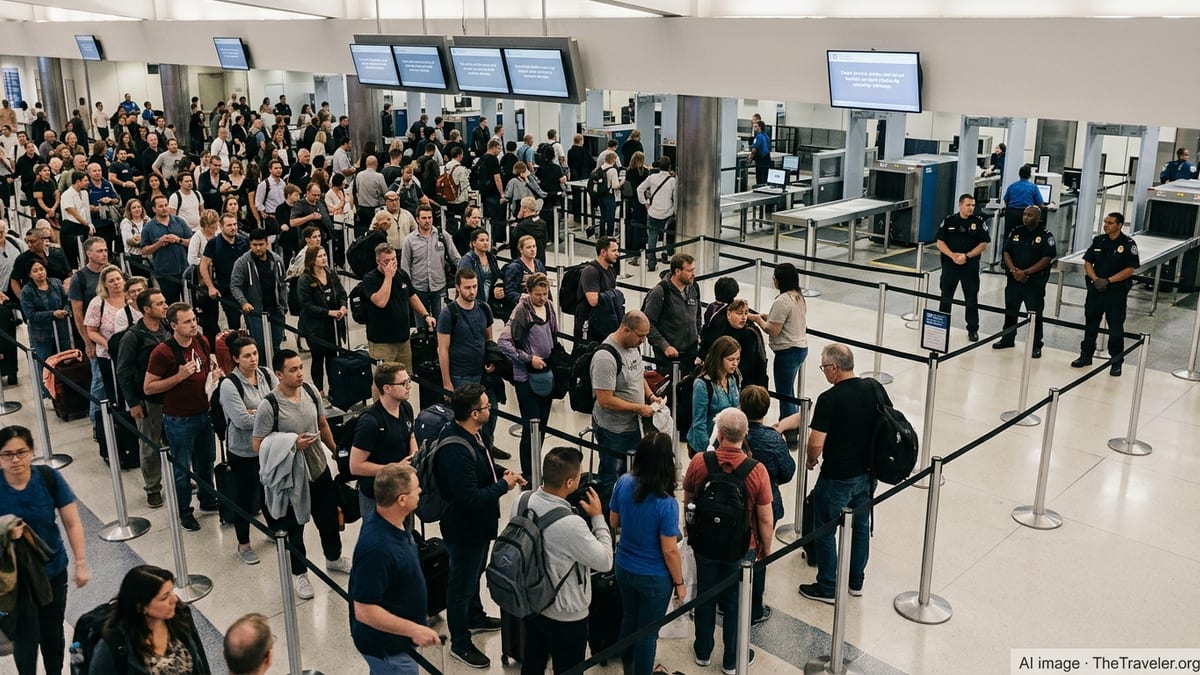
As the ground stop and flow restrictions spread, published reporting described hundreds of canceled flights tied to Newark operations, alongside large numbers of delays. For passengers, the practical result was missed connections, long customer-service lines, and rebooking into already tight seats on later departures.
The evening recovery phase can be especially difficult at Newark because many flights are scheduled to arrive and depart in concentrated waves. When that sequence is disrupted, airlines often have to make difficult calls about whether to delay a flight for a late inbound aircraft or cancel to protect the next day’s schedule.
Regional ripple effects across the New York area
Newark’s disruption did not occur in isolation. Reports described ground stops and restrictions affecting other airports in the New York region, including JFK and LaGuardia, as the air traffic system adjusted to reduced capacity and temporarily altered routings. Nearby airports such as Teterboro were also mentioned in coverage as being impacted.
For travelers, this matters because airline rebooking options often depend on nearby airports. When multiple area airports are simultaneously constrained, the usual advice to “switch airports” becomes less effective, and same-day alternate flights can be scarce.
Published coverage also pointed to knock-on delays reaching beyond the immediate metro area. When aircraft and crews are delayed at a major node like the New York region, the effects can travel to other cities by evening as late departures arrive after midnight, triggering crew legality limits and overnight aircraft swaps.
What travelers should do now if flying through Newark
Passengers with near-term itineraries through Newark should check their flight status frequently, as recovery can change hour by hour. Even after ground stops end, airline operations may continue to adjust as aircraft and crews are repositioned and as air traffic flow programs are updated.
Travelers who still need to fly today or early tomorrow should look for proactive rebooking options inside their airline’s app and consider flexible alternatives such as later departures, nearby cities served by rail, or shifting to a different airline if seats are available. In disruption scenarios tied to air traffic constraints, rebooking earlier in the day can help, since later banks may be more vulnerable to lingering congestion.
For those already at the airport, monitoring gate changes and aircraft assignments can offer clues about whether a flight is likely to move. It also helps to keep receipts for eligible meals, ground transportation, and lodging, since airline policies vary and reimbursement often depends on the disruption category and the traveler’s fare rules or credit card coverage.
Why Newark has been sensitive to technical disruptions
The Newark area’s dependency on a complex, highly saturated airspace system has been a recurring theme in coverage of regional aviation reliability. Reports have connected Monday’s disruption to broader concerns about aging infrastructure and the operational challenges of managing heavy traffic volumes with limited flexibility during outages.
In recent years, Newark has also faced compounding pressures such as runway construction schedules, chronic congestion, and ongoing controller staffing constraints that can shrink the system’s margin for error. When an equipment issue hits a key facility that supports Newark’s operations, delays can build rapidly because there are fewer “spare” arrival and departure slots to absorb the shock.
While service resumed after repairs, the episode adds to a growing list of technology-related disruptions that have affected the Northeast corridor. For travelers, the near-term focus is on recovery: getting rebooked efficiently, watching for rolling delays as flights reposition, and planning extra buffer time for connections in the New York region until schedules fully stabilize.