


More news on this day
Flights at Newark Liberty International Airport faced significant disruptions Monday after an FAA equipment outage triggered ground stops and extended delays, creating ripple effects across some of the busiest air corridors in the country.
Get the latest news straight to your inbox!
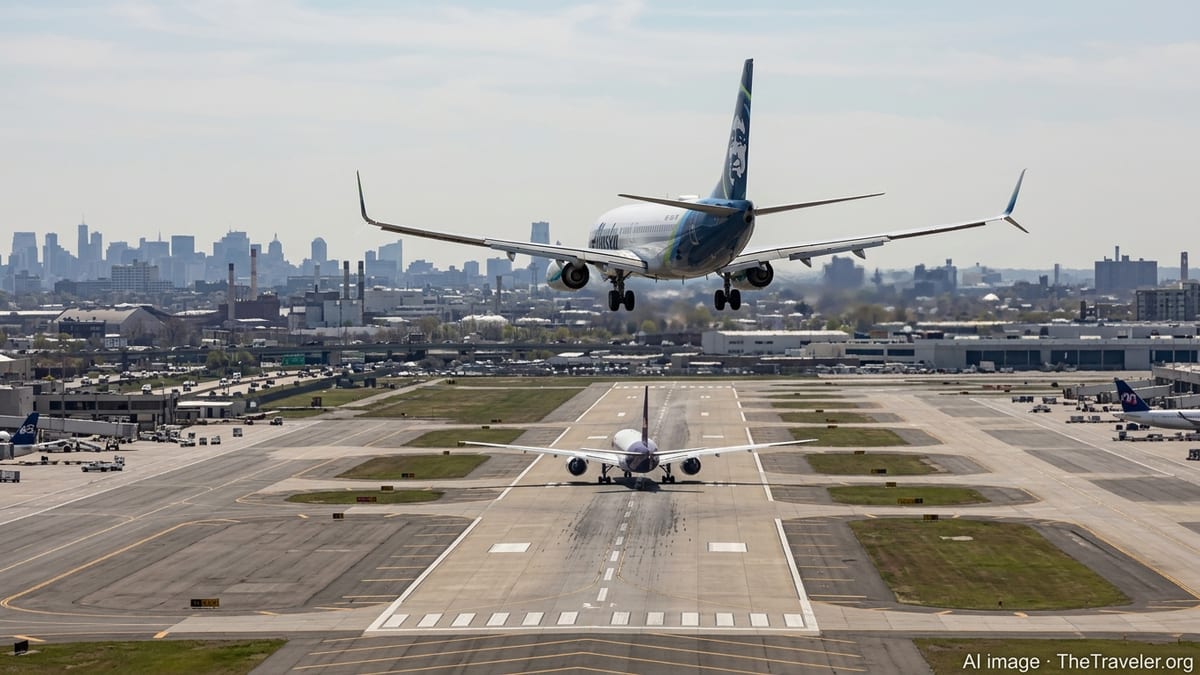
What happened at Newark and why the impact spread quickly
Published coverage indicates the disruption centered on a failure affecting air traffic control systems that manage traffic for the New York and Philadelphia region, with Newark among the airports most directly impacted. Reports described a telecommunications and equipment problem tied to a key FAA facility that sequences and separates aircraft arriving and departing the Newark area.
The incident unfolded during a heavy travel period for the Northeast corridor, where Newark, LaGuardia, John F. Kennedy, Philadelphia, and nearby airports share tightly coordinated airspace. When inbound aircraft cannot be safely accepted at normal rates, airlines quickly run into cascading challenges: aircraft and crews end up in the wrong cities, gates fill, and later departures leave behind connecting passengers.
Multiple outlets reported that the underlying issue involved a primary circuit failure and complications when systems attempted to switch to backups, with additional reporting pointing to fiber-related damage that reduced redundancy. That combination of lost capacity and constrained backups can force traffic managers to pause arrivals, reduce departure rates, and meter flights over many hours, even after service begins returning.
Ground stops, delays, and where travelers felt it most
Newark saw both arrivals and departures affected as FAA traffic management programs were put in place. Published coverage described a morning ground stop at Newark that was extended multiple times, with additional ground stops or ground delays expanding to other major New York area airports as the day progressed.
As delays piled up, reports indicated diversions increased, pushing some inbound aircraft to alternate airports in the region and beyond. Boston Logan was among the airports mentioned in coverage as receiving diverted flights during the disruption, a common outcome when the New York area becomes constrained and arriving aircraft must be reassigned quickly.
By Monday evening, widely reported updates indicated that operations were resuming across affected airports, but with the expectation that delays would continue while the system cleared backed-up flights, repositioned aircraft, and reset schedules for late-day and evening banks.
Airlines respond with waivers and rebooking flexibility
For travelers, the practical impact often came down to missed connections, aircraft swaps, and rebookings that pushed trips into later flights or even the next day. Newark is a major hub for United Airlines, and coverage described the carrier acknowledging that the FAA technology outage was affecting multiple airlines across the Northeast and issuing a travel waiver to give customers flexibility.
Across the industry, similar disruptions typically lead to fee-free changes within defined windows and eligible routes, though the details can vary by airline and fare type. Travelers affected Monday were broadly advised in coverage to check flight status before heading to the airport, since airport-wide improvements do not immediately translate into on-time performance for specific flights.
When major hubs are constrained, seat availability can tighten quickly on later departures, making same-day alternatives scarce on popular routes. That can be especially true for short-haul shuttle-style flying in the Northeast, where flights operate in closely spaced banks and disruptions tend to compress many delayed passengers into a smaller pool of remaining seats.
Why Newark is especially sensitive to equipment and staffing disruptions
Newark’s operational resilience has been under a bright spotlight in recent years because of the airport’s heavy demand and tight airspace. Publicly available FAA materials have described how Newark traffic is managed in coordination with the Philadelphia TRACON, including efforts to improve reliability and redundancy in systems that feed radar and communications data used to run arrivals and departures.
Separately, federal notices and FAA documentation have outlined continuing efforts to reduce chronic congestion and delay at Newark, including targeted limits on scheduled operations tied to staffing and capacity constraints. Even on normal days, those constraints can leave the airport with less buffer when weather, runway restrictions, or technology problems reduce throughput.
Monday’s outage also drew attention because it echoed earlier disruption patterns that travelers may remember from prior periods when technology, telecommunications, or staffing shortfalls limited Newark’s arrival and departure rates. In a tightly packed airspace where minutes matter, even a short interruption can produce hours of downstream delay.
What travelers can do now: checking status, timing, and alternatives
For passengers traveling through Newark in the near term, the most reliable step is to verify flight status directly with the airline and monitor FAA airport status updates, especially if a trip involves tight connections or the last flight of the night. Published guidance during the disruption emphasized confirming status before traveling to the airport, since ground stops can change quickly and may be extended or replaced by ground delay programs.
If a flight is delayed significantly, travelers may have better odds of rebooking earlier rather than later, particularly on routes with many daily frequencies. In the New York region, alternatives can include switching to LaGuardia or JFK for certain domestic routes, or considering Philadelphia for select itineraries, though those airports can be affected by the same air traffic constraints when a regional facility is disrupted.
Even after operations resume, delays can linger as airlines reposition aircraft and crews and work through gate congestion. Travelers should expect that recovery can stretch into later banks and consider leaving extra time for connections, arranging flexible ground transportation, and confirming baggage handling plans if rebooked onto a different routing.