


More news on this day
Northern Railway has launched a special long-distance train between Srinagar and Katra to move hundreds of stranded passengers after a prolonged closure of the Jammu–Srinagar National Highway cut a vital road link to the Kashmir Valley.
Get the latest news straight to your inbox!
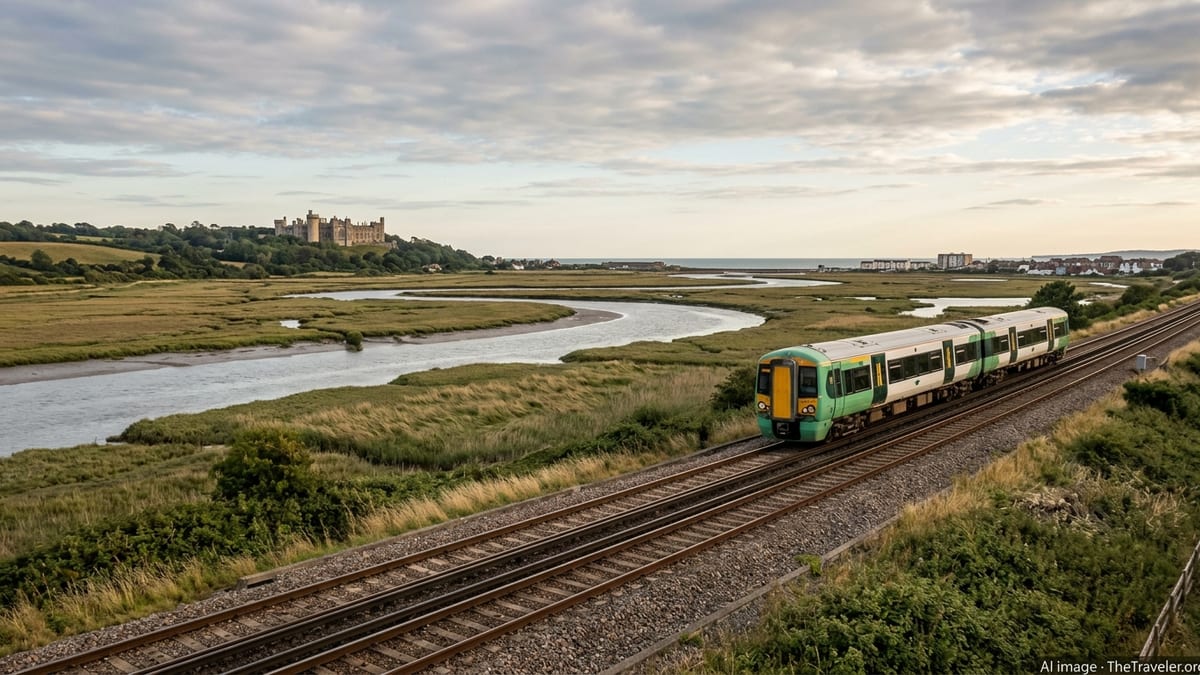
Highway closure triggers emergency rail link
Recent heavy rainfall across Jammu and Kashmir has triggered landslides, shooting stones and road erosion along key stretches of the Jammu–Srinagar National Highway, leading to a full closure of the corridor for a second consecutive day, according to regional media reports. The highway is the primary surface link between the Kashmir Valley and the rest of India, and its shutdown has left scores of buses, private vehicles and tourist coaches halted for hours at multiple locations.
With road convoys unable to move and aviation options limited during the bad-weather spell, publicly available coverage indicates that travellers attempting to reach or leave the Valley faced mounting uncertainty over onward journeys. Many passengers reportedly opted to turn back toward Jammu, while others remained in towns along the alignment waiting for an improvement in conditions or an alternative mode of transport.
Against this backdrop, Northern Railway activated a special train plan to offer a through rail connection between Srinagar and Katra, home to the busy Shri Mata Vaishno Devi pilgrimage hub in Jammu region. The move effectively stitched together isolated segments of the recently completed Udhampur–Srinagar–Baramulla Rail Link to create a temporary long-distance corridor while highway restoration work continues.
Special Srinagar–Katra service and operations
Regional news coverage describes the special service as a non-stop or limited-stop operation between Banihal and Katra, forming part of the broader Srinagar–Katra link. The train is being run with an eight-coach Mainline Electric Multiple Unit rake, a configuration generally used for high-frequency regional services but now redeployed to handle medium-distance emergency traffic.
Reports indicate that the special train is designed to carry a mix of local commuters, long-distance travelers and tourists, many of whom were left stranded after their road journeys stalled along the highway. Operating as a dedicated relief link allows Northern Railway to schedule departure and arrival times around the weather window in the Banihal sector and the capacity constraints on the single-line mountain section.
According to published reports, the service is expected to make at least one round trip per day while the highway remains disrupted, with adjustments based on passenger demand and operational feasibility. Railway planners appear to be prioritising quick turnarounds at terminal stations so that rakes can be reused rapidly, a familiar strategy when the network is tasked with clearing backlogs created by sudden infrastructure failures.
Stranded passengers find vital alternative route
Media accounts from Srinagar and Jammu describe crowded platforms, extended queues at ticket counters and passengers arriving at Valley stations after hours spent in stationary buses on the highway. For many travellers, news of the special train provided the first concrete option to continue journeys after an extended wait in deteriorating weather and traffic conditions.
The Srinagar–Katra special effectively offers a rail-based detour around the blocked highway sector, allowing travellers to bypass landslide-prone stretches and reconnect with the wider Indian Railways network at Katra and Jammu. From there, passengers can transfer to long-distance services toward Delhi, Punjab and other parts of northern India, or continue by road on comparatively unaffected routes further south.
Travel industry observers note that such emergency services can have an outsized impact in regions where a single highway carries most tourist and pilgrim traffic. In this case, the special train not only assists residents and workers commuting between Kashmir and Jammu but also supports visitors headed to or returning from the Vaishno Devi shrine and other regional attractions whose itineraries were disrupted by the highway shutdown.
Railway readiness for weather-related disruptions
The decision to run a special passenger link during the highway closure aligns with a broader pattern in which Indian Railways increasingly supplements or temporarily replaces road connectivity during extreme weather events. Previous episodes in Jammu and Kashmir, highlighted in earlier local coverage, saw Northern Railway operate special Katra–Srinagar or Katra–Sangaldan services when snow, landslides or flooding either closed or severely restricted the Jammu–Srinagar highway.
Standard operating procedures developed across Indian Railways divisions generally include keeping standby rakes and crews ready to deploy, coordinating with civil authorities on crowd management at key stations, and providing additional information counters to handle passengers who suddenly need to rebook their journeys. While specifics differ between corridors, the rapid rollout of the Srinagar–Katra special suggests that contingency planning around the Udhampur–Srinagar–Baramulla corridor has been increasingly integrated into regional disaster and transport management.
Transport analysts point out that such actions also serve a long-term goal of encouraging modal flexibility in mountainous regions where climate-linked disruptions are expected to become more frequent. As more sections of the Kashmir rail link have opened, special trains during highway blockages have gradually shifted from ad hoc responses to a recurring tool for maintaining basic mobility for residents and visitors.
What travelers should know before boarding
For passengers currently in or bound for Jammu and Kashmir, publicly available advisories recommend closely monitoring both rail and highway status before setting out, as conditions can change quickly in the monsoon season. Travellers are being encouraged by local reports to check train schedules through official railway information channels and station announcements, since the exact timings and frequency of the special Srinagar–Katra service may be adjusted at short notice.
Those planning to use the special train are advised in media coverage to arrive early at major stations such as Srinagar, Banihal and Katra, where queues are likely during peak periods. Passengers with further connections toward Delhi and other northern cities may need to factor in additional buffer time at interchange points, given the cascading delays that typically accompany large-scale weather disruptions on both rail and road networks.
Travel news outlets also highlight the importance of flexible planning for upcoming trips into the region over the next several days, as continued rain could slow highway repair efforts even while rail services are running. For now, the Northern Railway special between Srinagar and Katra has emerged as the key lifeline for thousands of travellers seeking a way around the blocked mountain highway and back onto the country’s main transport grid.