


More news on this day
Travelers moving between Muscat, Salalah and Abu Dhabi are facing fresh disruption as six flights operated by Oman Air and Etihad Airways have been cancelled, interrupting key domestic and Oman–UAE connections at the start of the summer travel period.
Get the latest news straight to your inbox!
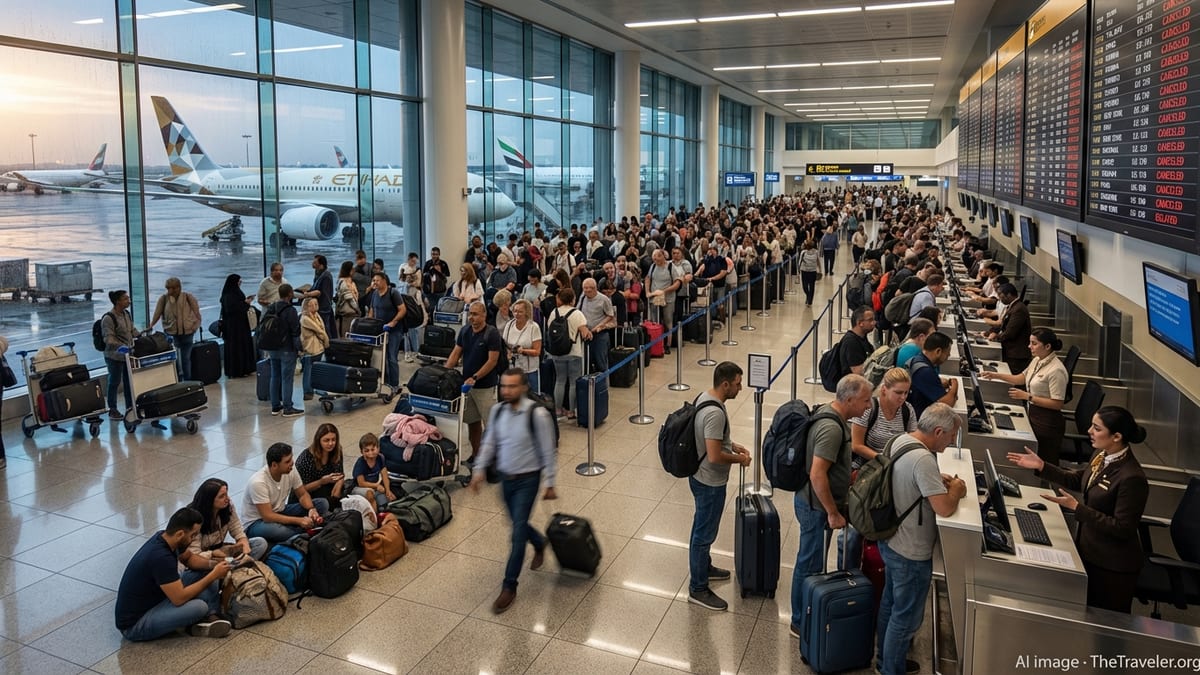
Six Cancellations Hit Muscat, Salalah and Abu Dhabi Links
Published flight-tracking data and airport information indicate that a total of six flights involving Oman Air and Etihad Airways have been cancelled across Oman, affecting services in and out of Muscat and Salalah as well as links to Abu Dhabi. The impacted operations include domestic rotations on the busy Muscat–Salalah corridor and cross-border services that connect Oman with the United Arab Emirates.
On the domestic side, at least one recent Muscat–Salalah service operated by Oman Air and listed under flight number WY907 was recorded as cancelled, highlighting renewed pressure on a route that serves both leisure and essential travel. Other Oman Air services on the same corridor have operated, but irregular cancellations are adding uncertainty for passengers trying to secure space during a period of rising demand toward the Khareef Dhofar season.
Internationally, Etihad Airways’ Muscat–Abu Dhabi services have seen selective cancellations as the carrier continues to work within a constrained regional operating environment. Flight-status tools and online booking platforms show instances where scheduled departures from Muscat to Abu Dhabi, including services such as EY693, have been marked as cancelled or subject to late changes, contributing to the overall tally of six affected flights on Oman–UAE sectors and onward connections.
While the number of disrupted services remains limited relative to the overall schedule, the cancellations are concentrated on routes that act as vital connectors for domestic travel within Oman and for regional itineraries linking the sultanate to the wider Etihad network via Abu Dhabi.
Khareef Tourism Build-Up Meets Patchy Flight Reliability
The latest disruptions come just as Salalah’s tourism season begins to ramp up. Publicly available information from Omani media and airport operators shows that Etihad Airways only resumed seasonal Abu Dhabi–Salalah flights in late May to coincide with the Khareef Dhofar 2026 monsoon, adding two weekly frequencies intended to bolster inbound tourism to Dhofar.
Salalah’s seasonal appeal makes reliable air links especially important, and domestic flights from Muscat provide a key feeder for both Omani residents and international visitors connecting onward. Even a small cluster of cancellations on the Muscat–Salalah route can create knock-on effects, particularly when alternative seats are scarce or rebooking options are limited to later in the week.
At the same time, Muscat International Airport has been gradually rebuilding regional connectivity after earlier reductions in schedules across the Middle East. Oman Air has publicized plans to expand frequencies to Salalah and other high-demand destinations, while also resuming and increasing flights to regional hubs such as Dubai and Riyadh. The recent cancellations sit uncomfortably alongside that growth narrative, underlining how regional volatility and operational constraints can quickly ripple through even well-planned seasonal ramp-ups.
For visitors planning trips to Dhofar for the Khareef, the combination of seasonal demand and occasional flight disruptions means that flexibility in travel dates and careful monitoring of schedules will remain important, particularly for those relying on tight domestic and international connections.
Etihad’s Gradual Network Resumption Still Faces Regional Headwinds
Etihad Airways has spent the past months rebuilding a limited commercial schedule from its Abu Dhabi hub after earlier waves of suspensions related to regional airspace and safety assessments. Public advisories and airline updates describe a phased resumption, with services to Muscat and, more recently, Salalah reintroduced as part of a growing but still tightly managed network.
Despite this gradual restart, reports from passengers, travel platforms and airport displays suggest that Etihad’s schedule remains subject to short-notice adjustments. Cases where flights appear as scheduled on one system but cancelled on another, or where services are withdrawn only hours before departure, have been described across various routes, including those touching Oman.
For travelers using Etihad to reach or depart Oman, cancellations on Muscat–Abu Dhabi flights can have wider consequences. Abu Dhabi acts as a connector to long-haul destinations in Europe, Asia and North America, and a single cancelled sector from Muscat or Salalah can disrupt entire multi-leg itineraries. This dynamic is particularly challenging for passengers on fixed-date trips who may suddenly find themselves needing hotel stays, alternative routings or refunds.
The airline has outlined flexible rebooking and refund options for customers whose flights are cancelled, but regional travel forums continue to reflect a mix of experiences, from smooth re-accommodation to longer waits for new tickets or reimbursements. The current cluster of cancellations affecting Oman–Abu Dhabi services appears to form part of this broader pattern of adjustment as the carrier calibrates its operations to evolving conditions.
Domestic and UAE Connectivity Under Strain for Omani Travelers
The combined impact of cancellations by Oman Air and Etihad Airways has placed additional strain on travel flows that are central to mobility within Oman and between Oman and the UAE. The Muscat–Salalah route supports business travel, family visits and tourism, while Muscat–Abu Dhabi and Salalah–Abu Dhabi services connect Omani cities to one of the Gulf’s major international hubs.
When even a handful of flights on these corridors fail to operate, passengers may face missed connections, extended layovers, or the need to re-route through alternative hubs such as Doha or Dubai. For Omani residents accustomed to using Abu Dhabi for long-haul connections, the temporary loss of individual frequencies can mean trading non-stop services for more complex journeys.
Smaller regional carriers and low-cost operators have also played a role in serving Oman’s domestic and short-haul markets, but the current environment has shown that these airlines are not immune to sudden cancellations either. Earlier disruptions affecting other operators on the Muscat–Salalah route left travelers stranded or forced to adjust plans at short notice, reinforcing the perception that reliability across the region remains uneven.
As the summer period approaches and demand for travel within the Gulf rises, the interplay between airline scheduling decisions, airspace constraints and airport capacity is likely to determine how resilient Oman’s domestic and UAE-linked connectivity will be. Travelers are increasingly turning to real-time flight-status tools and airport dashboards to cross-check their bookings in the days leading up to departure.
What Travelers Can Expect in the Coming Weeks
Looking ahead, both Oman Air and Etihad Airways are signaling an intent to grow capacity on key routes serving Oman, even as they navigate operational challenges. Oman Air has highlighted additional flights to Salalah and new regional and international destinations for the summer schedule, while Etihad continues to add back cities across its global network from Abu Dhabi.
However, the latest wave of six cancellations affecting flights between Muscat, Salalah and Abu Dhabi shows that schedules remain fluid. Travelers can expect that airlines and airports will keep refining operations on a rolling basis, meaning that some services may continue to be adjusted or withdrawn close to departure if conditions change.
For passengers planning journeys that rely on the affected routes, industry practice and recent patterns suggest a few practical considerations: checking flight status repeatedly in the 48 to 72 hours before travel, allowing longer connection times where possible, and being prepared for rebooking or overnight stays if a key sector is cancelled. Travel insurance that covers disruption costs is also likely to remain relevant for many long-haul itineraries transiting the Gulf.
While the current disruptions are moderate in scale, their concentration on high-importance domestic and UAE connections underlines how sensitive Oman’s travel ecosystem remains to regional developments. In the near term, flexible planning and close attention to airline updates will be essential for anyone moving between Muscat, Salalah and Abu Dhabi.