


More news on this day
On July 19, 2010, a pre-dawn collision between two passenger trains at Sainthia Junction in India’s West Bengal state killed more than sixty people, injuring scores more and exposing critical gaps in the country’s railway safety systems.
Get the latest news straight to your inbox!
A Pre-dawn Crash That Shocked India
The Sainthia train collision unfolded in the early hours of July 19, 2010, at Sainthia Junction in Birbhum district, roughly 200 kilometers north of Kolkata. According to contemporary news coverage and subsequent summaries, the northbound Uttar Banga Express approached the station at speed and struck the Vananchal Express from behind as it was departing the platform.
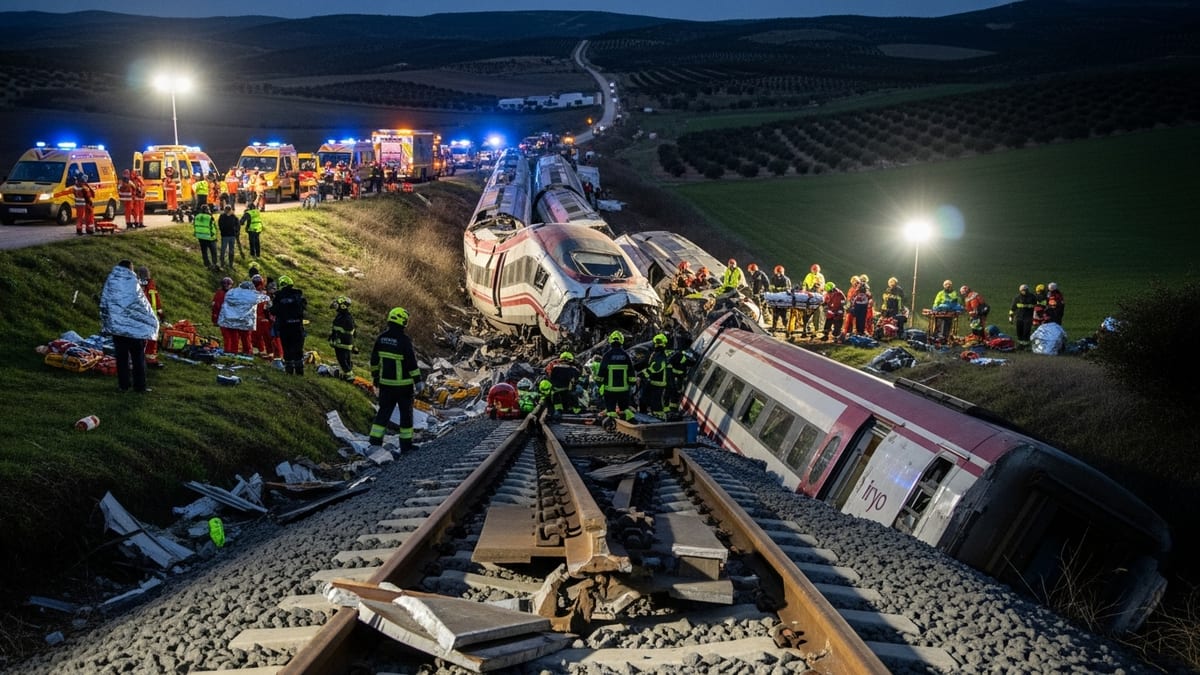
The force of the impact telescoped several rear coaches of the Vananchal Express, with one coach hurled upward toward the station’s footbridge and others crushed into twisted metal. Photographs published at the time showed coaches crumpled almost beyond recognition and debris scattered along the tracks.
Casualty figures varied slightly in the immediate aftermath, but publicly available records now generally cite at least 60 deaths and more than 150 injuries, making it one of India’s deadliest railway accidents of 2010. Many of the victims were traveling in the general and sleeper coaches that bore the brunt of the impact.
The collision came less than two months after another major train disaster in West Bengal, intensifying public scrutiny of rail safety in one of the world’s busiest passenger rail networks.
How the Collision Happened
Investigations and technical briefings in the weeks that followed focused on a stark operational question: why the Uttar Banga Express entered Sainthia Junction at a speed far higher than expected for a scheduled stop. Timetables showed that the train was due to halt at the station for roughly a minute, yet evidence gathered later indicated it was still traveling at significant speed when it reached the platform area.
Speed data and railway analyses reported in Indian media suggested the train was moving well above the local limit as it approached the standing Vananchal Express. With only a short distance between the station’s advance signals and the platform, there was little time or space to recover once the train had passed a restrictive signal or failed to slow in time.
Contemporary reporting noted that no major track defect or obstruction was identified at the site, shifting attention toward human factors and signaling. Discussions in parliamentary and committee documents later grouped Sainthia among serious collisions attributed to operational or signaling lapses rather than sabotage.
As with many complex rail accidents, the final narrative combined multiple elements: train handling in the approach to the station, interpretation of signals, communication between control points, and the inherent vulnerability of a stationary passenger train on a busy main line.
Rescue Efforts at a Crowded Junction
In the immediate aftermath, Sainthia Junction became the center of a large-scale rescue and recovery operation. Visual accounts from the scene showed local residents, railway workers, and emergency responders converging on the mangled coaches in low light, working amid cut metal and shattered glass.
Reports from the time described the challenges of reaching passengers trapped in severely compressed compartments. Gas cutters and heavy equipment were brought in to slice open coach roofs and sides, while improvised stretchers carried the injured toward waiting ambulances and nearby hospitals.
The station’s location on a key route between West Bengal and neighboring states meant that services were quickly disrupted across the region. Trains were diverted or delayed for hours while crews cleared wreckage from the tracks and attempted to restore a measure of normal operations.
As daylight broke over the junction, the scale of the disaster became starkly visible: overturned bogies, flattened carriages, and a station footbridge looming over the accident site. For many in India and abroad, images from Sainthia came to define the human cost of systemic weaknesses in rail safety management.
Safety Lessons and Policy Response
The Sainthia collision quickly entered official tallies and technical reviews of Indian railway accidents for the 2010s. Parliamentary committee documents and later academic work referenced the crash as a key data point in debates over automatic train protection, speed monitoring, and crew training.
Publicly accessible summaries of those deliberations show that Sainthia was cited when discussing the rollout and effectiveness of technologies designed to prevent rear-end collisions and overspeed incidents. The accident underscored the limits of relying primarily on human vigilance where high-speed passenger services and crowded timetables intersect.
In the years that followed, Indian Railways expanded programs for signal modernization, centralized traffic control, and various collision-avoidance and warning systems on selected routes. While these initiatives cannot be attributed to any single disaster, Sainthia is frequently mentioned in retrospective accounts as one of the events that sharpened the focus on such upgrades.
Safety advocates and independent analysts have also used Sainthia as a case study in how incremental failures across dispatching, cab signaling, and operational discipline can combine to produce a catastrophic outcome, even in the absence of sabotage or infrastructure collapse.
Remembering Sainthia in the Context of Rail Travel
For travelers passing through Sainthia Junction today, little on the surface may recall the devastation of July 2010. Yet the collision remains part of India’s wider rail safety narrative, frequently listed in chronologies of major accidents and in discussions of risk on long-distance passenger routes.
On anniversaries of the disaster, Indian media occasionally revisit the story, pairing archival images with updates on safety reforms and the ongoing pressures on a network that moves tens of millions of passengers daily. These reflections highlight both the progress made and the persistent vulnerabilities that come with aging infrastructure and intense demand.
For the global travel community, Sainthia stands as a reminder that rail, while generally safer than road transport on a per-passenger basis, is not immune to rare but devastating failures. The collision illustrates how high passenger densities, overnight schedules, and marginal safety margins can turn a single operational error into a national tragedy.
More than a decade and a half later, the Sainthia train collision continues to inform how policymakers, engineers, and travelers think about risk, responsibility, and resilience on one of the world’s largest railway systems.