


More news on this day
A fresh round of airspace disruptions and airport constraints across the Middle East has triggered at least 178 flight cancellations and 1,126 delays in recent days, heavily affecting services in and out of the United Arab Emirates, Kuwait, Saudi Arabia and Türkiye and grounding operations for carriers including Pegasus Airlines, Saudia and Etihad Airways on key regional routes.
Get the latest news straight to your inbox!
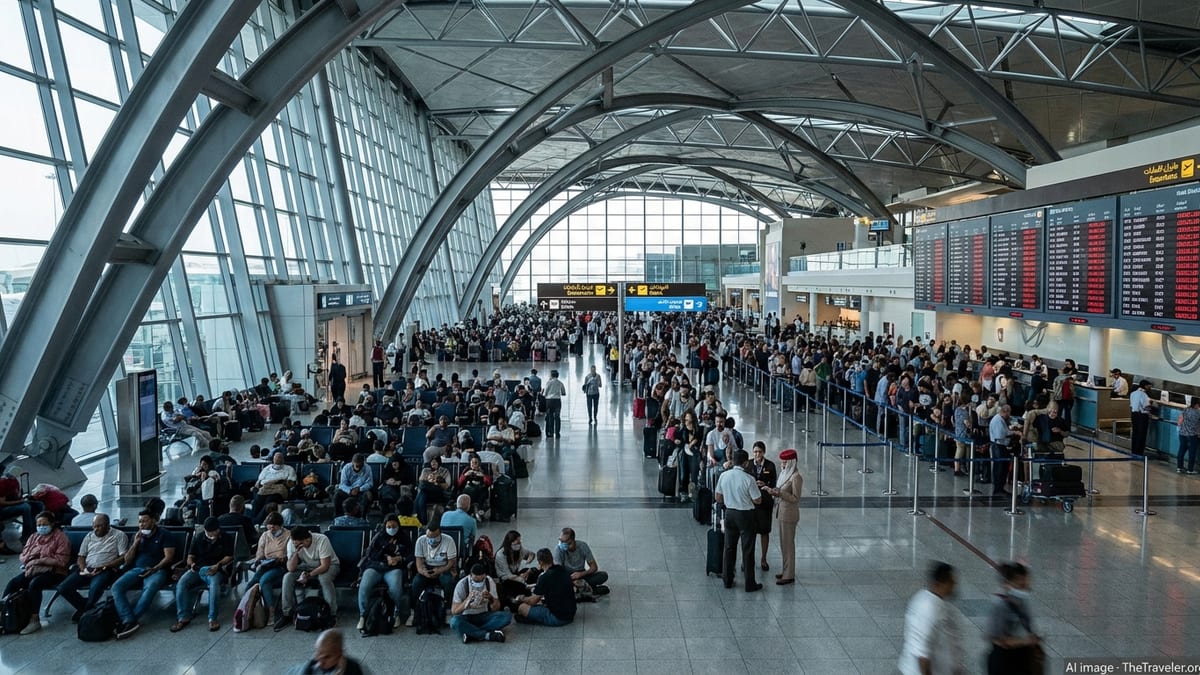
Regional Airspace Strains Push Middle East Operations to the Brink
Publicly available aviation data and regional news coverage indicate that the latest wave of disruption is closely tied to continuing instability in Gulf airspace and the broader fallout from the 2026 Iran conflict. Authorities in several states have tightened restrictions on overflight corridors, while periodic closures of key airports have forced airlines to cut or reroute services at short notice. Flight-tracking snapshots show thinning traffic over parts of Iran, Iraq and the northern Gulf, with knock-on effects stretching into neighbouring hubs.
Industry summaries compiled over recent weeks point to hundreds of cancellations across the wider conflict zone, but the newest figures for 178 cancelled and 1,126 delayed flights reflect a concentrated period of disruption centered on Kuwait, eastern Saudi Arabia and the core United Arab Emirates gateways. These numbers capture both outright cancellations and extended delays of more than one hour, as carriers juggle aircraft rotations, crew limits and lengthened routings that avoid higher-risk airspace.
Analysts note that the Middle East’s outsized role in global aviation magnifies the impact of any disruption. Before the current crisis, airports in the Gulf region collectively handled a significant share of worldwide connecting traffic. With a portion of that capacity now curtailed, delay cascades are appearing not only on regional sectors but also on long haul flights that depend on Gulf and Turkish hubs as transfer points.
Although some airlines have begun to restore a reduced schedule to select destinations, operational bulletins reviewed by travel media show that contingency timetables remain in force across multiple carriers, with capacity to Kuwait, parts of Saudi Arabia and conflict-adjacent markets still sharply below pre-crisis levels.
UAE and Kuwait See Wave of Cancellations and Rolling Delays
New reporting from Gulf-based outlets details an intense concentration of disruptions on the UAE–Kuwait corridor and on services linking Kuwait to wider Middle East and European destinations. Recent updates from airline status pages show Emirates cancelling multiple Dubai–Kuwait rotations through the July 19 weekend, while Abu Dhabi-based Etihad Airways has listed several Kuwait flights as pending or removed from sale as schedules are reworked.
In parallel, Kuwait International Airport has experienced sustained arrival delays, with flights from Istanbul, Abu Dhabi and other regional hubs operating significantly behind schedule or diverted. Coverage from regional travel desks notes that arrivals on carriers such as Pegasus Airlines, Etihad Airways and Turkish Airlines have been among those affected, highlighting how constraints in a single airspace corridor can snarl multiple airline networks at once.
Passengers flying from the UAE have also faced ongoing disruption beyond Kuwait. Recent travel advisories describe a mix of cancellations and re-timings on services into southern Saudi Arabia and the wider Gulf, as airlines navigate intermittent restrictions at airports such as Abha in Saudi Arabia and adjust routings to steer clear of conflict-adjacent airspace. For many travelers, this has meant last-minute itinerary changes, missed connections and extended layovers at already busy Gulf hubs.
While airlines have publicly reiterated that safety remains the overriding priority, schedules published for the second half of July continue to show a thinner roster of flights to Kuwait, parts of Saudi Arabia and select Levant destinations compared with earlier in the year, suggesting that the current disruption is likely to extend beyond a single weekend.
Pegasus Airlines, Saudia and Etihad Bear the Brunt
Turkish low-cost carrier Pegasus Airlines and Saudi flag carrier Saudia are among the airlines most visibly impacted by the latest round of disruption, according to factbox-style breakdowns compiled by international newswires and regional aviation bulletins. Pegasus, which has traditionally relied on a dense network of routes linking Türkiye to Gulf points such as Kuwait, Dubai, Doha and Dammam, has previously suspended or sharply curtailed services to several destinations in the conflict-affected zone.
Operational summaries issued this spring indicated that Pegasus flights to Iran, Iraq, Kuwait, Bahrain, Doha, Dammam and multiple UAE airports had been cancelled through at least early June, with more recent airport-specific updates noting continued suspensions on some of these routes. Travel-industry circulars for Amman’s Queen Alia International Airport, for example, currently list Pegasus as non-operational there until further notice, underscoring the scale of the carrier’s regional retrenchment.
Saudia and its low-cost affiliates have also pared back flying to and from certain Gulf points. Earlier advisories cited suspensions of services to Dubai and Abu Dhabi, and anecdotal reports from travelers in Riyadh and Jeddah describe same-day cancellations or consolidations of flights bound for the UAE. These adjustments sit alongside broader schedule reductions by Saudi carriers into conflict-adjacent markets, limiting options for both regional business travelers and religious pilgrims connecting onward.
Etihad Airways, meanwhile, has faced a complex mix of airspace constraints and airport-specific disruptions. Company travel notices and third-party advisories describe a prolonged period of reduced frequencies, rerouted long haul services and selective cancellations on routes connecting Abu Dhabi to Gulf, Levant and European cities. Recent days have brought fresh cancellations on short regional sectors such as Abu Dhabi–Bahrain and rolling delays on key trunk routes, adding to pressure on the carrier’s already stretched contingency schedule.
Saudi Arabia and Türkiye Hubs Under Sustained Pressure
Saudi and Turkish airports, critical junctions for regional and long haul traffic, continue to experience knock-on effects from the crisis. In Saudi Arabia, disruption at Abha International Airport in the country’s southwest has persisted into a fourth day, according to Gulf-based aviation coverage. Flights by several foreign and Saudi carriers have been suspended on the Dubai–Abha and Sharjah–Abha sectors, effectively cutting a key leisure and worker corridor between the UAE and southern Saudi Arabia.
Within the kingdom’s broader network, published schedules and passenger accounts point to a pattern of rolling adjustments rather than a uniform shutdown. Core long haul links via Jeddah and Riyadh remain in operation but subject to potential retimings, aircraft swaps and day-of-travel changes as airlines react to shifting risk assessments and airspace bulletins. Budget operators that once relied on dense shuttle-style flying between Saudi Arabia and neighbouring Gulf states have been especially exposed to these rapid shifts.
In Türkiye, Istanbul’s airports continue to function as major gateways into the region, but carriers such as Pegasus and Turkish Airlines have had to reshape their Middle East offerings. Earlier this year, Pegasus confirmed wide-ranging cancellations on flights into multiple Gulf cities, while broader industry data shows that Turkish carriers have maintained service on core European and domestic routes but scaled back or temporarily suspended some Middle East operations, particularly to airports closest to the conflict zone.
These changes have altered the traditional flow of passengers between Europe, the Middle East and Asia. Routes that once relied heavily on one-stop connections via Istanbul, Riyadh or Jeddah are now being rerouted through alternative hubs, including still-operational airports in the western Gulf and parts of North Africa, adding travel time and complexity for passengers.
Travelers Face Uncertainty as Airlines Maintain Flexible Policies
For affected travelers, the immediate impact has been uncertainty and disruption, as flight cancellations and lengthy delays upend holiday plans, business trips and family visits. Passenger forums and social media posts from recent weeks describe experiences ranging from moderate delays and longer routings to last-minute cancellations without same-day alternatives, particularly on routes touching Kuwait and the more restricted parts of Saudi and Gulf airspace.
In response, many airlines operating in and around the Middle East have extended flexibility policies first introduced at the onset of the conflict. Publicly posted guidance from a number of carriers allows passengers on cancelled services to request full refunds, travel credits or free rebooking on alternative dates. Some carriers have also permitted limited rerouting via different hubs where safe and operationally feasible, although availability on popular summer dates remains tight.
Travel-industry advisories now consistently recommend that passengers with upcoming itineraries involving the UAE, Kuwait, Saudi Arabia or nearby states monitor their bookings closely and check flight status repeatedly in the days and hours before departure. Insurers and consumer groups are also urging travelers to review policy wording around war-related disruption and schedule changes, as coverage can vary significantly between providers.
With airspace restrictions and regional security conditions still in flux, aviation analysts expect periods of elevated cancellations and delays to continue through at least the peak summer season. The tally of 178 cancelled and 1,126 delayed flights in the latest wave of disruption offers only a snapshot of a wider, evolving challenge for Middle East aviation, as airlines from Pegasus and Saudia to Etihad and other Gulf carriers work to keep as much of their networks running as safety and logistics allow.