


More news on this day
Japan has sharply escalated its travel warnings for parts of the Middle East, highlighting growing security risks in Iran, Iraq and several Gulf destinations as regional tensions trigger aviation disruption and uncertainty for international travellers.
Get the latest news straight to your inbox!
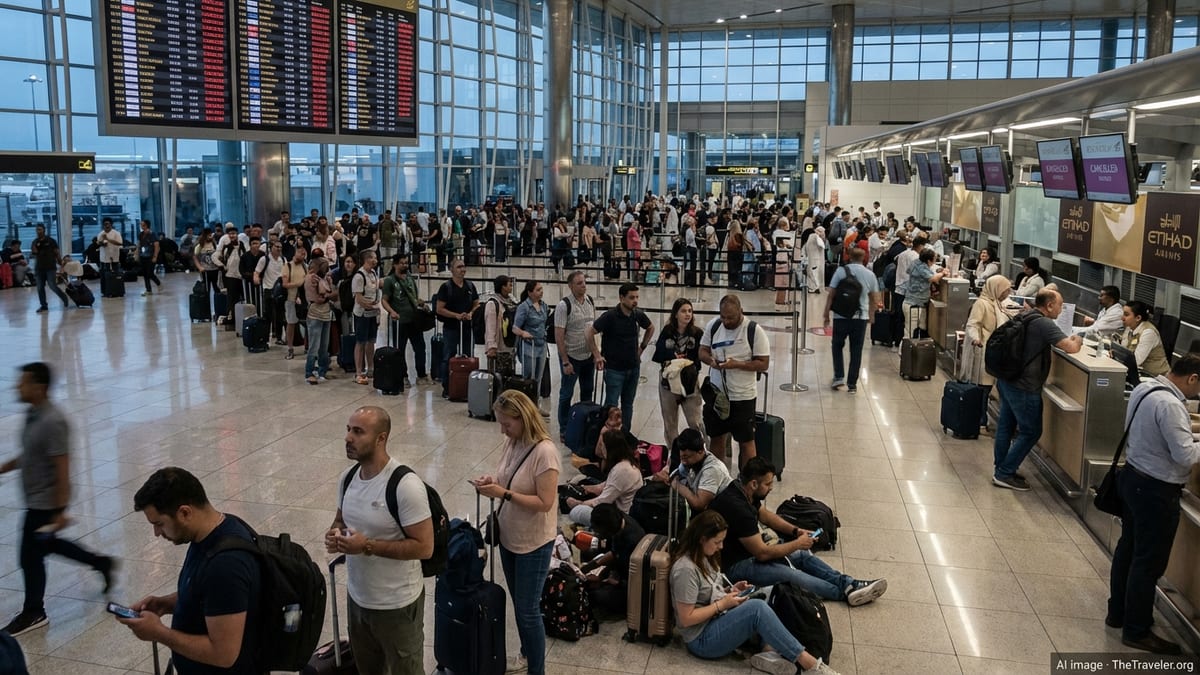
Expanded Risk Levels Across Iran, Iraq and the Gulf
Publicly available information from Japan’s Ministry of Foreign Affairs shows that travel advisories for multiple Middle Eastern countries have been tightened in recent months, following a series of missile strikes, armed clashes and cross-border attacks. Iran and Iraq remain among the highest‑risk destinations in the region, with Japanese nationals urged to avoid all travel to many areas due to concerns over terrorism, armed conflict and civil unrest.
Regional risk mapping published on Japan’s overseas safety website indicates elevated alert levels not only for Iran and Iraq, but also for nearby states that host military facilities or have been directly affected by recent attacks. Broad swathes of the Middle East are now classified at the upper end of Japan’s four‑tier warning scale, reflecting what officials describe in public documents as a persistently volatile security environment.
These developments come against the backdrop of a prolonged crisis spanning Israel, Iran and several proxy fronts, with the front lines and actors shifting over time. For Japanese and other foreign travellers, the result is a landscape where conditions can change rapidly and where planned itineraries that link multiple countries in the region face greater operational and safety challenges.
Missile Strikes, Airspace Closures and Aviation Uncertainty
The latest Japanese guidance references a series of Iranian missile and drone attacks that have targeted infrastructure and facilities in Gulf states in 2026, prompting temporary airspace closures and flight suspensions in several countries. International coverage of these incidents describes airports diverting or halting commercial services while authorities assessed damage and the risk of follow‑on strikes.
Shipping and aviation advisories issued to Japan’s maritime and airline sectors point to a pattern of sporadic disruptions affecting major hubs in the Gulf, as well as heightened alert levels along key air corridors linking Europe, Asia and Africa. Although many airports and ports have since resumed operations, the risk of renewed attacks has kept airlines and insurers wary, with some carriers rerouting flights or adjusting schedules at short notice.
For travellers, these dynamics translate into increased uncertainty around connections through major Gulf transit points that are normally used to reach destinations in Africa, Europe and South Asia. While most flights continue to operate, publicly available industry bulletins stress that schedules may be subject to sudden changes and that airspace restrictions could be re‑imposed with little warning if tensions escalate again.
Wide‑Area Warning and Global Security Context
Japan’s tightening of Middle East travel warnings is also framed within a broader international security picture. In parallel with Tokyo’s moves, several Western governments have issued region‑wide alerts urging their citizens in the Middle East to exercise increased caution, citing the potential for sudden escalation and retaliatory attacks linked to the confrontation between Iran, Israel and allied forces.
According to recent public advisories, diplomatic missions have updated contingency plans for staff and nationals in high‑risk locations, while travel notices for Iran, Iraq, Syria, Yemen and parts of Lebanon remain at their highest alert levels. Gulf countries such as Saudi Arabia, Kuwait, Qatar, Bahrain, the United Arab Emirates and Oman are typically assessed one step lower, with guidance urging travellers to reconsider non‑essential trips and to stay vigilant near military installations, diplomatic premises and other sensitive sites.
Japan’s own wide‑area information notice, updated this year, explicitly references the risk that attacks in the Middle East could have spillover effects on foreign nationals and facilities with links to partner countries. The advisory encourages Japanese nationals worldwide to monitor developments related to the Middle East crisis, even if they are not physically in the region, underlining the global dimensions of the current tensions.
Impact on Business, Pilgrimage and Tourism Travel
The stepped‑up Japanese warnings carry particular implications for business travellers, technical staff and expatriates who regularly move between Japan and energy‑producing states in the Gulf. Corporate travel managers are being advised in open guidance materials to reassess non‑essential trips, review evacuation and communication plans, and verify insurance coverage for travel to locations now rated at higher risk levels.
Religious and cultural travel is also affected. Iraq and Iran host major Shia pilgrimage sites that normally attract visitors from across Asia, while Saudi Arabia receives large numbers of pilgrims for the Hajj and Umrah seasons. With security warnings elevated and the possibility of renewed attacks on regional infrastructure, tour operators and religious organisations face a more complex risk‑assessment process before sending groups to these destinations.
Leisure tourism to Gulf hubs such as Dubai, Doha and Muscat, which position themselves as safe transit and holiday centres, has so far proved resilient, but the Japanese advisories underscore that these locations are not insulated from wider regional dynamics. Any fresh wave of missile launches or cross‑border strikes could once again disrupt flights, cruise calls or large‑scale events, with knock‑on effects for international visitors.
Advice for Japanese and International Travellers
Japan’s foreign ministry is urging nationals to consult the latest country‑specific advisories and wide‑area warnings before planning travel to the Middle East, and to register itineraries on official travel safety platforms when entering higher‑risk zones. Public guidance encourages travellers to maintain flexible plans, keep alternative routes in mind and allow extra time for transit through Gulf hubs that may be subject to operational strains if regional tensions rise suddenly.
International travel risk analysts note that the current phase of the crisis is characterised by periods of relative calm punctuated by sudden escalations, rather than a continuous, predictable pattern of disruption. As a result, travellers may find that trips proceed smoothly one week, only for the same route to be affected by diversions or cancellations the next, depending on military and political developments.
With no clear end in sight to the broader confrontation, Japan’s decision to raise warning levels for Iran, Iraq and key Gulf destinations signals an expectation that elevated risk will persist for some time. For airlines, tour operators and individual travellers, the message emerging from official and industry advisories is that caution, contingency planning and close monitoring of developments are now essential elements of any journey into or through the Middle East.