


More news on this day
One person died after a vehicle collided with a train at a rural rail crossing in Copiah County, Mississippi, according to preliminary information released over the weekend by local law enforcement and regional media.
Get the latest news straight to your inbox!
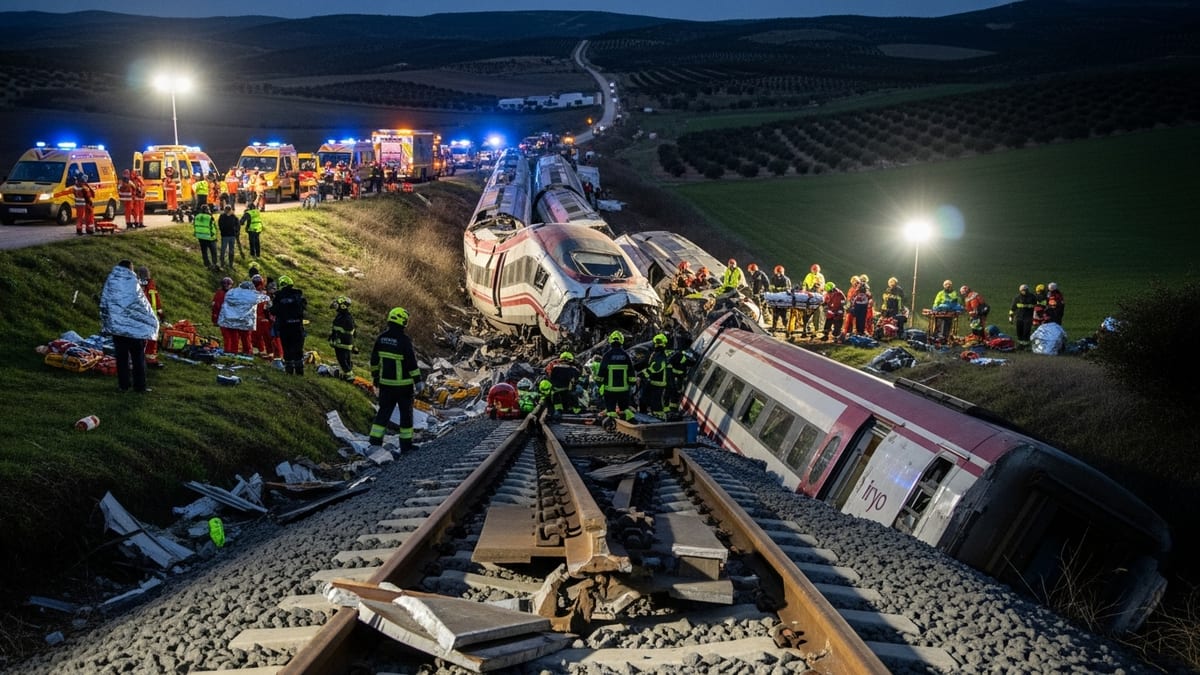
Collision reported at rural crossing in Copiah County
Initial reports indicate the crash occurred at a rail crossing in Copiah County on Sunday, when a train traveling through the area struck a vehicle on the tracks. Local outlets citing information from the sheriff’s office describe a severe impact that left the vehicle heavily damaged and halted rail traffic for an extended period while responders arrived and began their investigation.
Publicly available information shows that the driver of the vehicle died at the scene. No injuries among those on the train have been reported in early coverage, and railroad operations in the immediate vicinity were temporarily suspended while crews assessed the track and equipment involved.
Emergency responders closed the roadway around the crossing to keep bystanders away and to allow crash reconstruction teams room to work. Traffic in this part of Copiah County was diverted to alternate routes as law enforcement, medical personnel, and railroad representatives documented the scene.
Early descriptions of the crash emphasize that details about the vehicle’s direction of travel, speed, and any possible evasive actions remain under review. Investigators are expected to examine in-car evidence, on-board train data, and witness statements to build a clearer picture of the moments before impact.
Investigation focuses on conditions leading up to impact
According to published coverage, investigators are examining multiple factors that can influence collisions at rail crossings, including visibility, warning equipment, and driver behavior. The time of day, weather conditions, and the presence or absence of active crossing arms or flashing signals are typically key elements in understanding why a vehicle was on the tracks when a train approached.
Rail safety case studies from across the United States show that crashes often occur where drivers are accustomed to trains passing infrequently or where crossings are set in rural landscapes with limited sightlines. In such locations, vegetation, curves in the roadway, and the angle of the tracks can all hamper a driver’s ability to judge the distance and speed of an oncoming train.
Public information about the Copiah County crash suggests that law enforcement and railroad officials will review whether all crossing equipment was functioning properly at the time. Data from the train, including horn use, speed, and braking, is commonly retrieved after serious incidents and compared with physical evidence at the scene.
Any final report is expected to address whether mechanical problems, human error, or a combination of factors contributed to the collision. These findings can inform future safety measures at the crossing and guide public messaging about rail safety in the county.
Community impact in a largely rural county
Copiah County, located in central Mississippi, is traversed by key freight and passenger rail corridors that run alongside rural roads and small communities. Crashes at grade crossings in these areas can be especially jarring, because residents often know the individuals involved and rely on the same roads for daily travel.
Local coverage of previous road and rail incidents in Mississippi has highlighted the strain such crashes place on small emergency agencies. Volunteer fire departments, county sheriff’s deputies, and regional emergency medical services frequently respond to a wide range of incidents over large territories, and a serious rail collision can tie up personnel and equipment for hours.
In this case, responders in Copiah County were tasked with securing the scene, tending to the victim, coordinating with railroad representatives, and managing traffic disruptions on surrounding roads. These responsibilities extend well beyond the initial emergency response, as agencies must also handle reporting requirements, communication with families, and coordination with state-level transportation and safety offices.
For nearby residents, the sight of a stalled train and damaged vehicle at a community crossing is likely to renew conversations about how to improve safety in an area where road and rail lines intersect frequently. Similar tragedies in other rural counties have prompted calls for upgraded equipment, clearer signage, and better public awareness campaigns.
Rail safety concerns highlighted by recent incidents
National transportation data and past case summaries show that collisions between trains and road vehicles, while relatively rare compared with other types of crashes, often result in severe injuries or fatalities because of the size and speed of trains. Even at modest speeds, the force of a fully loaded freight train is far greater than that of a passenger vehicle, leaving occupants with little protection when a collision occurs.
Recent level crossing crashes across the United States reported by regional news outlets illustrate recurring themes, including drivers attempting to cross after warning signals begin, vehicles becoming stuck on tracks, and motorists misjudging the speed of an oncoming train. These patterns have led safety advocates to call for both engineering upgrades at crossings and stronger public education about the risks.
In many communities, local governments and railroad companies have responded to past collisions by installing additional warning lights, lengthening crossing gates, improving pavement markings, or in some cases closing low-traffic crossings entirely. Where such changes are not feasible in the short term, agencies often emphasize driver awareness, encouraging motorists to treat every crossing with caution and to avoid stopping on the tracks under any circumstance.
The fatal collision in Copiah County is expected to feed into broader discussions among state and local transportation planners about where limited safety funds should be directed. Crossings with a documented history of close calls or past incidents often move higher on priority lists for upgrades.
Calls for caution as investigators continue their work
As the investigation in Copiah County proceeds, public safety messaging is likely to focus on preventive steps drivers can take at rail crossings. National guidance stresses the importance of slowing down when approaching tracks, obeying all signals, and never attempting to drive around gates or rush across after lights begin flashing.
Transportation safety materials also encourage drivers who find themselves stopped in heavy traffic near a crossing to ensure there is ample room on the far side of the tracks before proceeding. If a vehicle stalls on the tracks, guidance commonly advises immediately exiting the car, moving away at an angle in the direction of the approaching train, and contacting emergency numbers listed near the crossing where available.
While the specific findings from the Copiah County crash remain pending, the loss of life underscores how little margin for error exists when trains and vehicles come into conflict. Even a brief misjudgment of distance or speed can have irreversible consequences when a multi-ton train is involved.
The fatality reported in this incident adds to a nationwide tally of level crossing deaths that transportation agencies and rail operators monitor closely. For residents who travel daily across rural tracks in Mississippi and elsewhere, the crash stands as a stark reminder that caution at rail crossings remains an essential part of road safety.