


More news on this day
One person has died and several others have been injured after two southbound trains collided on a main rail route north of London, prompting a major emergency response and severe disruption to services in and out of the capital.
Get the latest news straight to your inbox!
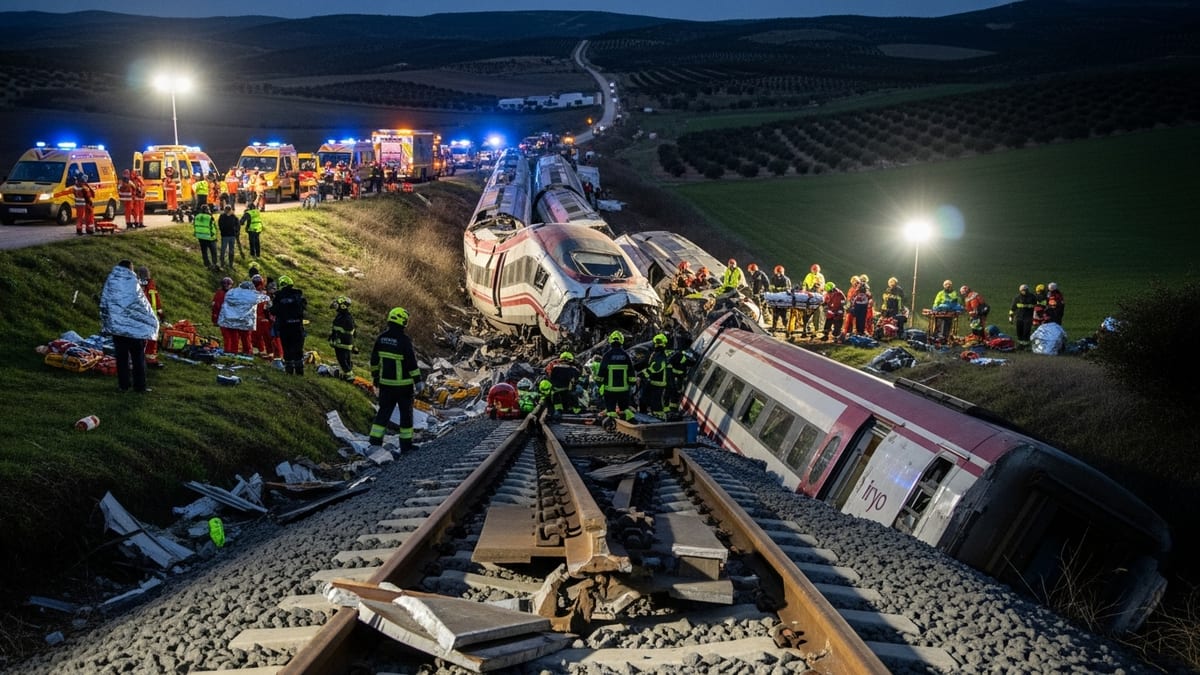
Collision on Busy Route into Central London
Initial reports indicate that the collision occurred on Friday afternoon near the town of Bedford, on a key commuter corridor linking the East Midlands with London St Pancras. Both trains were reportedly travelling south toward the capital when they came into contact on the approach to the town.
Publicly available tracking data described in news coverage suggests that the trains were operating on scheduled passenger services at the time of the incident. The impact led to at least one fatality and a number of injuries among those on board, with some passengers describing being thrown forward in their seats as the trains jolted to a sudden halt.
The line involved is one of the principal routes used by long distance and commuter operators serving communities between London and cities further north. The incident has resulted in immediate suspension or diversion of multiple services, with rail operators advising passengers to check revised schedules and expect extended journey times.
Emergency Response and Passenger Evacuation
According to published coverage, emergency services deployed significant resources to the scene, including ground ambulances, specialist medical teams and an air ambulance. Images and video from the area show multiple response vehicles positioned along tracks and access roads close to where the trains came to a stop.
Passengers reported walking along the railway line to reach safe evacuation points under the guidance of staff and responders. Some carriages appeared visibly damaged, and eyewitness accounts in media reports describe broken glass, scattered luggage and a number of people with visible injuries, including suspected fractures and lacerations.
Medical teams assessed casualties at the scene before transporting the more seriously injured to regional hospitals. Others were treated for shock and minor injuries and were later transferred to onward transport arranged by rail companies. Rail replacement buses and alternative routes were brought into operation to clear stranded passengers from nearby stations.
Disruption for Travelers Across the Network
The collision has caused significant disruption for travelers heading to and from London, particularly those using late afternoon and evening services at the start of the weekend. Services on the affected line have been curtailed, with some trains terminating short of their usual destinations and others diverted via slower alternative routes.
Rail operators have issued updated journey information through their usual channels and are advising passengers to allow extra time, consider postponing nonessential trips, or seek alternative modes of transport where possible. Those with flexible tickets are being encouraged to travel on different services or at off peak times once the line partially reopens.
For international visitors and domestic travelers alike, the incident highlights how quickly a single event on a busy mainline can ripple across the wider network. Major hub stations in London are experiencing congestion as services are altered at short notice, and some connecting trains have been held or cancelled to manage knock on delays.
Early Focus on Safety Systems and Investigation
While the precise cause of the collision has not yet been established, publicly available information indicates that rail accident specialists and technical teams are being deployed to the scene to begin an initial assessment. Their work will involve examining track conditions, signalling data, train control systems and the physical condition of the rolling stock involved.
Recent reporting on other rail incidents in the United Kingdom has underlined the importance of automatic protection systems, train braking performance and communication protocols between drivers and control centres. Investigators are expected to review whether all relevant systems operated as intended and what role, if any, human factors or equipment faults may have played.
In the short term, safety checks on nearby infrastructure and on similar services may be introduced as a precaution. Any formal findings are likely to take time to emerge, but previous investigations into UK rail collisions have often led to updated guidance, new technical safeguards and changes to operating procedures designed to reduce the risk of a similar event.
Implications for UK Rail Travelers
For travelers planning journeys over the coming days, the incident near Bedford serves as a reminder of the value of leaving additional time for connections, particularly when using busy intercity routes. Timetables can change rapidly following a serious incident, and reduced line capacity can continue even after the initial obstruction is cleared while engineers complete repairs and safety inspections.
Visitors arriving in London and connecting onward by train to regional destinations may wish to verify their options at stations or via operator announcements before departure. In previous cases of major disruption on this corridor, ticket acceptance on alternative routes and other operators has sometimes been introduced to ease congestion on the most affected line.
Despite the rarity of serious collisions on the United Kingdom’s rail network, the human impact of such events is profound for passengers, rail staff and local communities. Travel industry observers note that each major incident typically prompts renewed attention to safety culture, investment in infrastructure and communication with passengers, changes that can shape the experience of rail travel long after services resume.