


More news on this day
Ontario International Airport in Southern California has passed the four million passenger mark for 2026, underscoring how resilient domestic demand and rapidly expanding international routes are reshaping one of the United States’ fastest‑growing mid‑sized hubs.
Get the latest news straight to your inbox!
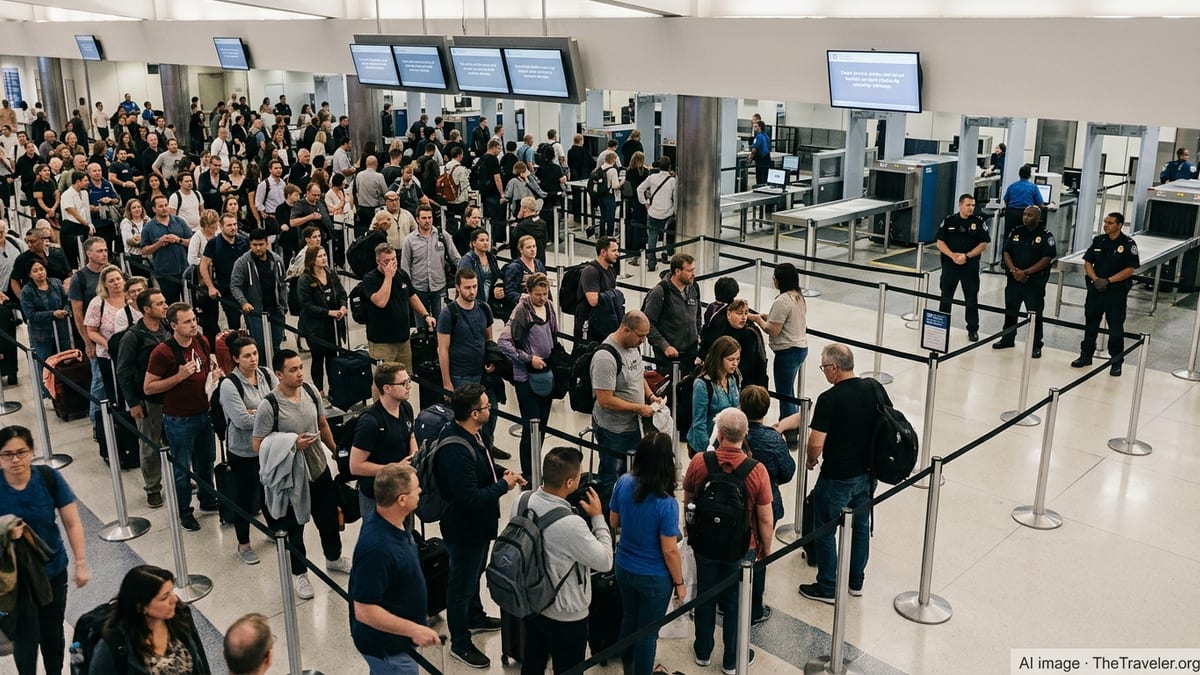
Four Million Passengers by July Marks New Milestone
Publicly available data from Ontario International Airport show the gateway handled 673,413 passengers in July 2026, bringing year‑to‑date volumes to 4,085,992 travelers through the first seven months of the year. The tally represents an increase of 1.3 percent compared with the same period in 2025 and pushes the airport past the symbolic four‑million threshold well before the traditional late‑year peak in holiday travel.
Domestic demand continues to anchor Ontario’s performance. Airport statistics indicate 616,247 domestic passengers used the facility in July, compared with 57,166 international travelers. While the total monthly figure slipped 1.2 percent year over year, the year‑to‑date picture remains one of steady expansion, illustrating how sustained local demand can offset short‑term monthly fluctuations.
The early passage beyond four million passengers also positions Ontario International to log another year above seven million travelers overall if current trends continue. The airport reported more than 7 million passengers in both 2024 and 2025, making the latest figures part of a broader growth pattern rather than an isolated surge.
International Growth Outpaces Domestic Recovery
The latest traffic report highlights the growing importance of international connectivity to Ontario’s expansion. Through July 2026, international passenger volume reached 403,385, a 36.9 percent increase from the same period a year earlier, according to airport figures. That rate far outpaces domestic growth and follows a record 567,000 international passengers in 2025.
This rapid rise builds on several years of network development focused on Mexico, Central America and transpacific links. Ontario International’s published route information shows nonstop services to multiple destinations in Mexico and Central America, as well as long‑haul flights to Taiwan, creating alternatives to Los Angeles International Airport for outbound Southern California travelers and inbound visitors alike.
The international trend also runs counter to broader headwinds reported for inbound travel to the United States, where a strong dollar and visa processing bottlenecks have weighed on some markets. Ontario’s performance suggests that secondary gateways with lower congestion and shorter processing times can still capture growing demand, particularly from visiting friends and relatives segments and price‑sensitive leisure travelers.
Cargo Strength and Regional Economics Sustain Momentum
Alongside passenger traffic, Ontario International continues to post gains in freight activity. Airport statistics cited in the July update show air cargo volumes up 7 percent year‑to‑date, reinforcing the airport’s status as one of the country’s leading cargo hubs by tonnage. The combination of strong logistics and rising passenger activity has become central to the airport’s growth narrative.
An independent economic impact study released in 2025 by Oxford Economics and referenced by the airport found that Ontario International generated approximately 4.8 billion dollars in annual economic output in 2024, supporting more than 24,000 jobs across Southern California. Since local authorities assumed control in 2016, annual passenger traffic has climbed from about 4.3 million to more than 7 million, while cargo operations helped the facility rank among the busiest freight airports in the United States.
The latest four‑million‑passenger milestone therefore extends a decade‑long expansion driven by Inland Empire population growth, industrial development and the airport’s role as a distribution hub for e‑commerce and express parcel operators. This dual passenger‑cargo model provides multiple revenue streams and helps shield the airport from cyclical swings in any single segment.
Airline Mix and Competitive Position in Southern California
Ontario International’s carrier mix remains concentrated among large U.S. airlines and low‑cost operators that help feed both local demand and connecting traffic. July 2026 data from the airport show Southwest Airlines with the largest share of passengers at roughly one‑third of the total, followed by American Airlines, Frontier Airlines, Alaska Airlines and Delta Air Lines. This blend of full‑service and budget carriers keeps average fares competitive with larger regional rivals.
The airport’s public history and performance summaries emphasize its rapid climb among mid‑sized U.S. airports since 2019, including recognition from industry publications as one of the fastest‑growing airports in the country. With Los Angeles International Airport facing chronic congestion and limited room for near‑term expansion, Ontario International has been marketed as a relief valve for the region, offering shorter security lines, closer proximity to Inland Empire communities and growing nonstop options.
Capacity investments, including terminal upgrades and new gate projects under the airport’s ONT BOLD development program, are designed to ensure that infrastructure keeps pace with rising demand. These projects, financed in part through federal grants and local contributions, aim to accommodate additional aircraft, streamline passenger flows and expand concessions, which in turn can attract further airline interest.
Outlook: Positioned for Continued Growth Amid Global Volatility
Ontario International’s ability to surpass four million passengers by July 2026 comes against a backdrop of uneven global travel recovery and macroeconomic uncertainty. Industry forecasts for North American carriers point to moderating growth after the post‑pandemic surge, yet Ontario’s data suggest that secondary hubs in high‑growth regions can continue to expand as travelers seek alternatives to crowded primary airports.
With international traffic growing at a double‑digit pace, a solid base of domestic demand and ongoing investments in terminals and airfield capacity, the airport appears positioned to maintain or exceed its recent annual passenger levels if economic conditions remain stable. The latest year‑to‑date figures will likely be closely watched by airlines weighing additional routes and capacity allocations for the 2027 planning cycle.
For now, the four‑million‑passenger mark through July underscores Ontario International’s emergence as a key player in Southern California’s aviation landscape, serving both as a community gateway for the Inland Empire and as an increasingly important node in global travel and logistics networks.
Ontario International Airport passenger count soared past 7 million in 2024