


More news on this day
Travelers flying between Orlando and Newark are facing some of the longest and most frequent delays in the United States, according to new analyses of federal aviation data and industry tracking services released ahead of the peak summer travel season.
Get the latest news straight to your inbox!
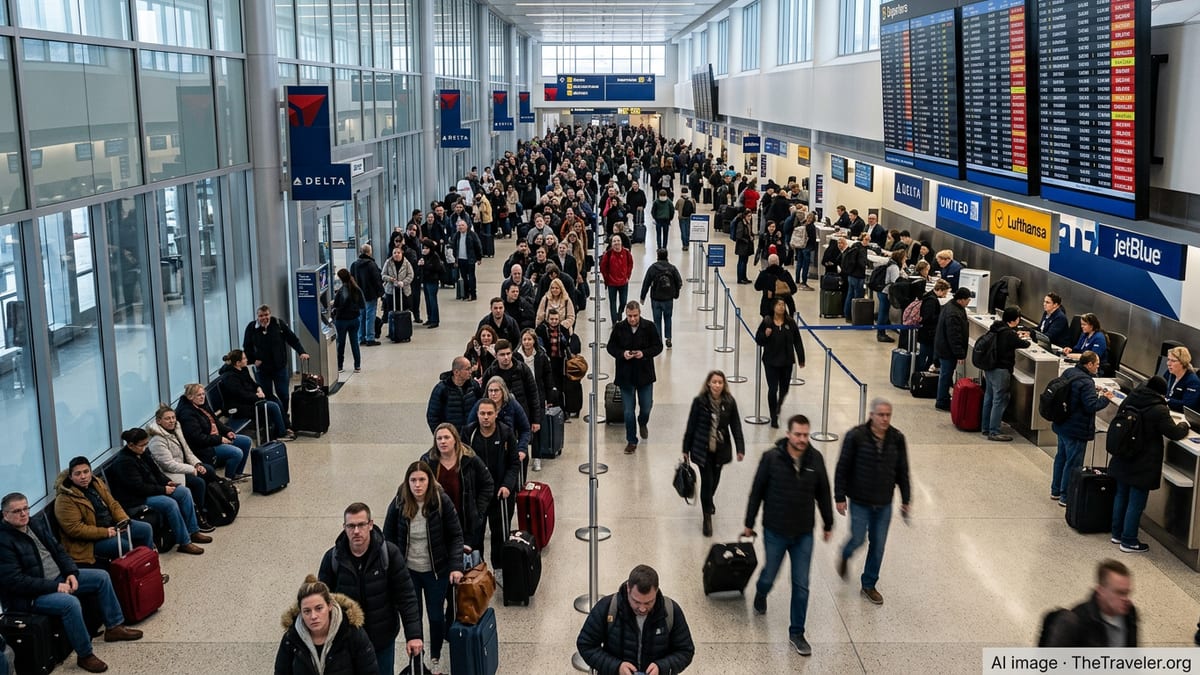
A busy leisure route with an outsized delay problem
The nonstop corridor between Orlando International Airport and Newark Liberty International Airport is one of the most heavily trafficked routes on the U.S. East Coast, with around 85 direct flights a week operated by multiple carriers. Publicly available schedule data shows a dense mix of early morning, midday and evening departures designed to move both vacationers and business travelers between central Florida and the New York metropolitan area.
Despite this robust schedule, the route has increasingly come to represent the broader strain on the national air travel network. Industry trackers that monitor on time performance indicate that flights between Orlando and Newark record elevated rates of late arrivals compared with many other domestic city pairs of similar distance. Delays of 30 minutes or more are common, with a notable share stretching past the one hour mark.
Analysts point to the combination of a high volume leisure gateway in Orlando feeding into one of the nation’s most delay prone hubs at Newark. When schedules are tight and aircraft are used on multiple daily rotations, even short disruptions early in the day can cascade into long waits for passengers booked on later Orlando–Newark departures.
Newark’s chronic congestion meets Orlando’s holiday surges
Newark has long ranked among the most congested and disrupted airports in the United States. Recent delay reports based on federal aviation data show Newark leading major U.S. airports in overall delay rates this spring, with average holds per disrupted flight frequently exceeding an hour. Those figures reflect a mix of air traffic control constraints in the busy New York airspace and operational bottlenecks on the ground.
On the other end of the route, Orlando International has emerged as a national hotspot for schedule disruptions during peak holiday periods. A recent analysis by travel site Upgraded Points, based on July 4 performance between 2023 and 2025, named Orlando the U.S. airport with the highest share of delayed Independence Day departures, with more than one third of flights leaving late.
When these two airports are paired, the result is a route unusually exposed to compounding problems. Summer thunderstorms in Florida, low ceilings and traffic management programs in the Northeast, and tight gate and runway capacity at Newark regularly interact to create long gaps between scheduled and actual departure or arrival times. For passengers traveling with children after a theme park vacation, the impact is particularly felt on evening northbound flights that can slip deep into the night.
Federal data and trackers place route among worst for long delays
The latest federal Air Travel Consumer Reports and commercial performance trackers do not publish rankings by every individual city pair, but they do detail on time records by airport and carrier. By combining those figures with schedule information for Orlando–Newark flights, independent analysts have highlighted the corridor as one of the worst in the country for extended delays relative to its distance and frequency.
Consumer-facing delay dashboards show that, over recent months, a significant portion of Orlando departures bound for Newark have arrived late enough to trigger missed connections and disrupted ground plans. In some cases, late arriving aircraft and air traffic control holds have pushed arrival times more than two hours beyond schedule, bringing the route into the category of long delays watched closely by regulators and passenger advocacy groups.
Recent Department of Transportation reports also underline how systemic issues, such as national aviation system delays and late arriving aircraft, weigh heavily on carriers with large operations at Newark. When those airlines deploy narrowbody fleets intensively between leisure markets like Orlando and constrained hubs in the Northeast, the Orlando–Newark segment becomes especially vulnerable to rolling disruptions throughout the day.
What travelers on the Orlando–Newark route can expect this summer
With the busiest vacation months approaching, industry observers expect the Orlando–Newark route to remain near the top of national rankings for long flight delays. Booking patterns show strong demand from families visiting central Florida attractions and from residents of New Jersey and New York returning from extended stays, which limits airlines’ ability to thin schedules on the corridor even when congestion is anticipated.
Travel experts reviewing the latest performance figures suggest that passengers on this route should build in extra buffer time, particularly if they are connecting onward in Newark or need to make time sensitive ground arrangements on arrival. Early morning departures are often cited as marginally less exposed to knock on delays, while midafternoon and evening flights are more likely to be affected by accumulated disruptions across the network.
Price sensitive travelers weighing different New York area airports may increasingly factor reliability into their decisions. While schedule and fare data indicate that Newark often offers convenient nonstop options to and from Orlando, the growing body of delay statistics is prompting some passengers to consider alternative routings through New York’s other airports or through different hubs altogether.
Airlines and regulators face mounting pressure on reliability
The elevated profile of the Orlando–Newark route in recent delay rankings adds to wider scrutiny of how airlines and infrastructure managers are handling an era of sustained high demand. Passenger advocates argue that the route exemplifies what happens when busy leisure markets are funneled into already saturated airspace without sufficient resilience built into schedules.
Publicly available commentary from regulators highlights ongoing efforts to address staffing levels in air traffic control facilities serving the New York region, alongside initiatives to modernize airspace management technology. At the same time, airline timetable adjustments ahead of the summer season show some carriers trimming marginal frequencies and padding block times on certain routes to improve on time statistics.
For now, however, the Orlando to Newark corridor remains a cautionary example for U.S. air travelers planning summer itineraries. With both endpoints ranking high for disruptions in recent reports and no rapid expansion of capacity on the horizon, the route’s reputation for long delays is likely to persist, keeping it firmly on the list of the country’s most delay prone flights.