


Few cultural experiences in Norway rival an evening at the Oslo Opera House. With its marble roof sloping into the Oslofjord and a program that ranges from grand opera to contemporary ballet, it attracts both locals and visitors year-round. Before you buy tickets, though, a bit of planning goes a long way in securing the right performance, the best seats for your budget, and a smooth experience from door to curtain call.
Get the latest updates straight to your inbox!
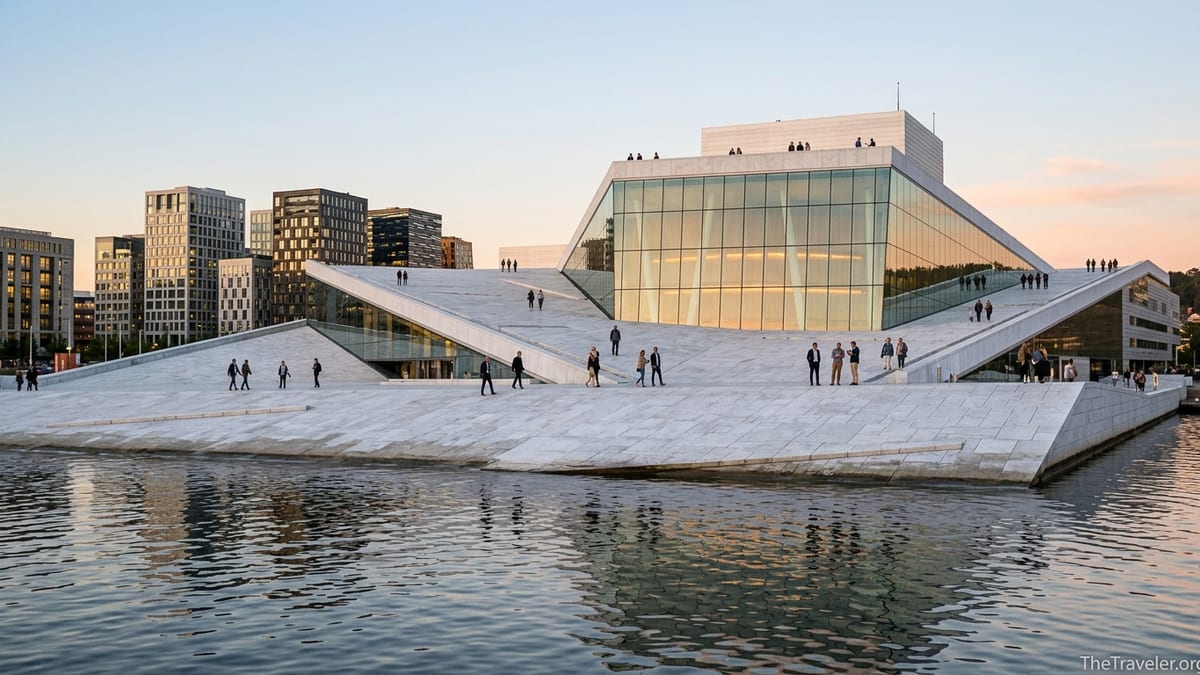
Understand What Is Free and What Requires a Ticket
One of the first surprises for many travelers is that much of the Oslo Opera House experience is free. You can walk the white marble and granite roof at any time of day, enjoy fjord and city views, and step into the foyer without paying an entry fee. Roof access is generally open around the clock and, on a clear summer evening, you will see locals using it as a casual promenade rather than a formal cultural attraction.
Tickets are only required for performances and for organized guided tours inside the building. Performances are staged by the Norwegian National Opera & Ballet on the main stage and in smaller venues throughout the season, roughly from September to June with a lighter schedule in July and August. If your goal is simply to see the architecture and views, you can do all of that without buying anything more than a tram or metro ticket to get to Bjørvika.
Guided tours offer a different kind of access. Typical public tours run for about 50 minutes and may cost in the region of 100 Norwegian kroner for adults, with reduced prices for children and discounts for Oslo Pass holders. These tours often include a look backstage or into rehearsal spaces when available, so they are worth booking if you are curious about how a modern opera house works behind the scenes.
Because the roof and foyer are free, you can separate your architectural visit from your performance night. Many travelers visit the building during the day to scout out the location, understand the entrances, and enjoy the views, then return later in the week for the show they have booked. That way you are not rushed before curtain time and you already know exactly where you are going.
Choosing the Right Performance and When to Book
The Oslo Opera House hosts a mix of opera, ballet, family performances, and occasional concerts. Programs are announced season by season, and tickets for the most popular titles, such as a new production of a Verdi classic or a Christmas-time ballet, can sell out quickly. Travelers who have their hearts set on a particular work should plan to book as soon as dates go on sale, which can be several months ahead of time for major productions.
Weekday performances, typically Tuesday through Thursday evenings, tend to offer better availability and slightly more relaxed pricing than Saturday nights. For example, a traveler looking at a mid-season opera might find that several seat categories remain open for a Wednesday performance a few weeks out, while the Saturday of the same run is already close to sold out. If your Oslo itinerary is flexible, anchoring it around a weekday show is a practical way to secure good seats without too much advance stress.
If you are in the discovery phase and simply want “something cultural” rather than a particular title, look at shorter or mixed programs, family-friendly shows, or contemporary dance evenings. These often have more last-minute availability. Checking the schedule a few weeks before your trip allows you to see what falls on the nights you are already in the city, and then you can decide whether to plan a pre-show dinner in Bjørvika or to fit the performance between sightseeing and a late bite near Oslo Central Station.
Some travelers prefer to wait and see what is available once they arrive, especially outside peak periods like December and early spring. This can work for less in-demand performances. However, if you are visiting on a tight time frame or during school holidays, treating opera tickets like you would a popular fjord excursion or Northern Lights tour and booking ahead is the safer option.
Seat Categories, Views, and What You Get for Your Money
Seat selection at the Oslo Opera House matters, especially if you are on a budget or have specific preferences about sound and sightlines. The main auditorium is modern and steeply raked, so even seats higher up can offer clear views of the stage. Generally speaking, the closer you are to the center, the higher the price, with more affordable categories to the sides and in the upper tiers.
For a traveler who wants a balance between price and experience, side seats in the first or second balcony often represent good value. Imagine a ticket buyer comparing options for a standard evening performance: central stalls seats may be among the most expensive in the house, while a seat slightly off-center in the first balcony can cost noticeably less yet still offer an excellent overview of the stage and orchestra pit. These seats are especially appealing for ballet, where seeing patterns and formations from above can be an advantage.
If Norwegian is not your first language and you are attending an opera, consider how close you need to be to comfortably read surtitles. The house is equipped with screens that make it fairly easy to follow the plot even from mid-range seats, but if your eyesight is limited you may feel more comfortable lower down. In that scenario, opting for a slightly cheaper category in the rear stalls rather than a premium balcony seat could be the more comfortable choice.
Budget-conscious visitors can also look at the very top galleries or partial-view seats when available. These are not ideal for first-timers who want the full staging, but they can offer an affordable way to experience the acoustics and atmosphere. For example, a student visiting Oslo for a semester might choose an upper gallery ticket for a midweek performance that costs significantly less than a central seat, then move down to empty seats during the interval only if staff confirm that it is allowed that night.
How and Where to Buy Tickets Safely
Official tickets for the Oslo Opera House are sold through the Norwegian National Opera & Ballet’s own channels and at the on-site box office. Prices are listed in Norwegian kroner, and you can usually pay by major credit or debit cards. Buying directly from the official provider avoids problems such as inflated resale prices, incorrect seat information, or tickets that do not scan at the door.
Because the building is both an iconic landmark and a major venue, it sometimes appears on third-party ticket platforms that list events around Oslo. While these can be helpful for seeing what is on, they may charge additional service fees. For instance, a visitor comparing an opera ticket listed on a general events site and the opera’s own system might notice that the base price is the same but the final amount on the third-party site is higher once its service charge is added. Whenever possible, checking availability on the official ticketing page or at the foyer box office keeps costs transparent.
The on-site box office is convenient if you are already in Bjørvika exploring the waterfront or visiting the nearby Munch Museum and Deichman library. Many travelers stop into the foyer to ask about performances later in the week, check seating plans on large screens, or clarify accessibility seating and companion tickets. Staff are accustomed to international visitors and can generally assist in English with questions about where to sit and what the show involves.
If you are purchasing online from abroad, leave enough time before the performance to troubleshoot any issues. It is wise to keep your confirmation email easily accessible on your phone and, if tickets are issued as PDFs, to download them before arriving in Norway in case your data connection is weak. Arriving at the opera house at least 30 minutes before curtain time gives you room to resolve anything at the box office if a QR code does not immediately scan or if there is confusion about your booking.
Plan Your Journey: Getting to and From the Opera House
The Oslo Opera House sits in the Bjørvika neighborhood at the head of the Oslofjord, a short walk from Oslo Central Station. For many visitors, the easiest route is to arrive by train, metro, or regional rail to Oslo S, then follow signs toward the waterfront. Within about five minutes on foot, you will see the building’s angular white roof rising from the water’s edge.
Oslo’s public transport system, operated by Ruter, connects the opera area to the rest of the city by tram, bus, metro, and local trains. Trams on lines that stop at Bjørvika let you step off practically in front of the opera and walk just a couple of minutes to the entrance. A traveler staying near the Royal Palace might take a tram down Karl Johans gate and transfer toward Bjørvika, validating a single-zone ticket on the Ruter app that covers the entire journey for a set period of time.
Driving is possible but not usually recommended for visitors. The immediate waterfront is designed more for pedestrians and cyclists, and parking garages are located slightly back from the building, around Bjørvika and Sørenga or near Oslo Central Station. Travelers who do choose to drive should factor parking fees into their evening, which can add significantly to the cost of a night at the opera compared with a simple public transport ticket.
After the performance, public transport remains the most straightforward way back to your hotel or rental. Norway’s approach to urban mobility means that late-evening trams and buses commonly still run through the central districts, especially on weekdays when performances end. If you are staying within walking distance of Oslo S or in the city center, you can simply stroll back along the lit waterfront or through the Barcode district, which is usually lively with people leaving restaurants and bars.
What to Wear and Practical Etiquette Inside
Many travelers worry unnecessarily about what to wear to the Oslo Opera House. Like many modern European venues, it does not enforce a strict dress code. On any given evening, you will see a mix of smart casual outfits, such as dark jeans with a shirt or blouse, and more formal attire like cocktail dresses or jackets. Locals often dress in a way that feels slightly elevated compared with everyday work clothes but far from black-tie.
If you are packing light for a longer Norway itinerary, think in terms of layers and versatile pieces. A simple dark dress with a cardigan and boots, or chinos with a button-down shirt and a light blazer, will look entirely appropriate in the foyer and auditorium. In winter, guests leave heavy coats in the staffed cloakrooms and reveal more polished outfits underneath, while in summer you might simply bring a light jacket that can be easily stowed.
Etiquette inside the house follows the usual expectations of a performance venue. Phones should be set completely silent and kept out of sight during the performance. Photography is generally fine in the foyer and on the roof but is not allowed once the curtain rises. Conversations should be kept to a whisper in the auditorium, especially during quiet musical passages. Travelers unfamiliar with opera customs can simply follow the lead of the crowd: stand when others stand for applause at the end, and remain seated and quiet during the music.
It is also worth arriving early enough to enjoy the building itself. The interior is lined with pale oak, and many visitors take ten or fifteen minutes before the performance to walk the sweeping staircases, look out at the city through the glass walls, and perhaps buy a drink or snack at the bar. For major productions, free introduction talks are sometimes offered in a dedicated space off the foyer before the main curtain, providing useful context for first-time opera or ballet goers.
Seasonal Considerations: Weather, Daylight, and Timing
The time of year you visit Oslo has a major impact on what your opera evening will feel like. In mid-winter, it can already be dark and cold well before an evening performance starts. Snow often collects on sections of the roof, and some outdoor areas may be cordoned off if conditions are icy. If you hold tickets for a January or February show, plan for warm footwear and give yourself extra time to navigate potentially slippery paths leading up to the building from the tram or station.
In contrast, a June or July performance can begin while the sun is still high and end in a lingering northern twilight. Travelers frequently walk the roof before or after a show to watch the light over the fjord, using the performance as the centerpiece of a long summer evening spent in Bjørvika. On such nights, the area’s waterfront bars and nearby food halls stay busy late, making it easy to combine culture with casual outdoor dining.
Spring and autumn bring more changeable weather. A day that starts with drizzle can clear in time for a golden-hour stroll on the roof before the curtain. Packing a compact umbrella and a windproof layer is sensible if you plan to be outside admiring the architecture before you head inside. The building’s design, with gentle ramps rather than steep stairs, helps even in poor weather, but you will still want shoes with decent grip, particularly when the marble is damp.
Seasonality also affects what is on the program. The main opera and ballet season typically runs from early autumn to late spring, with a slightly lighter schedule in the peak summer tourism period. If attending a full-scale opera or classical ballet is a priority, visiting between about October and April often provides the broadest range of titles and premiere performances, whereas summer might feature more concerts, special events, or shorter runs.
Making the Most of the Surrounding Bjørvika Neighborhood
Part of the pleasure of an Oslo Opera House ticket is the neighborhood that comes with it. Bjørvika has transformed from an industrial waterfront into a contemporary cultural district. Within a short walk of the opera, you will find the Munch Museum with its striking cantilevered silhouette, the glass-fronted Deichman library, and the high-rise Barcode buildings that have become a symbol of modern Oslo’s skyline.
Travelers often organize an entire afternoon and evening around the area. One popular pattern is to spend a couple of hours at the Munch Museum in the late afternoon, cross the plaza for an early dinner at a casual restaurant among the Barcode towers, then stroll the waterfront to the opera foyer in time for the performance. On warm days, some visitors even dip their feet at the small city “beach” areas and floating saunas that now dot the harbor, before changing into slightly smarter clothes for the evening show.
The opera’s own café and restaurants inside the building can also be part of the experience. While specific venues and names may change over the years, a typical setup includes a bar area where you can pre-order drinks and light snacks for the interval. Travelers who like structure sometimes reserve a small platter and glass of wine, then collect it at a dedicated counter during the break without needing to queue. This small detail can make a high-demand interval feel calmer and more enjoyable.
Because Bjørvika is compact, it is easy to adapt plans on the fly. If the weather turns unexpectedly poor, you can move dinner from a waterfront terrace to a cozy indoor bistro. If you discover that the library is hosting an event or exhibition that interests you, you can drop in for a quick visit before your show. Thinking of your Oslo Opera House ticket as a passport to an entire quarter rather than a single auditorium helps you get more value from both your time and your budget.
The Takeaway
Booking tickets for the Oslo Opera House is about more than securing a seat in a famous building. It involves choosing the right performance for your interests, selecting a seat that fits both your budget and your comfort, and weaving the experience into a broader exploration of Oslo’s waterfront. By understanding what is free to enjoy and what requires a ticket, planning your transport via Oslo’s reliable public network, and allowing time to appreciate the architecture and neighborhood, you turn a night at the opera into a highlight of your Norwegian journey.
With no strict dress code and plenty of options for affordable seats, the Oslo Opera House is genuinely accessible to first-time visitors and seasoned opera fans alike. A little advance research on scheduling and seat categories, plus a practical eye on the weather and daylight, is usually all it takes. The reward is an evening where world-class performance, innovative design, and the calm of the Oslofjord come together in a single, memorable experience.
FAQ
Q1. Do I need a ticket to walk on the roof of the Oslo Opera House?
Roof access is free and open to the public, so you do not need a ticket just to walk on the roof or visit the foyer.
Q2. How far in advance should I book Oslo Opera House tickets?
For popular operas and ballets, booking several weeks or even a couple of months ahead is wise, especially for weekend performances and peak seasons.
Q3. Is there a dress code for performances at the Oslo Opera House?
There is no strict dress code. Smart casual outfits such as neat jeans, dresses, shirts, or blouses are common and perfectly acceptable.
Q4. Are guided tours of the Oslo Opera House worth it?
Guided tours are worthwhile if you want to see backstage areas and learn about the architecture. They are relatively short and moderately priced, so many visitors find them good value.
Q5. What is the best way to get to the Oslo Opera House?
The easiest way is by public transport to Oslo Central Station or the Bjørvika tram stop, followed by a short walk along the waterfront to the building.
Q6. Which seats offer the best value for money?
Side seats in the lower or middle balconies often balance price and quality, giving good views of the stage at a lower cost than central stalls seats.
Q7. Can I buy tickets at the opera house on the day of the performance?
Same-day purchases are sometimes possible at the foyer box office, particularly for less in-demand shows, but availability is not guaranteed for popular titles.
Q8. Are there discounts for students or Oslo Pass holders?
Students and Oslo Pass holders often benefit from reduced prices or specific offers on selected performances or tours, so it is worth asking when you book.
Q9. What time should I arrive before the performance starts?
Arriving at least 30 minutes before curtain time allows you to collect or resolve tickets, check your coat, find your seat, and enjoy the foyer without rushing.
Q10. Is it possible to combine a visit to the Oslo Opera House with other nearby attractions?
Yes. The Munch Museum, Deichman library, and the Barcode district are all within a few minutes’ walk, making it easy to plan a full afternoon and evening in Bjørvika.