


Few buildings capture modern Oslo as vividly as the Oslo Opera House, a sheet of white marble rising out of the Oslofjord. Visitors come as much to stroll its sloping roof and linger by the water as to hear world-class opera and ballet. With a bit of planning, you can easily combine a roof walk, a look inside the foyer, maybe a performance, and a wander through the surrounding Bjørvika waterfront, all in a single, well-organized visit.
Get the latest updates straight to your inbox!
Understanding the Oslo Opera House Experience
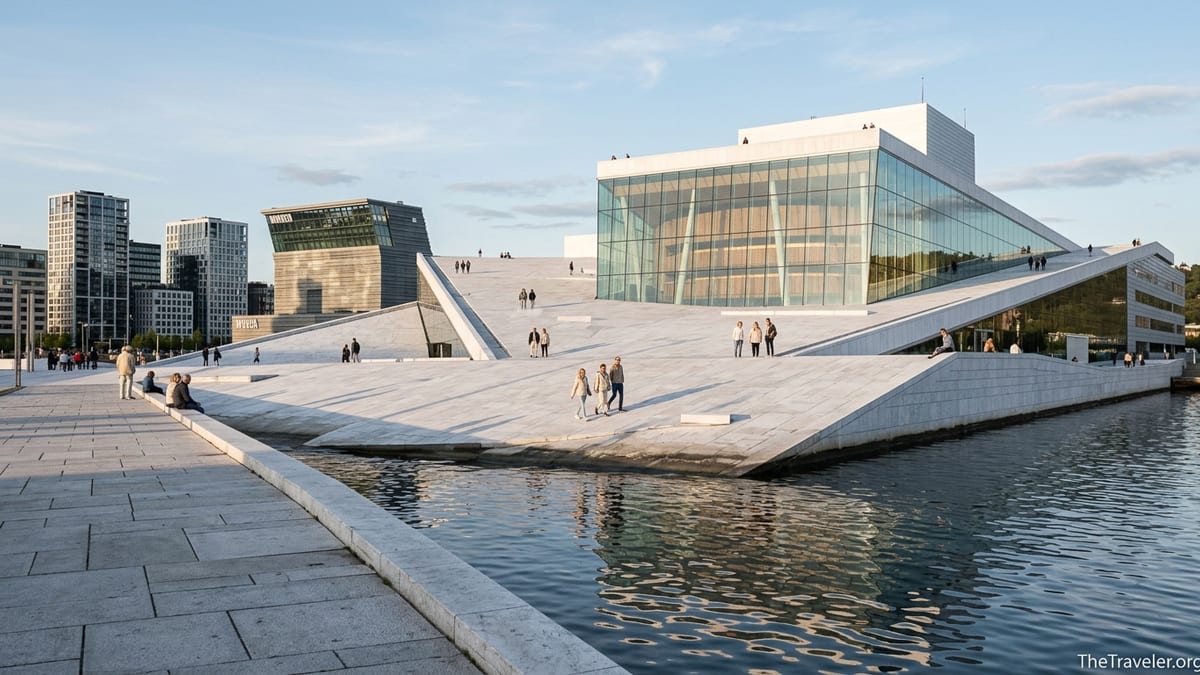
The Oslo Opera House is home to the Norwegian National Opera and Ballet and has become one of Norway’s most recognizable buildings since it opened in 2008. Designed by the architecture firm Snøhetta, its white marble and glass structure slopes straight into the fjord, creating a huge public plaza and roof that anyone can walk on without a ticket. Many locals treat it like a park: people bring coffee, sit on the warm stone in summer, and watch ferries glide in and out of the harbor.
For most travelers, the experience divides into two parts. First is the outdoor side: walking up onto the roof, taking in views of the Barcode office towers, the MUNCH museum and the new Deichman Bjørvika library, and feeling how the building connects city and sea. Second is the cultural side: stepping into the high, timber-clad foyer, browsing the schedule of opera and ballet, or joining a guided tour to see backstage workshops and rehearsal rooms. You can do one or both depending on your time and budget.
Because the building is so accessible, you do not have to commit to a long evening performance to appreciate it. Many visitors coming from Oslo Central Station drop their luggage in a hotel, walk five minutes to the opera plaza, and spend 45 minutes simply exploring the roof and foyer before continuing into the city. Others plan a full evening with a pre-show drink, a three-hour performance, and a late stroll along the waterfront afterward.
When to Visit and What It Costs
The public areas of the Oslo Opera House and its rooftop are typically open from early morning until late at night, often around 6 am to 1 am, which means you can fit a visit around other sightseeing or even a tight conference schedule. Mornings tend to be quieter, while late afternoons and early evenings attract both commuters and tourists. In high summer, late-night roof walks are popular because the sky stays light for so long; in winter, early afternoon offers the best natural light before darkness falls.
Walking around the exterior and going up on the roof is free, as is entering the main foyer to see the architecture, use the restrooms, or grab a coffee. Budget-conscious travelers can therefore enjoy the building without spending anything. Costs begin when you add a guided tour or performance tickets. As a rough reference, public guided tours advertised through operators connected with the house often start in the region of 100 Norwegian kroner for adults and around 60 kroner for children, with discounts for holders of the city’s tourist pass. Private group tours in English, German or French are more expensive but can be arranged in advance for families or groups of friends.
Performance prices vary widely depending on production, seat category and day of the week. A visitor looking for a seat in the upper galleries for a weekday performance might find prices in the lower hundreds of kroner, while prime stalls seats for a major opera or ballet premiere can be several times higher. If your dates are fixed, it is wise to check the program a few weeks ahead and filter by “Available tickets” to see what fits both your budget and schedule. Same-day ticket purchases are possible but popular productions and opening nights can sell out well in advance.
Getting There and Navigating Bjørvika
The opera house sits in the Bjørvika waterfront district, immediately southeast of Oslo Central Station (Oslo S). For most visitors arriving by train from Oslo Airport or other Norwegian cities, it is an easy five- to ten-minute walk. Once you exit the station toward the sea, you will see the sloping white roof ahead. Follow signs for the opera or simply walk toward the water and you will reach the broad plaza known as Kirsten Flagstads Plass in front of the main entrance.
Public transport in Oslo is integrated under the Ruter system, which covers metro, trams, buses and local trains. Any metro or tram stop serving Oslo S or nearby Jernbanetorget puts you within short walking distance of the opera. Visitors who plan several journeys in a day often find that a 24-hour ticket loaded onto the Ruter app is more convenient and better value than buying single tickets; you can then hop off at Oslo S for the opera, continue on to another neighborhood, and ride back to your hotel on the same pass.
Once there, give yourself time to explore Bjørvika itself. To one side of the opera stands the Barcode strip of tall, slender office and residential buildings, while just across the water you will see the leaning tower of the MUNCH museum. A few minutes’ walk away is Deichman Bjørvika, Oslo’s striking main public library with a large waterfront terrace and popular café. Between these landmarks you will find the Oslobukta shopping and dining area, with Norse and international brands, bakeries and wine bars. It is easy to combine a visit to the opera’s roof with a coffee in the library café or a casual dinner at one of the fjordside restaurants.
Walking the Roof and Exploring the Architecture
One of the most distinctive features of the Oslo Opera House is that visitors are encouraged to walk on the roof. The gently sloping ramps of pale Italian marble and granite extend from the water’s edge right up to the upper levels of the building. In practical terms, this means that even travelers with only an hour in the city can climb up for views across the Oslofjord and back toward the city center without joining a tour or buying a ticket. In summer, locals stretch out on the stone, and you will often see teenagers taking photos toward the fjord ferries and island-hopping boats.
The surface looks smooth but can be unexpectedly steep or slippery in places, especially in rain, snow or when ice forms along the edges. Visitors wearing thin-soled city shoes sometimes find parts of the roof surprisingly slick. It is sensible to wear shoes with decent grip and to hold the hand of young children as you move up the slopes. In winter, the staff often rope off the most exposed areas when conditions are too icy, but there are usually safe routes kept open. Handrails appear only in certain sections, so do not assume there will always be something to hold on to.
Inside, the foyer offers a different architectural experience. Warm oak surfaces curve around the main auditorium, and sunlight filters through the glass facade onto the stone floors. There is typically a cloakroom area, ticket desk, café and small shop selling items tied to current productions. Even without attending a performance, it is worth spending ten or fifteen minutes inside to feel the contrast between the cool exterior and the warm timber interior. If you are traveling with someone sensitive to crowds, know that the foyer can be very lively before evening performances but relatively quiet in late mornings or early afternoons.
Tickets, Tours and Performances
If you want more than the free roof walk and foyer, consider a backstage or architecture-focused tour. These usually run on selected days and may be available in English and other major languages. A typical tour might last around 50 to 60 minutes and include a look at rehearsal studios, costume workshops with rows of in-progress garments, and a peek into the main auditorium when it is not in use. Families with older children often find that seeing the production side of a ballet or opera helps hold attention better than simply sitting through a long evening performance.
Performance tickets are best purchased directly from the official sales channels of the Norwegian National Opera and Ballet or from the box office inside the building. Third-party resellers sometimes add service fees, and Norway takes ticket fraud seriously, so avoid buying from unofficial sources outside the venue. If you are flexible, consider midweek performances or matinees, which can be more affordable and less crowded than weekend evenings. Shorter works or mixed ballet programs can provide a taste of the company’s style without committing to a four-hour opera.
For travelers on a tight schedule, one practical option is to choose a performance that fits between a waterfront dinner and a late stroll. For example, you might have an early fish dinner in the Oslobukta area at 5:30 pm, attend a 7 pm ballet performance that ends around 9:30 pm, and then walk back up onto the now quiet roof to see the city lights. Visitors with children might instead book a shorter family-friendly matinee, such as a condensed version of a classic ballet or a seasonal production around the winter holidays, which typically finishes early enough for a relaxed evening.
Practicalities: Weather, Clothing and Accessibility
Oslo’s waterfront is exposed, and the experience of the opera house changes with the seasons. In winter, temperatures can fall well below freezing and wind from the fjord makes the roof feel even colder. You will see locals in insulated boots, scarves and hats, and this is the level of clothing visitors should imitate if they plan to spend more than a few minutes outside. Photographers hoping for clear blue winter skies often find that the best days are also the coldest, so warm layers are essential. In summer, the white marble can reflect both sun and heat, so sunglasses and sunscreen are helpful, and a light jacket is wise for breezy evenings by the water.
The good news is that the building was designed with accessibility in mind. While some exterior slopes are too steep for wheelchairs, there are lifts and ramps that provide step-free access into the foyer and to selected exterior terraces. Inside, accessible seating is available for performances, and there are elevators to all public levels. Travelers using mobility aids can contact the opera’s customer service ahead of time to ensure that the right seating and assistance are arranged. Accessible restrooms are located near the main foyer facilities, which are often praised by visitors for being clean and well maintained.
As with the rest of Oslo, tap water is safe to drink, so you can refill bottles in your accommodation and carry them with you. Public toilets in the city often charge a small fee, so another practical advantage of stopping at the opera is access to free restrooms inside the foyer during opening hours. If you are visiting in shoulder seasons such as April or October, prepare for rapidly changing conditions: it is not unusual to have sunny spells, showers and brisk winds all in a single afternoon along the fjord.
Making the Most of the Area Around the Opera
The opera house is one of three major cultural anchors in Bjørvika, alongside the MUNCH museum and Deichman Bjørvika library. Many visitors plan a half- or full-day itinerary that combines all three. One realistic sequence is to start late morning with a stroll on the opera roof, then walk five minutes to the library to browse the terraces, enjoy coffee and a pastry, and maybe sit with a book while looking out over the fjord. After lunch, you can cross the pedestrian bridges to MUNCH, where you will find multiple galleries of Edvard Munch’s work and temporary exhibitions, plus a top-floor bar with sweeping views.
Food and drink options are concentrated around Oslobukta and the streets behind Barcode. Travelers will find independent coffee bars serving Nordic-style filter coffee and cinnamon buns, casual pizza and burger spots, and a handful of more upscale restaurants focusing on seafood and seasonal Nordic ingredients. Prices in Norway are high by many international standards, so budget-minded visitors might choose one sit-down meal in the area and rely on supermarket snacks or simple café lunches for the rest of the day. There is a reasonably large supermarket a short walk away toward the central station where you can pick up water, fruit and sandwiches.
Families with children can treat the waterfront as a playground. The gently sloping plaza in front of the opera is a safe place for small children to run under supervision, and in summer you will often see kids paddling near the edges of the harbor steps. Closer to Sørenga, a 15- to 20-minute walk along the promenade, there is a designated sea bath area with floating saunas and swimming platforms that are popular with locals. Spending a morning on the opera roof and library, followed by an afternoon swim at Sørenga on a warm July day, gives a good sense of modern Oslo life in a compact radius.
The Takeaway
Planning a visit to the Oslo Opera House is less about complicated logistics and more about timing your experience for the light, weather and activities that suit you. Because the roof and foyer are open long hours and free to enter, it is simple to add a visit into almost any Oslo itinerary, whether you have only a few hours between trains or several days in the city. The building’s combination of striking architecture, everyday public use and top-level performances means it can be approached as a viewpoint, a cultural venue or a casual meeting place by the water.
If you take away one practical lesson, let it be this: check the performance and tour schedule in advance if you want to go beyond the free areas, but otherwise relax and let the place work on you. Arrive via Oslo Central Station, stroll slowly across the plaza, climb the marble slopes, and look back at the changing skyline of Bjørvika. Whether you then slip inside for a coffee, book a seat for a ballet or continue along the fjord promenade to MUNCH and Deichman, the Opera House will likely stand out as one of the clearest memories of your time in Oslo.
FAQ
Q1. Do I need a ticket to walk on the Oslo Opera House roof?
No. Walking around the outside of the building, including going up onto the roof, is free and does not require any ticket or reservation.
Q2. How much time should I plan for a visit if I am not seeing a performance?
Most visitors who only explore the roof and foyer spend between 45 minutes and 1.5 hours, depending on how long they linger for photos or a café stop.
Q3. Can I visit the inside of the Oslo Opera House without attending a show?
Yes. The foyer, café and public areas are open to visitors during the day, and you may enter to see the architecture or have a drink without a performance ticket.
Q4. Are guided tours of the Oslo Opera House worth it?
If you are interested in architecture, stagecraft or costume design, a guided tour adds backstage access and context that you will not get from the roof walk alone.
Q5. What is the easiest way to get to the Oslo Opera House from Oslo Airport?
Take a train to Oslo Central Station, then walk about five to ten minutes toward the fjord. The white, sloping roof of the opera house is clearly visible from the station area.
Q6. Is the Oslo Opera House accessible for wheelchair users?
Yes. There are step-free entrances, elevators inside, accessible restrooms and designated performance seating. Some exterior slopes are steep, but there are alternative routes.
Q7. What should I wear for a performance at the Oslo Opera House?
There is no strict dress code. Many locals wear smart-casual clothing, such as a shirt and trousers or a simple dress, but neat jeans and a sweater are also common.
Q8. Can I visit the Oslo Opera House in bad weather?
Yes, but roof access may be limited if it is very icy or stormy. In heavy rain or snow you can still enjoy the foyer, café and interior architecture while staying dry.
Q9. Is it possible to combine the Oslo Opera House with a visit to MUNCH and Deichman library in one day?
Yes. All three are within a short walk of each other in Bjørvika, and many visitors comfortably see the opera roof, MUNCH and the library in a single day.
Q10. Are there restaurants or cafés near the Oslo Opera House?
Yes. The opera has its own café, and the surrounding Bjørvika and Oslobukta areas offer a range of coffee bars, casual eateries and more upscale restaurants.