


More news on this day
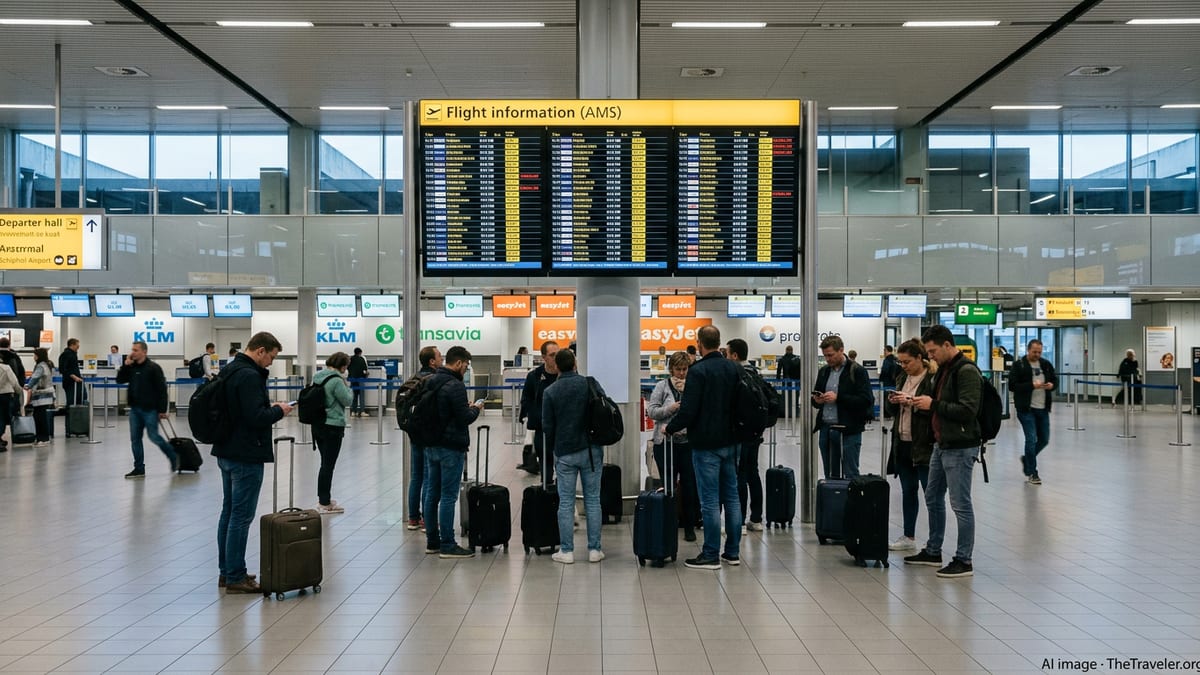
Dozens of passengers missed early morning flights from Amsterdam Schiphol Airport after overnight check-in problems triggered long queues at Transavia desks, highlighting renewed pressure on the hub as the busy summer holiday period gathers pace.
Get the latest news straight to your inbox!
Overnight disruption hits early departures
According to local Dutch coverage, the disruption unfolded overnight from Saturday into Sunday, when technical and staffing issues around Transavia’s airport check-in reportedly slowed passenger processing in Schiphol’s departure halls. As queues grew and self-service options stalled, travelers waiting to drop bags or obtain boarding passes were unable to reach security in time for their scheduled departures.
Reports indicate that several Transavia flights left with empty seats while frustrated passengers remained stuck in line at the desks. Many of those affected were bound for popular leisure destinations as the Dutch school summer holidays get underway, adding to the sense of frustration for families and groups who had planned peak-season getaways.
Information shared publicly described some passengers arriving at Schiphol well ahead of departure, only to be held up for so long at check-in that boarding cut-off times passed. In multiple accounts, travelers said they were informed at the desk that their flight had already closed, despite being physically present at the airport.
The problems occurred against a backdrop of generally high traffic at Schiphol, with the airport operating near peak capacity on many summer weekends and airlines reporting strong seasonal demand.
Passengers face missed holidays and rebooking hurdles
Travelers affected by the overnight disruption reported missed flights, disrupted holiday plans and difficulties securing alternative options on the same day. With many services during the school vacation already heavily booked, same-day rebooking opportunities were limited, leaving some passengers facing long waits or forced changes to their itineraries.
Publicly available information suggests that, in several cases, travelers were offered alternatives on later flights or on different dates, depending on availability and ticket conditions. However, with leisure routes operating close to capacity, there were few spare seats on popular morning departures.
Some accounts highlighted additional costs such as extra accommodation, food and replacement ground transport. Under European air passenger rules, travelers on eligible flights that arrive with long delays or are cancelled for reasons within the airline’s control may be able to claim compensation or reimbursement, but claims typically need to be pursued directly with carriers or through specialist services.
The situation also reignited debate about how much earlier passengers should arrive at Schiphol during peak periods. Recent online discussions among travelers have frequently referenced concerns about long queues for bag drop, security and border controls, with many opting to arrive far in advance of airline guidance.
Schiphol’s summer strain and recent operational warnings
The episode comes as Schiphol has been warning travelers to prepare for busy summer operations in 2026. Recent airport advisories have urged passengers to check flight information before leaving home, use online check-in where possible and build in extra time for possible congestion at security and baggage handling.
Earlier guidance for the current summer season has emphasized that crowding can develop quickly at peak morning and evening waves, particularly at the start of school holidays. Public information from Schiphol notes that staffing, construction work, and seasonal surges can all affect waiting times at check-in and security, even when flight schedules operate largely as planned.
The airport has also promoted tools such as pre-booked security time slots and its official app, which provides live updates on flight status, departure halls and gate changes. These measures are designed to spread passenger flows more evenly throughout the day and reduce bottlenecks at busy checkpoints.
Despite those efforts, the recent overnight check-in disruption underlines how localized problems at one airline’s desks can ripple quickly through the wider operation, particularly when they occur just before the first bank of early-morning departures.
Patterns of pressure at one of Europe’s busiest hubs
Amsterdam Schiphol is among Europe’s major aviation hubs, handling tens of millions of passengers a year and serving both point-to-point and transfer traffic. In recent years it has faced several episodes of crowding and operational strain, ranging from weather-related cancellations and baggage handling issues to security staffing shortages and industrial actions affecting ground operations.
During previous disruptions, including winter storms and technical failures, passengers have reported extended queues, missed connections and last-minute cancellations. Such events have prompted airlines and consumer groups to remind travelers of their rights under European regulations and to encourage the use of online tools to monitor changing conditions.
Industry analyses of airport operations note that check-in desk allocation, staffing levels and the performance of self-service equipment are critical factors in avoiding bottlenecks. When one or more of these elements falter during a busy period, queues can grow quickly and leave little margin for passengers who arrive close to minimum recommended times.
The latest disruption at Schiphol appears to follow that pattern, with problems concentrated in a specific overnight period but impacting travelers booked on several early departures. The incident has renewed scrutiny of how airlines and airports coordinate during high-demand seasons to prevent localized glitches from escalating into broader service breakdowns.
What travelers can do ahead of busy departures
Consumer guidance emerging from recent European travel seasons suggests several steps that may help reduce the risk of missing flights when airports are under strain. Passengers are frequently advised to check in online as early as permitted, monitor airline and airport communications closely in the hours before departure and arrive at the terminal with sufficient buffer time, particularly at weekends and during school holidays.
Travel experts commonly recommend that passengers traveling with checked baggage allow additional time for bag drop, as these queues are often the first to lengthen during operational disruptions. Keeping travel documents, booking confirmations and any airline notifications easily accessible can also speed up interactions at the desk if problems arise.
In situations similar to the recent overnight disruption at Schiphol, travelers who believe they have been affected by airport or airline-related delays can document their experience, save receipts for extra expenses and review their eligibility for assistance or compensation under applicable regulations. Independent passenger rights organizations, travel insurers and consumer bodies often provide step-by-step guidance on how to submit claims.
For Schiphol specifically, recent public advice has highlighted the value of checking live flight status via the airport’s app or website and paying close attention to any last-minute changes to check-in counters or departure halls. As the summer peak continues, the overnight check-in problems that left dozens of Transavia passengers behind underscore how quickly a routine departure can unravel when key parts of the process slow down.