


San Cristóbal is often the first or last stop on a Galápagos trip, and most visitors sleep in Puerto Baquerizo Moreno, the island’s small, walkable capital. Choosing the right base here will shape how you experience early-morning boat tours, lazy sunsets with sea lions, and quiet nights of real rest. This guide explains the town’s layout, breaks down the main micro-areas to stay in, and highlights a few reliable properties across budgets so you can match your priorities to a realistic shortlist.
Get the latest updates straight to your inbox!
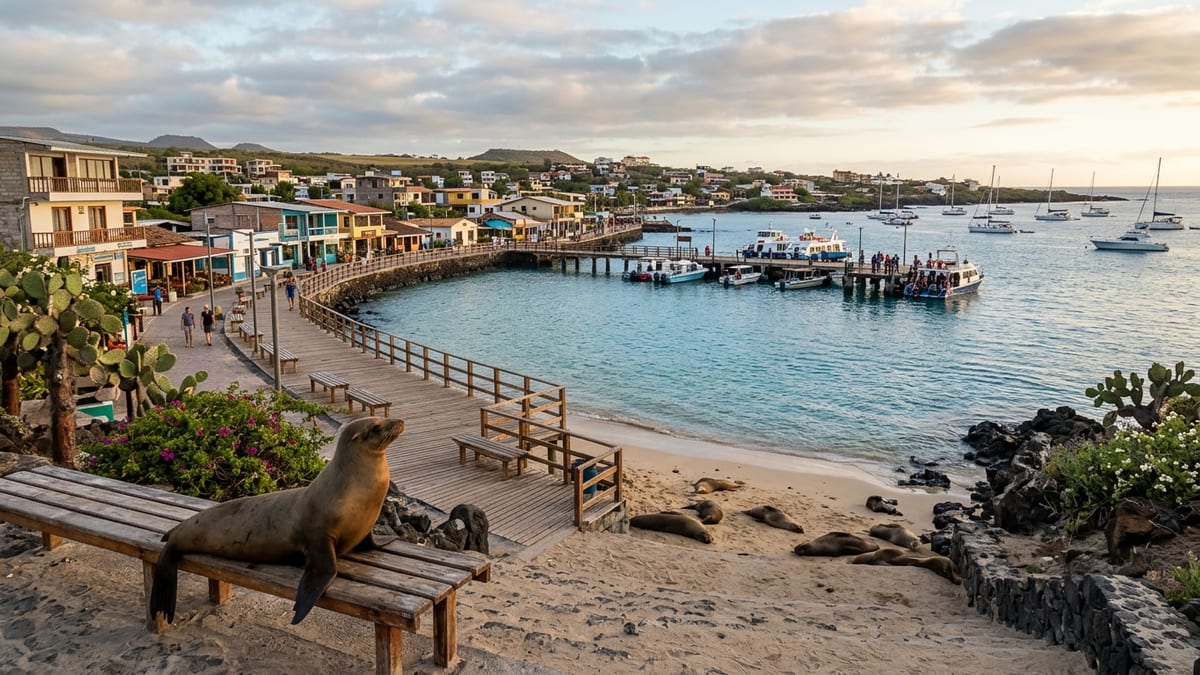
Understanding Puerto Baquerizo Moreno’s Layout
Puerto Baquerizo Moreno spills along a curving bay on San Cristóbal’s west coast, with a waterfront malecón running past the main pier, small beaches and a string of bars, cafés and tour agencies. This seafront strip is where you will first arrive for inter-island ferries and most day tours, and where sea lions haul out on benches and steps. The atmosphere is lively around sunset, especially on weekends and local holidays, when residents and visitors wander the promenade.
Immediately behind the malecón sits a compact grid of low-rise streets around the main church and plaza. Here you find additional restaurants, small supermarkets, pharmacies and many budget and midrange guesthouses. Walking from this central grid to the principal tour dock typically takes around 3 to 8 minutes, depending on your exact street, which makes it a practical area if you have early departures for Kicker Rock or inter-island boats.
A few blocks inland the town begins to rise slightly, leading to more residential streets and a scattering of small hotels and hostales. These uphill or outlying pockets are usually quieter at night, with less traffic and fewer bars, though you may still hear distant sea lions. From many of these spots, it is about 10 to 20 minutes’ walk or a short, inexpensive taxi ride to the pier. The airport sits on a plateau just above town; driving from the malecón to the terminal generally takes around 5 to 10 minutes.
Because almost all licensed visitor accommodation is concentrated in or just above Puerto Baquerizo Moreno, most travelers base themselves here and explore the rest of San Cristóbal on day trips. This keeps you close to tour operators, dive centers, ATMs, and the harbor, and avoids the logistical complexity of staying far from town unless you have very specific interests.
Staying on the Waterfront Malecón
The waterfront or malecón zone includes properties directly facing the bay, typically within a 1 to 4 minute walk of the main pier and tour docks. These hotels offer the classic San Cristóbal experience of watching sea lions and pelicans from your balcony or the hotel terrace, and they are unbeatable for convenience if you have dawn boat departures or want to pop back to your room between activities.
Accommodation here tends to fall in the midrange to upper-midrange bracket, with simple rooms in some older buildings and more polished boutique options in newer ones. As of late 2026, many double rooms in malecón-front hotels on major booking platforms commonly appear in a broad range from about 120 to 260 US dollars per night, depending on the season, room type and how far in advance you book. Prices often rise during wildlife high seasons and around holiday periods, so checking current nightly rates close to your travel dates is essential.
Representative options include Casa Opuntia, which occupies a corner on the oceanfront boardwalk with sea-facing rooms, a small outdoor pool and garden areas that feel like a calm pocket despite being only a few minutes’ walk from Playa de Oro and the pier. Hotel Miconia, also set directly on the malecón near the main beach, typically offers sea-view rooms, a pool and on-site restaurant, pairing an extremely central location with resort-style facilities that appeal to couples and families wanting amenities without sacrificing proximity to town.
The main trade-off on the malecón is noise. You are close to bars, restaurants and the evening promenade, and sea lions can be surprisingly loud throughout the night. Light sleepers should study recent guest reviews for comments on noise, ask the hotel for upper-floor or courtyard rooms away from the street, and check whether windows are sound-insulated and if there is effective air conditioning so that you can keep them closed. Elevators are not common in low-rise island buildings, so if stairs are an issue, confirm room location and access before booking.
Central Streets Just Behind the Waterfront
One or two blocks back from the water, the character of Puerto Baquerizo Moreno shifts to a more local, everyday feel while still being very convenient. Streets here tend to be lined with small shops, family-run eateries, laundries and tour agencies, and you can walk to the main pier in roughly 3 to 10 minutes from most addresses in this compact grid. For many travelers this zone offers the best balance of value, atmosphere and practicality.
Budget-friendly guesthouses and midrange boutique hotels are common in this area. Simple double rooms in hostales a short walk from the malecón often appear from roughly 35 to 80 US dollars per night, while smarter small hotels and apartments may run between about 80 and 150 US dollars in typical seasons, with wide variation for newer builds, larger rooms or holiday dates. Many include private bathrooms, air conditioning and basic breakfast, though cheaper options sometimes rely on fans and may not serve breakfast at all.
Examples of centrally located but not directly waterfront lodgings include small hotels near the west side of town, such as Hostal Romy, described on recent platforms as being about two blocks from the bay and an easy level walk to the pier, shops and restaurants. Properties like Hostal Suiza sit a short walk from Playa de Oro and the dock, with guests often citing clean, functional rooms and quiet side-street settings that still keep you close to everything. These sorts of stays can represent strong value for travelers who do not need a pool or direct sea view but want reliable comfort and a manageable early-morning walk to tours.
The main practical considerations in this central grid are room orientation, ventilation and stairs. Many buildings are two or three stories without elevators, and some interior rooms have limited natural light. When comparing options, look closely at photos and recent reviews to tell whether rooms have proper windows, effective air conditioning and any shared outdoor space where you can relax after excursions. Being a block or two from the malecón often reduces exposure to nightlife noise, though weekend music and occasional street activity can still be audible.
Quieter Uphill and Outlying Areas Around Town
A bit farther from the bay, small hotels, guesthouses and homestays line the more residential streets that climb gently away from the center. These uphill or slightly outlying areas typically offer calmer evenings, more local neighborhood life and, in some cases, glimpses back over the rooftops to the ocean. Walking distances vary, but many properties are around 10 to 20 minutes on foot from the main pier, and taxis are usually inexpensive for quick transfers if you prefer not to walk in the midday heat or after dark.
These zones often attract travelers seeking quieter nights, families wanting more space, or returning visitors familiar with the town who prioritize value over direct waterfront views. Room rates tend to be lower than on the malecón for a similar level of comfort, with many doubles on established platforms in the approximate range of 30 to 90 US dollars, rising for larger family rooms or mini-apartments with kitchenettes. Because streets can be slightly steeper and pavements uneven, it is worth checking location descriptions carefully if mobility is a concern.
Typical examples include small inns and guesthouses located a short walk uphill from Playa Mann or the central grid, some of which are cited by recent guests for their quiet at night and more residential atmosphere while still being able to reach the waterfront and restaurants in roughly 10 to 15 minutes. Properties marketed under names such as “Inn” or “House” in these areas often provide simple but comfortable rooms with air conditioning or strong fans, and sometimes shared kitchens or common terraces where guests can prepare snacks or enjoy evening breezes.
If you stay farther from the center, factor in the timing of early boat departures. Many day tours require you to be at the dock not long after dawn. In practice, this usually means arranging a taxi the night before if your walk would be more than 15 to 20 minutes, since you may not want to navigate dark or unlit streets with luggage or gear. Some guesthouses are accustomed to this rhythm and can help coordinate taxis and meeting points, so asking about this service during booking is helpful.
Budget-Friendly Hostales and Guesthouses
Budget travelers and independent backpackers will find Puerto Baquerizo Moreno relatively straightforward, though not as cheap as mainland Ecuador. The most affordable legal options are simple hostales and guesthouses scattered through the central grid and slightly uphill streets rather than directly on the malecón. On major booking platforms in late 2026, basic doubles in these properties often appear roughly in the 30 to 70 US dollar range, sometimes a bit lower in shoulder seasons or for rooms without air conditioning.
Common features in this bracket include private bathrooms with hot water, Wi-Fi of varying reliability and either fans or basic air-conditioning units. Some hostales provide simple included breakfasts, typically bread, fruit, eggs and coffee, while others charge a small extra fee or do not offer breakfast at all. Room layouts may be compact and stairs can be narrow, so travelers with heavy dive gear or large suitcases should study photos and descriptions to judge how manageable the building will be.
Budget-friendly examples reported by recent travelers include plain but well-located hostales a few minutes’ walk from the pier, where the main appeal is cleanliness and proximity rather than decor. Other properties positioned around 10 minutes from the waterfront are praised for quieter nights and helpful owners who can assist with booking tours, taxis and ferry tickets. These intangible services can add significant value on an island where organizing activities at short notice can be stressful.
For lower-budget stays, the most important practical checks are whether your room has air conditioning or only a fan, what floor it is on, and whether there is any external noise from neighboring businesses. Humidity and warmth in the Galápagos can make a big difference to comfort, especially for light sleepers, so it is worth paying slightly more for a room with effective cooling and decent sound insulation rather than focusing solely on the lowest nightly rate.
Midrange and Boutique Hotels on San Cristóbal
Midrange and boutique hotels fill the gap between bare-bones hostales and the small number of higher-end island lodgings. In Puerto Baquerizo Moreno these properties are often family-owned but professionally run, with more consistent hot water, stronger air conditioning, higher-quality mattresses and design touches that make downtime between excursions pleasant. Approximate rates for double rooms usually fall between about 90 and 200 US dollars per night in many seasons, varying with sea view, pool access and seasonality.
On the waterfront, Casa Opuntia and similar oceanfront boutique hotels combine prime locations with features such as small pools, landscaped courtyards and sea-facing terraces. Many rooms offer air conditioning, en-suite bathrooms and, in some categories, balconies where you can watch the bay and its sea lions. Just behind the malecón and around the central grid, a selection of newly renovated small hotels provides modern rooms with reliable Wi-Fi, quiet air conditioning and comfortable beds, often in a more subdued, less touristy setting than the front line.
Midrange hotels typically include breakfast and can often assist with arranging day tours, snorkeling trips and inter-island ferries. Some maintain close relationships with local dive operators, which can be helpful if you are planning multiple days of diving at Kicker Rock or nearby sites. When comparing midrange options, consider whether you value an on-site restaurant, pool or bar enough to pay a premium, or whether you are content to eat and socialize at the many waterfront establishments a short walk away.
Families and older travelers often gravitate toward this segment because it balances cost with comfort. However, building layouts vary widely; some places offer ground-floor rooms with minimal stairs while others only have upper floors accessed by steep steps. If mobility, stroller access or heavy gear is an issue, contact the hotel directly to confirm room locations, step counts and whether staff can assist with luggage.
Higher-End Stays and Lodges In and Around Town
San Cristóbal does not have the same level of large-scale luxury development seen on some other islands, but a small number of higher-end hotels and boutique lodges cater to travelers seeking more comfort, design and service. In Puerto Baquerizo Moreno itself, several seafront and near-seafront properties position themselves in the upper-midrange to upscale category, with larger rooms, carefully landscaped pools and services such as in-house tour desks and wellness facilities. Nightly rates for these stays often start somewhere around the mid-200s in US dollars for double rooms during popular months and can climb substantially for premium sea-view suites.
What distinguishes the higher-end segment here is usually location combined with thoughtful details rather than opulent luxury. Many such hotels are located on or very near the malecón, keeping walking times to the pier in the 1 to 5 minute range. Rooms may feature floor-to-ceiling windows facing the bay, private balconies or terraces, higher-grade bedding, and more reliable high-speed internet than is common in simpler hostales. Some properties also emphasize sustainability practices, such as water-saving measures and local sourcing, which can appeal to travelers conscious of the fragile Galápagos environment.
Beyond town, there have been proposals and projects for small upscale lodges closer to beaches such as Playa Mann or in more secluded coastal spots, some emphasizing large windows, modern architecture and landscaped gardens. Before counting on any of these, however, it is vital to confirm that the project is operating and welcoming guests, as some developments move slowly due to strict Galápagos regulations and changing investment conditions. Where such places are open, they generally require a short taxi ride into the center, so they suit travelers more interested in privacy and relaxation than in late nights on the malecón.
Given the modest scale of the island’s higher-end inventory, availability can tighten significantly during school holidays and wildlife peak seasons. Travelers seeking these categories should monitor multiple booking platforms and, when possible, contact properties directly several months ahead, particularly for stays in July, August, late December and early January, when demand historically spikes.
Staying Outside Puerto Baquerizo Moreno
While almost all visitors sleep within Puerto Baquerizo Moreno itself, there are limited accommodation options in the island’s highlands and other more rural zones, typically small lodges or farmstays. These appeal mainly to travelers on longer stays or those with specialist interests such as birdwatching, agriculture or conservation, who value cooler temperatures and quiet nights among vegetation over immediate access to the pier and restaurants.
Such properties are more isolated and almost always require taxi transfers to and from town for tours, dinners or ferry departures. Driving times to the waterfront from the highlands can range from around 15 to 30 minutes depending on location. This distance makes them inconvenient bases if you plan daily early-morning boat excursions or need to coordinate inter-island ferries, since you must factor in extra time and cost for every movement.
Before committing to a rural stay, verify that the lodge is currently licensed and active, ask whether they provide or help arrange transfers, and confirm if meals are included or available on-site. It is also important to understand internet connectivity and power reliability, which can be patchier outside town. For many first-time visitors and shorter trips, the trade-offs outweigh the benefits, and staying in town usually offers a better balance of wildlife access and logistical simplicity.
That said, combining a few nights in Puerto Baquerizo Moreno with a short stay in the highlands can work well for repeat visitors or photographers wanting different perspectives and cooler evenings. Just ensure that you schedule boat tours, diving days and inter-island travel around the days when you are conveniently based near the harbor.
Seasonality, Booking Patterns and Practical Checks
Galápagos travel patterns are strongly seasonal, and accommodation on San Cristóbal reflects that. Demand generally peaks during major school holiday periods, especially June to August and around Christmas and New Year, as well as during wildlife high points that attract divers and naturalists. In those months, midrange and waterfront rooms in Puerto Baquerizo Moreno often book out several weeks to a few months in advance, particularly at smaller, well-reviewed properties with limited room counts.
Outside those windows, shoulder seasons can still be busy, but there is usually more flexibility and occasional last-minute availability, especially in simple hostales and uphill guesthouses. However, relying entirely on walk-in bookings is risky, as regulations and carrying-capacity controls limit how much accommodation the island can add. Travelers with specific requirements, such as family rooms, twin beds or ground-floor access, should secure bookings early rather than assume they can improvise on arrival.
When comparing options, scrutinize cancellation policies and minimum-stay requirements, which may tighten around peak dates or special events. Some properties offer more flexible terms for direct bookings or non-refundable discounts through major platforms; weigh the savings against the unpredictability of flights and ferries in an island environment. It is also worth checking whether your accommodation can assist with booking day tours, diving and inter-island ferries, as having staff who regularly coordinate these logistics can reduce stress and help you avoid sold-out departures.
Finally, keep an eye on small but important details that many travelers overlook: confirm air conditioning versus fans, ask about water pressure and hot water consistency, check how many flights of stairs lead to your room, and verify realistic walking times to the pier and airport instead of relying only on approximate marketing descriptions. On a compact island where your days start early and revolve around the sea, these practicalities often matter as much as decor or brand name.
Which Area and Budget Suit You
Choosing where to stay on San Cristóbal comes down to matching your travel style to the town’s distinct micro-areas and budget levels. First-time visitors, travelers with limited Spanish and anyone with multiple early boat departures often do best right on the malecón or within two or three blocks of it, where you can find your tour operator in minutes and return easily to change clothes or drop off gear between outings. Divers and those with tightly scheduled excursions usually appreciate being as close as possible to the harbor, even if that means accepting more sea lion noise at night.
Budget-minded visitors and longer-stay travelers often favor the central streets just behind the waterfront or slightly uphill, where simple hostales and midrange boutiques provide solid comfort at more moderate prices. These zones work well for independent travelers who do not mind a 5 to 15 minute walk and prefer quieter evenings over constant waterfront bustle. Families and guests sensitive to noise may also gravitate to these residential edges, trading a bit of convenience for better sleep.
Higher-end hotels on or near the malecón suit couples and small groups who prioritize comfort, pools and design touches while staying in the heart of things. Meanwhile, the rare rural or highland lodges are best reserved for repeat visitors or specialists who understand the trade-offs of being away from the harbor and are willing to build taxis and transfer time into their daily plans.
Whatever your budget, focusing on concrete details such as air conditioning, stairs, noise levels and walking times to the dock will help you narrow down a realistic shortlist. From there, using up-to-date reviews and direct communication with properties to confirm services and policies will ensure that your chosen base in Puerto Baquerizo Moreno supports, rather than complicates, your time exploring the extraordinary land and sea life of San Cristóbal.