


Cozumel’s two signature water experiences are very different: drifting over the towering coral of Palancar Reef, and standing in the waist-deep turquoise sandbar at El Cielo surrounded by starfish. Many tours bundle them together, but if you only have one cruise stop or one free day, it helps to understand how each experience feels in real life. This guide compares Palancar Reef and El Cielo side by side, with concrete examples of tour types, prices, and what families, photographers, and first-time snorkelers can realistically expect.
Get the latest updates straight to your inbox!
Palancar Reef vs El Cielo: What Each Place Actually Is
Palancar Reef is a section of Cozumel’s protected marine park on the southwest side of the island, famous among divers for dramatic coral formations, swim-throughs, and clear blue water. It is not a beach and not shallow like a lagoon. When you snorkel here you float above coral heads that typically sit in roughly 15 to 40 feet of water, with deeper drop-offs in some sections used for scuba diving. You reach it only by boat, usually in about 20 to 30 minutes from the main marinas on Cozumel’s west coast.
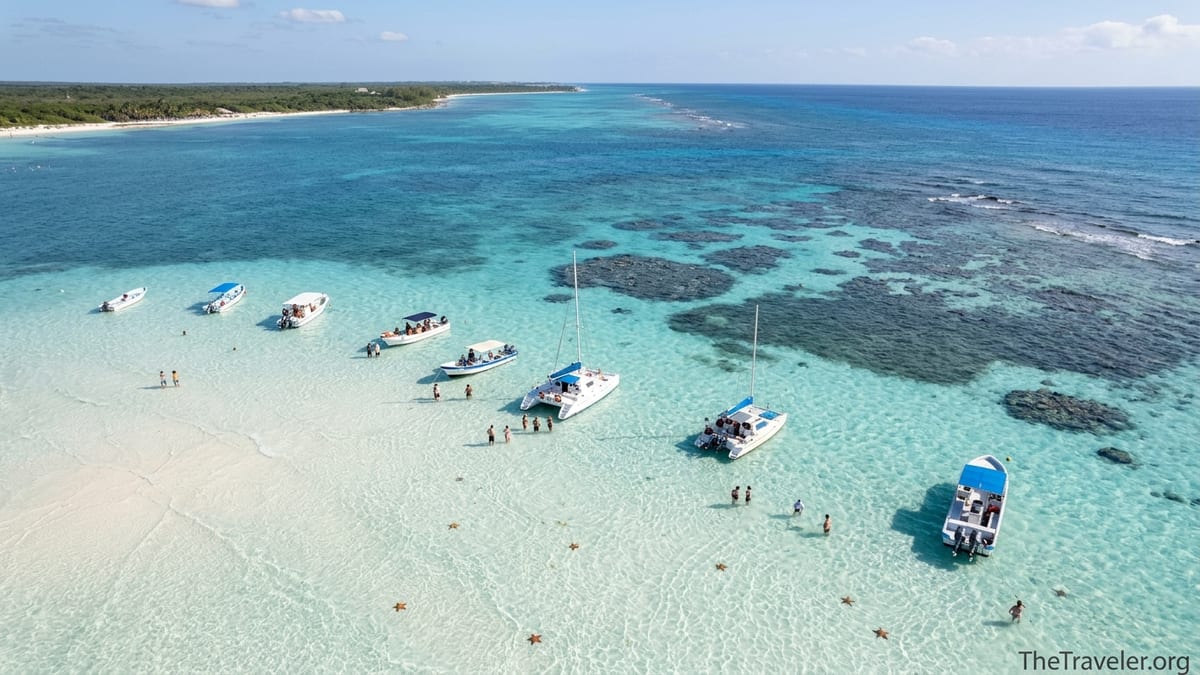
El Cielo, in contrast, is a shallow sandbar in the same general area of the marine park, closer to shore and protected from the open Caribbean. The water is usually 3 to 5 feet deep across a wide area of white sand, so most adults can stand comfortably while still being able to float on the surface to look down at starfish. Rather than coral walls, the draw here is the glowing turquoise color, cushion starfish resting on the bottom, and occasional stingrays gliding through the sand.
In practical terms, Palancar is a classic reef site for people who want to see big coral structures, schools of tropical fish, and maybe turtles or eagle rays in deeper water. El Cielo is more of a social, hang-out-in-the-water experience that just happens to include marine life, with people lounging around boats, drinks in hand, music playing, and guides pointing out starfish. Many operators treat Palancar as the “serious snorkeling” stop and El Cielo as the relaxed finale.
For planning purposes, think of Palancar as a snorkel or dive destination and El Cielo as a sandbar stop. They are often visited together on the same half-day tour, but the conditions, skills required, and vibe are very different, which is why choosing the right style of tour matters so much.
Water Depth, Conditions, and Comfort Level
Depth is the biggest practical difference between Palancar and El Cielo. Typical snorkel sections of Palancar are in about 20 to 40 feet of water, with coral heads rising closer to the surface and sandy patches in between. You will not be able to stand; you float at the surface the entire time, usually with a life jacket and sometimes holding onto a guide’s life ring. For confident swimmers this feels easy and relaxed, but people who are uncomfortable in deep water may tense up at first.
El Cielo’s shallow 3 to 5 foot depth feels completely different. On most tours you step off the boat and find you can stand on soft sand with water at about waist or chest level for an adult. Children often use life vests or pool noodles, but they can usually still touch the bottom near the boat. This makes El Cielo feel far less intimidating for non-swimmers or grandparents who want to be in the water without leaving their depth.
Current is another factor. Palancar is a drift site, so you often move slowly with the current along the reef while the boat follows. On a calm day the motion is gentle and you barely notice it; on a windier day first-time snorkelers can feel the water pushing them along faster than they expect. Guides usually stay in the water and keep the group together, but you do need basic comfort with a mask and snorkel. At El Cielo, by contrast, the water is usually very calm, almost like a giant saltwater pool, with much less sensation of being “carried” by the sea.
If someone in your group is anxious about deep water or has never snorkeled before, a tour that minimizes time over the deepest parts of Palancar or that offers a shorter reef stop followed by plenty of time at El Cielo can be a good compromise. Families frequently report that nervous kids relax immediately once they reach the shallow sandbar and realize they can stand and play in the water instead of floating over blue depths.
Marine Life and Photography: What You Actually See
Palancar Reef is all about structure and variety of marine life. On a typical snorkel stop here you might see large brain coral, tube sponges, and tall coral pinnacles with crevices sheltering parrotfish, angelfish, and grunts. With luck, you may spot a hawksbill turtle grazing on sponges, a nurse shark resting under a ledge, or an eagle ray passing in the blue. Because the reef sits deeper, wide-angle underwater photos and action camera footage work best, especially when the sun is overhead and the water is clear.
El Cielo’s marine life is simpler but very photogenic. The star attraction is the collection of bright orange cushion starfish spread out over the white sand. They are easy to photograph from the surface because they sit in only a few feet of water, and the clear, shallow depth gives the scene an almost unreal clarity. You might also see southern stingrays half-buried in the sand, small schools of yellow and silver fish cruising past, and occasional juvenile barracuda or trunkfish near the edge of the sandbar.
For above-water photography, El Cielo usually wins. This is where you get those iconic shots of people standing in waist-deep, milky-turquoise water with boats anchored in the background and a horizon of deep blue sea beyond. The color gradient between white sand, turquoise shallows, and dark reef in the distance is what ends up on Cozumel postcards and social feeds. At Palancar, most of the real beauty is below the surface, so your best photos will likely come from a GoPro or waterproof phone case rather than from the boat.
If you care about ethical wildlife encounters, remember that starfish at El Cielo should never be picked up or held out of the water, even if you see other visitors doing it. Reputable guides now emphasize looking but not touching and will discourage handling the animals, especially since El Cielo lies in the same protected marine park as Palancar. Choosing an operator that talks openly about marine park rules and uses reef-safe practices is a good sign for both locations.
Family-Friendliness, Kids, and Mixed-Ability Groups
Families often struggle with the classic Cozumel scenario: one parent is an enthusiastic snorkeler or diver dreaming of Palancar, while another adult or some of the children are nervous swimmers. The good news is that many tour operators have adapted specifically to these mixed-ability groups, designing routes that start with an easy shallow reef or drift and then move to El Cielo where everyone can relax.
On a typical half-day combo tour, you might begin with a 30 to 40 minute guided snorkel at Palancar, where stronger swimmers follow the guide over the edge of the reef and less confident swimmers stay closer to the boat or use life rings. Some operators bring an extra staff member just to support kids, literally towing them in a life ring so they can enjoy the fish without having to kick constantly. A second, slightly shallower reef like Colombia is sometimes added before ending at El Cielo for 40 to 60 minutes of free time.
Parents often report that younger kids enjoy El Cielo more than the reef itself, because the shallow depth lets them play, toss a ball, or just float near the boat while the adults take turns snorkeling. Children around 6 to 10 years old who are comfortable in a pool usually manage Palancar well with a proper fitting mask and a life jacket, but the deeper water and drift can be tiring for very young or anxious swimmers. For toddlers or infants, El Cielo is usually the only realistic in-water option, and even then, most families keep them on the boat or in an adult’s arms.
If your group includes both certified divers and snorkelers, a popular strategy is to book a small-boat operator that allows snorkelers to ride along while divers do a shallower Palancar or nearby reef dive, then everyone meets up at El Cielo. This way the diver gets the full coral-wall experience and the rest of the group still enjoys shallow water time without having to book two separate excursions.
Crowds, Atmosphere, and Tour Types
Palancar itself rarely feels crowded underwater, because groups spread out along the reef and drift in the same direction. Even when multiple boats are present, you mostly see your own guide and a few other snorkelers in the distance. The surface around the boat can feel busy when everyone enters or exits at once, but once you are in the water the sense of space usually returns. The atmosphere on the boat depends largely on the operator: small six to ten passenger pangas tend to be quiet and low-key, while larger catamarans may have music, open bars, and a more social feel.
El Cielo, by contrast, can look very busy on popular days. Late morning and early afternoon often see a flotilla of boats anchored close together, with guests from many tours standing in the same shallow area. This is especially true when multiple cruise ships are in port. On those days, the sandbar can feel like a floating beach club, with music from different boats overlapping and drinks flowing. If you want a more serene El Cielo experience, look for early-morning departures or tours that specifically advertise smaller group sizes and flexible timing.
Tour formats range from basic three-stop snorkel trips in simple open boats to upscale yacht or catamaran cruises with shaded seating, freshwater showers, and premium drinks. A no-frills small-boat Palancar plus El Cielo tour might cost in the approximate range of 55 to 80 US dollars per person, depending on the season and whether marine park fees and gear are included. Private small boats or luxury catamarans are more expensive but give you control over how long you stay at each spot, which can be worth it for families or groups with specific needs.
When comparing offers, pay attention to group size caps and how many stops are included. Some “El Cielo tours” technically include a quick reef stop but spend most of the time at the sandbar, while others split the time more evenly among Palancar, another reef, and El Cielo. Ask how long you will actually snorkel at Palancar and how long you will be in the shallow water at the end, especially if one part of the experience matters more to you.
Choosing Between Reef-Focused, Sandbar-Focused, and Combo Tours
If you are a strong swimmer or certified diver who cares most about marine life and coral, a reef-focused tour that gives you longer in the water at Palancar and a neighboring reef is usually the better choice. Some operators offer two-reef snorkeling excursions that visit Palancar and another reef like Colombia or Cedral in a single trip. These tours might offer only a brief swim in shallower water at the end, or skip El Cielo entirely, in order to maximize time over the coral.
If you are traveling with small children, non-swimmers, or older relatives, a sandbar-focused El Cielo tour with just one relatively short reef stop can make the day feel less demanding. On these itineraries, the reef portion is often described as “easy snorkeling,” and guides may keep the group over the shallowest section of Palancar rather than venturing out to the deeper wall. The rest of the time is spent in standing-depth water at El Cielo and sometimes at a second shallow stop nicknamed El Cielito, closer to shore.
Most visitors, especially cruise passengers with limited time, opt for a combo tour that includes at least one Palancar snorkel and a decent amount of time at El Cielo. A typical half-day combo might include about 30 to 40 minutes in the water at Palancar, another 30 minutes at a second reef, and then 45 to 60 minutes at El Cielo before returning to the marina. This split works well for couples and families who want a taste of Cozumel’s famous reef without skipping the iconic starfish sandbar shots.
When booking, think honestly about energy levels and attention span. A family with teenagers who swim on sports teams can happily handle multiple reef stops followed by El Cielo. A couple with one partner who is nervous in the water may prefer a single, shorter reef stop and extra time at the sandbar. Tight cruise schedules also matter: if you must be back on board by mid-afternoon, a well-reviewed three-stop combo that leaves early in the day is often the safest bet.
Practical Details: Gear, Photos, and Timing Your Visit
On both Palancar and El Cielo tours, operators generally provide basic snorkel gear: mask, snorkel, and fins, plus mandatory life vests for both snorkelers and sandbar swimmers. If you or your children wear glasses or have sensitive faces, consider bringing your own mask that you know fits comfortably, because an ill-fitting rental mask is the fastest way to ruin a first-time snorkel at Palancar. Rash guards or UV shirts are very useful; the Caribbean sun reflects off the water and you will spend a long time at the surface, especially at El Cielo where many people skip sunscreen to protect the marine environment.
For photos, a simple waterproof action camera with a wide-angle lens works well at Palancar, where you will be shooting scenes that include both reef structure and water column. At El Cielo, even a waterproof smartphone pouch can capture excellent shots because you are so close to the sand and starfish. Many families take group photos standing in the shallows with the boat in the background and the reef line visible as a dark stripe on the horizon.
Timing matters. Midday sun gives the brightest colors at both Palancar and El Cielo, but it is also when crowds peak. Early-morning departures may find slightly cooler water and less intense colors but far fewer boats on the sandbar. If you are visiting in winter, nortes (north winds) can occasionally make conditions rough and force tour cancellations, especially for small boats headed to open-water sites. In those cases, operators may shift to more protected areas or reschedule. Build a bit of flexibility into your itinerary if underwater time is a priority.
Finally, pay attention to marine park regulations and local guidance, which can change as authorities respond to environmental pressures. Both Palancar and El Cielo are inside a protected area, and in recent years some sections of the marine park have been temporarily closed or restricted to allow reef recovery. Booking with a company that clearly explains current rules, uses mooring buoys instead of anchoring on reef, and discourages touching animals is one of the simplest ways visitors can help keep both sites healthy.
The Takeaway
Palancar Reef and El Cielo are not competing attractions so much as complementary chapters in the same Cozumel story. Palancar delivers the classic Caribbean reef experience: drifting over towering coral, peering into crevices for fish and turtles, and feeling small in clear blue water that suddenly drops away into deeper shades. El Cielo offers the opposite sensation: firmly grounded in soft sand, starfish at your feet, a ring of boats and laughing swimmers in water so shallow and clear it barely seems real.
If you must choose only one, base your decision on who you are traveling with and how comfortable everyone is in deep water. Confident snorkelers and divers who live for marine life usually leave Cozumel talking most about Palancar. Mixed-ability families, first-time snorkelers, and those who care more about relaxed, photogenic shallow water often remember El Cielo as the highlight. When time and budget allow, a carefully chosen combo tour that includes both a meaningful Palancar snorkel and unhurried time at El Cielo gives you the best of Cozumel’s underwater world in a single morning or afternoon.
FAQ
Q1. Is Palancar Reef or El Cielo better for first-time snorkelers?
El Cielo is generally better for absolute beginners and people nervous in deep water, because the sandbar is only about 3 to 5 feet deep and you can usually stand. Palancar can still work for first-timers if they are reasonably confident swimmers, wear life vests, and follow a patient guide, but the deeper water and gentle drift can feel intimidating for some.
Q2. Can non-swimmers enjoy Palancar Reef or is it only for swimmers?
Non-swimmers may find Palancar challenging, since you cannot stand and the water is significantly deeper. Some operators allow non-swimmers to stay on the boat and simply enjoy the views, while others provide life rings and extra staff to tow nervous guests along the surface. If you have true non-swimmers in your group, El Cielo is usually the safer and more enjoyable in-water stop.
Q3. Will I definitely see starfish at El Cielo?
Starfish are typically present at El Cielo, but their exact number and visibility can vary with time of day, recent weather, and how many boats have visited. On most tours you can expect to see multiple cushion starfish resting on the sand in shallow water, but responsible guides will keep you at a respectful distance and will not allow the animals to be handled or lifted out of the water.
Q4. How long do tours usually spend at Palancar versus El Cielo?
On a standard three-stop combo tour, you might get around 30 to 40 minutes of snorkeling at Palancar, another similar amount at a second reef, and then about 45 to 60 minutes relaxing at El Cielo. Reef-focused tours may spend longer at Palancar and less time in shallow water, while sandbar-focused excursions sometimes limit the reef portion to a single, shorter stop before heading straight to El Cielo.
Q5. What is the typical price range for Palancar and El Cielo combo tours?
As of recent seasons, many shared small-boat or mid-size combo tours that include Palancar and El Cielo fall in an approximate range of 55 to 80 US dollars per person, depending on inclusions like marine park fees, drinks, and lunch. Private boats, luxury catamarans, or yacht-style experiences cost more but offer smaller groups and flexible timing at each stop.
Q6. Are these tours suitable for young children and older adults?
Yes, with the right expectations and operator. Children who are comfortable in a pool generally enjoy El Cielo and can often handle a short, shallow-section snorkel at Palancar with life vests and close supervision. Older adults who are cautious in the water may skip the reef and simply enjoy standing or floating at El Cielo. When in doubt, choose smaller boats that can adapt the pace and have guides experienced with families.
Q7. Do I need to bring my own snorkel gear?
Most tour operators provide basic gear, including mask, snorkel, fins, and life vests, as part of the tour price. However, bringing your own well-fitting mask can make a big difference in comfort, especially at Palancar where a leaky or foggy mask quickly becomes frustrating. If you wear prescription lenses, a personal mask with corrective lenses or contact lenses under the mask is usually worth the effort.
Q8. When is the best time of day to visit Palancar Reef and El Cielo?
Late morning to early afternoon offers the brightest colors and best underwater visibility, but also tends to be busier, especially at El Cielo. Early departures can mean fewer boats and a calmer atmosphere, though the light may be slightly softer. If you prefer quieter conditions over maximum color, ask operators about their earliest tours or less crowded time slots.
Q9. Are there any environmental rules I should know before visiting?
Both Palancar and El Cielo lie within a protected marine park, so visitors are expected to avoid touching coral or wildlife, not stand on reef structures, and refrain from picking up starfish. Many tours either restrict or strongly discourage the use of regular sunscreen that can wash off into the water, recommending long-sleeve UV shirts instead. Following crew instructions and choosing operators that respect these rules helps protect the fragile ecosystem.
Q10. If I only have time for one, should I choose Palancar Reef or El Cielo?
If you love snorkeling or diving and are comfortable in deep water, Palancar is the more rewarding choice for marine life and dramatic underwater scenery. If you are traveling with mixed abilities, non-swimmers, or simply want a relaxed shallow-water experience and iconic turquoise-water photos, El Cielo may leave a stronger impression. When schedules and budgets allow, a well-planned combo tour that includes both is the ideal solution.