


Ask a group of divers to name their favorite site in Cozumel and Palancar Gardens comes up again and again. It is shallow enough for newer divers, dramatic enough for veterans, and colorful enough that photographers will happily spend an entire morning drifting along its coral ridges. As part of the larger Palancar Reef on Cozumel’s southwest coast, Palancar Gardens offers a gentle introduction to Cozumel’s famous drift diving while still delivering the towering coral formations and clear Caribbean water that made the island a global dive destination.
Get the latest updates straight to your inbox!
Where Palancar Gardens Fits in the Palancar Reef System
Palancar Reef stretches for several kilometers along the southwest coast of Cozumel inside the Arrecifes de Cozumel National Park, a protected marine area where touching or removing marine life is prohibited. Within this long reef, operators typically divide dives into distinct sections: Palancar Gardens, Palancar Caves, Palancar Horseshoe and Palancar Bricks, sometimes with “Palancar Shallows” or “Palancar Deep” also used on daily dive briefings. Palancar Gardens is generally the shallowest and most beginner friendly of these sections, which is why many Cozumel dive shops like to schedule it as a first or second dive for new arrivals.
Most operators describe Palancar Gardens as running from roughly 10 to 15 meters on the top of the coral platform down to around 20 to 24 meters along the outer edge. Some guides may take experienced divers slightly deeper on parts of the site, but the heart of the dive typically stays within recreational beginner limits. In practice, that means you might start your descent in 15 meters of water, weave among coral ridges, then gradually work shallower to 10 or even 8 meters near the end of the dive to extend bottom time and enjoy the brightest colors.
For visiting divers, one practical detail is boat travel time. From popular hotel areas near San Miguel, most fast dive boats reach Palancar Gardens in about 35 to 45 minutes, depending on whether they stop to pick up other guests at hotel piers along the way. Slow, comfortable “panga” style boats may take closer to an hour. Operators typically pair Palancar Gardens with a second dive on a site like Yucab, Dalila, or Colombia Shallows, giving you one classic Palancar profile and one shallower, easy drift in a standard two tank trip.
Because Palancar Gardens sits firmly within the national marine park, all divers should expect to pay a small daily marine park fee collected by the operator. As of mid 2026, many Cozumel shops roll this into the advertised two tank price, which for boat dives generally ranges from about 95 to 130 US dollars before gear rental, nitrox or private guide surcharges. It is worth confirming in advance what is included so you are not surprised when you step on the boat.
Why Divers Fall in Love With Palancar Gardens
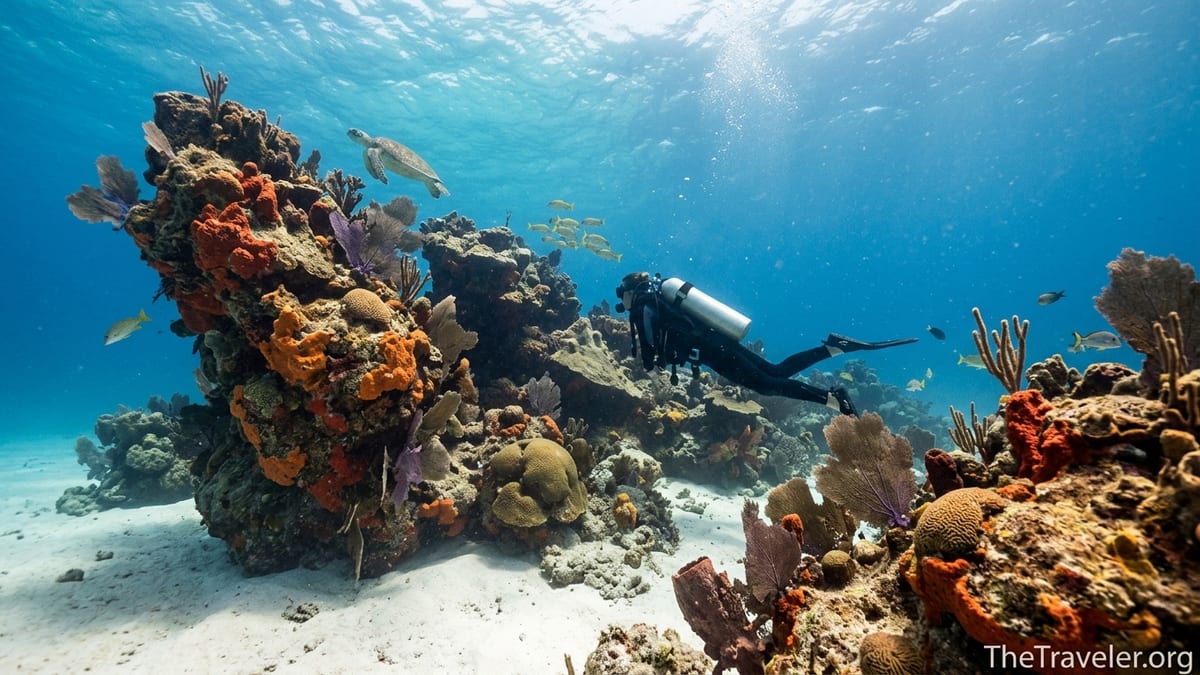
Palancar Gardens earns its reputation because it balances drama and comfort in a way few sites manage. The coral structure is impressive, with tall buttresses, pinnacles and mini canyons, but the depth and current are usually forgiving enough that you can actually relax and absorb it. Many divers describe their first descent onto Palancar Gardens as like gliding into a sunlit underwater amphitheater, with pillars of coral rising from the white sand and shafts of Caribbean light cutting between them.
For newer divers used to quarry or lake conditions at home, this first view can be transformative. Imagine dropping in with a local operator after finishing your open water certification in a cold US lake just a few weeks prior. At Palancar Gardens you might look up from 15 meters and still see your boat’s hull clearly silhouetted against a bright blue surface, with visibility often around 25 to 30 meters or more on good days. That combination of clarity, color and open space helps nervous divers settle quickly into the drift.
Experienced divers, on the other hand, tend to appreciate Palancar Gardens as a “long, easy, beautiful” dive that does not demand the constant depth and gas monitoring of deeper walls. Many log 70 to 80 minute dives here when conditions and their air consumption allow, especially when using nitrox blends provided by local shops for a modest surcharge. The site is varied enough that on one day you might focus on wide angle coral scenery, and on another you might stay a bit higher in the water column, scanning for turtles, eagle rays and schools of grunts along the reef crest.
This flexibility is why Palancar Gardens also often appears on itineraries for mixed-experience groups. A divemaster can lead newer divers on an easy path at 12 to 16 meters along the garden-like top, while more experienced or air efficient buddies cruise a little deeper along the outer edge, remaining within visual range. That way everyone surfaces with stories that feel tailored to their comfort level, even though they shared the same boat and site.
Coral Formations and Underwater Topography
The “gardens” name is not marketing fluff. Compared with some of Cozumel’s flatter reef sections, Palancar Gardens is a three dimensional maze of coral buttresses, overhangs and mini canyons separated by sandy channels. Divers weave between towers that, in places, rise several stories from the seabed, while the tops of the formations are carpeted with hard corals, sea fans and sponges that sway gently in the current.
Typical profiles start on the outer edge of the reef where the buttresses fall away toward deeper water, then gradually curve into a series of cuts and sand alleys that guide you back toward shallower coral heads. Some guides like to thread their groups through short, open swim throughs formed where coral formations lean together, creating archways you can pass under in single file. These are not the dark, overhead tunnel systems of more advanced sites like Palancar Caves, but rather short, well lit passageways that give newer divers a taste of Cozumel’s famous “cathedral” sensations without the stress.
From a photographer’s perspective, the structure at Palancar Gardens is ideal for wide angle compositions. It is common, for example, to frame a buddy hovering beside a coral pillar while the bright surface shimmers above and a sea fan arcs across the foreground. Late morning dives, when the sun is high but not directly overhead, often deliver beautiful slanting beams of light that filter between coral spurs. Many operators time Palancar Gardens as the first dive of a two tank morning trip to take advantage of these conditions.
While the fish density may be slightly lower here than on current-swept sites like Cedral, the sheer variety of coral textures rewards slow, observant diving. Between the big structures you will notice boulder star coral, brain coral, orange elephant ear sponges and delicate purple fans. Often you will find cleaner shrimps and tiny gobies setting up shop around anemones and coral heads, perfect for macro lenses when you are not shooting the reefscape as a whole.
Beginner Friendly Conditions and Typical Dive Profiles
One of the strongest arguments for choosing Palancar Gardens, especially early in a Cozumel trip, is that conditions are generally forgiving. The site sits shallower than nearby Palancar Bricks or parts of Palancar Deep, and the current is often described by local guides as light to moderate. You still experience Cozumel’s famous drift diving, but more as a gentle push than as a ride you have to fight to control. On calmer days, photographers may even pause in the lee of coral formations to compose shots without feeling rushed.
A typical dive profile with a mainstream operator might look like this: roll in off the boat in 15 to 18 meters of water, follow your guide along the outer reef edge for 25 to 30 minutes, then gradually ascend to 12 meters while exploring shallower coral ridges and sand channels. From there, you may spend another 20 to 30 minutes at 10 meters or less, enjoying long bottom time before finishing a three minute safety stop at 5 meters drifting in the blue. Total dive time commonly falls between 55 and 70 minutes for average air consumption, and considerably longer for relaxed divers on nitrox.
For newly certified divers, it is wise to discuss your recent experience with the shop when booking. Many Cozumel operators will suggest Palancar Gardens as a first boat dive for those who have only logged a handful of dives, sometimes pairing you with a private divemaster for close supervision for an additional fee. In practice that might mean paying an extra 30 to 50 US dollars on top of the standard two tank price, but you gain a dedicated professional helping with buoyancy, checking that you are comfortable with the drift, and managing your ascent and safety stop.
Conditions can still vary. Cozumel’s currents change with weather and tides, and some days Palancar Gardens may feel more like an intermediate site, especially if wind has built surface chop or if the current runs stronger than usual. This is why pre dive briefings matter. Listen carefully when your guide describes the day’s plan, expected current direction, maximum depth and what to do if you become separated. Good operators in Cozumel are used to managing mixed experience groups and will adjust the dive path to favor the most conservative divers aboard.
Marine Life Highlights and Photography Opportunities
While Palancar Gardens is primarily famous for structure and visibility, the marine life is far from disappointing. Green and hawksbill turtles appear frequently along the reef crest, often grazing on sponges or cruising between coral heads at eye level. Groups of snorkelers on boats that also stop near Palancar Gardens often report seeing these same turtles from the surface, which gives you an idea of how shallow and well lit much of the site is.
Grunts and schoolmaster snapper cluster above the sand channels, creating yellow and silver backdrops as you drift past. Nassau and black groupers lurk under ledges and in small caves, sometimes allowing divers to approach surprisingly close. Look carefully into crevices and you might find lobster antennae protruding, or a shy moray eel peering out. On colder current days in winter, eagle rays may glide along the outer edge of the reef, and during late afternoon dives, large barracuda sometimes hang almost motionless in the blue, just off the coral.
Macro photographers should not be fooled by the site’s reputation as a wide angle playground. The coral overhangs host arrow crabs, banded coral shrimp, flamingo tongue snails on sea fans, and tiny juvenile damselfish guarding algae patches. With patience, many divers have spotted Cozumel’s endemic splendid toadfish in sandy pockets or under ledges around Palancar, though some locals still prefer nearby sites like Yucab for more reliable sightings of this iconic, whiskered resident.
For camera carrying visitors, it is worth thinking about your setup in practical terms. Wide angle or fisheye lenses are favored here, since you will want to capture pillars, turtles and divers against the reef. Many photographers shoot Palancar Gardens with a compact camera in a housing, a wet wide lens and dual strobes, which is a common rental configuration from Cozumel shops. If you are renting locally, discuss which dives in your week’s schedule are best for that setup. Photographers often choose to bring their rig on Palancar Gardens and a shallower site like Colombia Shallows, where the slower pace and bright sun make color and composition easier.
How Palancar Gardens Compares With Other Palancar Sites
Within the Palancar system, each named section has its own personality. Palancar Gardens is the shallow, scenic, relatively relaxed cousin. Palancar Caves is known for taller coral formations and more pronounced, tunnel like swim throughs that can reach deeper, sometimes down to 25 to 30 meters, making it better suited to experienced divers comfortable with brief overheads and stronger currents. Palancar Horseshoe features a distinctive U shaped bend in the reef and often takes divers over a sloping wall that drops toward deeper water, offering dramatic vistas but usually at slightly greater depth than a typical Palancar Gardens profile.
Palancar Bricks, commonly recommended for advanced divers, tends to be deeper and can experience stronger currents. Here the reef feels more like a classic wall in places, with stacked coral buttresses that drop quickly into blue water. It is an excellent site for seeing pelagic visitors and for experienced photographers who want towering vertical compositions, but it usually is not where operators take freshly certified divers on their first day.
If you imagine a week of diving where you visit multiple Palancar sections, Palancar Gardens often serves as the gentle introduction. Many itineraries might look like this in practice: day one morning on Palancar Gardens followed by a second dive on a site like Yucab, day two including Palancar Caves and Cedral, and later in the trip a Horseshoe or Bricks dive when everyone feels dialed in to Cozumel’s currents. In that context, Palancar Gardens becomes a reference point, letting you appreciate how depth, current and structure change as you move along the same reef system.
From a non diver’s perspective, Palancar Gardens also stands out because similar scenery is visible to snorkelers. Boats that combine scuba and snorkeling groups may anchor or drift near the shallow reef top, where snorkelers at the surface can look down on many of the same coral heads and turtles that divers see from below. That makes Palancar Gardens a practical choice for mixed groups where some family members are certified divers and others prefer to stay at the surface.
Planning Your Dive: Operators, Seasons and Regulations
Most visitors experience Palancar Gardens on a guided boat dive booked through a Cozumel dive shop or resort operation. The island hosts a wide range of operators, from small boats carrying 6 to 8 divers with a focus on personal service, to larger boats run by resort based centers. Typical two tank morning trips that include Palancar Gardens depart around 8:00 to 9:00 a.m. and return around 1:00 to 2:00 p.m., leaving time for an afternoon siesta or shore dive.
In terms of seasons, Cozumel is diveable year round, but conditions at Palancar Gardens shift slightly with the calendar. Winter months often bring slightly cooler water, generally in the mid 24 to 26 degrees Celsius range, with the possibility of stronger north winds that can affect surface chop and visibility. Summer months see warmer water, often 28 to 30 degrees, along with calmer seas but occasionally reduced visibility after heavy rain or passing weather systems. In practice, Palancar Gardens remains a reliable choice, and dive shops often schedule it when they expect pleasant current and clear water.
The site lies inside the national marine park, so divers must follow local regulations. These typically include not touching coral or marine life, avoiding gloves to discourage contact, maintaining good buoyancy control, not feeding fish, and keeping a respectful distance from turtles and rays. Operators are required to display marine park bracelets or permits for guests. When comparing shops, ask whether park fees are included, whether they limit group sizes on Palancar Gardens, and how they handle divers with very different experience levels on the same boat.
As of 2026, standard gear rental in Cozumel, including BCD, regulator, wetsuit, mask, fins and computer, often adds roughly 25 to 40 US dollars per day on top of the base boat rate. Nitrox, if you are certified, may cost an additional 10 to 15 dollars per tank. Considering that Palancar Gardens rewards long, shallow, relaxed dives, many experienced visitors consider nitrox worthwhile for at least one of their Palancar days, especially if they plan back to back multi day dive schedules.
The Takeaway
Palancar Gardens occupies a sweet spot in Cozumel diving: shallow but spectacular, beginner friendly but not boring, and forgiving enough that you can slow down and really look at the reef. Its coral buttresses, sandy channels and gentle drifts make it a natural first or second dive on a Cozumel trip, and many return visitors request it specifically after sampling more demanding walls elsewhere on the island.
If you are planning your first Cozumel dive vacation, ask potential operators how they typically run Palancar Gardens, what depths they target for different experience levels, and whether they cap group sizes. Pairing a Palancar Gardens dive with a shallower reef like Colombia Shallows or Paradise often delivers a full morning that shows off both the dramatic and the serene sides of Cozumel’s marine park.
For underwater photographers, Palancar Gardens offers a reliable place to dial in your settings and enjoy long bottom times surrounded by classic Caribbean scenery. For beginners, it can be the site where the skills learned in a pool or quarry finally translate into easy, joyful exploration. Either way, drifting through the coral corridors of Palancar Gardens remains one of the most memorable experiences Cozumel has to offer.
FAQ
Q1. What certification level do I need to dive Palancar Gardens?
Most operators consider Palancar Gardens suitable for Open Water divers, including newly certified ones, provided you are comfortable with basic buoyancy and drift techniques. Always inform the shop of your experience so they can assign an appropriate guide or suggest a private divemaster if needed.
Q2. How deep is Palancar Gardens?
The main part of Palancar Gardens typically ranges from about 10 to 24 meters, with many dives staying closer to 12 to 18 meters to keep the profile beginner friendly and allow for long bottom times.
Q3. Is the current strong at Palancar Gardens?
Currents at Palancar Gardens are usually light to moderate, creating a relaxed drift dive. Conditions can vary with weather and tides, so your guide will adjust the route and brief you on what to expect that day.
Q4. Can snorkelers enjoy Palancar Gardens too?
Yes. Parts of Palancar Gardens are shallow enough that snorkelers can see coral heads and turtles from the surface. Some boats combine scuba and snorkel groups at the site, especially when the sea is calm.
Q5. What marine life is commonly seen at Palancar Gardens?
Divers often see green and hawksbill turtles, schools of grunts and snapper, groupers, moray eels, lobsters, and a variety of small reef fish. On some days eagle rays and barracuda cruise the outer edge of the reef.
Q6. Is Palancar Gardens good for underwater photography?
Palancar Gardens is excellent for photography, particularly wide angle shots of coral pillars, turtles and divers set against clear blue water. The shallow depth and bright light also help compact camera users capture vivid colors.
Q7. How long are typical dives at Palancar Gardens?
Typical guided dives last between 55 and 70 minutes, depending on your air consumption, conditions and whether you are using nitrox. Relaxed divers on shallow profiles may enjoy even longer bottom times.
Q8. When is the best time of year to dive Palancar Gardens?
Palancar Gardens is diveable year round. Winter brings slightly cooler water and occasional stronger winds, while summer offers warmer water and generally calmer seas. Many divers choose shoulder seasons for a balance of conditions and crowds.
Q9. Do I have to pay a marine park fee to dive Palancar Gardens?
Yes. Palancar Gardens lies inside Cozumel’s marine park, which requires a daily fee for divers and snorkelers. Most operators include this in their package price, but it is wise to confirm when booking.
Q10. How does Palancar Gardens compare to Palancar Caves and Horseshoe?
Palancar Gardens is generally shallower and more beginner friendly, with open coral gardens and gentle drifts. Palancar Caves and Horseshoe tend to feature deeper sections, more pronounced swim throughs and, at times, stronger currents better suited to experienced divers.