


More news on this day
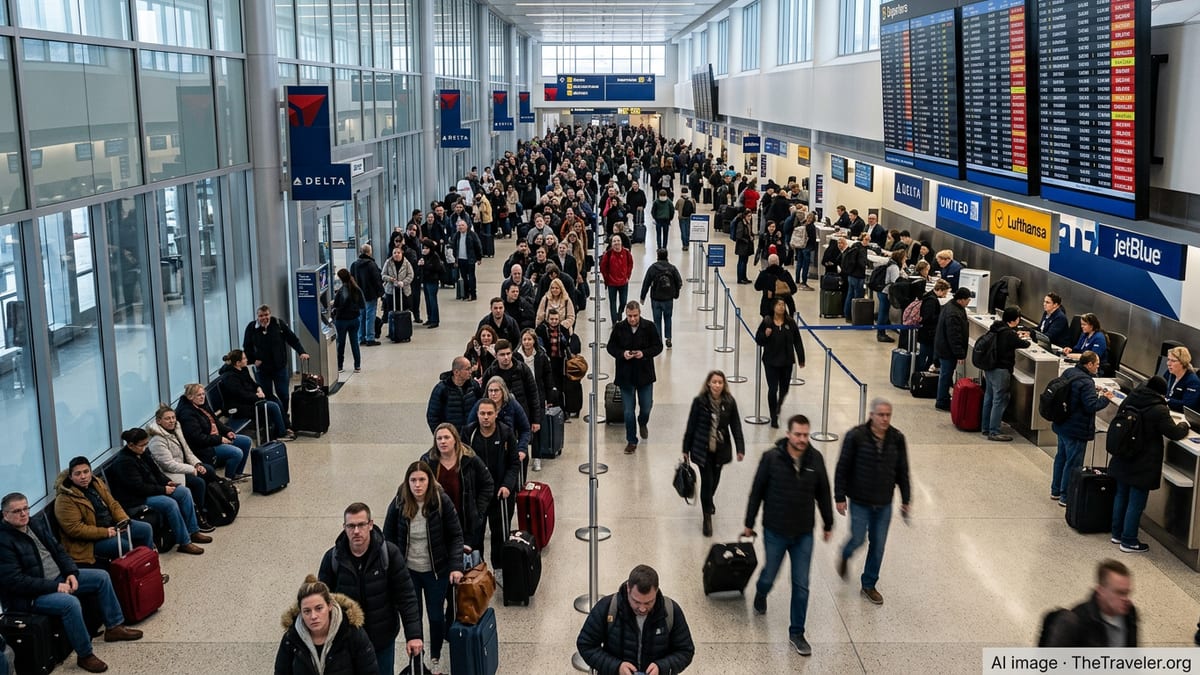
Travelers using Northwest Florida Beaches International Airport near Panama City Beach faced a choppy travel day as publicly available flight boards showed at least 22 delayed services and 8 cancellations across multiple U.S. carriers, disrupting leisure and business itineraries for passengers heading toward major destinations such as the Washington, D.C. region and Philadelphia.
Get the latest news straight to your inbox!
Multiple Carriers Affected in Compact Coastal Market
Northwest Florida Beaches International Airport, serving the Panama City Beach area, is a relatively small but fast-growing regional gateway that relies heavily on a handful of large U.S. airlines and their regional affiliates. Published airport activity reports indicate that Southwest, Delta, American and United, together with regional brands including PSA Airlines and SkyWest, account for the bulk of scheduled seats in and out of the terminal. When several of these operators experience issues on the same day, the impact on passengers can be disproportionate compared with larger hubs that have denser schedules and more back-up options.
On the latest disrupted day, online flight-status boards showed 22 departures or arrivals marked delayed and eight listed as cancelled. The affected services were spread across a mix of mainline and regional flights, including American Eagle operations flown by PSA Airlines and United Express and Delta Connection services operated by contract carriers such as SkyWest. Southwest, which has a strong presence at the airport and is popular with domestic leisure travelers to and from Florida’s Gulf Coast, also appeared among the airlines posting irregular operations.
Although the raw numbers are modest in national terms, they represent a significant share of the airport’s typical daily schedule. Industry data shows that Northwest Florida Beaches International handles just a few dozen commercial departures and arrivals per day, so even a cluster of several dozen disrupted segments can reshape the travel experience for hundreds of passengers over the course of a single afternoon or evening.
Publicly available information suggests that the disruptions were not driven by a single, widely reported nationwide system outage, pointing instead to a mix of local and network issues. These can include the late arrival of inbound aircraft, crew scheduling constraints on busy summer days and operational knock-on effects from weather and congestion at larger hubs that connect with the Florida Panhandle.
Knock-on Effects for Trips to Arlington and the Philadelphia Region
The pattern of delays and cancellations had an outsized effect on travelers with plans in the Washington, D.C. and Philadelphia metropolitan areas. Passengers bound for Arlington, Virginia, typically rely on connections through major hubs such as Charlotte, Dallas Fort Worth or Atlanta, and then continue to Ronald Reagan Washington National, Washington Dulles or nearby Baltimore. When a regional flight from Northwest Florida Beaches International runs late or is cancelled, itinerary planners often must reconstruct multi-segment journeys on short notice.
Philadelphia-bound travelers face similar complexity. Northwest Florida Beaches International does not have a nonstop link to Philadelphia, so journeys generally involve a connection on one of the dominant network carriers. When regional partners, including PSA Airlines operating for American or SkyWest operating for multiple brands, encounter off-schedule operations, missed connections at hubs can cascade into overnight misalignments, routing changes and lost vacation or meeting time in the Northeast corridor.
Data from national flight tracking platforms shows that Philadelphia International Airport regularly manages sizable numbers of delayed arrivals and departures, particularly during periods of unsettled East Coast weather or peak travel demand. When late-running or cancelled feeder flights from smaller markets like Panama City Beach intersect with those broader patterns, the result can be longer total travel times, extended layovers and, in some cases, same-day arrival becoming impossible.
For travelers headed to Arlington and nearby communities, the timing of disruptions also affects ground transport plans. Late-night arrivals into Washington area airports can reduce public transport options and increase reliance on rideshare or taxi services, adding further cost to an already difficult day of travel.
Weather, Network Congestion and Regional Airline Constraints
Analysts who track on-time performance note that flight disruptions in regional markets often arise from a mix of structural factors. Federal data on U.S. airline punctuality breaks down causes into categories such as air carrier issues, national aviation system delays, extreme weather and late arriving aircraft. Recent releases show that regional airlines, including PSA and SkyWest, operate large numbers of flights with comparatively lean spare capacity, leaving less room to recover when individual aircraft or crews fall out of position.
On the Florida Gulf Coast, scattered thunderstorms and summer heat commonly affect afternoon and evening operations. Even when local conditions appear relatively calm, convective weather along flight paths or at upstream hubs can introduce spacing restrictions and cause aircraft to hold or reroute, rippling through the schedule. At the same time, national traffic management measures, such as ground delay programs around busy northeastern airports, can extend block times for flights feeding into or out of Philadelphia and the Washington area.
Because Northwest Florida Beaches International is served primarily by narrowbody and regional jets, it does not have the redundancy of multiple widebody banks or dozens of overlapping departures that characterizes major hubs. When a single aircraft assigned to run several legs in and out of the Panhandle encounters a mechanical inspection or arrives from another city significantly behind schedule, several flights can shift from on time to delayed or cancelled within hours.
Public dashboards that aggregate FAA and airline data indicate that, on a typical high-travel day in the United States, thousands of flights can be affected by delays and hundreds cancelled nationwide. Against that backdrop, the set of 22 delays and 8 cancellations recorded around Panama City Beach fits within broader patterns of strain across airline networks, even if it stands out locally because of the airport’s modest size.
Advice for Affected Travelers and Future Flyers
Passenger advocates and industry observers frequently highlight several steps that travelers can take when disruptions like those seen in Panama City Beach occur. The first is to monitor flight status directly through airline apps and departure boards rather than relying solely on booking intermediaries, especially in the 24 hours before departure. This can provide early warning when an inbound aircraft is running late or when connecting hubs such as Philadelphia are posting arrival or departure delays.
Another practical measure is to build additional buffer time into itineraries that rely on connections through congested hubs, particularly for travelers heading to events in Arlington, downtown Washington or central Philadelphia. Booking an earlier flight from Northwest Florida Beaches International, even by a few hours, can create more options to be rebooked later the same day if an initial segment encounters problems.
Travel insurance that covers missed connections and overnight stays can also be a consideration during seasons that historically see more weather-related disruptions. While policies vary, some products provide coverage when delays cross specified thresholds or when cancellations force an unplanned hotel night en route between Florida and the Mid Atlantic.
Finally, publicly available performance statistics allow travelers to compare how often particular airlines and regional partners experience cancellations and long delays. Although no carrier is immune to disruptions driven by weather or nationwide system issues, understanding typical on-time performance can help passengers choose flights that better align with their tolerance for schedule risk when flying between Panama City Beach, Arlington and the Philadelphia region.