


More news on this day
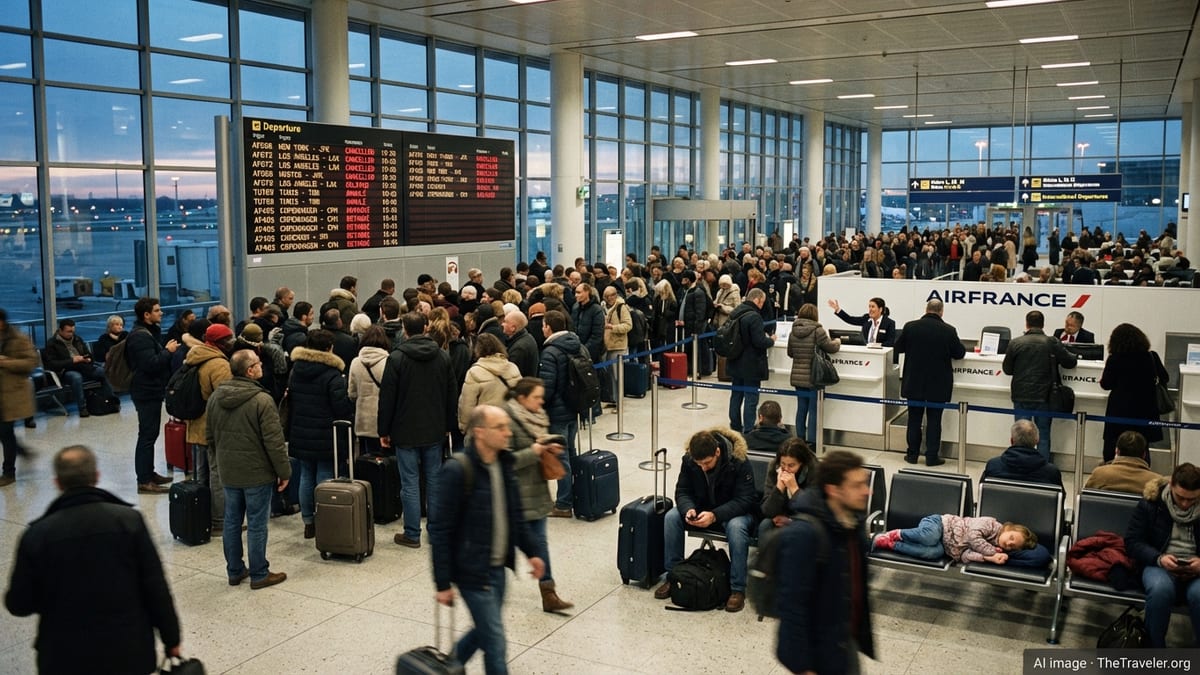
Paris Charles de Gaulle and Orly airports have processed about 27 million passengers in early 2024, as airlines navigated Middle East airspace closures and operational disruptions that reshaped traffic flows through Europe’s second-busiest aviation hub.
Get the latest news straight to your inbox!
Passenger Growth Holds Firm Around 27 Million
Publicly available data from airport operator Groupe ADP indicate that Paris Aéroport traffic reached roughly 22 million passengers in the first quarter of 2024, followed by 8.8 million in April and 9.1 million in May. Taken together, these figures show that Paris Charles de Gaulle and Paris Orly have already handled in the region of 27 million passengers during the spring period alone, underscoring resilient demand despite geopolitical tensions and technical constraints affecting flight schedules.
Over the first half of 2024, Groupe ADP reported 49.1 million passengers for Paris Aéroport, an increase of 4.4 percent year on year. This performance came even as the operator acknowledged that reduced flight schedules and air traffic management trials in early 2024 had curbed potential volumes, suggesting that underlying demand may be stronger than headline growth figures imply.
The traffic trends are being closely watched ahead of the busy summer season and major international events in the French capital. The ability of Paris’s airports to sustain growth while absorbing shocks to global air corridors is increasingly seen as a test of their role as a key European gateway between long-haul and intra‑European markets.
Middle East Airspace Rerouting Reshapes Flight Paths
The travel environment became more complex in April 2024, when a surge in tensions between Iran and Israel led several Middle Eastern states to temporarily close their airspace. According to coverage from European aviation regulators and international media, countries including Israel, Jordan, Iraq, Lebanon and Iran issued notices to airmen restricting or halting flights as drones and missiles were launched and defensive operations unfolded.
Reports from global news outlets show that airlines reacted by cancelling some services, diverting aircraft to alternate airports and rerouting long‑haul flights between Europe and Asia to avoid affected corridors. This added distance and time to many journeys, with carriers recalculating fuel loads and scheduling to keep services within safety margins and to comply with regulatory guidance.
For Paris, which serves as a major hub for connections to the Gulf, the Levant, South Asia and Southeast Asia, the rerouting meant that some flights arrived later than planned, while others bypassed traditional Middle East stopovers in favor of more northerly tracks. Public flight‑tracking data during the April escalation showed unusually dense traffic over parts of southern and eastern Europe as carriers navigated around closed or restricted airspace.
Industry analysts noted that while rerouting added costs and operational complexity, it did not produce a sustained collapse in demand on Europe–Asia and Europe–Middle East corridors. Instead, airlines adjusted schedules and, in some cases, upgauged aircraft on alternative routes, helping maintain passenger throughput at large hubs such as Paris Charles de Gaulle.
Operational Strains Add to April Disruptions
The Middle East crisis unfolded against a backdrop of pre‑existing operational constraints in the Paris airspace. Groupe ADP has reported that a scheduled trial of a new 4‑Flight air traffic management system at the North en‑route air navigation center early in 2024 led to reductions in flight schedules, limiting capacity over several weeks and contributing to an estimated loss of around one million potential passengers in the first quarter.
These trials, intended to modernize and harmonize air traffic control systems, required a temporary cap on movements that affected both domestic and international services to and from Paris. Airlines had to adjust timetables, consolidating frequencies or substituting larger aircraft to preserve seat capacity where possible, which in turn influenced connection patterns for transfer passengers.
In April, the combined effect of local airspace constraints and the sudden Middle East rerouting episode created a challenging operating environment. While Paris Aéroport still registered 8.8 million passengers that month, the figure reflects a balance between robust demand and constrained supply, with some routes temporarily thinned and others re‑timed to accommodate longer flight paths.
Airport operations teams also had to manage the knock‑on impact of delays and diversions from other regions. Late‑arriving aircraft can cascade into schedule disruptions across an entire day’s operation, requiring rapid gate reallocation, crew rescheduling and passenger handling adjustments to keep queues and connection times under control.
Resilience Ahead of Peak Summer and Major Events
Despite these headwinds, publicly available information shows that Paris Aéroport’s traffic trajectory remains positive relative to pre‑pandemic benchmarks. Half‑year figures place volumes at more than 100 percent of 2019 levels on a like‑for‑like basis for the wider Groupe ADP network, with Paris approaching or exceeding full recovery on several long‑haul markets.
This resilience is significant as Paris prepares for a series of high‑profile events and an expected surge in leisure and business travel. Airlines have been gradually rebuilding capacity on transatlantic routes and adding frequencies to North African and Middle Eastern destinations, while also expanding links to India and Southeast Asia that use Paris as a connecting hub.
Aviation observers note that the city’s dual‑airport system, with long‑haul operations centered at Charles de Gaulle and a mix of European and leisure services at Orly, offers a degree of flexibility in responding to disruptions. Carriers can redistribute capacity between the two platforms and adjust wave structures for connecting banks of flights when external shocks, such as airspace closures, temporarily alter demand or flight times.
Looking ahead, the experience of managing roughly 27 million passengers through a turbulent spring period is likely to inform future contingency planning. Scenario exercises involving rerouting, capacity caps and sudden spikes in delay are expected to remain a core part of operational strategy as geopolitical risks, climate‑related disruptions and infrastructure upgrades continue to intersect across the global aviation system.