


Trying to buy “Parthenon tickets” can send you down a rabbit hole of confusing options, tour ads, and so-called skip-the-line offers. The key fact many first-time visitors miss is that you enter the Parthenon through the Acropolis archaeological site, and there is no separate, stand-alone Parthenon ticket. Understanding how the official Acropolis tickets work will save you money, time in the sun, and a lot of frustration when you finally walk up to those famous marble columns.
Get the latest updates straight to your inbox!
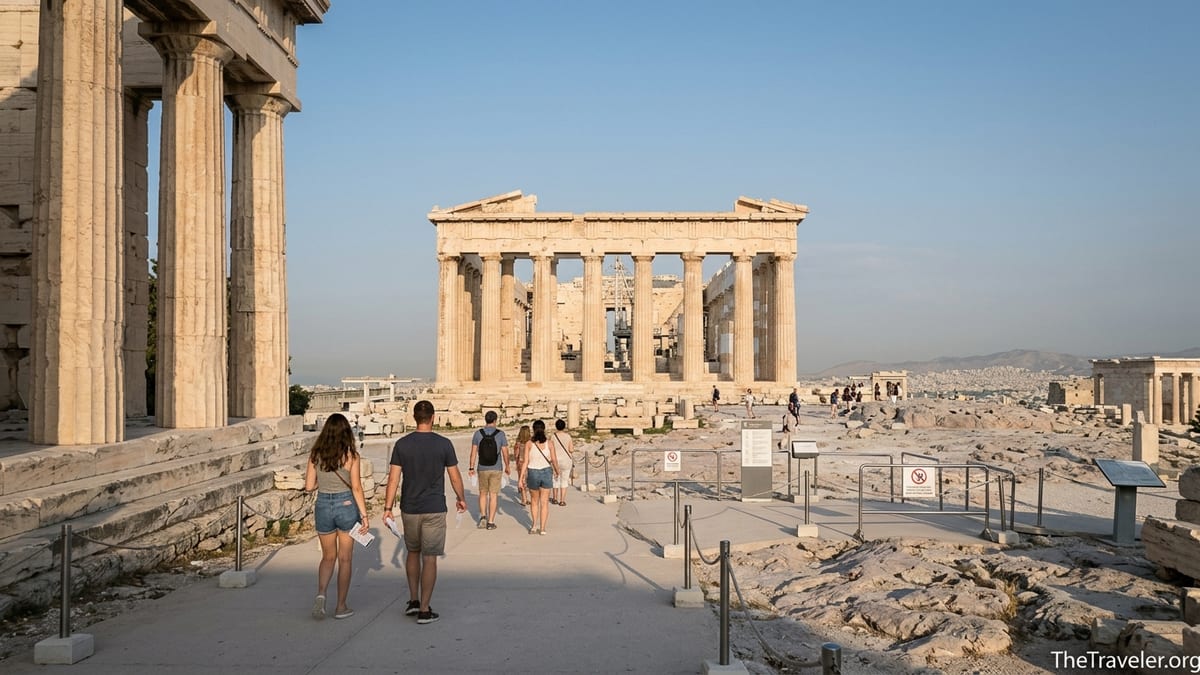
Parthenon tickets vs Acropolis tickets: what you are really buying
The Parthenon sits at the heart of the Acropolis archaeological site, and access is included in your Acropolis ticket. When you buy an Acropolis site ticket through the official Greek Heritage e-ticket system, you are paying for entry to the entire hilltop complex: the Propylaea gateway, the Parthenon, the Erechtheion with its Caryatids, the Temple of Athena Nike, and the surrounding slopes with the Theatre of Dionysus and other ruins. There is no additional turnstile or second ticket checkpoint at the Parthenon itself.
In practice, this means that any product marketed online as a “Parthenon ticket” is really one of three things: an official Acropolis timed-entry ticket, a guided tour that includes the Acropolis ticket, or a reseller product that costs more but is built on the same official ticket. For example, the Greek Ministry of Culture confirms that Acropolis entry is managed via timed e-tickets that cover the entire Acropolis site rather than individual monuments. Tour operators and ticket platforms simply package that core product with guiding, audio guides, or flexible cancellation policies.
This is important when you compare prices. If the official full-fare Acropolis ticket for the main season is around 20 to 30 euros, anything advertised as a Parthenon skip-the-line ticket for 45 to 60 euros is not a special pass to a different entrance. You are paying a markup for extras like a guide, a specific meeting point, or someone else handling the booking for you. As long as you recognize that the Parthenon is included in the basic Acropolis ticket, you can decide calmly whether those extras are worth it.
Another source of confusion is the separate Acropolis Museum. The museum, which sits just a few minutes’ walk from the Acropolis metro station, has its own ticketing system and entrance. Standing in front of the Parthenon on the hill and browsing the Parthenon marbles inside the museum require two different tickets. Many travelers expect one combined “Parthenon ticket” that covers both, but in reality you must plan them as two visits, often on the same day but with separate entry fees and time planning.
Current ticket types, time slots and seasonal details
The most important change in recent years is that Acropolis entry now runs on mandatory time slots for all official e-tickets. When you buy your ticket on the Hellenic Heritage e-ticket portal, you choose a specific date and a one-hour entry window. According to the official ticketing terms, your barcode is valid for entry from roughly 15 minutes before to 15 minutes after your chosen slot. Once you pass the scanners, you can stay on the hill until closing time, so you are not limited to one hour inside, just one hour to enter.
Time slots matter because the Acropolis is the single most visited archaeological site in Greece, and peak days in July or August can see queues stretching in the sun. Hotels and local guides in Athens regularly report that the 8:00 to 9:00 a.m. slot and the last slot of the day are the first to sell out in summer. Travelers who arrive with a confirmed e-ticket at 8:00 a.m. can often walk straight up to the security check while long lines form at the cash desks for people trying to buy tickets on the spot.
Ticket prices and structures can change, but a useful rule of thumb for the current era is this: there is usually a standard Acropolis-only ticket and, in some seasons, a more expensive combined ticket that covers multiple central Athens sites over five days. For example, in recent years the combined ticket around 30 euros has covered the Acropolis plus sites such as the Ancient Agora, Roman Agora, Hadrian’s Library, the Temple of Olympian Zeus, Kerameikos, and Aristotle’s Lyceum. In 2026 there has been debate and phased changes to that combo product, so always check the official portal for your exact travel dates rather than assuming older blog posts are correct.
The Acropolis Museum ticket is separate and typically priced lower than the Acropolis site itself. It does not use the same time slot system for the hill, though in busy periods the museum also sells dated tickets to spread crowds. You can visit the museum before or after your Acropolis time slot; you just need to allow enough transit time between the two. Many itineraries work well with a morning Acropolis entry and a late afternoon or evening museum visit when the sun is lower.
How and where to book official Acropolis (Parthenon) tickets
The safest way to buy your Acropolis ticket that grants access to the Parthenon is through the official Hellenic Heritage e-ticket platform linked directly from the Greek Ministry of Culture. The site allows you to choose your language, select “Attica” as the region and “Acropolis and Slopes” or equivalent wording as the site, then pick your date, time slot, and number of tickets. You pay online and receive a QR code by email which you can show on your phone at the gate. There is no need to exchange it for a paper ticket.
For example, a couple visiting in mid June might log in three or four weeks before their trip, choose Tuesday 16 June, and book the 8:00 to 9:00 a.m. entry for two full-price adults. They receive two barcodes labeled for the Acropolis archaeological site. On the day, they arrive at the main entrance on the west side about 7:45 a.m., pass security when the gates open, scan their codes, and walk up towards the Parthenon without ever joining the much longer queue at the ticket booths.
If you prefer a guided visit rather than exploring on your own, you have two main choices. You can book a walking tour that explicitly states it includes the official Acropolis ticket, or you can book a “tour only” product and buy your own ticket separately. The first option is more convenient because the tour company takes responsibility for getting everyone in at the right time, but it will cost more than buying the base ticket yourself. The second option is cheaper but requires more organization. In both cases, read the description carefully: if the fine print says “ticket not included,” you still need to buy your timed entry through the official portal.
Another reliable way to get tickets is to buy them in person at the Acropolis ticket office or at another central archaeological site, such as the Ancient Agora, especially in the quieter months from November to March. This can work well if you are visiting outside peak times, but it is riskier in high season because popular morning and evening slots can sell out. Longtime Athens guides report that on busy July days the midday slots may be all that is available for walk-ups by late morning, which is when heat and crowds are at their worst.
Best times to visit and crowd strategies that actually work
When your goal is a memorable experience at the Parthenon rather than a stressful slog, timing is as important as ticket type. Athens experiences intense summer heat, and the bare marble surfaces of the Acropolis amplify that heat and glare. The most comfortable and photogenic times of day are early morning and the final hours before closing, especially from late April through early October.
Locals and hotel concierges often recommend the 8:00 a.m. entry as the sweet spot. Travelers who booked that slot and arrived ten to fifteen minutes early consistently report gliding past the forming ticket line and reaching the Parthenon while it is still relatively quiet. By around 9:30 a.m., large cruise ship groups and bus tours begin to arrive, and by 10:00 or 11:00 the plateau can feel crowded, with lines forming for the best viewpoints.
An alternative is the late afternoon or early evening slot, which varies by season according to the Ministry’s published opening hours. In high summer, when the Acropolis may stay open until early evening, a 5:00 to 7:00 p.m. window can deliver softer light, slightly thinner crowds, and views of the city beginning to glow. Some travelers plan this as part of their jet lag strategy: arrive in Athens, rest for a few hours, then head up for a golden-hour Parthenon visit and an early dinner in the Plaka or Makrygianni neighborhoods below.
Midday visits are still manageable with good preparation, but you should treat them like a serious outdoor activity. That means a hat, sunscreen, water, and comfortable shoes with grip. Even in October, the reflective stone surfaces can be bright and hot. If all you can secure is a midday slot, consider visiting another shaded site such as the Ancient Agora earlier in the morning, breaking for lunch in the shade, then tackling the Acropolis as soon as your time window opens.
What your ticket includes, and what it does not
One of the most common misunderstandings is what is actually covered by the Acropolis ticket that gets you to the Parthenon. The basic timed-entry ticket includes access to the Acropolis plateau and its monuments, plus the designated slopes on the north and south sides where you find the Theatre of Dionysus, the Odeon of Herodes Atticus exterior, and several sanctuaries and remains. Within this area you are entitled to wander freely along the marked paths, read the on-site information boards, take photographs for personal use, and remain until closing time.
The same ticket does not include the Acropolis Museum, any guided commentary, or special behind-the-scenes access such as interior scaffolding zones or restoration areas. Those require separate arrangements. If you visit the Acropolis site in the morning and decide later that you also want to see the Parthenon sculptures housed in the museum, you will need to buy a separate museum ticket either online or at the museum itself. Many visitors do both on the same day, but you can also split them over two days to avoid cultural fatigue.
Combined archaeological tickets, when available, extend your access beyond the Acropolis to other major ruins in central Athens, usually over a five-day period. For example, with a combined ticket you might enter the Acropolis at 8:00 a.m. on Monday, then use the same QR code to visit the Ancient Agora on Tuesday, the Temple of Olympian Zeus on Wednesday, and Hadrian’s Library on Thursday, each during their own opening hours. What they still do not cover is the Acropolis Museum or other state museums, which maintain separate pricing and, on certain days of the month, free-entry policies.
Discounts and free-entry days are another layer to consider. The Greek Ministry of Culture offers reduced or free admission to several categories such as young EU citizens, students, and people with disabilities, although documentation rules can be strict and are best checked directly on the Ministry’s website before traveling. Additionally, many archaeological sites, including the Acropolis, offer free entry on specific days, such as some national holidays or the first Sunday of certain months. On those days, you still pass through security and crowd control, but you do not pay for a ticket, and there can be very heavy attendance.
Common scams, markups and misunderstandings to avoid
Because demand for Parthenon access is so strong, a small industry of confusing and sometimes misleading offers has grown around it. The Greek cultural authorities have issued public notices warning visitors not to be fooled by ads promising special “skip-the-line tickets” for the Acropolis from third-party sites. Officially, every visitor passes through the same security and ticket scanning points, and there is no secret VIP gate included in ordinary tickets. What time-slotted e-tickets legitimately skip is the line for buying tickets at the cash desk, not the security queue itself.
A typical example: you may see a product online labeled “Acropolis & Parthenon Skip-the-Line Ticket with Optional Audio Guide” priced at 40 or 50 euros. Closer reading often reveals that the base of this product is a standard-timed Acropolis ticket at the usual state price, plus a digital audio guide and a service fee for handling the purchase. The seller might add language about “priority entrance” that simply means you already have your ticket in hand. If that convenience and the audio guide are worth the markup to you, there is nothing inherently wrong with buying it. But it is not a fundamentally different ticket type, and you can recreate the same functional “skip” by buying directly from the official portal and downloading a separate audio guide app.
Another misleading pattern is tour listings that use “skip the line” prominently in the title but quietly mention “tickets not included” in the fine print. In those cases, the tour guide will escort you through the security line at your chosen time, but only after you have bought and paid for your own Acropolis ticket. Travelers who do not read carefully can end up double-paying: once for the tour, then again at the official ticket price on top. Before booking any Parthenon or Acropolis product, always look for a clear sentence stating either “ticket included” or “ticket not included.”
There are also outright scams that mimic the look of official Greek cultural sites. Some travelers have reported encountering unofficial-looking websites or social media ads claiming to be “the Ministry’s partner” while charging inflated prices and sending vague vouchers that still require a visit to a local kiosk. The Ministry of Culture stresses that the only official e-ticketing platform for the Acropolis is the Hellenic Heritage ticket portal, linked from the Ministry’s own site. If a URL does not clearly match that domain or a well-known, reputable tour operator, treat it with caution.
On the ground in Athens, you may run into touts near metro stations or the base of the Acropolis offering “last-minute Parthenon tickets” or claiming the site is sold out except through them. In reality, time slots can be sold out on busy days, but no street vendor has special access to hidden stock. They may be reselling agency-held allocations or trying to bundle you into an overpriced group tour. If you have not secured your ticket in advance, your safest bet is still the official ticket booth or the official e-ticket portal rather than cash deals with strangers.
Practical visiting tips: entrances, routes and accessibility
Even with the right ticket in hand, a few practical decisions will shape your Parthenon experience. The Acropolis has two main access points: the primary west entrance near the Propylaea and a secondary entrance on the southeast side near the Theatre of Dionysus. Many visitors using guided tours or following group flags will gather at the main west gate, while independent travelers sometimes prefer the south slope entrance, which can be quieter at certain times of day and brings you gradually up past the theatre and sanctuaries before you reach the Parthenon.
The walk from either gate to the Parthenon involves uneven stone, worn marble steps, and some moderately steep sections. Good footwear is essential; flip-flops and smooth leather soles are a recipe for slips, especially if the stones are damp from a brief shower. Carry water, particularly in the warmer months, because while there are a few taps and kiosks at the edges of the site, you do not want to break your visit at the top just to go looking for a bottle. Many travelers bring a small daypack with a hat, sunscreen, and a light cover-up in case the sun becomes intense.
Accessibility has improved but still requires planning. There is an elevator on the northeastern side of the Acropolis for visitors with mobility impairments, which can be arranged through the site staff. The Ministry of Culture recommends that wheelchair users or those with significant mobility challenges contact the Acropolis site office in advance or speak with staff at the entrance to coordinate elevator use. Inside the site, some areas are still difficult to access with a wheelchair, but the elevator does make it possible to reach the plateau and enjoy close-up views of the Parthenon and surrounding monuments.
Photography is allowed for personal use throughout the Acropolis, including around the Parthenon, although tripods and professional setups may be restricted without prior permission. Security guards may ask you to avoid touching or leaning against ancient surfaces or barriers. Drones are not permitted. Dress codes are generally relaxed, but respectful clothing and sensible shoes are appreciated in such a significant heritage setting. Many visitors find that an early start, simple gear, and realistic expectations about crowds make the difference between a rushed checklist stop and a powerful encounter with one of the world’s great classical monuments.
The Takeaway
Planning a visit to the Parthenon becomes much simpler once you accept one central idea: there is no special standalone Parthenon ticket. What you really need is the correct timed-entry Acropolis archaeological site ticket, ideally bought in advance from the official Hellenic Heritage portal, plus a realistic plan for the time of day, temperature, and crowds.
Book your preferred entry slot as soon as your Athens dates are fixed, aim for early morning or late day whenever possible, and treat any “skip-the-line” marketing as a convenience surcharge rather than a magic pass. Decide whether a guide, audio tour, or combined ticket with other ruins truly adds value for you, and remember that the Acropolis Museum is a separate but highly recommended visit.
With the practicalities sorted, you can focus on the experience: walking up the ancient slopes, stepping through the Propylaea, and seeing the Parthenon emerge against the Attic sky. When you are not worried about tickets, lines, or scams, the Acropolis feels less like an obstacle course and more like what it is meant to be: a remarkable encounter with history above the city of Athens.
FAQ
Q1. Do I need a separate ticket for the Parthenon, or is it included with the Acropolis ticket?
You do not need a separate Parthenon ticket. Entry to the Parthenon area is included in the standard Acropolis archaeological site ticket, which covers the whole hill and its monuments.
Q2. What is the official website for buying Acropolis (Parthenon) tickets?
The official tickets are sold only through the Hellenic Heritage e-ticket platform operated by the Greek Ministry of Culture. Many other sites resell or package these same tickets, sometimes with higher prices or added services.
Q3. How do the Acropolis time slots work, and how long can I stay at the Parthenon?
You choose a one-hour entry window when you buy your ticket and must enter near that time, but once inside you can usually stay on the Acropolis plateau and around the Parthenon until closing time that day.
Q4. Is a “skip-the-line” Parthenon ticket worth paying extra for?
Most skip-the-line products simply mean you already have a timed e-ticket and can avoid the ticket office queue, not the security line. If you are comfortable booking through the official site yourself, you can get the same benefit without paying a markup.
Q5. Can I still buy tickets on the day at the Acropolis entrance?
Yes, you can usually buy same-day tickets at the Acropolis ticket booths, especially outside high season. However, in summer popular morning and evening time slots often sell out in advance, and lines in the sun can be long.
Q6. Does the Acropolis ticket include the Acropolis Museum as well?
No. The Acropolis archaeological site and the Acropolis Museum use separate tickets and entrances. Many visitors choose to see both, but each requires its own ticket and planning.
Q7. What is the best time of day to visit the Parthenon to avoid crowds and heat?
Early morning around opening time and the last few hours before closing are usually the most comfortable and least crowded, especially from late spring through early autumn when midday heat can be intense.
Q8. Are there discounts or free days for visiting the Acropolis and Parthenon?
The Greek Ministry of Culture offers reduced or free admission to certain groups, such as some students and young people, and designates specific days with free entry. Check the Ministry’s latest rules before you travel, as details and dates can change.
Q9. Is the Acropolis and Parthenon visit suitable for people with mobility issues?
There is an elevator on the Acropolis for visitors with mobility challenges, but access must usually be coordinated with site staff, and some pathways remain uneven. With planning, many visitors with limited mobility can still enjoy close views of the Parthenon.
Q10. If I book a guided tour that includes the ticket, do I still need to buy anything on my own?
If the tour clearly states that the official Acropolis ticket is included in the price, you generally do not need to buy an extra ticket. Always read the description carefully, because some tours only provide guiding and expect you to purchase your own timed-entry ticket separately.