


More news on this day
Two pastors in South Korea have been fined for disrupting a domestic passenger flight with loud, unsolicited preaching and warnings that fellow travelers would “go to hell,” an incident that has reignited debate over religious expression and safety in the confined space of an aircraft cabin.
Get the latest news straight to your inbox!
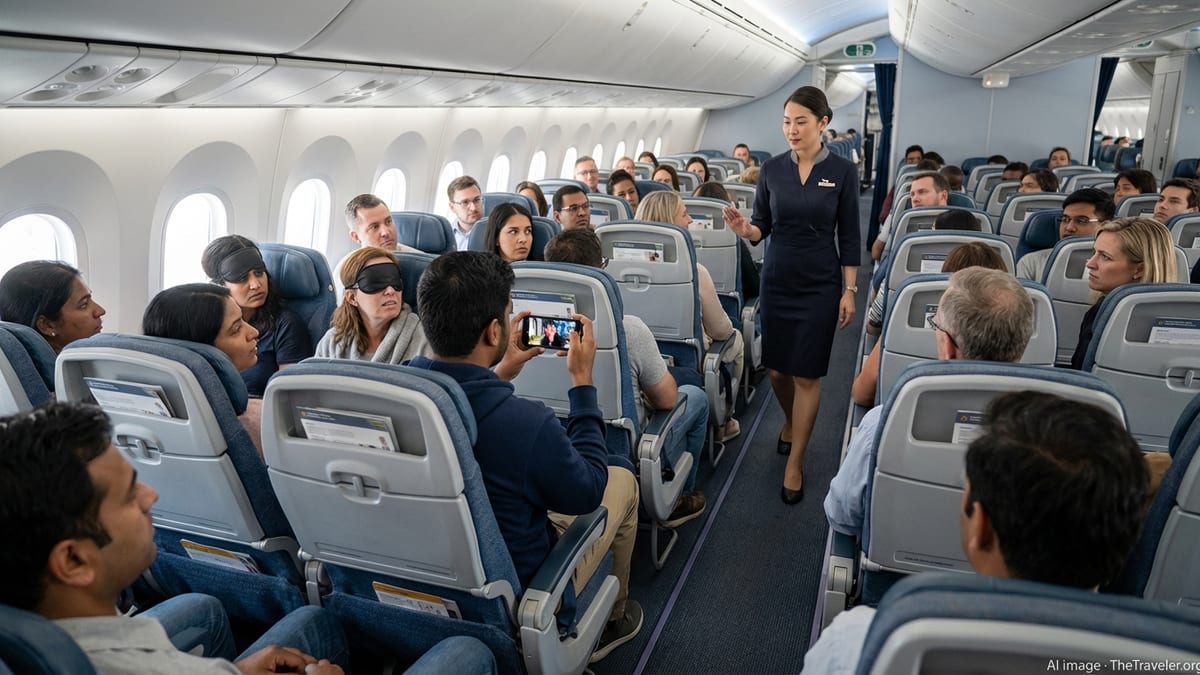
Court ruling details disruptive mid-flight sermon
Publicly available court records and local media reports indicate that the incident occurred on March 12 on a flight from Jeju Island to Seoul’s Gimpo Airport. The aircraft had departed Jeju around mid-afternoon when a 64-year-old pastor reportedly rose from his seat, stepped into the aisle and began addressing nearby passengers at high volume about Christian salvation and damnation.
According to summaries of the case from South Korean outlets, the man continued preaching despite repeated requests from cabin crew to sit down and lower his voice. The pastor was described as shouting variations of the message that people who did not believe in Jesus would go to hell, creating a disturbance in the cabin for the duration of the episode.
A second pastor, aged 68, then joined in, walking along the aisle and loudly proclaiming “Hallelujah, you will go to hell,” also ignoring objections from crew and other passengers. Coverage of the subsequent trial notes that some travelers complained about feeling distressed and unable to avoid the sermon in the enclosed environment of the aircraft.
Reports indicate that the outburst continued for around 13 minutes before the situation was brought under control. The flight, which was already airborne, completed its journey to Seoul, where the incident later became the subject of a criminal case under South Korea’s aviation security laws.
Fines imposed under South Korea’s aviation security law
On August 18, a district court in Seoul found both pastors guilty of violating South Korea’s aviation security legislation, which prohibits disruptive or threatening behavior that could interfere with safe flight operations. According to multiple news accounts, each man received a fine of 1 million won, roughly equivalent to about 900 Singapore dollars or just over 700 US dollars.
Judicial summaries cited in local reporting state that the court concluded the pastors’ actions constituted a “disturbance” that undermined cabin order and ignored lawful instructions from crew members. The ruling emphasized that the pair continued their loud preaching even after being presented with formal warnings and told to stop.
During the proceedings, the pastors reportedly argued that they had not intended to cause a disturbance and that their actions should not be considered an aviation security offense. The court rejected this position, pointing to the volume, duration and confrontational nature of the preaching, as well as the confined setting of an aircraft in flight.
The case highlights how South Korean law gives pilots and cabin crew enhanced authority to maintain order on board, including the power to warn and, if necessary, restrain passengers whose behavior is deemed to jeopardize safety or significantly disrupt operations.
Captive audiences and rising tension over in-flight evangelism
The Jeju–Gimpo case comes amid wider global discussion about religious proselytizing on planes, as more videos of in-flight sermons and worship sessions circulate on social media. Recent coverage has documented travelers who stand in aisles to deliver brief homilies, lead worship songs or speak about sin and salvation while aircraft are delayed on the tarmac or cruising at altitude.
In a number of high-profile episodes, passengers have expressed discomfort with what they view as intrusive and inescapable preaching in a confined space. Commentators often point out that aircraft cabins are “captive audience” environments, where travelers cannot easily walk away, use headphones effectively over very loud speech or choose another setting if they prefer not to listen.
Airlines, for their part, generally frame disruptive behavior in terms of safety and operational control rather than religious content. Publicly available policies typically require passengers to comply with crew instructions and avoid conduct that is offensive, threatening or likely to cause alarm, whether it involves faith-based messages, political advocacy or other highly charged topics.
Travel industry analysts note that social media has amplified the impact of such incidents, turning what might once have been a localized cabin dispute into an international talking point. Viral clips of preaching on planes have fueled online debates over freedom of expression, respect for diverse beliefs and the limits of acceptable conduct in shared public spaces.
Balancing religious freedom, safety and passenger comfort
The South Korean pastors’ fines underscore the complex balance between protecting individual rights to religious expression and ensuring the safety and comfort of other passengers. Legal experts quoted in regional commentary suggest that courts are likely to focus less on the content of speech and more on its impact on cabin order and the ability of crew to do their jobs.
Observers point out that what may be accepted in a church, on a street corner or in an online video can carry different implications at 30,000 feet, where any escalation of tension or misunderstanding can have serious consequences. Airline crew must be able to communicate safety instructions clearly and respond quickly to emergencies, tasks that can be hindered by loud, unauthorized performances or confrontations in the aisle.
The case has also prompted renewed discussion among travelers about expectations of privacy and quiet during flights. Some commentators argue that passengers should be able to rely on airlines to intervene when any behavior, religious or otherwise, becomes so loud or insistent that it effectively removes others’ ability to opt out.
For now, the Jeju–Gimpo ruling signals that South Korean courts view loud, insistent preaching that disregards crew instructions as incompatible with aviation security rules. Travel observers say similar principles are likely to guide responses in other jurisdictions, even as the broader cultural debate over public proselytizing in transit spaces continues.
The Straits Times: Two pastors fined for disrupting South Korean flight with loud preaching
Yahoo News Malaysia: Pastors fined for preaching loudly mid-flight
Kyunghyang via Daum: Report on Seoul court verdict over mid-flight preaching