


More news on this day
Air India and Drukair, Royal Bhutan Airlines, have unveiled a new interline partnership that promises to streamline journeys between India, Bhutan and global destinations by combining both airlines’ networks on single, seamless itineraries.
Get the latest news straight to your inbox!
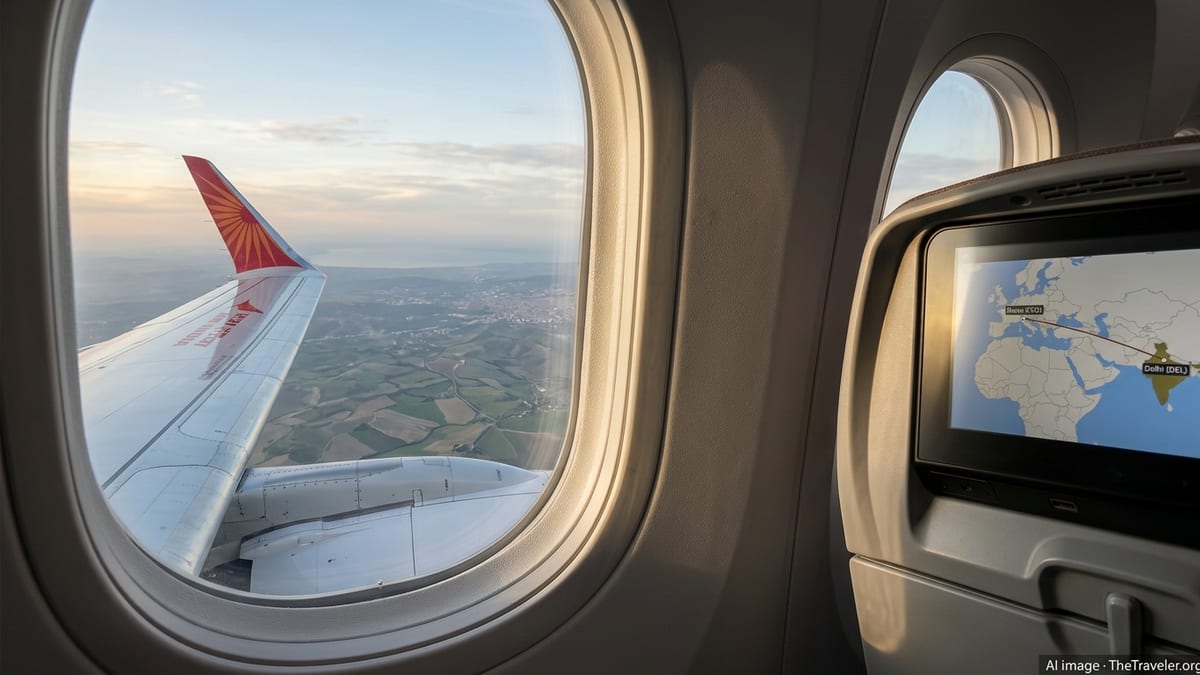
Interline agreement aims to simplify India–Bhutan journeys
According to publicly available information from the two carriers, the interline partnership was announced on August 26, 2026, positioning India’s flag carrier and Bhutan’s national airline to offer coordinated, multi-sector itineraries on a single ticket. The arrangement is designed to reduce friction for travelers moving between Bhutan and India and to onward destinations across Asia, Europe, North America and Australasia.
Under the agreement, passengers can purchase itineraries that combine Air India and Drukair-operated flights without needing separate bookings. The structure of the deal enables through check-in of both passengers and baggage to the final destination, reducing queue times, minimizing the risk of missed connections and cutting out repeated security and immigration formalities where airport processes allow.
Industry reports indicate that interline fares will be offered across the combined network, intended to provide more competitive pricing and flexibility compared with booking separate legs. Travel media coverage notes that the move aligns with Air India’s broader strategy of rebuilding its international network through a mix of its own expansion and new partnerships with regional and global airlines.
The launch timing coincides with Bhutan’s continued push to grow high-value tourism and improve air access after the pandemic, making it easier for travelers from long-haul markets to reach the Himalayan kingdom with only one or two connections.
Delhi hub and new routings expand access to Paro and within Bhutan
Air India’s Delhi hub sits at the heart of the new arrangement. Publicly available details show that travelers will be able to connect via Indira Gandhi International Airport onto Drukair services to Paro, Bhutan’s primary international gateway, from a widening range of Air India origin points across India, the Middle East, Europe, North America and the Asia-Pacific region.
Once in Paro, Drukair’s growing domestic network allows onward travel to regional airports including Bumthang, Gelephu and Yonphula. The new partnership effectively opens up these emerging Bhutanese destinations to international travelers booking through Air India, reducing the need to arrange separate domestic segments and improving schedule coordination for tight connections.
On the reverse flow, Drukair passengers originating in Bhutan will gain streamlined access to Air India’s domestic network via key Indian gateways such as Delhi, Kolkata and Guwahati. From there, Air India’s international services offer onward connections to major global cities including London, New York, Toronto, Frankfurt, Melbourne, Sydney, San Francisco and others highlighted in published schedules and network maps.
Travel-industry coverage suggests that this enhanced connectivity is expected to benefit both leisure and business travelers. Bhutan-bound visitors can combine mountain trekking or cultural itineraries with stopovers in Indian cities, while Bhutanese travelers gain easier options for medical, educational and commercial trips to larger hubs in India and beyond.
Bhutan’s regional strategy and Drukair’s widening partnership web
The interline agreement with Air India fits into a broader regional strategy for Drukair, which has been progressively layering partnerships to offset its relatively small fleet and limited direct long-haul reach. Company reports and earlier press releases highlight existing or recent interline arrangements with carriers such as Turkish Airlines and Thai Airways, as well as distribution tie-ups that place Drukair inventory on major global booking platforms.
In 2025 and early 2026, Drukair also moved to reinforce its role as a connector between Bhutan, Northeast India and Southeast Asia. The reintroduction of flights linking Paro with Bangkok and Singapore via Guwahati, and the addition of extra frequencies on these routes, have increased options for travelers moving between Bhutan and regional hubs in Thailand and Singapore.
These developments are viewed in the context of Bhutan’s broader economic plans, including the development of Gelephu Mindfulness City near the southern border, for which air connectivity is seen as a key enabler. By tying into Air India’s large domestic network and its expanding list of global partners, Drukair effectively multiplies the number of one- or two-stop combinations available to potential visitors, while maintaining its own tightly managed capacity into Paro’s challenging airfield.
Travel analysts note that such partnership-driven growth allows Bhutan to court higher-yield tourism and specialized traffic, such as wellness travelers and conference delegates, while preserving controls on overall visitor numbers that underpin the country’s “high value, low volume” tourism model.
Air India deepens regional network through partnership strategy
For Air India, the tie-up with Drukair is another step in a partnership-led strategy aimed at consolidating its position as a pan-regional connector. In recent months the airline has announced a series of codeshare and interline agreements with carriers across Central Asia, the Middle East, Southeast Asia and North America, adding breadth to its network as new aircraft join the fleet.
Airline-network observers point out that the Drukair deal is particularly significant within South Asia, as it helps Air India offer connectivity to nearly the entire South Asian Association for Regional Cooperation region either on its own metal or through partners. Bhutan was one of the last remaining gaps in the network, historically accessible only via point-to-point tickets or informal combinations requiring separate bookings.
The ability to market itineraries that include remote destinations such as Paro, Bumthang or Gelephu may also support Air India’s ambitions in premium and niche travel segments. Tour operators focused on trekking, spiritual tourism and luxury small-group journeys can now design itineraries that combine multiple countries and cities under a single ticket structure, simplifying logistics and potentially improving traveler protection when disruptions occur.
Additionally, greater integration with regional partners is expected to bolster Air India’s relevance among frequent flyers who increasingly compare not just schedules and fares, but also the breadth of connection options when choosing a preferred carrier for multi-trip travel across a year.
Implications for travelers, tourism and trade flows
The interline partnership is anticipated to deliver immediate practical benefits for passengers. With through check-in, baggage tags issued to the final destination and boarding passes for all legs provided at the first point of departure in many cases, travelers face fewer touchpoints and reduced uncertainty during connections in busy hubs like Delhi.
Travel-industry coverage underscores that single-ticket itineraries can also offer stronger protections in the event of delays or disruptions, as partner carriers coordinate reaccommodation on later services within the same booking. This is particularly relevant for routes into Paro, where weather and operational constraints can occasionally affect schedules.
On a strategic level, tourism stakeholders in both countries are expected to leverage the partnership to market new itineraries. Bhutan’s tourism authorities and private operators gain a stronger platform to reach long-haul markets via Air India’s global sales channels, while Indian destinations may see additional stopover traffic from Bhutan-bound travelers choosing to spend time in cities such as Delhi, Kolkata, Bengaluru or Mumbai.
Improved air links also support trade and people-to-people ties, including educational exchanges and official travel between the two neighboring countries. While the interline agreement does not in itself add new flight frequencies, it alters how seats are packaged and sold, potentially lifting load factors and paving the way for future capacity increases on key India–Bhutan sectors.
As booking systems are updated and sales channels begin to display the new combined itineraries, airlines and travel agents alike will be watching uptake closely. Early response from the market is expected to shape whether the partnership remains a primarily regional facilitator or evolves into a more prominent pillar of South Asian connectivity over time.
Air India official press release on the interline partnership
Coverage in The Economic Times on India–Bhutan connectivity
Drukair information on regional expansion via Guwahati
Business Standard report on the Air India–Drukair partnership