


Perugia, the hilltop capital of Umbria, has quietly stepped into the spotlight. According to Expedia’s recent Unpack ’27 trends report, searches for flights and stays in Perugia have risen about 35 percent compared with the previous year, putting the city among the most interesting emerging destinations in Europe. For travelers, that surge reflects what locals have long known: Perugia offers serious history, big-name festivals, honest regional food and easy day trips, all without the crowds of Italy’s best known art cities.
Get the latest updates straight to your inbox!
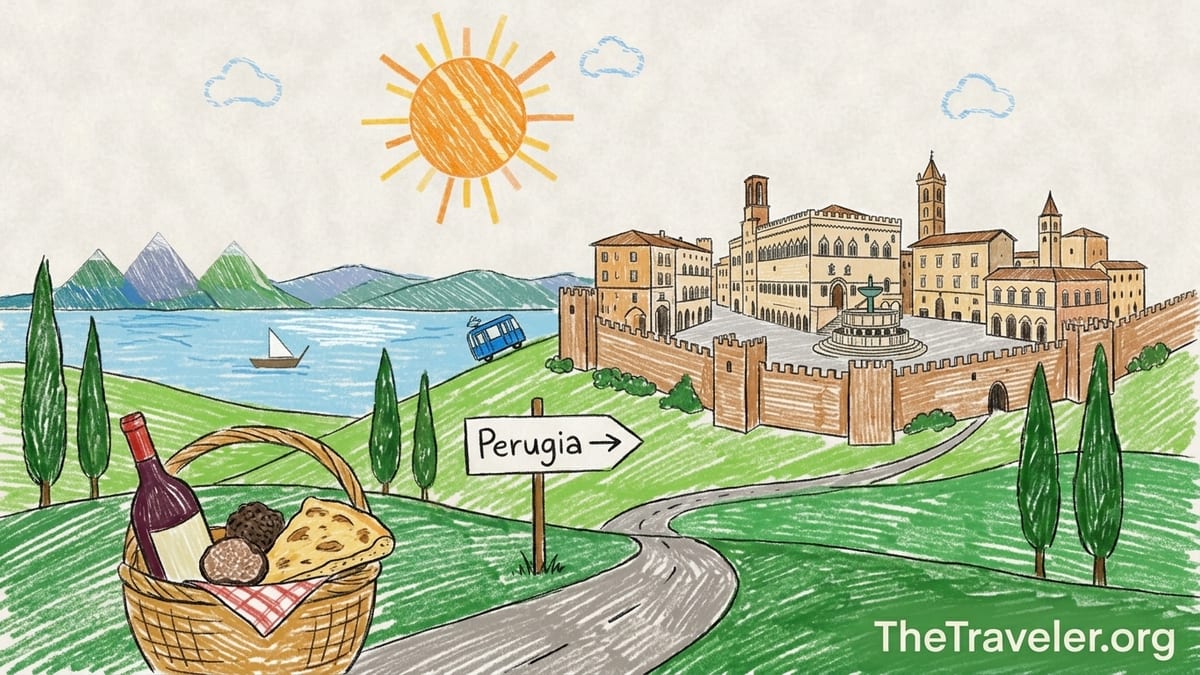
Why Perugia and Umbria Are Trending Now
Perugia sits at the heart of Umbria, long branded as Italy’s “green heart” for its rolling hills, olive groves and forested valleys. The region still attracts a fraction of the visitors that go to neighboring Tuscany, yet official figures show overnight stays across Umbria now total well over six million per year, a steady climb over the last decade. That means more services and better connections, but still nothing like the saturation you see in Florence or Venice. It is a useful balance if you want the Italy of stone hill towns and long lunches rather than queues and selfie sticks.
The latest Expedia Group trend report puts Perugia on a short list of destinations showing the fastest growth in future travel searches, with roughly a 35 percent rise in combined flight and stay interest measured between late 2025 and mid 2026 compared with the previous year. The city is highlighted specifically for its medieval streets, art heritage and food. Local tourism officials in Umbria have welcomed those figures as confirmation that the province of Perugia is “running ahead” in the national competition for new visitors, while still far from any overtourism concerns.
For individual travelers, what matters is how that growth feels on the ground. In practical terms, you can now expect a broader range of small boutique hotels in historic palazzi, more mid-range apartments in the historic center listed on major platforms, and restaurant menus that address international tastes without abandoning Umbrian classics. At the same time, the city’s size and hilly layout mean that even on busy festival weekends, you can step a few side streets away from the Corso Vannucci and find quieter corners almost immediately.
Perugia’s appeal is amplified by Umbria as a whole. Within an hour or two by train or regional bus, you can pair time in the city with Assisi’s basilicas, Orvieto’s clifftop Duomo, small wine towns around Montefalco and Bevagna, and outdoor areas around Lake Trasimeno. For travelers trying to maximize value, this makes Perugia an efficient base: accommodation is generally less expensive than in Florence or Rome, yet you still access a dense cluster of day-trip options.
A Walk Through Perugia’s History
Perugia’s roots go back to the Etruscans, and the city was one of the key Etruscan capitals before the Romans arrived. You can see that depth of history almost immediately in the huge Etruscan city walls and gates that still mark the old center. One of the most striking examples is the Arco Etrusco, an imposing stone gate that has stood here for more than two millennia and now serves as a dramatic entry point into the medieval streets above.
In the Middle Ages and Renaissance, Perugia became a powerful city-state, often at odds with papal authority. Much of what visitors see today dates from that period: Piazza IV Novembre framed by the Gothic Palazzo dei Priori and the striped façade of the cathedral, and the Fontana Maggiore in the center of the square, carved in the 13th century with biblical scenes, labors of the months and allegories of the liberal arts. Spend half an hour circling that fountain and it becomes a stone textbook of medieval life and beliefs.
Underneath modern Perugia lies another city. The Rocca Paolina, a 16th century fortress built by Pope Paul III, swallowed an entire neighborhood when it was constructed. In the 20th century, excavations reopened the buried streets and houses, and today escalators carry you down into a ghostly underground quarter of arches, staircases and bricked-up doorways. For many visitors this short escalator journey, costing nothing, is the single most memorable way to grasp how many physical layers of history sit beneath today’s streets.
Perugia is also firmly a university town. The University of Perugia dates back to the 14th century, and the University for Foreigners attracts language students from across the world. That academic presence keeps the city lively and relatively youthful, especially around Via della Viola, where small bars and live-music venues fill on weekends. Historically minded travelers benefit too: the National Gallery of Umbria, recently refurbished, holds works by Perugino, Pinturicchio and other Umbrian masters in a manageable space inside the Palazzo dei Priori, typically with shorter ticket lines than major museums in Florence or Rome.
What and Where to Eat in Perugia
Umbrian food is defined by simplicity and strong local ingredients: olive oil, grains, pork, game, truffles and legumes. In Perugia you will see menus built around hearty pastas such as strangozzi or umbricelli with black truffle from nearby Norcia, thick lentil soups from Castelluccio, and grilled meats known as grigliata mista. Another local staple is torta al testo, a flatbread cooked on a round griddle and then split and stuffed with combinations like sausage and wild greens or pecorino and prosciutto. Small kiosks and bakeries in the historic center sell it for a few euros, making it an easy lunch between museum visits.
One concrete example: around Piazza IV Novembre and Corso Vannucci you will find informal osterie where a plate of fresh pasta with truffles plus a glass of local Sagrantino or Montefalco Rosso might run in the region of 15 to 20 euros, depending on the season and truffle market prices. Move a few streets away, around Via dei Priori or near the University for Foreigners, and menus become a little more student-friendly, with daily lunch specials that bundle a primo, water and coffee for under 15 euros. Portions tend to be generous, so sharing antipasti of cured meats and pecorino is common.
Perugia is probably best known internationally for chocolate. The Perugina factory on the outskirts of the city created the Baci chocolate in the 1920s, and the brand remains one of Italy’s most recognizable confectionery exports. In the center, chocolate shops showcase pralines filled with local liqueurs, thick bars of dark chocolate and seasonal specialties in the run-up to the Eurochocolate festival. When Eurochocolate takes over Perugia in November, the historic streets fill with stands selling hot chocolate, chocolate kebabs and themed desserts. For travelers, it is an opportunity to sample high-quality artisanal chocolate while also tasting other local products that festival stalls highlight, such as honey and hazelnut spreads from around Umbria.
Wine and olive oil culture are close at hand. Many restaurants list wines from Montefalco, Bevagna and the Colli Perugini hills, with glasses starting around 5 to 7 euros in central venues. Look for Sagrantino di Montefalco if you prefer bold, tannic reds, or Grechetto and Trebbiano Spoletino for fresher white wines that pair well with lake fish from Trasimeno or grilled vegetables. If you have a car or join a small-group excursion, half-day visits to nearby wineries often combine cellar tours with tastings of three or four wines and plates of local cheeses, generally priced in the 25 to 40 euro range per person depending on the estate and season.
Festivals and Events: Umbria Jazz, Eurochocolate and Beyond
Perugia’s calendar is anchored by two headline events that significantly shape travel patterns: Umbria Jazz in July and Eurochocolate in November. Umbria Jazz brings international names in jazz and related genres to stages across the city. Tickets for headline evening concerts in arenas or theaters can vary widely in price depending on the artist, but even if you do not purchase a main ticket, the festival atmosphere spills into the streets. Free or low-cost performances take place in squares like Piazza IV Novembre and Giardini Carducci, and bars run late-night jam sessions where you only pay for your drink.
Eurochocolate, which has increasingly concentrated its main edition in Perugia in November, transforms the historic center into a multi-day fair of chocolate stalls, tastings and themed installations. Around this time, local rail operator partnerships have offered discounts to visitors who arrive by regional train, and extra services run from cities such as Rome to manage weekend crowds. Accommodation rates during both Umbria Jazz and Eurochocolate weekends rise compared with shoulder-season weeks, so travelers on tighter budgets may want to time their visits for late spring or early autumn while still catching smaller local events.
Beyond those flagship festivals, Perugia and nearby Umbrian towns host a dense program of smaller cultural events. In the shoulder seasons you might encounter ceramics markets, photography exhibitions in repurposed churches or food fairs dedicated to products like black truffle or new olive oil. For instance, nearby towns such as Norcia and Gubbio run their own specialty festivals that can easily be combined with a Perugia base. Checking local tourism offices or your accommodation’s noticeboard a day or two in advance can reveal concerts or festas that rarely appear on international booking platforms but add vivid local color to a stay.
The festival culture ties back into Perugia’s student and resident life. During university term time, nights around Piazza Danti, Via Bonfigli and Via della Viola stay lively even without formal events, with live bands playing in basements and crowds spilling out into small squares for aperitivo. Visitors looking for a quiet stay can still find it by choosing accommodation a few streets off the busiest bar areas or on the edges of the historic center, but it is helpful to be aware that parts of central Perugia keep late hours during the academic year.
Getting There and Understanding Rail Connections
Perugia does not sit on Italy’s high-speed rail lines, but regular regional trains make it reachable without a car from major gateways. The main station, Perugia Fontivegge, is roughly two hours from Florence with direct regional services and around two to three hours from Rome, often with a change in Foligno on the fastest routes. On peak festival Sundays, rail operators have run additional direct regional services from Rome Termini to Perugia, an indication of both demand and the city’s commitment to promoting lower-impact transport.
From the station, the historic center sits high on the hill. You can take the MiniMetro, a small driverless light railway that climbs from the lower town up to the Pincetto station near the walls, or use city buses and a system of escalators that run through the Rocca Paolina and other access points. A single urban bus or MiniMetro ticket costs only a few euros and can be bought from machines or tobacconists; many visitors buy a 70-minute integrated ticket that covers transfers during that window. Taxis wait outside the station and charge fixed or metered fares into the center, which can be convenient if you have heavy luggage, though hilly streets mean taxis cannot reach every door within the medieval core.
Perugia is also served by Umbria International Airport, about 12 kilometers from the city, which offers a small but growing set of flights from Italian and European cities. Schedules change seasonally, but recent years have seen connections to hubs such as Milan and London alongside services from other European airports. Public buses and occasional shuttle services link the airport to Perugia, while taxis cover the trip in around 20 minutes depending on traffic. For many international travelers, however, flying into Rome or Florence and taking the train remains the more frequent option due to the wider choice of long-haul flights.
Once in Perugia, the rail and bus network opens the rest of Umbria. Trains from Perugia connect directly to Assisi, Foligno and Terontola on Lake Trasimeno’s line, where you can change for places like Cortona or Arezzo in neighboring Tuscany. Other hill towns such as Gubbio and Todi lack train stations and are reached by regional buses that depart from terminals in the lower and upper town. Timetables can be sparse on Sundays and public holidays, so building a little flexibility into your day-trip plans and checking schedules locally the day before is important.
Day Trips: From Assisi to Lake Trasimeno
Assisi is the classic day trip from Perugia and one of the easiest. Regional trains take around 20 to 30 minutes from Perugia to Assisi’s station in the valley; from there, local buses run uphill to the historic center. A typical traveler might leave Perugia after breakfast, visit the Basilica of San Francesco with its Giotto frescoes, wander the narrower lanes up to the Rocca Maggiore fortress, and return in the early evening. Even with time for a sit-down lunch, that makes for a relaxed full-day excursion without the need for a car.
Lake Trasimeno offers a contrast of water and open sky after the stone streets of Perugia. Trains from Perugia reach lakeside towns such as Passignano sul Trasimeno and Castiglione del Lago in roughly 30 to 45 minutes. In summer, ferries connect the shore to islands like Isola Maggiore, where walking paths circle old fishermen’s houses and olive groves. Cafes along the lakefront serve fried perch and carp, often alongside simple pasta dishes and salads, giving a sense of Umbrian lake cuisine that differs from the inland pork and truffle focus.
For wine and small-town atmosphere, the Montefalco and Bevagna area lies about an hour to ninety minutes away, generally reached by a combination of train to Foligno and then regional bus or by rental car. Here, vineyards produce the powerful Sagrantino wines that appear on Perugia restaurant lists. Many estates welcome visitors for tastings by pre-arranged appointment, and the villages themselves retain quiet stone streets, small churches and views across patchwork hills. Those interested in textiles and traditional production might pair Montefalco with a stop in nearby towns that still maintain weaving and craft workshops.
If you do have access to a car, a broader ring of day trips opens up: the volcanic plateau and cathedral of Orvieto to the southwest, medieval Gubbio to the north and the Roman theater at Gubbio’s outskirts, the waterfalls of Marmore near Terni, or cross-regional excursions to places like Cortona in Tuscany. Many travelers find that three or four days based in Perugia allows for two full days exploring the city itself and two to three day trips, striking a balance between movement and the slow pace that Umbria rewards.
Where to Stay: Neighborhoods and Practical Choices
Choosing the right base in Perugia largely comes down to balancing atmosphere against logistics. The historic center on the hilltop is the most atmospheric option, with accommodation housed in old palazzi and townhouses around Piazza IV Novembre, Corso Vannucci and the side streets near the cathedral. Here, you can step out of your door into traffic-free lanes, reach major sights in minutes, and simply wander between cafes and viewpoints without worrying about transport. Boutique hotels and bed-and-breakfasts in this zone often price above suburban options, but for many visitors the ability to stroll home after dinner without navigating buses or steep climbs is worth the extra cost.
Areas around Piazza Italia and the Giardini Carducci offer a slightly quieter feel within the center, along with sweeping views across the Umbrian countryside. Accommodation here ranges from traditional hotels with staffed receptions to small design-forward guesthouses. Because vehicle access to much of the old town is restricted by limited-traffic zones, travelers arriving by car often choose places that can provide clear instructions for parking in nearby garages and then walking or taking escalators up to the front door. Confirming parking arrangements at the booking stage avoids stress on arrival, particularly in the early evening when traffic can be busy.
Downhill around the Fontivegge station and surrounding streets, larger chain hotels and business-style properties cluster close to the rail hub. These can work well for travelers planning intensive rail day trips or those who prefer easier luggage handling and modern rooms over historic charm. From here, the MiniMetro or buses take about ten minutes up to the old town, and some hotels offer simple shuttle services. Prices in this area can be noticeably lower than in the hilltop center, especially outside major festivals, which may appeal to budget-conscious travelers comfortable with a short daily commute.
For longer stays or repeat visitors, apartments on the edges of the center or in residential districts offer a more local rhythm. Weekly rentals give access to home kitchens, making it easier to take advantage of Perugia’s markets and supermarkets to cook with Umbrian ingredients. Staying a little outside the central tourist core also places you closer to everyday services, from laundries to neighborhood bakeries, and provides insight into Perugia’s life beyond the monuments. With tourism supply expanding but still moderate compared with Italy’s largest cities, booking ahead for July and November festivals remains wise, while spring and early autumn generally offer more last-minute flexibility.
Planning Your Perugia Trip
With interest in Perugia up sharply according to Expedia’s latest figures, planning ahead brings rewards. Looking six to nine months out for visits during Umbria Jazz or Eurochocolate can secure central rooms at more stable rates, whereas booking only a few weeks in advance often means higher prices or compromises on location. Outside peak festival periods, a lead time of two to three months is usually enough to find good options across different budgets, particularly if your dates are flexible by a day or two.
Costs on the ground compare favorably with larger Italian cities. A standard espresso at the bar in a central Perugia cafe often remains around the one-euro mark, with cappuccino modestly higher. Aperitivo drinks with a small plate of snacks in streets just off Corso Vannucci might run 6 to 10 euros, while simple trattoria dinners without truffle or premium steak often come in under 30 euros per person for two courses and wine. These concrete examples, based on current menus in the center, help frame realistic daily budgets without relying on abstract averages.
Finally, consider how long to stay. Many itineraries squeeze Perugia into a single day from Florence or Rome, but the city reveals itself more slowly. Two or three nights allow time for the underground city, art museum, a sunset walk along the medieval aqueduct route and at least one unhurried morning spent watching local life around Piazza IV Novembre. Add two or three extra days if you want to fold in day trips to Assisi, Lake Trasimeno and one or two wine towns. In an Italy where some destinations are straining under visitor numbers, Perugia and Umbria offer something different: room to breathe, detailed layers of history and food that still speaks directly of its landscape.
Whether you are drawn by a spike in search trends, the pull of jazz or chocolate, or simply the idea of a lived-in Italian hill town, Perugia now sits firmly on the map without having lost its sense of place. As travel demand to the city grows, the opportunity remains to experience it at a humane scale, sharing streets and cafes not only with other visitors but with students, shopkeepers and families who call this hilltop home.