


More news on this day
A new ground stop issued for Philadelphia International Airport (PHL) on Monday, September 21, 2026, rippled across the Northeast travel network after an equipment outage disrupted key air traffic control communications, forcing airlines to hold departures and reshuffle schedules.
Get the latest news straight to your inbox!
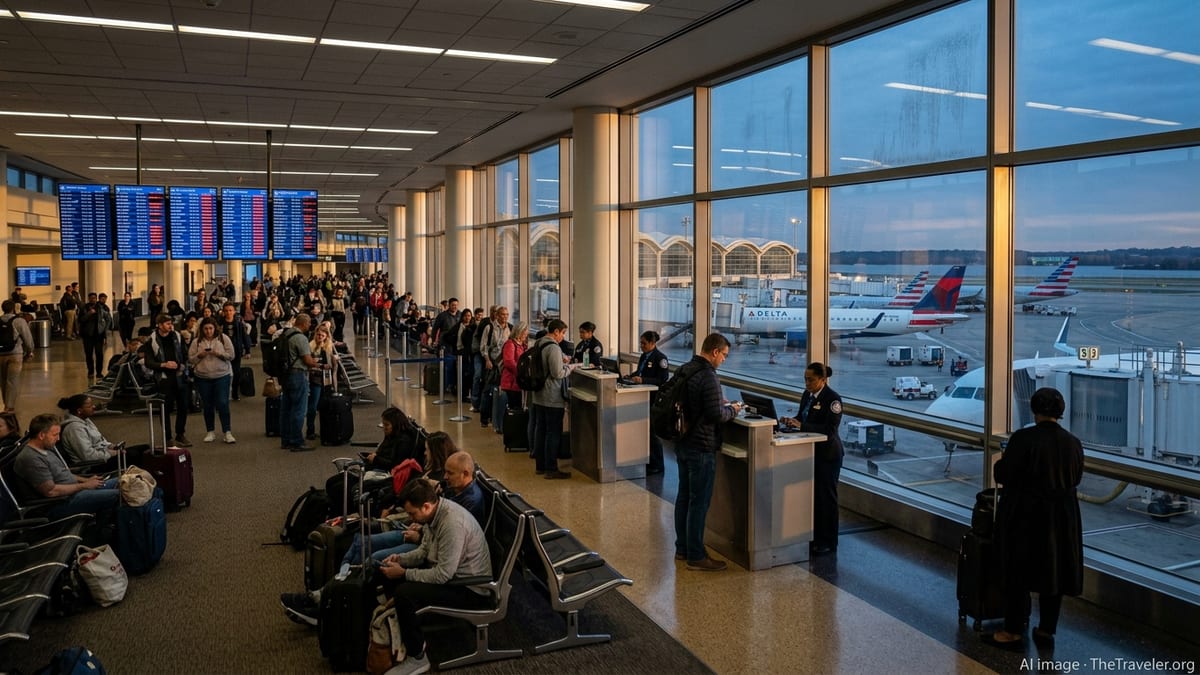
What triggered the ground stop at PHL
Published coverage indicates the disruption was linked to failures affecting the Philadelphia Terminal Radar Approach Control facility, known as Philadelphia TRACON, which helps manage arriving and departing traffic for multiple airports in the region. Reports described problems involving communications frequencies and an equipment outage that limited normal operations.
The incident also drew attention because the problems were not isolated to one airport. Coverage tied the outage to a broader communications breakdown that affected air traffic flow into several major Northeast gateways, creating cascading delays even for travelers who were not scheduled to fly directly into Philadelphia.
Multiple reports described a combination of issues: a primary communications line failure and a backup fiber optic line that had been severed during construction work in New Jersey. That overlap reduced redundancy and contributed to extended disruptions while repairs were underway.
Airports affected and how the disruption spread
The ground stop impacting Philadelphia came as similar restrictions and delays were reported at other major airports, including Newark Liberty International, John F. Kennedy International, LaGuardia, Teterboro, and Boston Logan. In practice, when arrival rates drop at one busy hub, aircraft and crews can quickly fall out of position across airline networks.
Publicly available flight-tracking data cited in coverage showed hundreds of cancellations and widespread delays across the region. Philadelphia itself saw heavy disruption, with reports citing roughly 400 delays and about 200 cancellations at PHL by late Monday afternoon, alongside lengthy average delays into Monday night.
Newark experienced some of the most severe impacts, with reporting indicating the airport’s arrival flow slowed dramatically for much of the day. That mattered for Philadelphia travelers, too, because many itineraries route through the New York-New Jersey airspace complex, and airlines often swap aircraft between these nearby hubs.
Timing: when flights were paused and when they resumed
Coverage Monday described an FAA ground stop that held departures bound for Philadelphia and other airports during the outage. Local reporting indicated the PHL ground stop was initially expected to run into the afternoon, and later updates indicated it expired at 5 p.m. Monday as conditions improved.
Even after a ground stop expires, disruptions can linger as airlines work through aircraft and crew displacement. Reports indicated arrivals and departures remained significantly behind schedule at Philadelphia Monday night, with average delays stretching into hours for some passengers.
By Tuesday, September 22, operations across New York City-area airports were reported to be resuming, though delays and cancellations persisted into the morning as airlines and air traffic managers cleared backlogs. Early Tuesday figures cited in coverage still showed notable disruption at Newark, underscoring how long recovery can take after a systemwide constraint.
What travelers should do now if flying through Philadelphia
Because ground stops can be issued and lifted quickly based on system conditions, travelers with flights into or out of PHL should rely on real-time flight status tools from their airline and the FAA’s National Airspace System status updates before departing for the airport. Travelers connecting through the Northeast may also want to monitor the status of inbound aircraft, since delays often start earlier in the day at a different airport.
When widespread air traffic constraints hit, rebooking options can change hour by hour. Reports noted that some airlines allowed customers to change flights without fees during the disruption window, but policies vary by carrier and fare type, and travelers may see different options depending on available seats and crew legality limits.
For passengers already at the airport, the most practical steps are to confirm whether the flight is awaiting an air traffic control release time, whether the aircraft is still scheduled to arrive, and whether a gate change or aircraft swap has occurred. During regional disruptions, flights can appear “on time” and then slip repeatedly as airspace constraints evolve.
Why this outage renewed focus on aging infrastructure
The episode renewed scrutiny of how communications and radar resilience can affect the entire Northeast corridor. Reporting framed the disruption as a reminder that a single point of failure at a key facility can rapidly constrain airport arrival rates and push delays far beyond one metro area.
Coverage also noted the role of construction activity in damaging fiber lines, a scenario that highlights how aviation operations depend on broader telecom and utility systems. When backup paths are compromised, recovery becomes more complex, and even after repairs, airlines can need many hours to reposition aircraft and crews.
Separately, local reporting noted the FAA began testing a new computer system intended to help predict schedule conflicts and weather issues, though that effort was described as unrelated to Monday’s outage because it was being tested in the Washington, D.C., area rather than in Philadelphia.