


More news on this day
Philadelphia International Airport has lifted a ground stop that halted most flights on Monday after an air traffic control equipment failure, but travelers are still confronting long delays and residual disruptions across the busy Northeast corridor.
Get the latest news straight to your inbox!
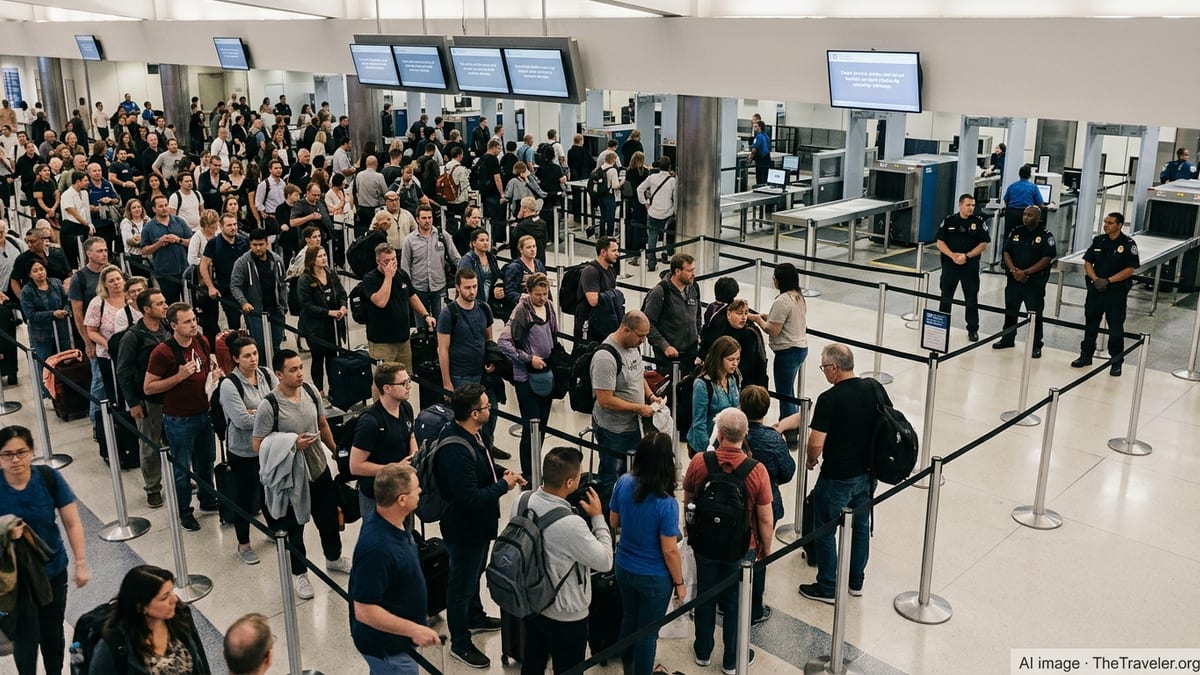
Equipment failure triggers cascading disruptions
Publicly available information indicates that the disruption began late Monday morning, September 21, 2026, when a blown circuit at a Federal Aviation Administration air traffic control facility in the Philadelphia area knocked out a primary communications line. Reports from national outlets describe how a backup fiber-optic line, routed through an active construction zone, was subsequently severed, leaving controllers with limited connectivity and forcing traffic restrictions across several major airports.
According to published coverage, the affected facility manages approach and departure traffic not only for Philadelphia International Airport but also for parts of the Newark Liberty International Airport region and other busy Northeast airspace. With redundancy compromised, the FAA implemented ground stops and ground delay programs to slow the flow of flights into the affected airspace while technicians worked to restore service.
By early afternoon, the ground stop at Philadelphia International had effectively paused most incoming traffic, leaving aircraft on hold at origin airports and on taxiways around the region. Local reports counted hundreds of delayed flights across the Northeast, including at Newark, New York-area airports and smaller satellite fields that depend on the same control infrastructure.
Regional news organizations note that the equipment outage occurred at the same type of facility that experienced a disruptive failure in 2025, which also led to widespread delays. This latest incident has renewed attention on the vulnerability of critical communications links that support dense airspace along the East Coast.
Ground stop lifted, but long delays remain
By late Monday afternoon, the FAA’s real-time airport status page showed that the formal ground stop at Philadelphia had been lifted and arrivals were slowly resuming. Local television and newspaper coverage report that the ground stop expired around late afternoon, with a subsequent ground delay program keeping tight control over the number of flights allowed to depart for Philadelphia.
Broadcast outlets in Philadelphia cite FAA advisories showing that, even after the ground stop ended, average departure delays from Philadelphia International climbed well past three hours during the late afternoon and early evening. One station described an average delay of more than 200 minutes for some departures as of around 5 p.m. Monday, as airlines worked through long queues of aircraft and crew assignments.
National travel coverage notes that Philadelphia’s situation was part of a broader pattern across the Northeast. Newark Liberty International and New York’s LaGuardia and John F. Kennedy airports all reported significant delays and, in some cases, their own ground stops or ground delay programs related to the same outage. Because flights in and out of these airports interconnect across numerous domestic and international routes, the operational shock spread far beyond the region.
Despite the technical repair and the lifting of formal FAA restrictions, airlines faced a backlog of parked aircraft and crews that had reached federally mandated duty limits. As a result, some flights were pushed into late-night operations or cancelled outright, extending the impact on travelers beyond the timeframe of the ground stop itself.
Tuesday outlook: Minor reported delays, uneven recovery
By early Tuesday, September 22, publicly available FAA airport status information for Philadelphia International indicated only minor general delays of around 15 minutes or less for arrivals and departures. A same-day travel advisory from TheTraveler.org notes that the federal system was no longer listing destination-specific delay programs for Philadelphia, suggesting that air traffic control capacity had largely returned to normal.
Even with that improvement on the federal dashboard, published coverage cautions that the recovery for individual travelers may lag behind the system-level indicators. Airline schedules and crew rotations are still absorbing the disruption, and aircraft that ended Monday out of position may not be back on their usual routes until later in the day on Tuesday.
Major carriers serving Philadelphia, including large domestic and transatlantic operators, have announced flexible rebooking options for passengers whose plans were affected between September 21 and September 23. According to publicly shared waiver details, these policies generally allow customers to change to alternative flights within a limited date range without incurring change fees, provided travel is booked in the same cabin and between the same city pair.
Travel industry analysts suggest that the most pronounced residual effects are likely on early-morning and late-evening flights, where crews and aircraft are still catching up from Monday’s cascade of delays. Midday services could stabilize more quickly as airlines rotate additional aircraft and personnel into the schedule.
What passengers traveling through Philadelphia should expect
For travelers headed to or through Philadelphia International on Tuesday, the combination of normalized air traffic control operations and airline recovery efforts offers a mixed picture. Real-time FAA data shows the airport operating without formal flow restrictions, but flight-tracking platforms and airline status pages continue to list pockets of long delays on certain domestic routes and connecting services.
According to guidance compiled from federal aviation resources, the most reliable way for passengers to gauge how long the disruption will affect a specific trip is to check three elements at once: the FAA’s real-time status for Philadelphia, the airline’s own flight status for the booked flight number and the status of the inbound aircraft assigned to operate that route. When all three sources align, travelers have a clearer sense of whether a posted delay is likely to improve, worsen or hold steady.
Philadelphia International’s terminal maps and public advisories indicate that all concourses remain open, and security screening is proceeding under standard procedures. However, airport-focused news reports highlight crowded gate areas and long lines at customer service counters as frustrated travelers seek rebooking options and information about missed connections.
Passenger advocacy groups are emphasizing that, because the root cause of Monday’s problems lies with air traffic control infrastructure rather than airline operations or weather, some travelers may qualify for additional assistance under certain carrier policies, particularly for overnight disruptions. Those policies vary by airline and route, and travelers are being encouraged to review the specific terms listed in their carrier’s conditions of carriage.
Broader questions about infrastructure and resilience
The incident at Philadelphia comes against the backdrop of ongoing efforts to modernize air traffic control systems and expand capacity for major hubs in the Northeast. Government documents published in recent years describe multiple initiatives to upgrade communications and radar equipment, reinforce telecommunications pathways and reconfigure responsibilities among regional control facilities to address chronic congestion.
Regulatory notices show that since 2024, the Philadelphia Terminal Radar Approach Control facility has taken on added responsibilities for the Newark area as part of a broader plan to balance workloads and improve staffing conditions. Monday’s outage has drawn renewed focus on how these reorganized control structures depend on robust, redundant communication links that can withstand construction activity and other localized hazards.
Analysts quoted in aviation trade coverage point out that fiber-optic cables supporting air traffic control are often buried along rail lines and highway corridors, where major infrastructure projects are underway. Reports indicate that the cut to a backup line in this case occurred during construction work, underscoring how coordination between transportation agencies and contractors plays a critical role in protecting essential systems.
While federal agencies have moved quickly in the past to reinforce vulnerable nodes after high-profile outages, detailed plans for additional safeguards around the Philadelphia facility have not yet been fully described in public documents. Travel industry observers expect that regulators, airports and airlines will be watching closely for further updates in the coming weeks, mindful that Philadelphia and its neighboring hubs are key gateways for both domestic traffic and upcoming large-scale events across the region.