


The first thing that hit me on my husky safari was not the cold. It was the sound. Dozens of dogs howling with anticipation, claws scratching on hard-packed snow, sleds rattling against their tethers. Then, in an instant, silence as the guide let go of the brake and my team surged forward. The sled jerked, my knees flexed, and we were flying over the Arctic tundra. Of everything I experienced north of the Arctic Circle, from northern lights chases to snowmobile safaris, nothing matched the raw, joyful energy of that husky safari.
Get the latest updates straight to your inbox!
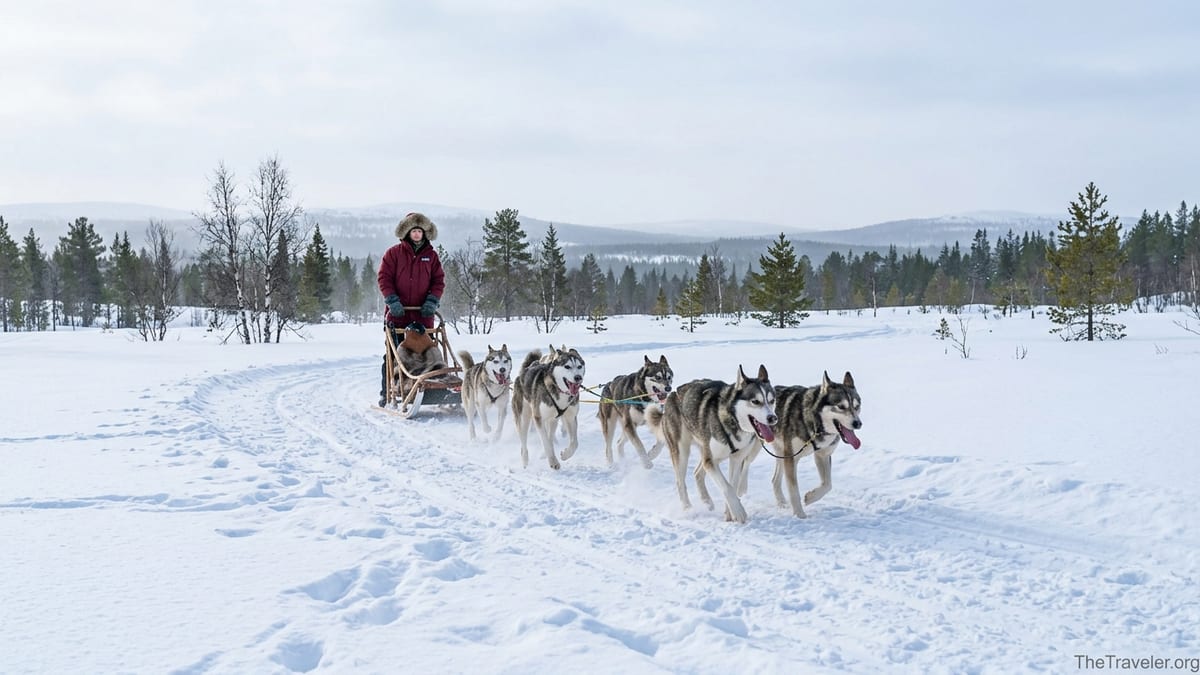
The Moment the Huskies Start to Run
On paper, a husky safari sounds straightforward: you stand on the runners of a wooden sled, the dogs pull, and you glide through a snowy landscape. In real life, it is a jolt of adrenaline. In Rovaniemi in Finnish Lapland, I watched as my guide clipped six Alaskan huskies into the gangline, their bodies quivering with excitement. They barked, jumped, and lunged against their harnesses, as if the only thing that mattered in the world was the chance to run. When the guide finally stepped aside and signaled, I lifted my foot off the brake and the team exploded forward. The acceleration was stronger than I expected, closer to a sudden push from a starting subway car than a gentle glide.
Within minutes, the noise around the kennel fell away. Once the dogs settle into their pace, the barking stops. All I could hear was the rhythmic panting of the team, the swish of runners over snow, and the occasional creak of the sled frame. On a 10 kilometer safari outside Rovaniemi, with air temperatures hovering around minus 12 degrees Celsius, my eyelashes collected tiny ice crystals as we crossed a frozen marsh and slipped into quiet spruce forest. The energy in that moment was different from any other Arctic experience I had. Snowmobiling felt mechanical and loud; a reindeer sleigh ride was peaceful and slow. The huskies, though, were pure, focused power.
What surprised me most was how responsive the sled felt. Small shifts of my weight changed the line through corners, and pressing lightly on the brake transformed the dogs’ effort into controlled speed. On a standard 5 to 10 kilometer self-drive safari, which typically lasts 30 to 50 minutes of actual sled time, you have enough distance to move from nervous beginner to confident musher-in-training. That learning curve, happening while a living, breathing team pulls you through subarctic forest, creates an intimacy and intensity that no other tour in the Arctic matched for me.
Choosing Where to Experience a Husky Safari
The husky safari I remember most vividly took place near Rovaniemi, but the experience is broadly similar across the Arctic belt. In Tromso in northern Norway, kennels cluster about 25 to 40 minutes outside the city, in valleys where snow lingers late into spring. Around Levi and Saariselka in Finnish Lapland, husky farms are set among rolling fells and frozen lakes. In Kirkenes in far northeastern Norway, some operators combine dog sledding with visits to ice hotels or snow castles. The landscapes differ, but the core elements are shared: a working kennel, a guided safety briefing, warm overalls and boots, and then time on the trail with your own dog team.
In Rovaniemi, tours typically start around 100 to 120 euros per adult for a short 5 kilometer ride that takes about 15 to 25 minutes of sledding, rising to roughly 150 to 200 euros for the more satisfying 6 to 10 kilometer safaris that last 2 to 3 hours door to door, including transfers and farm visit. In Tromso, a half-day self-drive husky safari with hotel pickup generally falls in the range of 2,000 to 2,500 Norwegian kroner, depending on season and operator. These prices usually include warm clothing, boots, guiding, and a hot drink and snacks around an open fire afterward.
For a first husky safari, I recommend choosing a mid-length, self-drive tour outside the main theme-park style attractions. For example, in Rovaniemi, a 10 kilometer tour with a small local kennel that limits groups to six or eight guests will feel far more like a wilderness journey than the short passenger-only loops near Santa-themed attractions. In Tromso, look for operators that clearly state you will drive your own sled for most of the route, rather than sit as a passenger the entire time. The difference in energy between standing on the runners, feeling the dogs respond to your weight and commands, and sitting bundled in a sled while a guide does all the work, is enormous.
What It Feels Like to Stand on the Runners
Standing on the runners of a husky sled for the first time is both empowering and slightly intimidating. The sled itself is simple: two narrow wooden runners, an upright handlebar, and a foot-operated brake. On my first safari in Lapland, the guide explained the basics during a short briefing in the kennel yard. Both hands must stay on the handlebar at all times. Your right foot controls the heavy metal brake, which digs into the snow to slow or stop the team. You lean gently into turns and keep your knees soft to absorb bumps. Then they gave a quick demonstration of how hard you may need to step on the brake to hold an eager team still at the line.
Once on the trail, the physical sensation surprised me. The sled glides more easily than a beginner expects. On flat stretches across frozen lakes, where the snow is packed and fast, gentle pressure on the brake is enough to keep the speed comfortable. When we descended a small hill through birch forest outside Levi, I had to put my full weight on the brake to stop the sled from catching the dogs. That moment, feeling the dogs’ strength pulling against the line while my boots bit into the snow, made it clear that I was not simply a passenger. I was part of the team’s safety and rhythm.
Most standard safaris pair guests two by two on each sled. One person drives while the other sits in the low sled basket under warm reindeer skins, and you switch halfway. That arrangement makes the experience more accessible to people who are nervous about driving from the start. On a 6 kilometer trail near Rovaniemi, my travel partner started in the basket, and I drove the first half. By the time we paused at a forest clearing for photos and hot berry juice, she was eager to take the runners for the second leg. That gradual introduction to driving is ideal for anyone unsure about their balance or fitness.
The Dogs Behind the Experience
The energy of a husky safari comes not just from speed, but from the animals themselves. Most Arctic kennels today use Alaskan huskies, a mixed-breed type optimized for endurance, speed, and cold resistance. They are leaner and taller than the classic image of a Siberian husky, and their personalities are big. At a small farm visit outside Rovaniemi, one of the guides introduced us to the dogs that would pull our sled. There was a focused lead dog at the front, whose job was to follow the trail and respond to the musher’s signals. Behind her were the strong wheel dogs closest to the sled, powerful animals that provided much of the pulling force at starts and on hills.
Before the tour, we had time to walk along the kennel lines, scratch eager heads through the fences, and learn about how the dogs live. A typical working husky will run thousands of kilometers each winter season, but also spend summers in more relaxed training or on shorter hikes when temperatures allow. Many kennels now publish welfare and sustainability statements, mentioning things like daily health checks, rest days, and the maximum temperature at which they will operate. For instance, some Finnish kennels state they stop husky rides when temperatures climb above about 10 to 15 degrees Celsius to avoid overheating the dogs in their thick double coats.
On the trail, the dogs’ personalities shine. Our guide in Finland told us to listen for the tone of the barking before departure. When the dogs are loud, impatient, and throwing themselves against the harnesses, they want to run. When we stopped halfway through the tour at a small lean-to shelter in a spruce grove, the dogs flopped into the snow to cool off, rolling on their backs and sticking their noses into drifts. The same animals that had been fierce bundles of muscle on the line were suddenly overgrown puppies, jostling for a scratch behind the ear from each guest.
Comparing a Husky Safari to Other Arctic Adventures
In a typical Arctic holiday, husky safaris compete with reindeer rides, snowmobile trips, ice fishing, and northern lights excursions. Each has its charm, but none of the others felt as alive to me as standing on a sled behind a husky team. Snowmobiles are fast and thrilling, but the noise of the engine and the smell of exhaust create a barrier between you and the landscape. Reindeer sleighs are culturally rich and peaceful, often combined with Sami storytelling and meals in a lavvu tent, yet they are purposely slow, ideal for families with young children or travelers who prefer a calm glide through the forest.
On my trip to Tromso, I combined a northern lights minibus chase, a snowmobile safari on a frozen lake, and a self-drive husky tour. The aurora night was magical, but much of it involved driving between cloud gaps and standing in open parking lots, scanning the sky. The snowmobile day delivered speed and big views, yet I felt like I was piloting a machine in a controlled playground. The husky safari, by contrast, placed me in direct cooperation with living animals. I had to read their body language, respond to shifting snow conditions, and adjust my stance and braking in real time. The emotional connection that formed over just a few hours was intense.
Travelers I met in Levi and Rovaniemi echoed this. One couple told me they had booked only a short 5 kilometer husky ride at first, assuming it would be a quick snapshot moment. Afterward, they regretted not choosing a longer route, describing the tour as the highlight of their Lapland week. An older solo traveler I met in a hotel lobby in Tromso said that although she could not drive the sled herself, sitting in the basket and listening to the dogs breathing and the guide softly encouraging them felt more immersive than any other tour she had done. It is this mix of movement, rhythm, and companionship that gives husky safaris a unique emotional energy.
Practical Planning: Seasons, Conditions, and Costs
Husky safaris are closely tied to winter conditions. In much of Finnish Lapland, the main season runs roughly from early December to early April, with the most reliable snow usually from late December through March. Around Tromso and the coastal parts of northern Norway, maritime weather can be more variable, with occasional thaws and rain even in midwinter, but inland valleys often retain good snow well into spring. In Rovaniemi, local tourism boards indicate that standard husky rides are typically possible from December through early April, though exact opening and closing dates can shift each year.
Prices reflect both the length of the tour and the peak holiday demand. In Rovaniemi in the 2025 to 2026 winter season, a 5 kilometer kennel safari with transfers has been advertised in the region of 150 to 190 euros per adult, with children’s rates usually 30 to 60 euros lower. Longer 10 to 15 kilometer routes tend to start around 200 to 250 euros. In Tromso, a half-day self-drive safari including warm clothing, hot meal, and transport commonly ranges between 2,100 and 2,600 Norwegian kroner per adult in midwinter, with slightly lower prices in the shoulders of the season.
Important practical details can shape your experience. Group size has a huge impact on the feel of the tour. Small-group operators who cap tours at 8 or 10 guests create a quieter, more intimate kennel environment than large buses arriving with dozens of passengers. Time of day matters too. A morning safari in January may take place in the blue twilight of the polar night, with barely any direct sun, while an afternoon tour in March can bring dazzling brightness as the sun reflects off crusted snow. Some kennels also offer evening husky rides where, with luck, you might run under the northern lights.
Doing It Right: Safety, Ethics, and What to Expect
Behind the romance of a husky safari lies a layer of logistics and ethics that travelers should understand. Safety begins with a proper briefing. Before my first tour, the guide walked us through how to stand, brake, and lean, and made it clear that we must never let go of the sled. If you fall, they instructed, you should try to hold on to the handlebar and drag rather than release, because the dogs will keep running if they do not feel the brake. They also checked everyone’s clothing and helped guests add extra mittens or balaclavas from the kennel’s gear when needed.
Ethical considerations mainly revolve around dog welfare. Good kennels are transparent about how many dogs they have, how often they run, and what happens to retired animals. Some publish sustainability plans that mention measures such as rotating teams so no dog runs too often, closing rides when temperatures are too warm, and maintaining kennels that are clean and roomy. When visiting a farm in Rovaniemi, I noticed staff taking time to point out small details, like how they monitor each dog’s appetite and behavior daily and adjust harness fit to avoid chafing on long runs.
As a guest, you can look for certain signs. Dogs should appear lean but not emaciated, alert, and eager to run. Kennel areas, while inevitably a bit noisy and snowy, should not smell overwhelmingly foul or show clear signs of neglect. Guides should be willing to answer questions about training, rest days, and veterinary care. Choosing operators that work in partnership with local tourism boards or carry recognized sustainability labels is a practical way to support better practices in a region where husky tourism continues to grow in popularity.
The Takeaway
Of all the winter activities I tried in the Arctic, from standing under shimmering auroras to racing snowmobiles across frozen lakes, the husky safari stands apart. It is not just a ride. It is a temporary membership in a team, a shared effort between human and dog in a landscape that demands respect. The energy you feel at the start, with dozens of huskies throwing their voices into the cold air, transforms into a deep, steady rhythm as you glide through silent forests. That shift, from chaos to harmony, is what makes the experience so memorable.
If you are planning a trip to Lapland or northern Norway, consider building your itinerary around a quality husky safari instead of treating it as an add-on. Book in advance, choose a mid-length self-drive tour with a reputable kennel, and leave enough time afterward to linger by the fire with a hot drink and simply watch the dogs interact. Come prepared for cold, for a bit of physical effort, and for the possibility that, like many travelers I met along the way, you will step off the sled already planning a return to the Arctic.
FAQ
Q1. Do I need previous experience to drive a husky sled?
No. Most Arctic kennels design their standard tours for complete beginners. Guides provide a safety briefing and demonstrate how to stand, brake, and lean before you head out. On many tours, you share a sled with a partner and can start as a passenger if you are nervous, then switch to driving once you feel comfortable.
Q2. How physically demanding is a typical husky safari?
A standard 5 to 10 kilometer safari is moderately demanding but manageable for most reasonably fit adults. You will stand on the runners for 20 to 50 minutes of sled time, bending your knees over bumps and sometimes stepping hard on the brake, especially on descents. People with knee, hip, or balance problems may prefer to ride as passengers and let the guide drive.
Q3. What should I wear for a husky safari in Lapland or Tromso?
Dress in warm, breathable layers. A typical outfit includes a thermal base layer, fleece or wool mid-layer, insulated trousers, and a windproof outer shell. Most kennels supply heavy winter overalls, boots, mittens, and sometimes balaclavas. Avoid cotton next to your skin and make sure your socks and gloves are thick enough for temperatures that can drop below minus 15 degrees Celsius.
Q4. When is the best time of year to go on a husky safari?
In Finnish Lapland, the main husky season usually runs from early December to early April, with the most reliable snow from late December through March. Around Tromso, the season is similar but can vary more with coastal weather. Early winter offers deep twilight and a chance to combine huskies with northern lights, while March brings longer days and often sunnier conditions.
Q5. How much does a husky safari typically cost?
Prices vary by location and tour length, but as a general guide, expect to pay around 150 to 200 euros per adult for a 5 to 10 kilometer self-drive safari in Finnish Lapland, including clothing and transfers. In northern Norway, half-day self-drive tours commonly cost the equivalent of roughly 2,100 to 2,600 Norwegian kroner per adult. Shorter passenger-only rides are cheaper but give a much briefer experience.
Q6. Is husky sledding safe for children?
Many operators welcome children, often with minimum age guidelines such as 4 to 5 years to ride in the sled and 17 to drive. Young children usually sit in the sled basket with an adult while a guide or another adult drives. Always check age limits and safety policies with the specific kennel and be prepared for very cold conditions, which can be challenging for smaller children.
Q7. What happens if the weather is bad on the day of my tour?
Husky safaris run in many types of winter weather, including light snow and overcast skies, but strong winds, heavy rain, or unsafe trail conditions can lead to cancellations or changes. Reputable operators will assess the trails daily and may shorten routes, switch to a different area, or reschedule if conditions would be unsafe or too uncomfortable for guests and dogs.
Q8. How can I tell if a husky kennel treats its dogs well?
Look for signs such as clear information about dog welfare, rest days, and veterinary care, as well as clean kennel areas and dogs that appear alert, eager to run, and comfortable with handlers. Kennels that publish sustainability or welfare statements and that are recommended by local tourism boards are often a safer choice. Do not be afraid to ask direct questions about how often the dogs work and what happens when they retire.
Q9. Will I see the northern lights during a husky safari?
It is possible but not guaranteed. Some evening husky tours are timed to maximize your chances, taking place far from city lights and under open skies. However, the northern lights depend on both solar activity and clear weather. Think of any aurora display during your husky safari as an extraordinary bonus rather than something that can be promised.
Q10. Can I combine a husky safari with other Arctic activities in one day?
Yes, in many destinations you can combine a half-day husky safari with activities such as reindeer visits, snowmobile tours, or evening northern lights excursions. Around Rovaniemi and Tromso, it is common to do huskies in the morning and a different experience in the afternoon or evening. Just be mindful of fatigue and the cold; building in rest time between activities will help you enjoy each one fully.