


Lake Bohinj sits in the heart of Slovenia’s Julian Alps, inside Triglav National Park. Quieter and wilder than nearby Lake Bled, it is a place of glassy water, steep forested slopes and small villages where cowbells carry across the valley. To get the best out of a visit, it helps to understand the lake’s layout, transport, typical prices and local rules before you go.
Get the latest updates straight to your inbox!
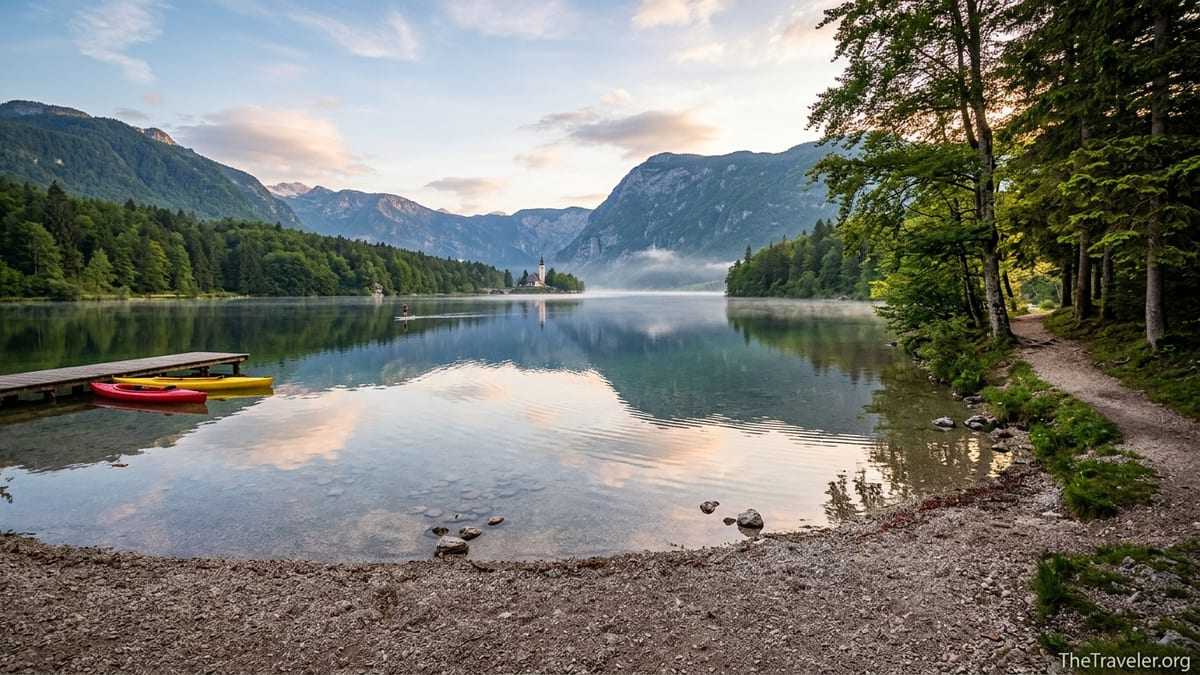
Getting your bearings: where and what is Lake Bohinj
Lake Bohinj is Slovenia’s largest permanent lake, covering just over three square kilometres in the upper Bohinj valley. It lies in the northwestern corner of the country, roughly 75 kilometres from Ljubljana, and forms part of Triglav National Park. The setting feels distinctly Alpine: high ridges, dense spruce and beech forest, and meadows that in summer are dotted with traditional hayracks and wooden barns.
The lake is long and narrow, stretching from the village of Ribčev Laz at the eastern end to Ukanc at the western shore. Several small settlements sit around it, most notably Ribčev Laz, Stara Fužina slightly back from the water, and Ukanc at the far end. Each offers a different feel. Ribčev Laz has the classic postcard view with the stone bridge and St John the Baptist church; Stara Fužina feels more like a traditional farming village; Ukanc is more remote, surrounded by thick forest and close to trailheads.
Understanding this geography matters when you book your accommodation or plan activities. Walking from Ribčev Laz to Ukanc along the north shore path takes about 1.5 to 2 hours one way at a relaxed pace, so staying on one end of the lake will influence how much time you spend on foot, on the local bus or on the panoramic boat. The main road runs along the south side with frequent bus stops, while the north shore is mostly car free, so many visitors combine buses on the south with lakeside walks on the north.
The wider Bohinj area extends down-valley to Bohinjska Bistrica, the main service town, and up into steep side valleys like Voje and the plateau above the Vogel cable car. When locals or guides talk about “Bohinj”, they often mean this whole valley, not only the lake, which helps explain why bus timetables and trail descriptions sometimes list Bohinjska Bistrica or Stara Fužina rather than “Lake Bohinj” itself.
How to get to Lake Bohinj from Ljubljana and beyond
For most international visitors the journey starts in Ljubljana. From the capital, the most straightforward option is the direct intercity bus to Bohinj. Several operators, including Arriva, run buses from Ljubljana’s main bus station towards Bohinj via Lake Bled. Typical journey time is around 1.5 hours to Ribčev Laz, slightly longer to Ukanc, and recent reports put one-way tickets in the region of 8 to 10 euros depending on time and operator. In peak summer, services can be busy, so it is wise to board at the main Ljubljana station rather than intermediate stops to have a better chance of getting a seat.
Travelers who prefer rail can take a train from Ljubljana to Bohinjska Bistrica on the historic Bohinj railway line, then continue by local bus or taxi for the last 6 kilometres to the lake. The train ride takes about 2 hours and is especially scenic where it follows river valleys and passes through long tunnels. This option can be appealing to rail enthusiasts or those visiting on weekends when certain leisure services are scheduled, though most visitors still find the direct bus more practical.
If you are landing at Ljubljana Jože Pučnik Airport, be aware there is no direct public bus to Lake Bohinj. A typical route involves taking a shuttle or local bus to Kranj or Ljubljana, then changing to a Bohinj-bound bus. Private transfers from the airport directly to Ribčev Laz generally cost in the region of 60 euros for two people, sometimes more in high season. For small groups, pre-booked transfers can be good value compared with multiple public tickets, especially if you are carrying hiking gear or arriving late in the day.
Many visitors choose to rent a car in Ljubljana or at the airport, drive the A2 motorway towards Jesenice, exit at Lesce Bled and then continue through Bled and Bohinjska Bistrica towards Bohinj. The drive usually takes about an hour in light traffic, though in July and August congestion around Bled can add significant delays. Remember that Slovenian motorways require a vignette, which is commonly included in the price of Slovenian rental cars but is an extra cost if you are driving in from neighbouring countries.
Where to stay: villages, styles and typical price ranges
Accommodation at Lake Bohinj spans from lakeside campsites to mid-range hotels and self-catering apartments in traditional houses. Prices fluctuate strongly between low season (April, October) and the peak summer weeks in July and August, so it is best to check recent rates before committing. As a guideline, simple guesthouse rooms often start around 70 to 100 euros per night for two people in shoulder season, while well-rated apartments or boutique hotels close to the lake can easily run to 150 euros or more in midsummer.
Ribčev Laz is the most popular base because it combines the classic lake view with practical services. Here you will find hotels, small supermarkets, gear rental shops and the starting point of the electric panoramic boats. Staying here is convenient if you want to rely on public transport, as many buses and shuttles stop near the bridge. However, it also feels the busiest, especially around midday when day-trippers and tour groups arrive from Bled or Ljubljana.
For a quieter feel, many travellers book apartments or farmstays in Stara Fužina, a 15 to 20 minute walk from the lake along quiet roads and paths. This village has a handful of restaurants, a small grocery store and direct access to walking trails into the Voje Valley. In summer you may wake up to the sound of cows being moved to high pastures. At the western end of the lake, Ukanc has a more remote atmosphere with a scattering of chalets and a large seasonal campsite that sits almost on the water’s edge. It is also closest to the Vogel cable car station and the Savica Waterfall trailhead, which is helpful if sunrise hikes or easier logistics to these spots are a priority.
Camping is popular in the Bohinj area. Camp Danica in Bohinjska Bistrica and Camp Bohinj near Ukanc are two established options that publish annual price lists. For 2025 and 2026, these suggest that a pitch for two adults with electricity and a car in high season typically totals several tens of euros per night, plus the municipality tourist tax. The tourist tax is generally around 2.5 euros per adult per night, charged separately by most hotels, apartments and campsites. Check your booking confirmation carefully so you are not surprised by this extra line on arrival.
Lake activities, seasons and what to expect
Lake Bohinj is a true year-round destination, but each season offers a different experience. In late spring and early summer, snow often remains on the highest peaks while meadows around the lake turn bright green and fill with wildflowers. Water levels are usually higher from snowmelt and rainfall, and temperatures can shift quickly from cool and misty mornings to warm afternoons. July and August bring the warmest weather and the busiest crowds: this is prime time for swimming, paddleboarding and family holidays.
Swimming in Lake Bohinj is permitted in designated areas, and many people also slip into the water from small pebbly beaches and rocks. Even in July, expect the water to feel refreshing rather than bath-warm; many visitors comment that a quick dip is exhilarating but not something they stay in for an hour. Stand up paddleboards, kayaks and rowing boats can be rented from several providers near Ribčev Laz and Ukanc, with prices commonly quoted per hour. For example, paying around 10 to 15 euros for an hour of paddleboard rental is typical at popular Alpine lakes in Slovenia, and Bohinj is broadly in that range.
One of the most relaxed ways to enjoy the scenery is the electric panoramic boat that runs between Ribčev Laz and Ukanc. Two boats, named Zlatorog and Triglavska roža, normally operate from spring to autumn with more frequent departures in the core months. Tickets can be bought one way or return, and many visitors combine a boat trip out with a lakeside walk back. Exact tariffs vary by season, but you can expect to pay a modest fee comparable to a museum ticket in a European capital, with discounts for children and sometimes for holders of local guest cards.
Hiking opportunities range from short lakeside strolls to serious mountain ascents. A classic, family-friendly option is the path along the northern shore, which is mostly flat and shaded. For more elevation, the hike up to the viewpoints at Peč or Rudnica offers superb panoramas over the lake and valley without requiring technical equipment. Strong hikers use Bohinj as a base to tackle longer routes such as the ascent of Mount Vogel via the cable car upper station, or even multi-day journeys deeper into Triglav National Park.
Transport and getting around once you are there
Even without a car, getting around the immediate Bohinj area is achievable with a mix of walking, buses, shuttle services and boats. Regular regional buses run between Bohinjska Bistrica, Ribčev Laz, Stara Fužina and Ukanc, with schedules densest in the morning and late afternoon. In high season, the municipality often supplements these with special summer shuttles that link the lake with popular starting points such as the Savica Waterfall car park or the Vogel cable car base station. Recent announcements mention shuttle operations around late April and early May holidays, then again in the main summer period, though exact dates change each year.
These local buses are part of an effort to reduce private car traffic inside the national park. In practice, that means visitors are encouraged to park once and then move around using public or organized transport. Some accommodations provide the Bohinj Guest Card or similar, which can include free or discounted use of certain bus lines and attractions. If your hotel or camp mentions such a card, ask precisely which routes it covers, as benefits can differ between summer and winter versions.
For cyclists, there are dedicated bike paths between Bohinjska Bistrica and the lake and quieter back roads through villages. E-bike rental is increasingly common, letting visitors ride from Ribčev Laz up gentle gradients into side valleys or reach viewpoints without a car. Helmets are strongly recommended and may be mandatory for younger riders; rental shops typically include them in the price. Experienced road cyclists sometimes use the Bohinj valley as part of longer loops that connect over passes towards the Soča Valley or other parts of the Julian Alps, though these routes require planning and fitness.
Taxis and small private shuttles operate in the area, useful if you finish a long hike in a different village from where you started or if a bus timetable does not suit your schedule. It is a good idea to ask your accommodation for a trusted local contact; in small Alpine valleys, drivers often combine regular taxi work with other jobs, so booking ahead by phone the day before is more reliable than expecting to hail a car on the street.
Practicalities: weather, packing and local rules
Weather in the Bohinj valley is typically cooler and wetter than on Slovenia’s lowland plains. Even in July, evenings can feel fresh, and afternoon thunderstorms are not uncommon. In May and September, you should be prepared for days that shift from bright sun to steady mountain rain. Pack layers, including a light insulating jacket, a waterproof shell, and quick-drying trousers or shorts. For footwear, sturdy walking shoes or lightweight hiking boots are more useful than urban sneakers, especially if you plan to follow forest trails that can be muddy after rain.
Because Lake Bohinj lies inside Triglav National Park, there are specific rules intended to protect the environment. Wild camping is prohibited, and fires are not allowed outside designated areas. Swimming is limited to certain zones, and boating generally requires non-motorized or electric craft. Littering is taken seriously; you will notice that bins are not present on every trail, so plan to carry your rubbish back down to the villages. Rangers sometimes conduct checks, especially in busy summer weeks and around highly visited spots like Savica Waterfall.
Slovenia uses the euro as its currency, and card payments are widely accepted in hotels, restaurants and supermarkets around Bohinj. Small mountain huts and rural snack stands, however, may still prefer cash for smaller amounts. It is sensible to carry a modest amount of cash for trail refreshments, bus fares if ticket machines are not available, and local markets. ATMs are easier to find in Bohinjska Bistrica than at the lake itself, so withdrawing there on arrival is convenient.
Language is rarely a barrier. Slovene is the official language, but English is widely spoken in tourism settings, and many locals also speak German or Italian. Simple phrases in Slovene are appreciated but not required. Mobile coverage is generally good in the villages and around the lake, though it can drop out on some mountain trails. Most hotels, apartments and campsites provide Wi-Fi, yet the bandwidth in peak season can be slower than urban travellers are used to.
Sample day itineraries and real-world scenarios
To make the planning concrete, it helps to imagine how a real day at the lake might unfold. A common first-day plan for visitors staying in Ljubljana is to catch a morning bus around 8 or 9 a.m., arriving in Ribčev Laz mid-morning. After a short stop for coffee at a lakeside café and a quick visit to the stone bridge and St John the Baptist church, many travellers rent a paddleboard or kayak for an hour. Lunch might be a simple pizza or local trout at a restaurant in Ribčev Laz, followed by an afternoon walk along the north shore towards Ukanc, taking breaks on small beaches. A late-afternoon bus then returns you to Ljubljana, getting you back for dinner in the capital.
For those staying several nights in Bohinj itself, a different rhythm emerges. One day could focus on the Vogel cable car: you ride up in the morning to enjoy views across the entire Bohinj basin, then follow marked hiking trails on the plateau, where mountain huts serve hearty dishes like jota stew or štruklji dumplings. In the afternoon, you descend, perhaps stop at the lakeside campsite café for a drink, and then stroll back to your accommodation along the water. Another day might be centred on the Savica Waterfall, reached either by local bus or seasonal shuttle to the Savica car park and then by a short but steep stair climb. Combining this with a boat trip and a swim makes a full but manageable day.
Families with children often build in unstructured time. A realistic example is a mid-morning visit to a small supermarket in Bohinjska Bistrica to pick up picnic supplies, then catching the bus down to the lake. After swimming and stone-skimming near Ribčev Laz, you can spread out a picnic on the grass, then ride the panoramic boat to Ukanc simply for the fun of it. Because the area is compact, if the weather turns, you can pivot quickly: a rainy afternoon can be spent in an indoor pool or wellness centre in Bohinjska Bistrica, or simply reading in a lakeside café while clouds drift low over the water.
For experienced hikers, Bohinj works well as a gateway to longer routes. Some visitors use it as the starting or ending point of multi-day treks into Triglav National Park, staying at mountain huts high above the valley. A typical pattern is to overnight in Stara Fužina, hike up through the Voje Valley to plateaus like Velo polje or Dedno polje, then spend one or two nights in huts before returning by a different trail that drops back to the lake near Ukanc or along the Mostnica Gorge. This kind of itinerary requires advance booking of huts and a close eye on weather forecasts, but Bohinj’s trail network supports many creative variations.
The Takeaway
Lake Bohinj rewards visitors who slow down and lean into its quieter, more natural rhythm. Understanding the basic geography of the lake, the distinction between villages like Ribčev Laz, Stara Fužina and Ukanc, and the seasonal patterns of buses, boats and shuttles makes it much easier to plan days that feel relaxed rather than rushed. Budgeting for tourist tax, being realistic about journey times from Ljubljana and packing for changeable Alpine weather will help you avoid common surprises.
Whether you come for a single day or base yourself in the valley for a week of hiking, the key is to balance must-see highlights like the Vogel cable car or Savica Waterfall with simple moments: a quiet swim in cool water at sunset, a picnic under larch trees, the sound of distant cowbells on an evening walk back to your guesthouse. With a little preparation before you go, Lake Bohinj can feel less like a busy tourist stop and more like a corner of the Alps you have temporarily made your own.
FAQ
Q1. Is Lake Bohinj suitable for a day trip from Ljubljana, or should I stay overnight?For a first visit, a day trip from Ljubljana is possible and many travellers do it by direct bus, but staying at least one or two nights lets you experience quieter early mornings and evenings, explore more hiking trails and avoid spending several hours of the day in transit.
Q2. How cold is the water in Lake Bohinj for swimming?In July and August the surface water is usually comfortably swimmable, though still refreshingly cool rather than warm. Many visitors are happy with short dips or 10 to 20 minute swims, while in May, June and September the lake can feel significantly colder, especially after rain or cool nights.
Q3. Do I need a car to enjoy Lake Bohinj?You can visit without a car by using direct buses from Ljubljana and local buses or shuttles around the lake, and many travellers do so successfully. A car does add flexibility, particularly for reaching trailheads early or connecting Bohinj with more remote valleys, but it also brings parking challenges in peak season.
Q4. What is the difference between Lake Bled and Lake Bohinj for visitors?Lake Bled is more developed, with a castle, island church and many hotels and restaurants, and it feels lively and sometimes crowded in summer. Lake Bohinj is wilder and more low-key, with fewer large hotels and more focus on hiking, swimming and nature, so it suits visitors looking for a quieter Alpine experience.
Q5. When is the best time of year to visit Lake Bohinj?Late May to June and September are often ideal, with generally pleasant temperatures, fewer crowds than peak summer and good conditions for hiking. July and August are best if swimming and long daylight are priorities, while autumn brings beautiful foliage but cooler weather and a reduced timetable for boats and some shuttles.
Q6. Are there grocery stores and ATMs near the lake?Yes. Small supermarkets and bakeries operate in Bohinjska Bistrica and in or near Ribčev Laz, with more limited options in Stara Fužina and Ukanc. ATMs are easier to find in Bohinjska Bistrica, so many visitors withdraw cash there on arrival and then rely on card payments plus some cash for huts, buses and small snack bars.
Q7. Is Lake Bohinj family friendly for young children?Lake Bohinj works well for families, with shallow pebbly areas for supervised paddling, easy lakeside paths suitable for strollers in sections and relaxed cafés and picnic spots. Parents should be aware that some swimming areas get deep quite quickly and that mountain weather can change fast, so extra layers and sun protection for children are important.
Q8. Can I visit Lake Bohinj in winter?Yes, winter visits are possible and the lake can look spectacular under snow, though many services such as boat trips and some lakeside rentals pause or run on limited schedules. Winter is more suited to visitors interested in snowshoeing, skiing at Vogel or simply enjoying a quiet, cold-season landscape rather than swimming or boating.
Q9. Are there vegetarian or vegan food options around Lake Bohinj?While traditional menus lean heavily on meat and dairy, most hotel restaurants and several cafés and pizzerias in Bohinj now offer at least a few vegetarian dishes and sometimes vegan options. If you have strict dietary requirements it is wise to email your accommodation in advance and consider self-catering so you can buy ingredients locally and cook.
Q10. Is it necessary to book accommodation at Lake Bohinj far in advance?From late June through August and on holiday weekends it is strongly advisable to book several months ahead, especially if you want lakeside rooms, family apartments or specific campsites. In shoulder seasons like May or late September you may find last-minute options, but booking at least a few weeks in advance still gives better choice and prices.