


In a country blessed with dramatic mountains and glassy lakes, Lake Bohinj often sits in the shadow of its famous neighbor, Lake Bled. Yet travelers who make the extra journey into Triglav National Park frequently come back saying Bohinj was the highlight of their Slovenia trip. If you are wondering whether Lake Bohinj is worth visiting, it helps to understand what kind of traveler it really rewards: those who value nature, stillness, and low-key Alpine adventure over grand hotels and souvenir stands.
Get the latest updates straight to your inbox!
Where Lake Bohinj Is And Why It Feels So Different From Bled
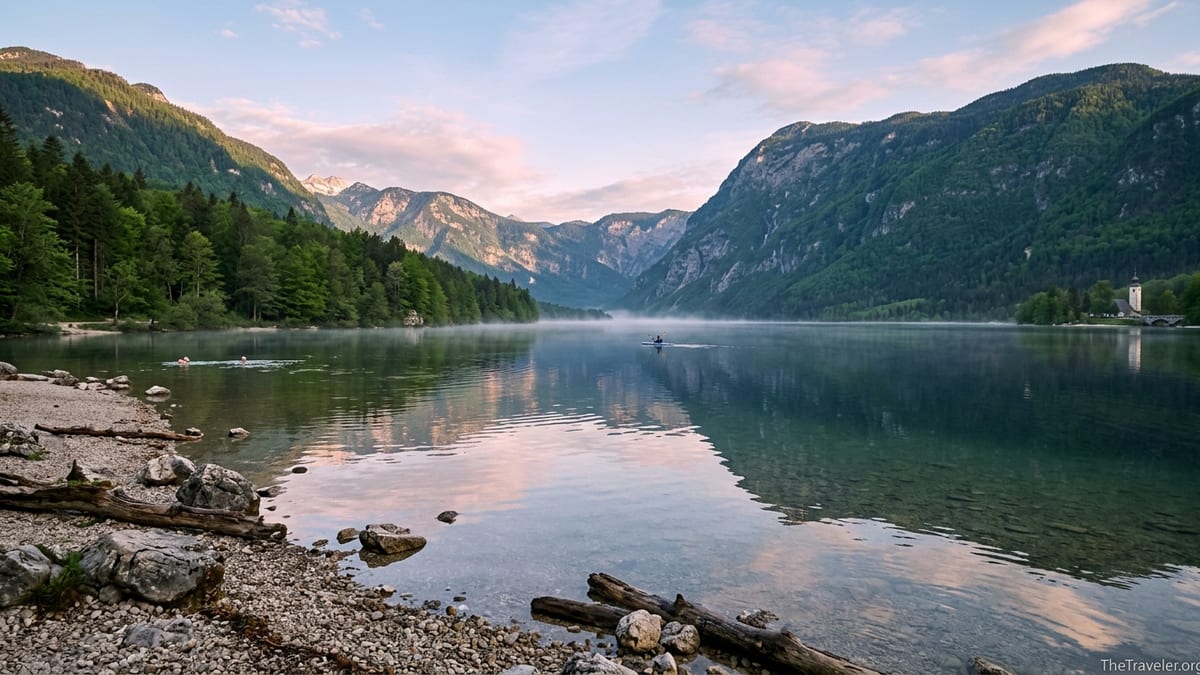
Lake Bohinj lies in the Bohinj Valley in the Julian Alps, inside Triglav National Park in northwestern Slovenia. It is Slovenia’s largest permanent lake, about 4 kilometers long, surrounded by steep forested slopes and rugged peaks that drop almost straight to the water’s edge. The village of Ribčev Laz, with its postcard bridge and the stone Church of St John the Baptist, marks the eastern end of the lake, while the quieter hamlet of Ukanc and the mouth of the Savica valley sit at the western end.
From Ljubljana, most visitors reach Bohinj by public bus or car in roughly 1 hour 45 minutes to 2 hours, usually via Bled and then along the Sava Bohinjka river. In practice, this short but winding final stretch is where the mood changes. The traffic thins out, villages get smaller, and by the time you step off the bus at “Bohinjsko jezero” stop you are standing right beside the lake, with only a handful of hotels and guesthouses in view. You immediately sense that Bohinj has more hiking boots and kayaks than cocktail bars.
Compared with Lake Bled’s castles, island church, and wedding venues, Bohinj is much less developed. There is no historic castle looming above, no ring of upscale lakeside restaurants, and no line of pletna boats jockeying for photos. Instead, you find a simple lakeside promenade, a couple of modest hotels such as Hotel Jezero and Hotel Bohinj, a few cafés and pizza places, a small info center, and wide, mostly wild shorelines shaded by beech and spruce. For many travelers, this stripped-back feel is exactly why Bohinj becomes their favorite place.
In summer, Lake Bled can feel overwhelmed by day-trippers and tour buses. Bohinj certainly gets busy on hot weekends, but outside of peak afternoons in July and August you can still walk sections of the shore path and encounter more birds than people. If your idea of a memorable Alpine lake involves quiet swims, long hikes and evenings with a simple trout dinner and early night, Bohinj is far more likely to match your expectations than Bled.
What Travelers Love Most: The Lake Itself
Ask people what won them over at Bohinj, and they usually start with the water. The lake has a clean, almost metallic blue-green color that shifts with the light and weather. On calm mornings you see near-perfect reflections of the surrounding peaks and forests. In mid-summer, locals wade in from stony pocket beaches and swim far out; by late afternoon, the water often warms enough for long, leisurely swims without a wetsuit, especially along the sun-exposed northern shore.
Unlike some Alpine lakes where large stretches are fenced off for hotels or private chalets, most of Bohinj’s shoreline is public and undeveloped. You can wander the path that circles the lake, choose a rocky outcrop or a patch of grass, and simply slip into the water. Families tend to gather near Ribčev Laz and the small pebble beaches east of the bridge because they are close to cafés, toilets and the playground. Those seeking more solitude usually walk 20 to 30 minutes along the northern shore towards Ukanc, where there are quieter coves under the pines.
Boats on the lake are mostly human-powered or electric. In high season, you can rent kayaks or stand-up paddleboards from small kiosks near Ribčev Laz and Ukanc, typically for around an hour or two at a time, with prices that feel reasonable compared with many Alpine resorts. There is also an electric tourist boat that glides between Ribčev Laz and Ukanc, giving you an easy way to see the length of the lake without hiking or paddling. Because the craft are small and motor noise is limited, the lake surface often stays calm and mirror-like even when people are out enjoying it.
For many visitors, the most memorable Bohinj moments are the unscripted ones: watching early morning mist lift off the surface while drinking takeaway coffee from a simple kiosk, taking an evening dip as the last swimmers head home, or lying on a dock at Ukanc as the sky darkens and the mountains turn a deep indigo. There are no big light shows or nightlife districts here; the lake itself is the main attraction, from sunrise to the last glow of dusk.
Easy Alpine Adventures: Cable Car, Waterfall And Gentle Hikes
One of Bohinj’s biggest advantages is how many approachable outdoor activities sit right on the doorstep, even for travelers who do not consider themselves serious hikers. From the lakeshore at Ukanc, the Vogel cable car climbs steeply to a high plateau with panoramic views over the lake and the Julian Alps. On a clear day you can see Mount Triglav and a ring of jagged summits stretching into the distance. In summer, visitors step out in sneakers and light jackets, wander along easy marked walking trails, and have lunch on a terrace that overlooks the water far below.
Another classic excursion is the Savica Waterfall, concealed in a narrow rocky amphitheater above Ukanc. You typically reach the trailhead by car, bicycle, or local shuttle bus from the lake, then climb a stone stairway through the forest to a viewpoint platform. The path is short but steep, taking most people around 20 to 30 minutes of steady uphill walking. The reward is a powerful ribbon of turquoise water plunging into a pool, one of the sources that eventually feeds Lake Bohinj. For many visitors staying one or two nights, pairing Savica in the morning and Vogel in the afternoon makes for a full but satisfying day of easy Alpine sightseeing.
On the opposite side of the lake, the valley of the Mostnica river offers one of the area’s most pleasant beginner hikes. Starting near the village of Stara Fužina, a marked trail follows the narrow Mostnica Gorge, where clear water rushes between sculpted limestone walls. In season, a small entrance fee is charged at the start of the gorge, helping maintain the path and rails. Many visitors walk as far as the alpine hut at Voje for a lunch of jota stew, štruklji dumplings or simple grilled sausage, then return the same way, turning the outing into a relaxed half-day walk.
Beyond these headline sights, there are countless shorter paths and gravel roads leading to viewpoints, pastures and side valleys. Families with children often stroll just a short stretch of the shore, stop to skim stones, then continue the next day. More energetic travelers might combine the lakeside path with a detour to a viewpoint such as Peč, where a wooden bench frames a now-Instagram-famous view across the lake and the church at Ribčev Laz. The variety of gentle options makes Bohinj especially appealing for couples or groups where not everyone is equally active.
For Serious Hikers And Cyclists: Bohinj As A Base Camp
While Bohinj is forgiving for first-time hikers, it also functions as a gateway to some of Slovenia’s most dramatic high-mountain terrain. The lake sits inside Triglav National Park, and multiple multi-day trekking routes, mountain huts and high passes can be reached within a few hours’ walk or a short drive from the shore. Ambitious visitors use Bohinj as a base for tackling sections of the Julian Alps long-distance trail or even multi-day ascents of Mount Triglav, Slovenia’s highest peak.
From settlements such as Stara Fužina, Srednja vas or Ukanc, marked trails lead up to alpine pastures like Vogar and Uskovnica, traditional grazing areas dotted with wooden huts. In summer, some of these pastures still host cows and cheese-making, creating a sense of living mountain culture rather than a pure theme-park landscape. Hikers often report spending a full day climbing through forest, then emerging into open meadows where they can buy a simple plate of žganci or local cheese from a small hut before looping back to the lake.
Bohinj also appeals to road cyclists and mountain bikers who prefer quieter roads than those around Lake Bled. The valley leading towards Bohinjska Bistrica and beyond has rolling terrain, while steeper climbs branch off to plateaus such as Pokljuka. In recent years, local authorities and the national park have paid increasing attention to managing bike traffic and encouraging riders to stick to marked routes, so it is worth checking current maps and asking at the tourist information office in Ribčev Laz about recommended loops for your fitness level.
Because of its location at the heart of the Julian Alps, weather in Bohinj can change quickly. Serious hikers and bikers often carry layers and waterproofs even in July, and many build in extra days in their itinerary in case storms or low cloud make high routes unsafe. Travelers who stay three or four nights instead of just doing a quick day trip from Bled often say that this extra time lets them adapt to the mountains’ rhythm: choosing easier lakeside walks on cloudy days, saving their big hikes for clearer windows, and enjoying the lake when afternoon thunderstorms blow through and the crowds retreat to their guesthouses.
Practicalities: Getting There, Costs And Crowds
Most independent travelers reach Bohinj from Ljubljana, either directly or via Bled. Public buses typically run several times a day from Ljubljana’s main bus station to the “Bohinjsko jezero” stop by the lake, with journey times often around two hours depending on intermediate stops and traffic. Fares are generally budget-friendly by Western European standards, which makes the bus attractive for backpackers and solo travelers. Some visitors prefer to take the train from Ljubljana to Bohinjska Bistrica and then switch to a local bus or shuttle for the final stretch, especially in peak season when the direct buses to Bled and Bohinj can be crowded.
If you hire a car, the drive from Ljubljana to Bohinj usually takes around 90 minutes in light traffic. However, parking in the lake area has become more regulated in recent years, both to reduce congestion and to protect the national park. Paid car parks around Ribčev Laz, Ukanc and popular trailheads are now the norm in high season, with daily caps designed to discourage all-day free parking on verges and residential streets. Travelers who have visited recently often recommend using park-and-ride lots closer to Bohinjska Bistrica and then continuing by bus to the lake to avoid circling for a spot on busy summer weekends.
Accommodation prices in Bohinj span a range, from simple rooms in private houses and farm stays to mid-range hotels and well-equipped apartments. Many visitors find that staying in a self-catering apartment in Stara Fužina or Ribčev Laz helps keep costs under control, especially for families, since they can cook some meals and walk to the lake without needing a car every day. Dining out tends to be slightly cheaper than in many Alpine regions of Austria or Switzerland, though prices have crept up as Bohinj becomes better known internationally.
In July and August, afternoons beside the more accessible parts of the shore can still feel busy, particularly on hot days when Slovenians from Ljubljana and nearby towns come up for a swim. Yet even on these days, a short walk along the northern shore or a trip up the Vogel cable car provides quick relief from the crowds. May, June, September and early October are often considered sweet spots for those who want milder temperatures, easier parking and quieter trails, though swimming is cooler outside the high summer window.
Who Will Love Bohinj (And Who Might Prefer Bled)
Lake Bohinj is worth visiting for travelers who value nature and low-key experiences more than sightseeing checklists. If your ideal day on holiday involves a morning hike, lunch at a mountain hut, a long swim, and a simple dinner before an early night, Bohinj delivers with ease. Couples on active honeymoons, families with outdoorsy teenagers, solo hikers and photographers looking for unspoiled landscapes often describe Bohinj as their favorite stop in Slovenia.
On the other hand, travelers who want grand hotels, historic architecture and a lively evening atmosphere might feel more at home in Bled. Bled offers a lakeside castle to tour, an island church with bell to ring, horse-drawn carriages, and more options for fine dining, patisseries and bars. Its promenade fills with people strolling after dinner, and there is more of a resort-town buzz. Some visitors spend two or three nights in Bled and visit Bohinj as a day trip to enjoy its wilder setting without giving up their preferred amenities.
A growing number of travelers, however, are flipping that pattern: they base themselves in Bohinj and do a single day or half-day trip to Bled instead. This approach suits those who want quiet nights and darker skies, but still hope to see Bled’s classics like the island and castle. With frequent buses and plenty of small tour agencies offering transfers, it is straightforward in practice to sleep at Bohinj and allocate one day to Bled, rather than the other way around.
In deciding which lake to prioritize, it helps to be honest about your travel style. If you imagine yourself spending long evenings in wine bars and exploring heritage buildings, Bohinj might feel too sleepy. If you mostly picture yourself out in nature and only coming to town for groceries and the occasional pizza or trout dinner, then Bohinj is almost certainly worth the extra journey, and a single quick photo stop at Bled on the way may be enough.
How Long To Stay And Sample Itineraries
For many travelers on a tight schedule, a day trip from Ljubljana or Bled to Bohinj can answer the question of whether they like its quieter energy. A simple one-day itinerary might include a lakeside walk from Ribčev Laz towards Ukanc, a couple of swims, and a boat ride or quick hike to a low viewpoint such as Peč. Even in a few hours, the contrast with Bled becomes obvious: fewer buildings, more forest, more space.
However, Bohinj reveals its real character if you stay at least two or three nights. A classic three-day stay might look like this in practice: on day one, arrive from Ljubljana, check into a guesthouse in Stara Fužina, and spend the afternoon finding your favorite swim spot near the village. On day two, take the Vogel cable car for high views and a gentle ridge walk before descending for an evening swim. On day three, hike the Mostnica Gorge to the Voje alpine hut, have lunch of hearty mountain food, then either continue to the waterfall at the end of the valley or turn back, finishing your day with a lakeside sunset.
Travelers with four or five days can add more ambitious hikes to alpine pastures such as Vogar and Planina Blato, attempt a guided ascent of a nearby summit, or build in a relaxed day at the lake between more strenuous outings. Families might reserve one “rest day” where the only goals are swimming, renting a kayak for an hour, and eating ice cream in Ribčev Laz. Because Bohinj is compact, you can usually reach most starting points on foot, by bike, or by short bus rides, which reduces the sense of constantly packing and unpacking.
In shoulder seasons like late May or early October, you may need to be more flexible with your plans. Some seasonal businesses and boat services run less frequently or close entirely outside peak summer, and mountain huts above the lake may have shorter opening periods. On the plus side, you gain quieter trails, more available accommodation and the chance to see the forests around Bohinj light up with spring flowers or autumn colors. For many repeat visitors, those shoulder months are when the valley feels most magical.
The Takeaway
Lake Bohinj is worth visiting if you are drawn to wild landscapes, clear water and simple mountain pleasures more than to grand buildings or nightlife. It offers an accessible taste of the Julian Alps inside Triglav National Park, with swimming, gentle hikes and cycle routes right from the lakeshore, as well as more serious mountain adventures for those who seek them. The trade-off is that services are fewer, evenings are quiet, and rain or low cloud can linger around the peaks. If you need only a quick photo stop and a castle tour, Bled will probably satisfy you more.
For many travelers, though, Bohinj becomes the place they remember most vividly: a cold morning dip with mist on the water, a plate of hot soup at a mountain hut after a walk up the gorge, or a sunset where the last light burns on the cliffs while the lake turns black and still. If those sound like the moments you want from a trip to Slovenia, then taking the extra bus ride beyond Bled and giving Bohinj at least a couple of unhurried days is very likely to feel not just worthwhile, but essential.
FAQ
Q1. Is Lake Bohinj worth visiting if I am already going to Lake Bled?
Yes, if you have at least one extra day. Many travelers visit Bled for its castle and island, then find Bohinj more peaceful and more natural, with easier access to hiking and swimming.
Q2. How many days should I spend at Lake Bohinj?
You can get a feel for the lake on a day trip, but two to three nights let you combine lakeside time with outings to Vogel, Savica Waterfall and the Mostnica Gorge without rushing.
Q3. Can I swim in Lake Bohinj, and when is the best time?
Swimming is allowed and very popular. The water is cold in spring, pleasantly fresh in midsummer, and coolest again by October. July and August are best for long, comfortable swims.
Q4. Is Bohinj suitable for families with children?
Yes. There are gentle lakeside paths, stony beaches for paddling and skipping stones, easy boat rides, and shorter hikes like part of the Mostnica Gorge that work well for active kids.
Q5. Do I need a car to enjoy Lake Bohinj?
No. Regular buses connect Bohinj with Ljubljana and Bled, and many hikes start directly from villages such as Ribčev Laz and Stara Fužina. A car offers flexibility but is not essential.
Q6. When is the best season to visit Lake Bohinj?
Late May, June, September and early October balance milder temperatures and smaller crowds. July and August are ideal for swimming but are busier, especially on sunny weekends.
Q7. Is Lake Bohinj more budget-friendly than Lake Bled?
Accommodation and dining at Bohinj are often slightly cheaper than at Bled, and there are many self-catering apartments. However, prices have been rising as the area becomes better known.
Q8. What are the must-do activities around Lake Bohinj?
Most visitors try to swim in the lake, ride the Vogel cable car for panoramic views, visit Savica Waterfall, and walk at least part of the Mostnica Gorge and Voje Valley.
Q9. Can I visit Lake Bohinj on a day trip from Ljubljana?
Yes. Buses generally take around two hours each way. A realistic day trip includes lakeside walking, a swim or boat ride, and possibly one extra activity like Vogel or Savica.
Q10. Is Lake Bohinj good for serious hiking in the Julian Alps?
Very much so. Bohinj is a common starting point for multi-day hikes, alpine pastures and, with proper planning and guidance, routes that lead toward Mount Triglav and other high peaks.